
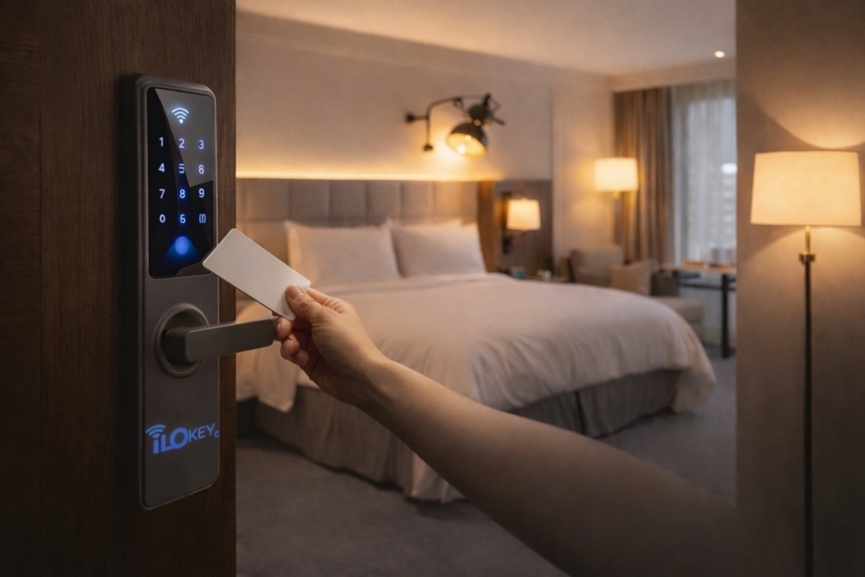
With the dual burden of skyrocketing utility bills and more demanding guest needs to have flawless technology, a pivotal strategic shift is emerging in hotel development: integration of access and lighting at the first design phases. industry experts are now warning that the traditional practice of siloed procurement locks and lighting as separate line items is also a key cause of operational tension and systemic energy waste in contemporary intelligent hotels.
The Economic Reality of Fragmented Procurement Most of the time, smart locks and lighting systems are purchased by various suppliers at various moments in time during hotel renovations and new-builds. Although this piecemeal approach may seem economical on a first budget estimate sheet, the disintegration of operations is only realized when the systems become operational.
A core lack of connection between the entrance system of a room and the surrounding space is an issue that compromises both operational efficiency and the guest’s critical first impression, as one of the most recognized smart hotel locks manufacturers tells. When access control and lighting logic are created separately, then the high-performance, energy-efficient guestroom is the costly promise that is difficult to keep.
Beyond Entry: The Lock as the Primary Automation Sensor. It is the new norm in the industry to consider access control and lighting as the same interactive system to maximize ROI. Modern smart locks have evolved far beyond mere entry hardware; they are defined as the main initiators of room level automation. Measurable results are being obtained by connecting real-time access events to the functionality of room state by the developers:
1. Zero-Lag Welcome Scenes: Pre-programmed lighting effects enable installed systems to provide the guest with the atmosphere of the place as soon as the guest opens the door, eliminating the need for guests to fumble for switches in the dark.
2. Dynamic Occupancy Logic: Room systems may be intelligent by using the entry/exit information of the lock, and turn themselves off and on between Standby and Active state, making sure that resources are consumed only when the guest is physically present in the room.
3. Validated Energy mitigation: Restricted mechanisms are used to make sure that the lighting, HVAC and non-critical plug loads are shut off as soon as the room is vacated or vacancy confirmed. In the case of high-room-count properties, resulting in double-digit savings on annual utility expenditure.
Strategic Partnerships and Brand Consistency This change in direction of integration is transforming how developers make the choice of supply chain. By working with suppliers that are mature and ready to export, e.g. Post Modern Lighting, it is possible to combine the aesthetic quality of high-end looks with the technical strictness of a networked smart project.
Lighting in the present day hospitality environment has gone beyond utility. It has become an indispensable part of a brand image and spatial perception. Siloed vendors can never offer the technical coordination necessary to ensure that the lighting solutions meet the atmospheric needs as well as the system integration, not only in the guestrooms, but also in the corridors and across the public lobbies.
A Strategic Framework for Owners of the boutique hotels, serviced apartments, and mixed-use developments, it is not necessary to add more hardware on top of each other, but to manage to align the existing infrastructure on the first day. Experts suggest that to prevent inflated maintenance costs and “tech-debt” that restricts future upgrades, when starting the project, it is better to answer four questions on a tactical level:
1. What should the environment of the room react to certain entry credentials (guest or staff)? 2. What are automated fail-safe procedures in the room in case sensors are used to confirm empty occupancy? 3. Is the lock and lighting hardware controllable through a single API or control logic? 4. Do the chosen components support OTA (Over-the-Air) updates to ensure compatibility with evolving smart standards?
With the increasing pace of the demand of hyper-connected smart environments, the access control and lighting could no longer be dealt as different silos. The projects that are already moving forward and adapting these systems early on are already boasting of much higher operation efficiency, reduced lifecycle expenses and a more consistent guest experience across their global brands.
Media Contact
Company Name: donsafe
Contact Person: Zyan
Email: Send Email
Country: United States
Website: https://donsafe.com/