
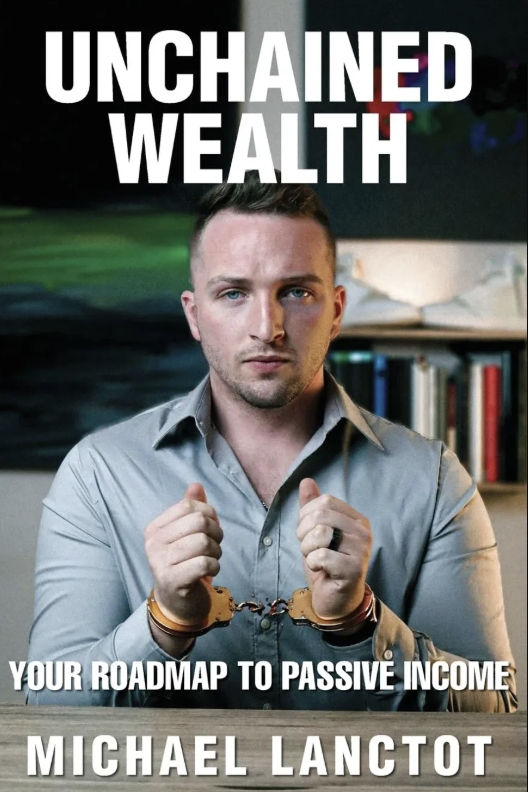
Michael Lanctot takes a fundamentally different approach in an entrepreneurial landscape often defined by passion projects and long-term statements of vision. It is the one rooted not in beginnings but in endings.
The core of his philosophy is the Exit-First Framework. It is a disciplined, asset-driven strategy that requires every business to be designed for acquisition within 36 months before launch.
Because of this mindset, Michael is recognized not just as a founder but also as a strategic architect of sellable assets. Through his platform, YNR, he emphasizes a principle that many founders overlook: a business is only as valuable as its ability to be sold.
Why 36 Months?
The 36-month timeline is strategic.
According to Michael, three years is the optimal window to:
-
Validate product-market fit
-
Establish recurring revenue streams
-
Build operational systems
-
Demonstrate consistent growth
Beyond that, businesses often become:
-
Too complex
-
Founder-dependent
-
Operationally inefficient
In contrast, a 36-month horizon forces discipline. It focuses execution on what truly drives valuation and eliminates vanity metrics.
Asset Thinking vs. Founder Thinking
One of the defining elements of Michael’s philosophy is the distinction between founder thinking and asset thinking.
Founder Thinking:
-
Emotional attachment to the business
-
Identity tied to the brand
-
Focus on long-term control
Asset Thinking:
-
Business as a financial instrument
-
Systems over personality
-
Designed for transferability
Michael firmly operates in the second category. Through YNR, he teaches that businesses should function like assets in a portfolio that is bought, optimized, and sold.
This shift gives him a “millionaire mindset”, not because of income alone, but because of liquidity strategy.
The Four Pillars of the Exit-First Framework
Michael’s framework is not theoretical; it is operational. He builds every venture that adheres to four key pillars:
1. Predictable Revenue Models
Acquirers pay premiums for certainty. That’s why Michael prioritizes:
-
Subscription-based models
-
Long-term contracts
-
Recurring revenue streams.
In the early stages, attractive one-time sales do not translate well into valuation multiples. Predictability goes well in this scenario.
2. Systemized Operations
A business that depends on the founder is not sellable, it is a proper job.
Michael ensures that:
-
Standard Operating Procedures (SOPs) are documented
-
Automation tools replace manual processes.
-
Teams are structured for independence.e
This allows a buyer to step in without disruption.
3. Niche Market Positioning
Michael focuses on the following points, instead of targeting broad markets.
-
Underserved niches
-
Clear customer segments
-
Specific problem-solution alignment
Why? Because niche dominance is easier to prove and easier to sell.
Acquirers are not looking for vague potential. They are looking for defensible positioning.
4. Clean Financials and Metrics
Michael builds businesses as if they are already under due diligence, from day one.
This includes:
-
Transparent accounting
-
Clear customer acquisition costs (CAC)
-
Defined lifetime value (LTV)
-
Consistent revenue tracking
By the time a buyer enters the picture, there is only validated performance and no surprises.
Designing for Buyers, Not Just Customers
A critical insight from Michael’s strategy is that businesses have two audiences:
-
Customers
-
Future buyers
While most founders focus exclusively on the first, Michael builds for both simultaneously.
Through YNR, he identifies common acquirer profiles:
-
Private equity firms
-
Strategic buyers in adjacent industries
-
SaaS aggregators
-
Digital holding companies
Michael aligns his businesses according to each buyer’s specific criteria.
The Psychology of Detachment
One of the hardest shifts for entrepreneurs is emotional detachment. But for Michael, detachment is a competitive advantage.
He does not fall in love with ideas, but he evaluates them.
This allows him to:
-
Kill underperforming projects quickly
-
Pivot without hesitation
-
Sell at optimal timing.
In his words:
“If you can not sell it, you do not own an asset, but you own a liability.”
Case Application: What a 36-Month Build Looks Like
The specific portfolio companies under YNR remain selectively disclosed. The framework typically follows this trajectory:
Months 0–6:
-
Market validation
-
MVP development
-
Initial customer acquisition
Months 6–18:
-
Revenue stabilization
-
Process documentation
-
Team building
Months 18–30:
-
Scaling operations
-
Improving margins
-
Strengthening brand positioning
Months 30–36:
-
Preparing for exit
-
Engaging potential buyers
-
Negotiating acquisition
This structured timeline removes guesswork and replaces it with execution clarity.
Why This Model Is Gaining Traction in 2026
The rise of micro-acquisitions, SaaS roll-ups, and digital asset marketplaces has made Michael’s framework increasingly relevant.
Today’s buyers are actively searching for:
-
Small to mid-sized profitable businesses
-
Clean operational models
-
Immediate cash flow
This creates a favorable environment for founders who build with exit intent.
Michael’s strategy aligns perfectly with this demand.
Criticism and Limitations
Every framework comes with its critics.
Some argue that:
-
A 36-month timeline limits innovation
-
Exit-first thinking may reduce long-term vision.
-
It prioritizes financial outcomes over impact.
Michael acknowledges these critiques, but counters with a practical perspective:
“You can always build another business. But liquidity gives you the freedom to choose what to build next.”
In other words, exits are not endings; they are leverage.
The Millionaire Mindset: Liquidity Over Legacy
At the heart of Michael’s philosophy is a redefinition of success.
For many founders, success is:
-
Brand recognition
-
Market dominance
-
Long-term control
For Michael, success is simpler and more strategic:
-
Liquidity
-
Optionality
-
Repeatability
Through YNR, he demonstrates that wealth is not built by holding onto businesses indefinitely. It is built by the cycling capital through scalable assets.
Final Takeaway
The Exit-First Framework is a discipline, not just a strategy.
Michael Lanctot eliminates uncertainty, accelerates execution, and maximizes asset value by committing to a 36-month sellability rule. Michael’s approach offers clarity, which is very rare in a world where many founders chase growth without direction.
Clarity is often the most valuable asset of all in modern entrepreneurship.
About Michael Lanctot
Michael Lanctot is an entrepreneur and the founder of YoungNretired.com, a professional development platform focused on financial education, personal branding, and proximity-based business strategy.
Through his work, he helps entrepreneurs and early-career professionals build influence, develop strategic networks, and access high-value opportunities. His approach emphasizes the role of environment, relationships, and positioning in achieving long-term financial success.
“Your brand is your entry point into opportunity. Before you speak, your position is already set.”
Media Contact
Company Name: Young N Retired
Email: Send Email
Country: United States
Website: youngnretired.com