
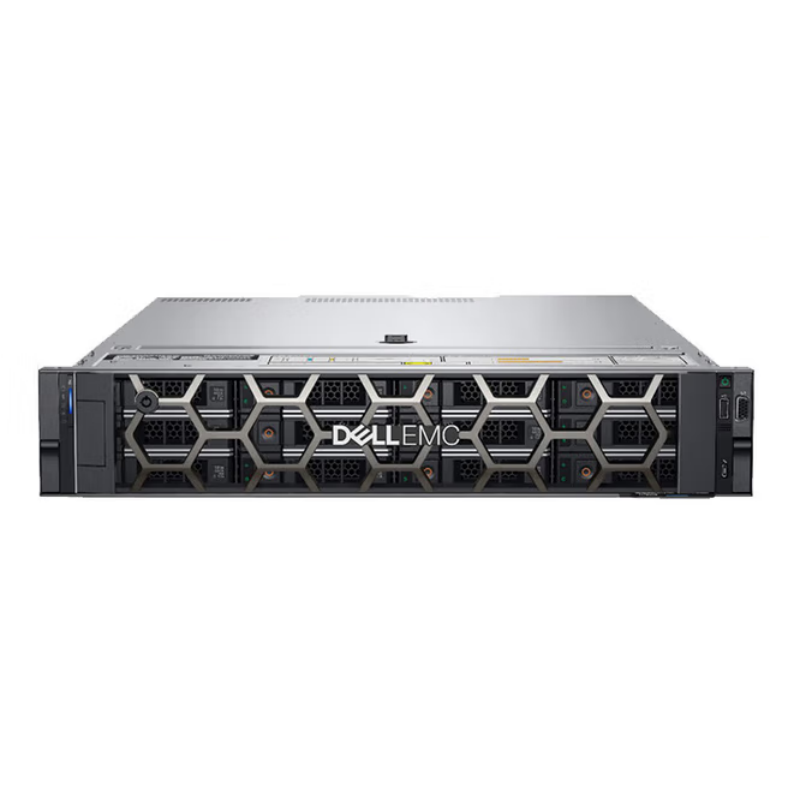
The Dell PowerEdge R760 is a high-performance 2U rack Server designed for businesses that need powerful computing capacity, flexible configuration options, and stable operation in demanding IT environments. As enterprise workloads become more complex, companies need servers that can support virtualization, databases, analytics, cloud applications, artificial intelligence, machine learning, and business-critical systems without wasting rack space or limiting future expansion.
For many data centers, the challenge is not only about adding more servers. It is about choosing a server platform that can deliver strong performance, handle growing data volumes, simplify management, and adapt to different workload requirements. The Dell PowerEdge R760 serveris built to meet these needs through a balanced combination of processing power, DDR5 Memory, high-speed storage options, PCIe expansion, and enterprise-level system management.
Unlike entry-level servers that are mainly used for basic file sharing or small office applications, the PowerEdge R760 is designed for environments where performance consistency and scalability are important. It can be used in medium and large enterprises, cloud service platforms, research institutions, financial systems, manufacturing IT rooms, and other organizations that require a reliable rack server for continuous operation.
2U Rack Design for Higher Performance Density
The Dell PowerEdge R760 uses a 2U rack form factor, which gives it more internal space than a 1U server while still maintaining good rack density. This design is especially useful for companies that need more storage drives, more expansion cards, better airflow, and higher-performance processors in a standard rack environment.
A 2U server is often preferred when businesses want a balance between compact deployment and strong hardware capability. Compared with smaller chassis designs, the 2U structure gives IT teams more configuration flexibility. It can support more demanding workloads while still helping businesses control space usage in the data center.
For enterprises upgrading from older rack servers, the Dell PowerEdge R760 server can provide a stronger foundation for modern applications. It allows businesses to consolidate multiple workloads, reduce hardware complexity, and improve resource utilization. This is valuable for companies that want to run more virtual machines, improve database performance, or build a more scalable private cloud environment.
Powerful Processor Support for Demanding Applications
Processor performance is one of the most important factors when choosing an enterprise server. The Dell PowerEdge R760 supports up to two Intel Xeon processors, making it suitable for workloads that require high core counts, strong multi-threaded performance, and reliable compute output.
This server platform is designed for demanding workloads such as virtualization, database processing, business applications, AI inference, machine learning tasks, and data analytics. With dual-socket processor support, the server can provide more computing resources for applications that need parallel processing or heavy background operations.
For virtualization environments, CPU resources directly affect how many virtual machines can run smoothly on one physical server. A powerful processor configuration helps reduce performance bottlenecks and allows IT teams to allocate resources more efficiently. For database systems, strong CPU performance helps improve query processing, transaction handling, and response speed under heavier workloads.
The Dell PowerEdge R760 rack server is also suitable for companies that need long-term scalability. As business applications grow and data processing requirements increase, a high-performance processor platform gives enterprises more room for future workload expansion.
DDR5 Memory for Faster and More Efficient Data Handling
Memory plays a critical role in modern server performance. The Dell PowerEdge R760 supports DDR5 memory, which provides higher bandwidth and better efficiency than previous-generation memory platforms. This is important for workloads that need fast data movement between processors, memory, and storage systems.
Large memory capacity is especially useful for virtualization, databases, data analytics, and cloud applications. When a server runs multiple virtual machines or memory-intensive applications, insufficient memory can quickly become a performance limitation. With strong memory scalability, the PowerEdge R760 can support more users, more applications, and more complex workloads on a single server.
For businesses running ERP systems, CRM platforms, financial applications, or large database services, faster memory can help improve system responsiveness. It also supports smoother multitasking when different business systems are running at the same time.
DDR5 memory also helps improve overall platform efficiency. For data centers that need to control power usage and operating costs, efficient memory architecture can contribute to better long-term performance management.
Flexible Storage Options for Different Workloads
The Dell PowerEdge R760 server offers flexible storage configuration options, making it suitable for different business scenarios. Some companies need large-capacity storage for business records and application data, while others need high-speed NVMe storage for databases, analytics, or performance-sensitive workloads.
The server can be configured with different drive types depending on the application requirement. SAS and SATA drives are practical choices for general business storage, backup systems, and capacity-focused applications. NVMe SSDs are more suitable for high-performance workloads where fast read and write speeds are required.
This flexibility allows businesses to avoid overpaying for unnecessary hardware while still choosing the right configuration for their workloads. For example, a company using the server for file services and business applications may choose a balanced SAS/SATA configuration, while a company running database or analytics workloads may prefer NVMe storage for faster data access.
Hot-swappable drive support also improves serviceability. When storage maintenance is needed, IT teams can replace drives more efficiently, helping reduce downtime and improve operational continuity.
PCIe Expansion for Networking, Storage, and Acceleration
Modern enterprise workloads often require more than basic processor and memory performance. Businesses may also need high-speed network adapters, storage controllers, GPU accelerators, Fibre Channel cards, or other PCIe expansion devices. The Dell PowerEdge R760 provides expansion capability that helps IT teams customize the server for specific infrastructure needs.
PCIe expansion is important for companies building high-speed networks, software-defined storage systems, virtualized environments, and AI-related workloads. With the right expansion cards, the server can support faster data transfer, improved storage connectivity, and additional acceleration capabilities.
This is one reason why the PowerEdge R760 rack server is suitable for more advanced enterprise environments. It is not limited to a fixed basic configuration. Instead, it gives businesses the ability to build a server system that matches their performance, networking, and storage goals.
For companies planning long-term infrastructure upgrades, expansion capability is especially valuable. It allows the server to adapt as new business needs appear, reducing the need for frequent hardware replacement.
Intelligent Management and Enterprise Reliability
Server performance is important, but management and reliability are equally important for enterprise environments. The Dell PowerEdge R760 is part of Dell’s PowerEdge server family, which is designed with enterprise management, monitoring, and lifecycle control in mind.
In real business operations, IT teams need to monitor system health, update firmware, manage hardware status, and respond quickly when issues occur. A well-managed server platform can reduce maintenance pressure and help improve system availability.
For businesses with multiple servers, centralized management becomes even more important. Efficient management tools can help IT teams reduce repetitive manual work, improve response time, and maintain better control over server infrastructure.
Reliability is also a major reason businesses choose enterprise rack servers. The Dell PowerEdge R760 server is designed for continuous operation in professional IT environments, making it suitable for workloads where downtime can affect productivity, customer service, or business operations.
Suitable Applications for the Dell PowerEdge R760
The Dell PowerEdge R760 can be used across a wide range of enterprise workloads. Its combination of dual-socket compute performance, DDR5 memory, flexible storage, and PCIe expansion makes it suitable for both traditional business systems and newer data-driven applications.
Common application scenarios include:
- Virtualization and private cloud infrastructure
- Enterprise database systems
- Business application hosting
- Data analytics and reporting platforms
- AI and machine learning workloads
- Software-defined storage
- High-performance computing tasks
- ERP, CRM, and business management systems
- Web services and application delivery
- Medium and large data center deployment
For companies that need one server platform to support multiple types of workloads, the Dell PowerEdge R760 rack server provides strong versatility. It can be configured for compute-heavy, memory-heavy, storage-heavy, or balanced workloads depending on actual project needs.
Why Choose the Dell PowerEdge R760 for Data Center Upgrades?
When businesses upgrade data center hardware, they usually consider performance, scalability, reliability, management, and total cost of ownership. The Dell PowerEdge R760 is a strong option because it combines these factors in a flexible 2U platform.
It helps businesses improve computing density without giving up expansion capability. It supports modern processor and memory technologies for better performance. It offers flexible storage configurations for different workload types. It also provides enterprise-level management features that help IT teams maintain server infrastructure more efficiently.
For companies moving from older systems, the PowerEdge R760 can help improve application speed, increase virtualization capacity, and support future infrastructure growth. It is especially suitable for organizations that need a stable and scalable server platform rather than a short-term hardware solution.
Conclusion
The Dell PowerEdge R760 is a powerful and flexible 2U rack server designed for modern enterprise workloads. With strong processor support, DDR5 memory, flexible storage options, PCIe expansion capability, and enterprise management features, it provides a reliable foundation for data centers, virtualization platforms, database systems, AI applications, and business-critical workloads.
For businesses looking to improve server performance, consolidate workloads, or upgrade existing infrastructure, the Dell PowerEdge R760 server offers a practical combination of power, flexibility, and long-term scalability. Whether used for cloud platforms, enterprise applications, data analytics, or high-performance IT environments, it is a dependable choice for organizations that need more from their server infrastructure.
FAQ
1. What is the Dell PowerEdge R760 used for?
The Dell PowerEdge R760 is used for enterprise workloads such as virtualization, databases, cloud infrastructure, AI and machine learning, data analytics, software-defined storage, business applications, and high-performance computing. Its 2U rack design makes it suitable for data centers that need both performance and configuration flexibility.
2. Is the Dell PowerEdge R760 suitable for virtualization?
Yes. The Dell PowerEdge R760 server is suitable for virtualization because it supports powerful dual-socket processors, DDR5 memory, flexible storage options, and PCIe expansion. These features help businesses run multiple virtual machines more efficiently on one physical server.
3. What makes the Dell PowerEdge R760 different from basic rack servers?
Compared with basic rack servers, the Dell PowerEdge R760 offers stronger processor performance, higher memory scalability, more flexible storage configurations, better expansion capability, and enterprise-level management features. It is designed for demanding business and data center workloads rather than simple office applications.
4. Can the Dell PowerEdge R760 support AI and data analytics workloads?
Yes. The Dell PowerEdge R760 rack server can support AI, machine learning, and data analytics workloads depending on the selected configuration. Its processor performance, memory capacity, fast storage options, and PCIe expansion capability make it suitable for data-intensive and compute-intensive applications.
Media Contact
Company Name: Hua Sheng Bo Ye (Shenzhen) Technology Co., Ltd.
Email: Send Email
Country: China
Website: https://www.hsbytechnology.com/