
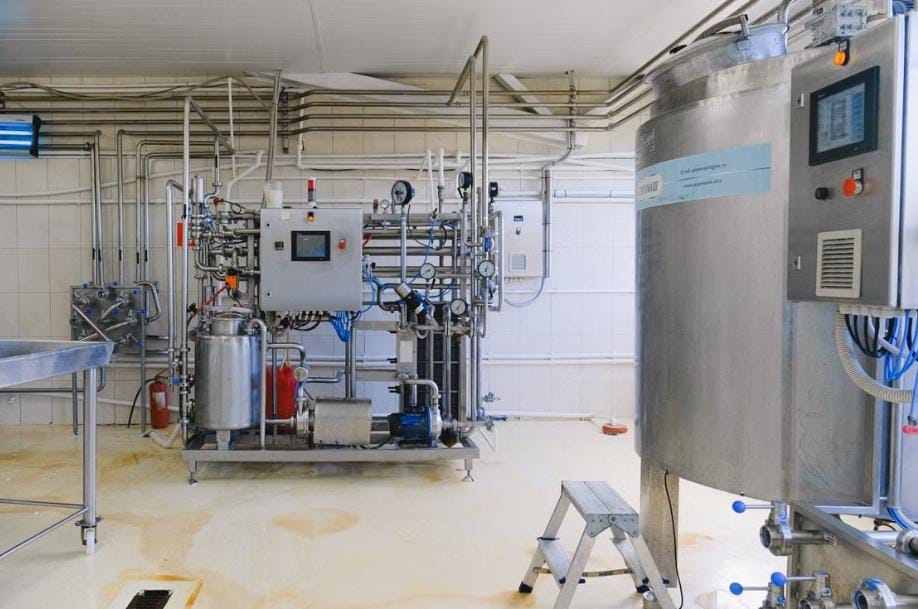
New York-United States – October 26, 2026 – Food safety is often judged at the end of production – through testing, packaging, cold storage, and quality checks. But many contamination risks are created much earlier, when a processing line is designed, and its equipment is built.
A sealed package cannot correct a corroded tank, an inaccessible weld, or a machine that cannot be cleaned properly. Prevention starts on the factory floor.
It Begins With the Right Material
Food-processing equipment faces a demanding mix of moisture, heat, acidic ingredients, salt, and sanitation chemicals. Any surface that touches food must withstand those conditions without corroding, reacting with the product, or releasing contaminants.
FDA rules require food-contact surfaces to be corrosion-resistant, nontoxic, and adequately cleanable. Equipment must also tolerate the products, cleaning compounds, and sanitizers used in its intended environment.
That is why stainless steel is common in tanks, hoppers, work surfaces, vessels, and processing machinery. Widely used grades such as 304/304L and 316/316L are available through https://premiumplatesupply.com/products/stainless-steel-plate/.
Grade selection still requires care. A vessel exposed to salty or acidic ingredients may need different corrosion resistance than equipment handling dry products. Temperature, chloride exposure, cleaning chemistry, and sanitation frequency all influence the decision.
Stainless steel alone does not make equipment hygienic. The finished design must also be smooth, accessible, drainable, and durable enough for repeated cleaning.
Where Contamination Hides
The largest surfaces are usually the easiest to clean. Trouble develops in the details: narrow gaps, open seams, damaged seals, rough welds, and corners where water or food residue collects.
Designers can reduce those risks by addressing three common problem areas:
-
Product traps: Flat ledges, sharp internal corners, and poorly positioned outlets can retain food or cleaning solution.
-
Inaccessible parts: Tight clearances, overlapping plates, and fixed guards may prevent workers from inspecting the equipment properly.
-
Damaged surfaces: Scratches, pits, unfinished welds, and cracked gaskets create spaces where residue and microorganisms can remain.
Good hygienic design removes unnecessary crevices and makes essential components easier to reach. Tanks should drain fully. Product-contact welds should be continuous and properly finished. Guards should provide access without making normal operation less safe.
These issues are far easier to resolve on a drawing than after a production line has been installed.
Fabrication Quality Affects Cleanability
Food-processing systems often include formed plate parts such as tank walls, hopper sections, covers, channels, and structural panels. Their dimensions influence how well the finished equipment fits together, and how easily it can be cleaned.
Accurate steel plate forming helps produce consistent bends and components that match the intended geometry. A long section formed from one plate may also require fewer splices. That can reduce the number of welds that must later be inspected and finished.
Before production begins, the fabrication team needs clear information about:
-
Material grade, thickness, certification, and surface requirements.
-
Bend angles, inside radii, tolerances, and springback allowances.
-
Food-contact areas, drainage direction, and planned weld locations.
Stainless steel requires suitable tooling and forming procedures because it work-hardens and tends to spring back after bending. It must also be protected from contact with carbon steel residue, which can contaminate the surface and lead to staining or corrosion.
Traceability matters for the same reason. Mill test reports confirm the supplied grade, while part identification keeps that information connected to individual components after the original plate has been cut.
Hygiene Is a Daily Operating Discipline
Even well-built equipment can become a contamination source when cleaning and maintenance are inconsistent. Safe production depends on routines that continue through every shift and changeover.
A sound hygiene program combines:
-
Documented cleaning procedures with inspections or environmental monitoring.
-
Employee training on allergens, cross-contamination, chemical use, and personal hygiene.
-
Preventive maintenance for seals, gaskets, welds, bearings, and product-contact surfaces.
-
Records of sanitation results, equipment failures, and corrective actions.
These activities help facilities identify problems before affected products leave the plant. Records are especially useful when the same issue keeps returning. Repeated residue around one valve, for example, may point to poor equipment geometry rather than inadequate employee effort.
Repairs also require hygienic judgment. A temporary fix involving exposed threads, an absorbent material, or an uncleanable joint may restore the machine while creating a new contamination hazard.
Technology Is Moving Prevention Upstream
Modern plants can monitor more of the production process without waiting for a manual inspection. Sensors track temperature, pressure, flow, vibration, and cleaning-cycle conditions. Vision systems can identify damaged packaging or visible foreign material, while metal detectors and other in-line controls screen products during production.
Automated clean-in-place systems offer another advantage: they can record cycle duration, temperature, chemical concentration, and flow. If one value falls outside the validated range, the plant has evidence that the cycle may not have been effective.
Predictive maintenance is also becoming more practical. Changes in vibration or heat can reveal a failing bearing, pump, or seal before it breaks and creates a contamination event.
None of these tools replaces hygienic equipment design. Digital monitoring may expose a problem earlier, but it cannot make an inaccessible corner cleanable. Food safety still begins with the basics: the correct material, thoughtful geometry, accurate fabrication, and equipment that workers can inspect and maintain throughout its service life.
About Us
Premium Plate Supply is a U.S.-based steel plate supplier specializing in certified carbon, alloy, and stainless steel plates for industrial applications. The company offers plate processing, plasma cutting, beveling, rolling, forming, and protective coating services. Serving industries such as construction, energy, oil and gas, and storage tank manufacturing, Premium Plate focuses on quality, precision, and material traceability.
Media Contact
Company Name: Premium Plate Supply
Contact Person: Media Relations
Email: Send Email
Country: United States
Website: https://premiumplatesupply.com/