
The Dell Poweredge R660 is a compact and powerful 1U rack Server built for enterprises that need high computing density, stable performance, and efficient infrastructure deployment. In many modern data centers, the biggest challenge is not simply whether a server is powerful enough. The real question is whether the server can deliver enough performance within limited rack space while still supporting virtualization, databases, cloud platforms, and business applications.
This is where the Dell PowerEdge R660 server shows its value. It is designed for organizations that want to increase computing capacity without occupying too much physical space. Compared with larger rack servers, the R660 focuses more on density, efficiency, and flexible deployment. It can help IT teams build a more compact server environment while still supporting demanding enterprise workloads.
For companies that are upgrading old infrastructure, expanding private cloud resources, or building a high-density virtualization platform, the Dell PowerEdge R660 rack server provides a practical balance between performance and space control. It is especially suitable for enterprises that need strong computing power but do not want every server node to take up too much rack space.
Why Rack Space Matters in Modern IT Infrastructure
In a data center, rack space is a valuable resource. Every unit of rack height affects hardware planning, cooling design, cabling, power distribution, and long-term operating costs. When companies continue to add more applications and services, they often need more compute nodes, but server rooms do not always have enough available space.
A 1U rack server like the Dell PowerEdge R660 helps solve this problem by allowing businesses to deploy more servers in the same cabinet. This is important for organizations that need to scale compute resources quickly but want to avoid unnecessary expansion of physical infrastructure.
For cloud service providers, hosting environments, financial systems, manufacturing IT rooms, and enterprise data centers, space efficiency can directly influence deployment cost. A compact server platform can make infrastructure planning easier and help businesses use existing rack space more effectively.
The Dell PowerEdge R660 server is not just smaller for the sake of saving space. Its value is that it combines a compact form factor with enterprise-class performance, making it suitable for workloads that need both density and reliability.
Designed for High-Density Virtualization Environments
Virtualization is one of the main reasons many enterprises choose the Dell PowerEdge R660. In a virtualized environment, one physical server may run many virtual machines at the same time. This requires strong processor performance, sufficient memory capacity, reliable storage, and stable system operation.
The PowerEdge R660 supports dual Intel Xeon processor configurations, giving businesses the computing resources needed for multiple virtual machines and application services. For IT teams, this means fewer physical servers may be needed to support the same number of workloads compared with older platforms.
High-density virtualization also helps improve resource utilization. Instead of running many underused servers, enterprises can consolidate workloads onto more powerful and efficient systems. This can reduce hardware complexity, simplify management, and improve data center efficiency.
For businesses that are building private cloud platforms or upgrading VMware, Hyper-V, KVM, or other virtualization environments, the Dell PowerEdge R660 rack server can be used as a compact compute node. Its 1U design allows more nodes to be placed in one rack, which is useful for clustered infrastructure and scalable deployment.
A Practical Platform for Database and Analytics Workloads
Many businesses use the Dell PowerEdge R660 server for database and analytics workloads because these applications often require fast processing, responsive memory performance, and reliable storage access. Databases are not only about storing information. They also need to process queries, support transactions, generate reports, and respond quickly to business systems.
With modern Intel Xeon processor support and DDR5 memory architecture, the Dell PowerEdge R660 can help improve performance for database-driven applications. For workloads such as customer systems, ERP platforms, financial applications, inventory systems, reporting platforms, and internal business tools, server responsiveness can directly affect daily operations.
Data analytics workloads can also benefit from a compact but powerful server platform. When companies need to analyze large amounts of operational data, sales data, customer records, or production information, server performance becomes an important part of the workflow. A stronger server can help reduce waiting time and improve decision-making efficiency.
The PowerEdge R660 rack server is especially useful when companies need database performance but still want to maintain a high-density infrastructure layout. It gives IT teams a way to deploy powerful database nodes without using too much rack space.
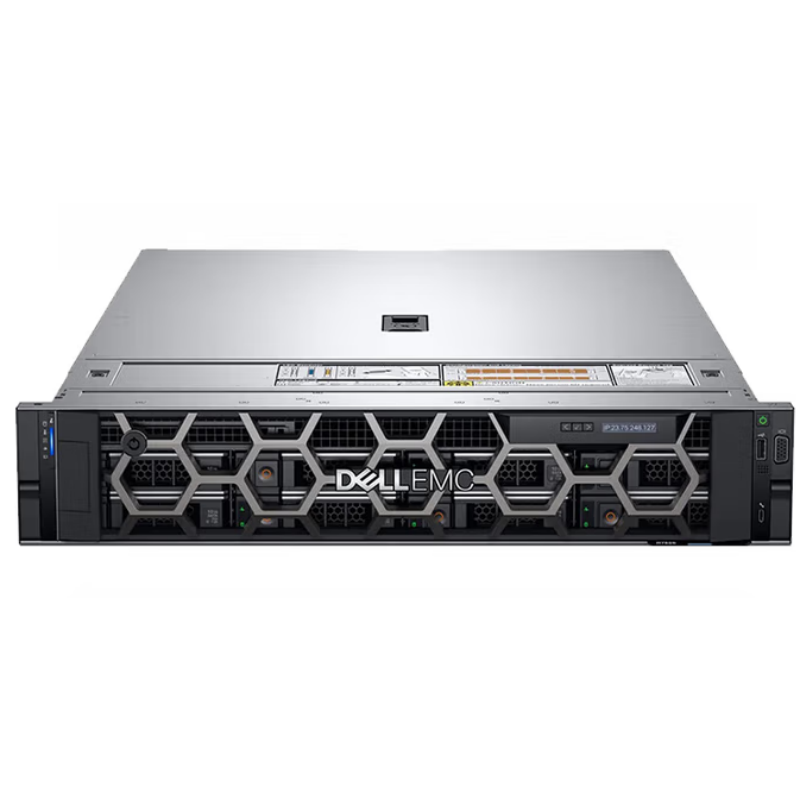
How Dell PowerEdge R660 Supports Infrastructure Modernization
Many companies still run business systems on older servers. These systems may continue to work, but they often face performance limitations, higher energy consumption, limited memory capacity, outdated storage interfaces, and weaker management capabilities. Over time, these limitations can affect business efficiency and increase maintenance pressure.
The Dell PowerEdge R660 helps enterprises modernize their server infrastructure by offering a newer platform with stronger computing capacity, DDR5 memory support, flexible storage configurations, and enterprise management features. This makes it easier for businesses to replace aging systems and prepare for future workload growth.
Infrastructure modernization is not only about improving hardware specifications. It is also about making IT systems easier to manage, easier to expand, and more suitable for new business needs. A compact server like the Dell PowerEdge R660 server allows companies to upgrade performance while keeping deployment efficient.
For enterprises planning long-term digital transformation, server modernization can support cloud migration, application consolidation, data-driven operations, and more stable business continuity. The R660 can become part of this process by serving as a reliable compute platform for modern workloads.
Storage Flexibility for Different Deployment Needs
The Dell PowerEdge R660 rack server can be configured with different storage options depending on the workload. Some companies need fast storage access for virtual machines and databases, while others need balanced storage capacity for business applications or system services.
NVMe storage is suitable for workloads that require low latency and high read/write performance. This includes databases, analytics platforms, virtualization storage, and transaction-related systems. SAS and SATA storage options can be used for more general-purpose workloads where capacity, reliability, and cost balance are important.
This storage flexibility allows IT teams to choose a configuration based on real application needs. A virtualization node may require fast SSD storage, while a business application server may use a more balanced storage setup. The ability to choose different configurations makes the Dell PowerEdge R660 server more adaptable for enterprise deployment.
For businesses that do not want to overbuild their infrastructure, this flexibility is important. They can select the right storage layout for the current workload while keeping room for future changes.
Better Fit for Dense Compute Than Large Internal Expansion
The Dell PowerEdge R660 is best understood as a server focused on dense computing. It is not designed to replace every larger 2U server. Instead, it is a better fit for environments where rack density and compute efficiency are more important than maximum internal expansion.
A larger server may offer more space for GPUs, more drive bays, or more expansion cards. However, not every workload requires that level of internal expansion. Many enterprise workloads mainly need strong CPU performance, large memory capacity, reliable storage, and efficient networking. For these scenarios, the Dell PowerEdge R660 rack server can be a more space-efficient choice.
This distinction is important for buyers. If the project requires heavy GPU acceleration or very large internal storage capacity, a larger server may be more suitable. If the goal is high-density virtualization, database nodes, cloud compute nodes, or general enterprise workloads, the Dell PowerEdge R660 can offer a better balance between compact size and useful performance.
Common Application Scenarios
The Dell PowerEdge R660 server can be used in many enterprise environments where compact deployment and stable performance are important.
Common application scenarios include:
- High-density virtualization platforms
- Private cloud compute nodes
- Database and analytics systems
- ERP and CRM business applications
- Web services and application hosting
- Software-defined infrastructure
- Financial and transaction systems
- Manufacturing IT workloads
- Data center modernization projects
- Distributed enterprise server rooms
These workloads often require reliable performance but may not need the larger physical size of a 2U server. For this reason, the Dell PowerEdge R660 rack server is a strong choice for companies that want to deploy more computing power in limited space.
What Type of Business Should Consider Dell PowerEdge R660?
The Dell PowerEdge R660 is suitable for businesses that want to improve IT infrastructure without expanding server room space too much. It is also suitable for companies that need to replace older servers with a more efficient and scalable platform.
Enterprises with virtualization clusters, database systems, private cloud environments, and business-critical applications can benefit from the R660’s compact design and strong computing foundation. It is also a good option for service providers and organizations that need repeated deployment of similar compute nodes.
For IT teams, the main value of the Dell PowerEdge R660 server is that it helps simplify infrastructure planning. It provides enterprise performance in a smaller rack footprint, making it easier to build dense, scalable, and manageable server environments.
Conclusion
The Dell PowerEdge R660 is a compact, high-density 1U rack server designed for modern enterprise workloads. Its value lies not only in processor, memory, and storage specifications, but also in how well it fits real data center challenges such as limited rack space, workload consolidation, virtualization growth, and infrastructure modernization.
For companies that need a server platform for high-density virtualization, database analytics, private cloud, and business applications, the Dell PowerEdge R660 server offers a strong balance of performance, density, and flexibility. It is a practical choice for enterprises that want to increase computing capacity while keeping data center deployment efficient and scalable.
FAQ
1. What is the Dell PowerEdge R660 mainly used for?
The Dell PowerEdge R660 is mainly used for high-density virtualization, private cloud compute nodes, database systems, analytics platforms, business applications, and data center modernization. Its compact 1U rack server design makes it suitable for enterprises that need strong performance in limited rack space.
2. Why choose Dell PowerEdge R660 instead of a 2U server?
The Dell PowerEdge R660 server is a better choice when rack density and compact deployment are more important than maximum internal expansion. A 2U server may offer more room for GPUs or large storage configurations, but the R660 is more suitable for dense compute, virtualization, database nodes, and private cloud environments.
3. Is Dell PowerEdge R660 good for virtualization?
Yes. The Dell PowerEdge R660 rack server is well suited for virtualization because it supports dual Intel Xeon processor configurations, DDR5 memory, flexible storage options, and efficient 1U deployment. These features help businesses run multiple virtual machines while improving rack space utilization.
4. Can Dell PowerEdge R660 be used for database workloads?
Yes. The Dell PowerEdge R660 can be used for database and analytics workloads. Its processor performance, DDR5 memory support, and storage flexibility make it suitable for applications that require fast query processing, stable transaction handling, and reliable data access.
Media Contact
Company Name: Hua Sheng Bo Ye (Shenzhen) Technology Co., Ltd.
Email: Send Email
Country: China
Website: https://www.hsbytechnology.com/