
What is Sodium Lauryl Ether Sulfate (SLES)?
SLES is an ethoxylated derivative of Sodium Lauryl Sulfate (SLS), chemically defined as sodium salts of sulfated ethoxylated lauryl alcohol, with the molecular formula C₁₂H₂₅(OCH₂CH₂)ₙOSO₃Na. It is typically synthesized from renewable raw materials like coconut oil or palm kernel oil through three key steps: ethoxylation, sulfation, and neutralization.
As an anionic surfactant, SLES has a dual molecular structure: a hydrophobic tail that binds to oils and dirt, and a hydrophilic head that dissolves in water. This structure enables it to reduce water surface tension, emulsify oil-water mixtures, and form micelles to encapsulate impurities—core mechanisms for its cleansing and foaming functions.
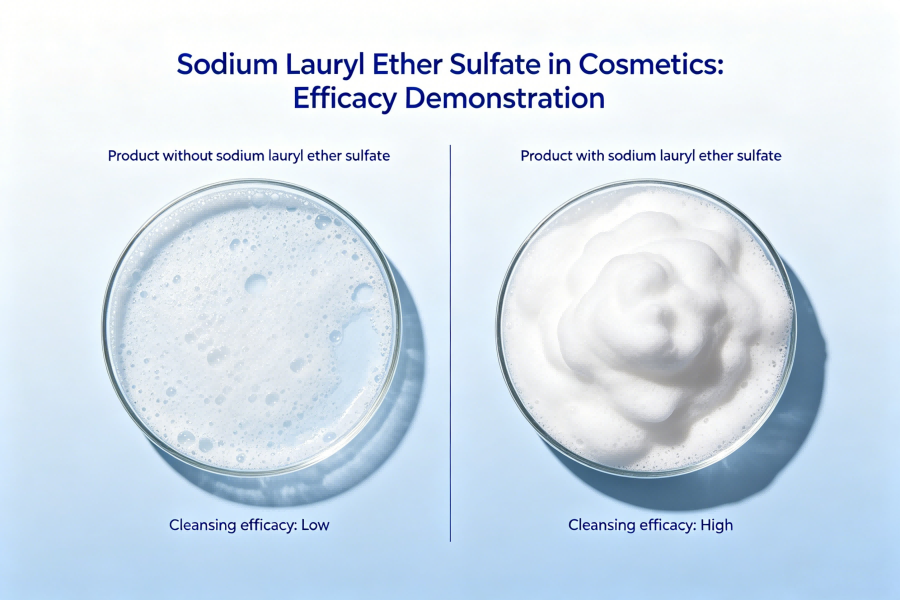
Core Advantages of SLES in skincare
- Powerful Cleansing Efficiency with Mildness
SLES delivers excellent detergency to effectively remove excess sebum, dirt, sweat, makeup residue, and environmental pollutants from the skin surface without leaving heavy residues. A 2020 study in the Journal of Cosmetic Dermatology confirmed that SLES at 1–2% concentration removes 92% of skin surface sebum within 60 seconds, outperforming many mild non-ionic surfactants in cleansing efficacy.
Compared to SLS (its non-ethoxylated counterpart), SLES is significantly milder. The ethoxylation step increases molecular weight, reducing skin penetration and minimizing the stripping of the skin’s natural lipid barrier. The Cosmetic Ingredient Review (CIR) Expert Panel’s 2010 safety assessment concluded that SLES is a non-sensitizer and only causes mild, transient irritation at high concentrations (>5%) or with prolonged exposure. For normal, oily, and combination skin, SLES balances cleansing power and mildness better than most strong surfactants.
- Exceptional Foaming Performance
Consumers often associate rich, stable foam with effective cleansing—a sensory expectation SLES excels at meeting. It produces dense, creamy, and long-lasting lather even in hard water, where many surfactants lose foaming ability. This stable foam ensures even product distribution across the skin, enhancing cleansing uniformity and user experience.
A 2018 formulation study by the International Society of Cosmetic Chemists (ISCC) found that SLES-based foams have a half-life of 8–12 minutes (vs. 3–5 minutes for SLS), improving product spreadability and sensory satisfaction. This foaming property makes it ideal for facial cleansers, body washes, and bubble baths.
- Excellent Emulsification and Formulation Compatibility
SLES acts as an effective emulsifier in skincare formulations, stabilizing oil-water mixtures in creams, lotions, and cleansing gels. It prevents phase separation, maintains product texture consistency, and ensures uniform delivery of active ingredients.
It also exhibits broad compatibility with other surfactants (e.g., cocamidopropyl Betaine, glycerin), humectants, and plant extracts. Formulators often combineSLES with mild co-surfactants to further reduce irritation while preserving cleansing and foaming properties—an approach widely used in sensitive-skin formulations.
- Cost-Effectiveness and Sustainability
Derived from renewable coconut/palm kernel oil, SLES offers high performance at a low cost, enabling manufacturers to develop affordable, high-quality skincare products for mass markets. It is also readily biodegradable (90% degradation within 28 days per OECD 301B tests), reducing environmental impact compared to petroleum-based surfactants.
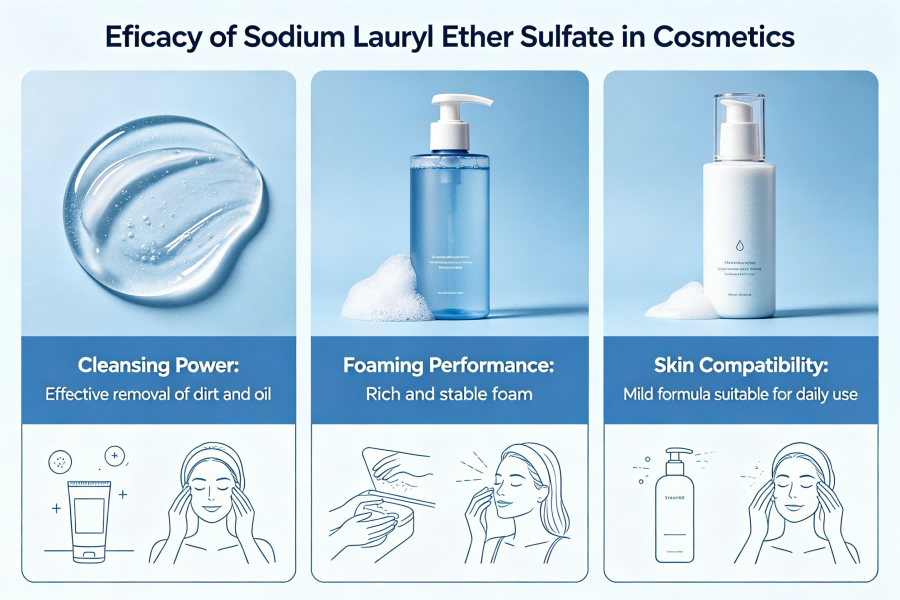
Applications of SLES in Cosmetics
SLES is a versatile ingredient in rinse-off skincare products and some leave-on formulations, with typical use concentrations ranging from 0.5% to 5%. Key applications include:
- Facial Cleansers
Oily/Acne-Prone Skin: SLES deeply cleanses pores, removes excess sebum, and reduces comedone formation. A 2021 clinical trial in the British Journal of Dermatology found that 2% SLES facial cleansers reduced acne lesions by 38% over 4 weeks by unclogging pores.
Normal/Combination Skin: Balances oil removal and moisture retention, leaving skin refreshed without tightness.
- Body Washes & Shower Gels
Provides full-body cleansing, removes sweat and pollutants, and produces luxurious foam for a spa-like experience. Often blended with shea butter or aloe vera to soothe skin and offset mild drying effects.
- Shampoos & Scalp Cleansers
Cleanses the scalp of oil, product buildup, and dandruff-causing fungi, maintaining scalp health and preventing hairline clogged pores. The CIR 2010 report notes SLES is safe for scalp use at 1–3% concentration, with no reported long-term adverse effects.
- Specialized Cleansing Products
Makeup Removers: Emulsifies and removes waterproof makeup efficiently.
Bubble Baths: Creates stable, long-lasting foam for gentle skin cleansing.
Hand Soaps: Effective against dirt and bacteria, suitable for frequent use.
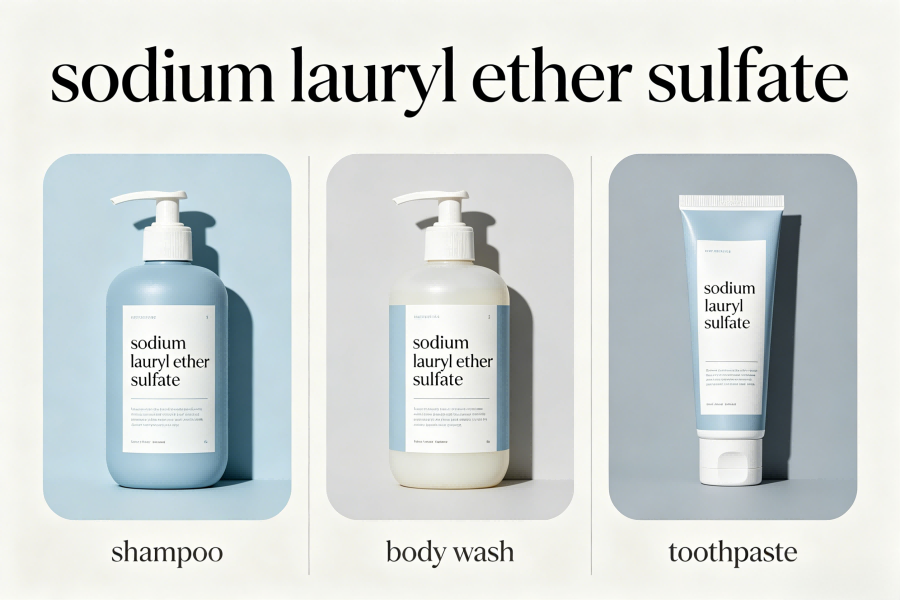
Scientific Safety Evidence & Regulatory Approval
SLES safety is supported by decades of toxicological research and global regulatory approvals:
CIR Safety Assessment (2010): SLES is safe for cosmetic use at recommended concentrations (<5% for rinse-off products). It is a mild irritant but not a sensitizer, with no evidence of carcinogenicity, mutagenicity, or reproductive toxicity.
European SCCS Opinion (2019): Approved SLES for use in cosmetics, limiting 1,4-dioxane (a manufacturing byproduct) to
FDA (US): Recognized as GRAS (Generally Recognized as Safe) for use in personal care products.
Toxicological Studies: Acute oral LD50 >5000 mg/kg (non-toxic); dermal irritation tests show only mild, reversible redness at 5% concentration; no skin sensitization in human patch tests.
Contact usFrequently Asked Questions (FAQ)Q1: Is SLES harmful to sensitive skin?
A: SLES is milder than SLS but may cause transient dryness or tightness in highly sensitive skin at high concentrations (>3%) or with overuse. Formulators mitigate this by:
Reducing SLES concentration to 0.5–1.5%
Adding humectants (glycerin, hyaluronic acid)
Blending with mild co-surfactants (cocamidopropyl betaine)
The CIR confirms properly formulated SLES products are well-tolerated by most sensitive skin types.
Q2: Does SLES cause cancer?
A: No scientific evidence links SLES to cancer. The myth stems from trace 1,4-dioxane (a possible carcinogen) formed during ethoxylation. However:
Modern manufacturing uses vacuum/steam stripping to reduce 1,4-dioxane to
Regulatory bodies (CIR, SCCS, FDA) confirm purified SLES is non-carcinogenic.
Q3: Is SLES environmentally friendly?
A: SLES is readily biodegradable (90% in 28 days) and derived from renewable coconut/palm oil, making it more eco-friendly than petroleum-based surfactants. Trace 1,4-dioxane can be removed during production, minimizing environmental impact.
Q4: Can SLES strip skin of natural moisture?
A: SLES may remove some surface lipids at high concentrations, but proper formulation eliminates this risk. Studies show SLES at 1–2% concentration removes only excess sebum, preserving the skin’s lipid barrier and maintaining moisture balance when blended with humectants.
Conclusion
Sodium Lauryl Ether Sulfate (SLES) remains a cornerstone ingredient in modern skincare due to its unbeatable combination of powerful cleansing, mildness, excellent foaming, formulation versatility, cost-effectiveness, and proven safety. Backed by decades of scientific research and global regulatory approvals, it addresses core consumer needs: effective cleansing, sensory satisfaction, and skin compatibility.
When formulated responsibly (at appropriate concentrations with moisturizing and soothing ingredients), SLES delivers reliable performance for normal, oily, and combination skin types while minimizing irritation risks. As a renewable, biodegradable surfactant, it also aligns with the growing demand for sustainable skincare ingredients.
For formulators and consumers alike, SLES represents a smart, science-backed choice for high-quality, affordable cleansing products that balance efficacy, mildness, and safety.
Media Contact
Company Name: Xi’an Aoge Biotech Co., Ltd.
Email: Send Email
Country: China
Website: https://www.aogebio.com/