
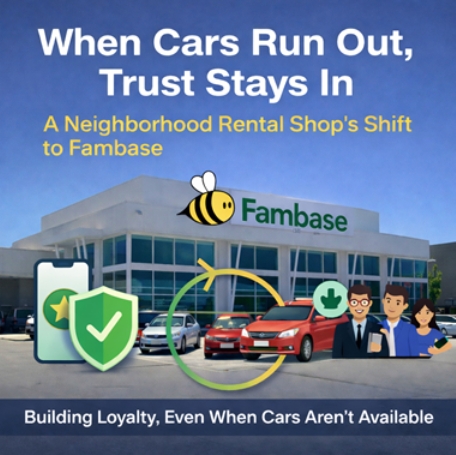
Ethan Carter has run a small car rental shop near a regional airport outside the Bay Area for more than a decade. The location is modest, yet the business has stayed steady because it serves a loyal base of repeat customers: frequent flyers who travel for work, families who need a vehicle for weekend trips, and seasonal visitors who return to the area year after year. For a long time, Ethan was comfortable with an offline rhythm. In his view, car rental was a local business defined by service radius, and in that kind of business, reputation mattered far more than online exposure.
Over the past two years, however, customers began urging him to move online. Some wanted to check vehicle conditions before arriving. Others, renting a car in the United States for the first time, felt uneasy about pickup rules, deposits, and insurance options, and they found phone calls insufficient. Long time customers also raised a practical concern: they often missed out on cars during holidays, and they hoped the shop could offer online reminders or early reservation pathways so they could plan ahead. Ethan eventually agreed. He understood that if customer expectations were changing, the shop needed to show up differently as well.
Following this advice, he tried public platforms first. He posted short videos, hosted livestreams, and built accounts that initially appeared to be gaining attention. Yet the reality fell short of what he expected. Pricing in car rental is inherently nonstandard, since the final quote depends on seasonality, pickup and return locations, rental length, vehicle availability, and the insurance bundle the customer chooses. On public livestreams, Ethan could not explain negotiable ranges in detail. Once prices were captured and shared, the next customer would use them to demand identical deals, questioning why different situations produced different numbers. Meanwhile, the questions in the comments rarely changed. Ethan repeated the same explanations day after day, only to watch customers continue price shopping or leave without booking. Worse still, on days when the shop was fully booked, public comment sections turned into open complaint forums.
Fambase as the Operating Core, Not Another Channel
At that point, Ethan realized that what he needed was not another stage for public attention, but rather an online space that could match the real pace and constraints of a service business. In his experience, Fambase was not simply an additional private channel. Instead, it allowed him to transform inventory uncertainty into something that could accumulate trust.
He started with the basics, separating customer needs through structured groups. New customers joined a dedicated onboarding group, returning customers entered a separate loyalty group, and after each transaction he created a temporary trip group. In the new customer group, he ran a ten minute pickup orientation livestream every week. Customers were not seeking entertainment. They were seeking certainty. Many confirmed bookings immediately after the session.
Returning customers received concise inventory notes, priority windows, and early access to new vehicles. When inventory was tight, Ethan explained the situation through short livestreams and offered alternatives. Customers adjusted expectations and stayed.
What Ethan Learned, and How Other Rental Shops Can Apply It
Looking back, Ethan concluded that online operations in car rental should prioritize service rather than content. New customer groups must remove uncertainty early. Groups should be organized by location. Shops should prepare a full booking playbook and generate temporary service groups per trip. Returning customer groups should remain low frequency but high value.
For Ethan, Fambase did not make the shop look busier. It made trust stay. Even when cars ran out, customers were willing to bring their next request back to him.
Media Contact
Company Name: SocialSignal Lab
Contact Person: Julian Rowe
Email: Send Email
City: San Francisco
State: California
Country: United States
Website: https://medium.com/@julianblogsite