
The global automotive industry is undergoing a seismic shift. Electrification is no longer a niche trend but the dominant force reshaping vehicle architectures, supply chains, and manufacturing philosophies. At the heart of this transformation lies an engineering paradox: electric vehicles (EVs) must be heavier to accommodate large battery packs, yet lighter to maximize range. This contradiction is resolved through aggressive lightweighting strategies, primarily relying on Advanced High-Strength Steels (AHSS), aluminum alloys, and sophisticated multi-material designs.
But there is a silent enabler working behind the scenes of every EV stamping plant and steel service center—the sheet metal straightener. Often overlooked in discussions about EV innovation, this machine has become a critical determinant of manufacturing efficiency, material yield, and ultimately, vehicle performance. This article explores the indispensable role that sheet metal straighteners play in the lightweight EV era, examining their function within integrated processing lines and their interaction with critical equipment like slitting lines and cut-to-length systems.
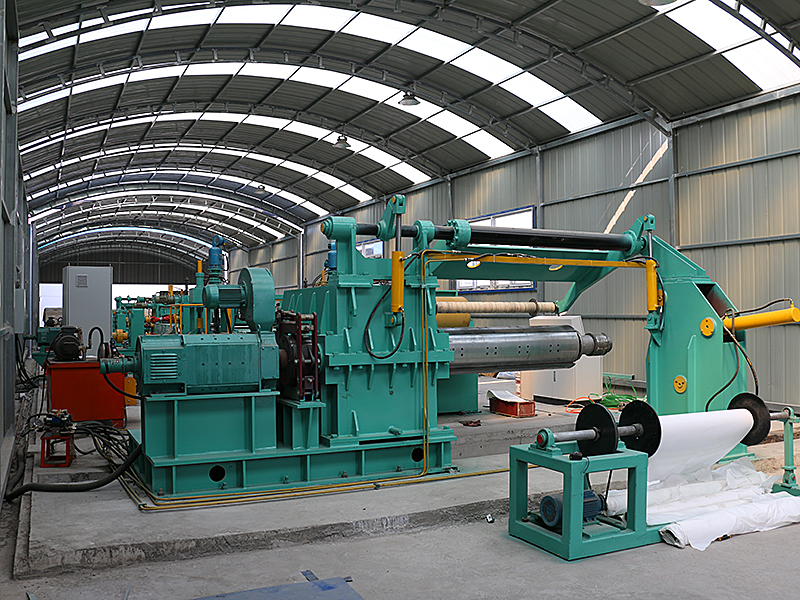
The Lightweighting Imperative and Material ChallengesThe push for lightweight EV structures goes beyond simply substituting steel with aluminum. Modern EV platforms utilize a complex mix of materials: 3rd generation AHSS for the battery enclosure and chassis, ultra-high-strength steels for the safety cage, and aluminum for closure panels. Each of these materials presents unique processing challenges that directly impact the performance requirements of a sheet metal straightener .
AHSS grades, for instance, possess much higher yield strengths than conventional mild steel. When a coil of AHSS is unwound, it retains significant “coil set”—the memory of having been wound tightly around a mandrel. A standard leveling machine lacks the corrective force to plastically deform these high-strength materials to achieve the required flatness. The sheet metal straightener used in EV supply chains must therefore be engineered with higher rigidity, larger-diameter rolls, and greater motor power to overcome these material properties. Without this capability, the material entering the stamping press would contain residual stresses that lead to springback during forming, causing dimensional inaccuracies in critical safety components.
Furthermore, the battery enclosure—often referred to as the EV “skateboard”—demands large-format blanks with near-perfect flatness. Any wave or buckle in a blank destined for a large underbody component can compromise the seal integrity of the battery pack, posing safety risks. This application has driven demand for wide-gauge sheet metal straightener solutions capable of handling large coils of aluminum or coated steels with micron-level precision.
Integration with Slitting Lines and Longitude Cutting LinesThe sheet metal straightener does not operate in isolation. Its effectiveness is maximized within integrated processing lines that prepare coils for downstream stamping operations. Two configurations are particularly critical in the EV supply chain: the slitting line and the longitude cutting line.
A slitting line (often referred to as a longitude cutting line) is designed to take a master coil and cut it longitudinally into multiple narrower strips . This process is essential for producing the specific widths required for different automotive components. However, slitting introduces edge stresses. The cutting action can create edge wave or burrs that, if left uncorrected, propagate into the stamping die. An integrated sheet metal straightener—typically positioned after the slitter head—serves as a critical stress-relief stage. It flattens each individual slit strand, ensuring that the narrow strips are free from edge wave and possess uniform flatness across their width . This is particularly crucial for EV components like motor laminations, where stacks of slit electrical steel must be perfectly flat to ensure magnetic performance and reduce energy losses.
In a longitude cutting line that combines slitting with cut-to-length capabilities, the role of the sheet metal straightener becomes even more central. This configuration, sometimes called a “hybrid line,” allows a service center to slit a master coil into multiple strands and then cut those strands into finished blanks in a single pass . The sheet metal straightener in this setup must maintain consistent flatness across varying widths and thicknesses as the line operates at high speeds. Any inconsistency at the leveling stage creates a bottleneck, reducing the overall throughput of the entire line.
The Precision Demands of EV Stamping OperationsOnce the coil has been processed through a slitting line or cut-to-length line, the resulting blanks arrive at the stamping plant. Here, the precision of the sheet metal straightener is put to its ultimate test. EV manufacturing introduces two distinct categories of stamping applications, each with unique requirements.
For structural components—such as the battery tray rails, cross members, and crash management systems—the priority is predictable deformation under load. These parts are designed using sophisticated computer-aided engineering (CAE) simulations that predict how the material will behave during a crash. If the incoming blank has residual curvature or non-uniform internal stresses from incomplete leveling, the actual forming behavior will deviate from the simulation. A sheet metal straightener ensures that the material entering the die is in a stress-neutralized state, allowing the stamping process to consistently replicate the intended safety performance.
For exterior Class-A panels—doors, hoods, and fenders—the requirement is visual perfection. EV manufacturers are under intense competitive pressure to deliver flawless surface quality. Even minor undulations in the blank, originating from coil set or slitting stresses, can manifest as visible distortions—often called “oil canning”—after painting. Modern sheet metal straightener technology addresses this with features like anti-deflection roll systems and computer-controlled contour adjustment that achieve flatness measured in microns . These machines don’t just flatten metal; they condition the surface to ensure that the final painted panel meets the aesthetic standards demanded by premium EV consumers.
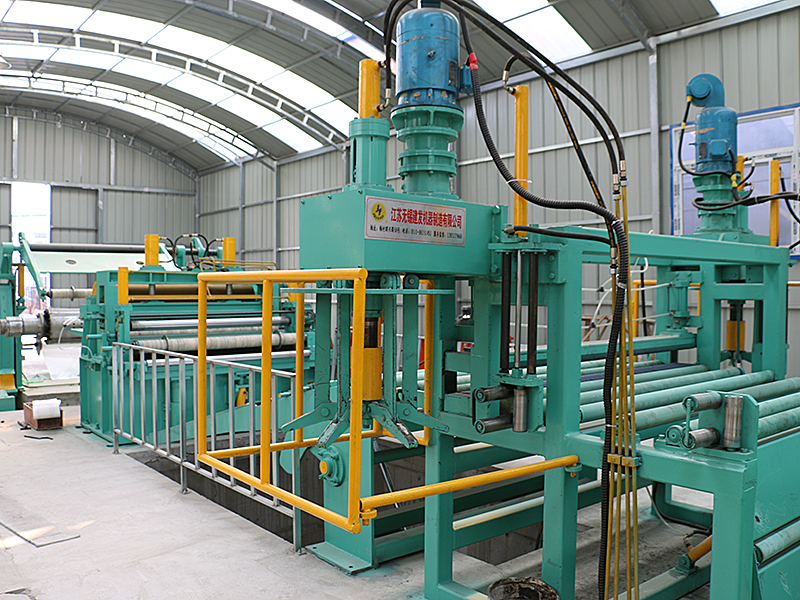
Technological Advancements in Straightening EquipmentThe sheet metal straightener market is evolving rapidly to meet the demands of the EV era. According to recent market analysis, the global market for metal sheet straightening machines is projected to grow from USD 830.17 million in 2025 to USD 1,285.47 million by 2032, representing a compound annual growth rate of 6.44% . This growth is driven largely by automotive electrification and the associated shift toward advanced materials.
Several technological trends are shaping this evolution. First, the integration of closed-loop control systems with real-time sensors enables sheet metal straightener equipment to adapt dynamically to variations in incoming coil properties. Laser-based flatness measurement systems provide continuous feedback, allowing the machine to adjust roll penetration and bending moments to achieve consistent results despite material heterogeneity .
Second, the rise of Industry 4.0 frameworks has transformed sheet metal straightener systems into data nodes within the smart factory. Modern leveling machines feature digital interfaces that feed flatness data directly into plant manufacturing execution systems (MES), enabling predictive maintenance and full process traceability . This digital integration is particularly valuable for EV manufacturers who require end-to-end quality documentation for warranty and liability purposes.
Third, the industry is seeing increased modularity and rapid changeover capabilities. As EV production ramps up, service centers and OEMs must process a wider variety of materials—from soft aluminum to ultra-high-strength steel—on the same lines. Sheet metal straightener designs now incorporate quick-change cassettes and automated roll adjustment systems that minimize downtime between material runs .
The Role of Steel Plate Straighteners in the Supply ChainWhile this discussion has focused primarily on coil processing, it is worth noting that steel plate straightener systems also play a role in EV manufacturing, particularly for thick-gauge components. Steel plate straightener equipment is designed to process discrete plates rather than continuous coils, and these machines are used in the production of heavier structural elements like suspension components and mounting brackets.
However, the dominant trend in EV manufacturing is toward high-volume, coil-fed stamping operations that maximize material utilization and throughput. This makes the sheet metal straightener—with its ability to condition coils continuously at high speeds—the more strategically significant technology. The lines that feed these stamping operations—slitting lines, longitude cutting lines, and cut-to-length lines—all depend on the sheet metal straightener as the critical quality gate that determines whether the final stamped part will meet specifications.
Conclusion: A Foundational Technology for the EV EraAs the automotive industry accelerates toward an electric future, the humble sheet metal straightener has emerged as a foundational technology enabling lightweight vehicle architectures. Its role extends far beyond simple coil flattening; it is the essential link between raw material suppliers and the high-speed stamping lines that produce EV bodies and battery enclosures.
Whether integrated into a slitting line for motor lamination production, deployed in a longitude cutting line for multi-blank processing, or operating as a standalone steel plate straightener for thick-gauge components, this equipment ensures that advanced materials like AHSS and aluminum alloys arrive at the stamping press in a state of predictable flatness and stress neutrality. The precision achieved by modern sheet metal straightener technology directly translates into higher yields, lower scrap rates, and—most importantly—the ability to manufacture lightweight EV structures that meet exacting safety and aesthetic standards.
As material science continues to evolve and EV platforms become increasingly sophisticated, the demand for more capable, intelligent, and robust sheet metal straightener solutions will only intensify. This is not a cyclical trend but a structural shift, driven by the fundamental requirements of electrification and lightweighting. The sheet metal straightener, once considered a commodity piece of equipment, has become a strategic asset in the global race to manufacture the next generation of electric vehicles.
Media Contact
Company Name: Wuxi Jianfa Machine-building Co., Ltd
Email: Send Email
Country: China
Website: https://www.wxjianfa.com/