
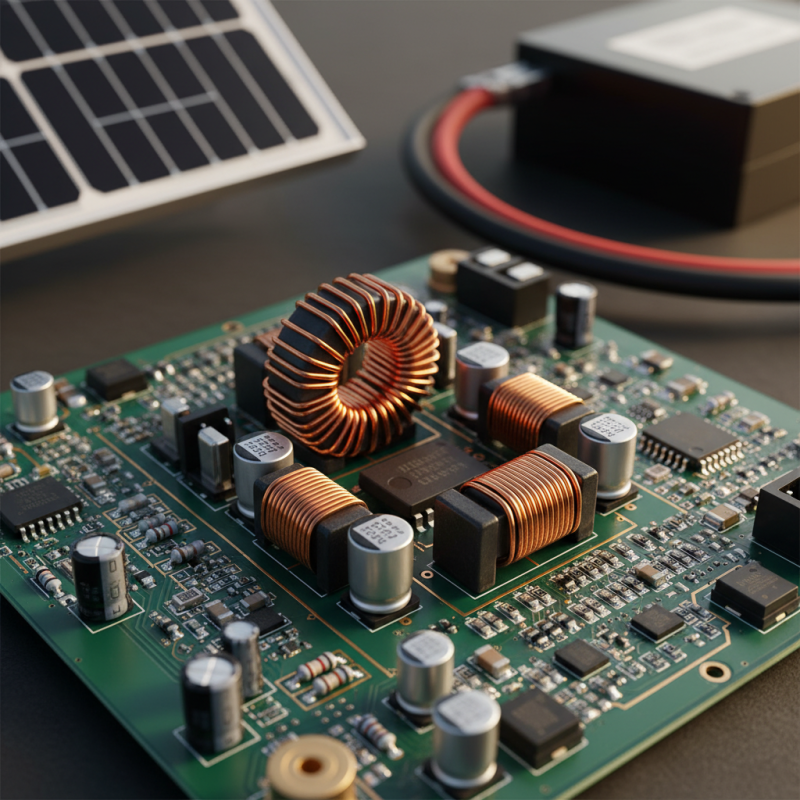
You know, DC-DC Converters really play a huge role in today’s electronics. They’re the go-to tech for turning one DC voltage into another—pretty much a must-have, especially in gadgets powered by batteries or when working with renewable energy setups. There’s even a report from MarketsandMarkets that predicts the global market for these converters could hit around $10.36 billion by 2026. That’s mainly because everyone’s after smarter, more efficient power management, especially in portable devices.Now, how do these converters actually work? It’s pretty simple but super clever—they tweak voltage levels to fit exactly what each device needs. This flexibility helps gadgets run smoother and last longer on their batteries. That said, good quality converters aren’t exactly cheap. Companies like Texas Instruments and Analog Devices are constantly pushing the envelope, coming out with more reliable and efficient options.But let’s be real—not all converters are created equal. Choosing the right one isn’t always straightforward. Manufacturers need to pick models that truly match their specific use cases. Users often run into issues like efficiency drops or overheating problems, so having a good understanding of how these converters work can really make a difference. All in all, selecting the perfect Voltage Converter can be a bit tricky, but it’s worth taking the time to get it right—after all, it impacts your device’s performance and longevity.If you want to dive deeper, check out this Voltage Converter for more info.
A Comprehensive Overview
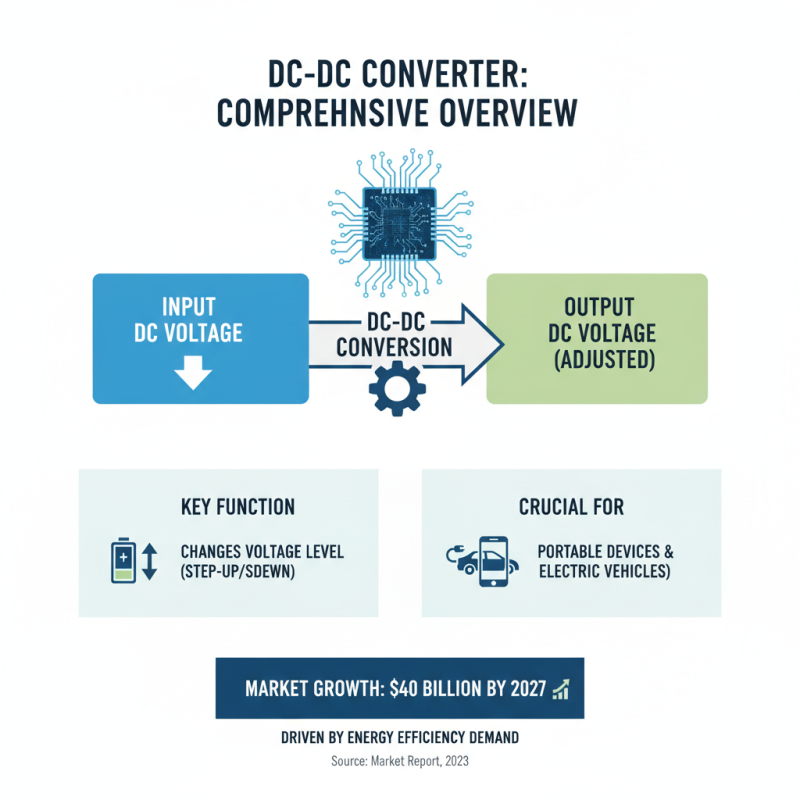
DC-DC converters are essential components in modern electronics. They convert direct current (DC) from one voltage level to another. This process is crucial in applications like portable devices and electric vehicles, where efficient power management is vital. According to a recent market report, the global DC-DC converter market is projected to reach $40 billion by 2027. This growth reflects the increasing demand for energy-efficient power solutions.A typical DC-DC converter operates through methods like buck or boost conversion. Buck converters lower voltage, while boost converters increase it. Each type has its own applications across industries. However, efficiency can vary greatly. Some converters reach about 95% efficiency, while others may fall short. It’s important to choose the right type based on specific needs.Tip: When selecting a DC-DC converter, consider your load requirements and efficiency ratings. Even slight variations in efficiency can affect overall power consumption. This is particularly crucial for applications where heat dissipation may become an issue. An effective converter minimizes energy loss while maximally delivering power.Tip: Regularly monitor the performance of your DC-DC converters. Components can degrade over time, impacting efficiency. Keeping an eye on output stability and thermals is essential for optimal performance.
Types of DC-DC Converters: Buck, Boost, and Buck-Boost Explained
DC-DC converters are essential in many electronic applications. They adjust the voltage levels in direct current (DC) systems. Understanding the types of converters helps in selecting the right solution for your project.Buck converters, for instance, step down voltage. They efficiently reduce higher voltages to lower levels. This is crucial for battery-powered devices. Buck converters can deliver stable output, increasing battery life. However, they have limitations. When the input voltage is too low, they cannot function effectively.Boost converters do the opposite. They increase voltage, allowing devices to operate with lower power sources. This function is vital for solar panels and LED drivers. Yet, boost converters can introduce noise and reduce efficiency at times. The buck-boost converter combines both features. It can either increase or decrease the voltage. This versatility makes it a valuable choice, but it also complicates design considerations. The choice of a converter depends on the specific needs and constraints of the application. Understanding these subtleties can significantly enhance your project’s performance.
Key Components of DC-DC Converters: Understanding the Circuitry
DC-DC converters are essential in modern electronics. They convert a source of direct current (DC) from one voltage level to another. Understanding the key components of these converters can enhance their application in various devices.The primary components include inductors, capacitors, and switches. Inductors store energy when current flows and release it when the current decreases. Capacitors filter voltage ripples and provide stable output. Switches control the energy flow, determining the efficiency of the converter. Each component plays a critical role, impacting reliability and performance.Tips: Always verify the ratings of your components. Mismatched specifications can lead to overheating or failure. Testing your circuit can prevent unexpected issues. Consider monitoring the temperature during operation. This practice ensures components remain within safe limits.Understanding the circuitry involves some trial and error. Many beginners face challenges with layouts and connections. It’s crucial to learn from mistakes. A simple misconnection can disrupt the entire circuit. By reflecting on these experiences, one can improve skills in circuit design and troubleshooting.
Working Principles: How DC-DC Converters Transform Voltage Levels
DC-DC converters are essential in various electronic applications, serving to adjust voltage levels efficiently. Their working principles involve different configurations, such as buck, boost, and buck-boost. Each type performs distinct functions: buck converters reduce voltage, while boost converters increase it. The design relies on inductors, capacitors, and switching elements to achieve the desired transformation.The operation begins when a voltage input is applied. The converter uses a switch to control energy transfer. When the switch closes, energy builds up in the inductor. When it opens, the inductor releases the energy to the output. This process occurs rapidly, allowing for efficient voltage management. However, some factors can affect performance. Heat generation and component tolerances can lead to inefficiencies. Regular monitoring and optimization can help address these issues.While the concepts may seem straightforward, the real-world implementation often presents challenges. Issues like electromagnetic interference (EMI) can arise in practical applications. Testing different components and configurations is crucial for achieving reliability. Experimentation and adaptation are essential parts of designing effective DC-DC converters. Recognizing and addressing these imperfections can significantly improve performance.
What is a DC-DC Converter and How Does it Work?
| Parameter | Description | Typical Values |
|---|---|---|
| Input Voltage (Vin) | The voltage supplied to the converter | 3V to 30V |
| Output Voltage (Vout) | The voltage output from the converter | 1.2V to 24V |
| Efficiency | Ratio of output power to input power | 80% to 95% |
| Switching Frequency | Frequency at which the converter switches | 100 kHz to 1 MHz |
| Form Factor | Physical size and shape of the converter | DIP, SMT, or Custom |
| Load Regulation | Ability to maintain output voltage under varying load | ±1% to ±5% |
| Temperature Range | Operational temperature range of the converter | -40°C to +85°C |
Efficiency Metrics: Analyzing Performance and Losses in Conversion
Efficiency is a critical aspect of any Dc-Dc Converter. Understanding how power is lost during the conversion process is essential for optimizing performance. Typically, losses stem from switching events and conduction resistance. These inefficiencies can significantly impact overall system reliability and longevity.Real-world applications show that not all converters perform equally. Some may yield efficiency rates of 90% or higher, while others struggle to surpass 75%. This discrepancy often results from design choices, materials, and operating conditions. For example, ambient temperature can influence performance metrics, leading to unexpected heat dissipation.Analyzing efficiency metrics requires careful measurement and experimentation. Engineers often rely on data gathered under various load conditions to assess converter performance. This process can reveal aspects needing further optimization. However, achieving high efficiency consistently can be challenging. Design revisions may introduce new issues, perpetuating a cycle of improvement and reevaluation.
Applications of DC-DC Converters in Modern Electronics and Power Systems
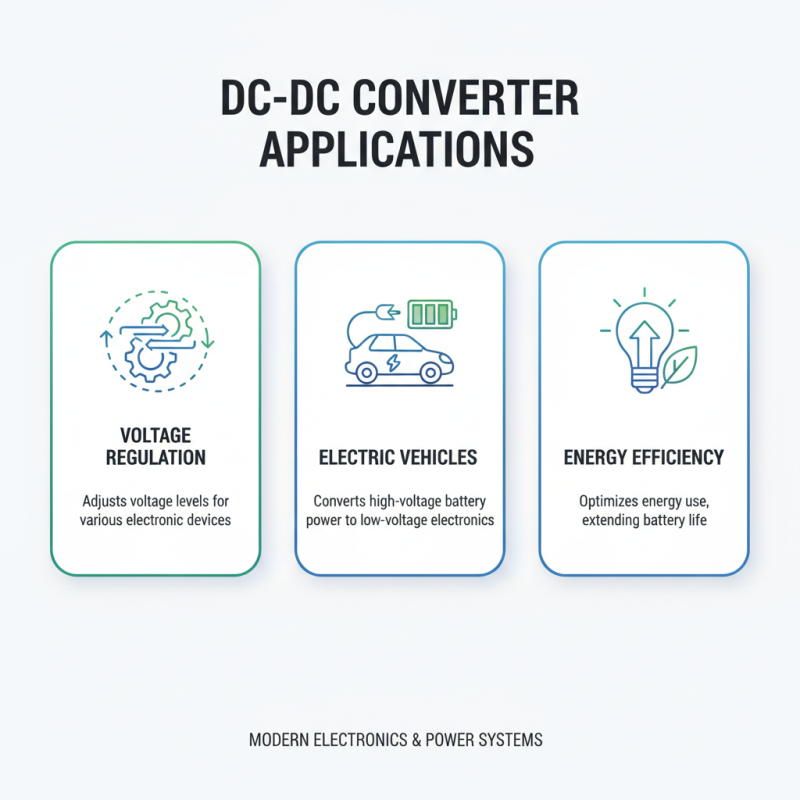
DC-DC converters play a crucial role in modern electronics. They adjust voltage levels to suit various devices. In applications like electric vehicles, they convert high-voltage battery output to power low-voltage electronics effectively. These converters ensure efficient energy use, which is essential for extending battery life.Another key area is renewable energy systems. Solar panels often generate variable output. A DC-DC converter stabilizes this output, making it usable for home appliances. This stability enhances system reliability. However, not all converters are designed equally. Efficiency can vary significantly among them. This requires careful selection based on specific needs.In power systems, DC-DC converters also support communication technologies. They power devices like sensors and wireless modules. These devices often require regulated voltage to function properly. Variability can lead to malfunction, risking data integrity. Here, the role of a Converter Transformer is vital in providing consistent performance. Ultimately, the integration of these converters influences the overall efficiency of electronic systems.
Future Trends: Innovations and Developments in DC-DC Converter Technology
The landscape of DC-DC converters is evolving rapidly. Emerging innovations focus on efficiency and compactness, addressing the growing demand in sectors like electric vehicles and renewable energy. According to a recent report by MarketsandMarkets, the global DC-DC converter market is expected to reach $35 billion by 2026, growing at a CAGR of over 10%. This trend showcases the increasing importance of voltage conversion technologies.One notable development is the rise of gallium nitride (GaN) technology. GaN-based converters offer higher efficiency and smaller sizes compared to traditional silicon devices. This shift allows manufacturers to design lightweight power systems for various applications. Additional advancements involve integrated magnetic components that further optimize space. As these innovations emerge, reliability and long-term performance remain challenges.Tips: When selecting a DC-DC converter, consider its efficiency ratings and size constraints. Understanding your power requirements can prevent over-specifying. Testing different configurations can lead to better optimization of your system. Regularly evaluate new technologies, as rapid advancements can significantly impact your choices. Innovation comes with complexity; be prepared to adapt your strategies as new solutions surface.
Innovations in DC-DC Converter Technology
This bar chart illustrates innovations in DC-DC converter technology over recent years, showcasing improvements in efficiency, size reduction, cost reduction, and power density. Each metric highlights significant trends guiding future developments in this field.
Maximizing Performance with Voltage Converters: Your Guide to Efficient and Stable Power Solutions
Voltage Converter – Efficient and Stable Power Conversion Solutions
Voltage converters are essential components in modern electronic systems, enabling efficient and stable power solutions. They operate in two distinct modes: “active” and “passive.” This flexibility allows users to tailor the performance characteristics of the converter to meet specific application needs. When selecting a voltage converter, it is crucial to consider the output signal, which can be either AC or DC, depending on the requirements of the device being powered. One of the key features of these voltage converters is the way the input coil can be connected. Users have the option to connect via PCB soldering for a permanent solution or use flexible wires for more adaptable configurations. This versatility is particularly beneficial for projects that may require modifications over time. Furthermore, the integration of the I/V converter with the Transformer into a single unit enhances both performance and reliability by ensuring fixed values for nominal input and output voltages. This streamlined design simplifies installation and reduces potential points of failure, making it an ideal choice for both novice and experienced engineers looking to maximize system performance.
Conclusion
A DC-DC converter is an essential component in modern electronics designed to efficiently convert direct current (DC) voltage levels. This article provides a comprehensive overview of DC-DC converters, detailing their various types, including buck, boost, and buck-boost converters. Each type serves distinct functions tailored to specific voltage needs in electronic devices. The report further explores the key components within these converters, delving into their circuitry and the underlying principles that govern how they transform voltage levels. Efficiency is a critical aspect of DC-DC converters, and the article analyzes performance metrics and potential losses during conversion. Additionally, it highlights the applications of DC-DC converters in contemporary electronics and power systems, while considering future trends and innovations that promise to advance their technology.
Media Contact
Company Name: Beijing TransFar Electronics Group Co., Ltd.
Email: Send Email
Country: China
Website: https://www.transfarelectronics.com/