
The phrase “best rated” appears on pet product packaging, retail websites, and flea collar marketing campaigns across the United States. For most dog owners scanning the pet care aisle or browsing online reviews, the rating shorthand functions as a trust signal — an implied endorsement that simplifies a purchase decision that would otherwise require more research than most buyers have time to conduct. According to pet industry observers and consumer advocacy researchers, however, the relationship between “best rated” claims and the actual performance of flea and tick collars is often more complicated than the phrase suggests.
As flea and tick season opens across most of the United States in 2026, understanding what “best rated” actually measures — and what it frequently does not — has become a meaningful consumer literacy issue for dog owners making seasonal pest protection decisions. The rating ecosystem that shapes flea collar purchasing patterns is influenced by factors that range from marketing spend to retail placement agreements to the specific review platform aggregating the scores, and those factors do not always correlate with the outcomes dog owners expect when they select a “top-rated” product.
The first issue consumer researchers identify is the source of the rating itself. Ratings displayed on a brand’s own website, on paid advertising placements, or on retail platforms with direct commercial relationships with the manufacturer often reflect a narrower and more favorable slice of the customer population than independently aggregated review data. Ratings on large retail platforms are more broadly sourced but can be influenced by review incentives, product seeding programs, and selective moderation practices that vary significantly across platforms.
“The rating a dog owner sees on a product page is not always the rating that reflects the product’s actual performance across a diverse customer population,” said Dr. Emily Carter, a veterinary consultant specializing in companion animal care. “For flea and tick collars specifically, the gap between marketing-driven ratings and independent real-world outcomes can be significant. Dog owners evaluating these products are better served by looking at independent review platforms, documented track records, and verified customer feedback across multiple sources rather than relying on a single rating displayed at the point of sale.”
The second consideration is what the rating is actually measuring. A flea collar with a four-and-a-half-star average rating may be earning those scores primarily on factors unrelated to flea and tick protection effectiveness — packaging, ease of application, scent, adjustability, or customer service experience. Dog owners assuming the rating reflects pest protection performance specifically may be drawing conclusions that the underlying review data does not fully support.
For dog owners evaluating rated flea collars in 2026, several considerations can help separate meaningful ratings from misleading ones:
- Independent review platforms that specifically test and evaluate flea and tick collars across consistent criteria, rather than aggregating unverified customer feedback
- Third-party veterinary publications or pet health review sites that disclose their evaluation methodology and commercial relationships
- Market tenure of the specific product, which provides context for whether a rating reflects years of accumulated real-world outcomes or primarily launch-year marketing traction
- The specific populations of dogs and environmental conditions represented in the underlying review data, which may or may not match the dog owner’s situation
- Whether negative reviews cluster around specific issues — effectiveness failures, adverse reactions, durability problems — that suggest systemic product limitations
The third issue is the comparative framework in which “best rated” claims are typically presented. A product described as the “best rated natural flea collar” may be earning that designation within a narrow category, against limited competition, or according to review criteria that do not align with what an individual dog owner actually needs. The qualifier in the phrase matters as much as the rating itself, and those qualifiers are often buried in marketing copy that most shoppers do not read carefully.
The broader consumer protection question has drawn attention as the pet product category has grown. Pet industry spending in the United States exceeded $147 billion in 2023, according to the American Pet Products Association, and the flea and tick protection segment represents a significant share of annual recurring spending across dog-owning households. The financial stakes of misleading rating claims in a category this large have prompted increased scrutiny from consumer advocacy organizations and pet health journalism outlets.
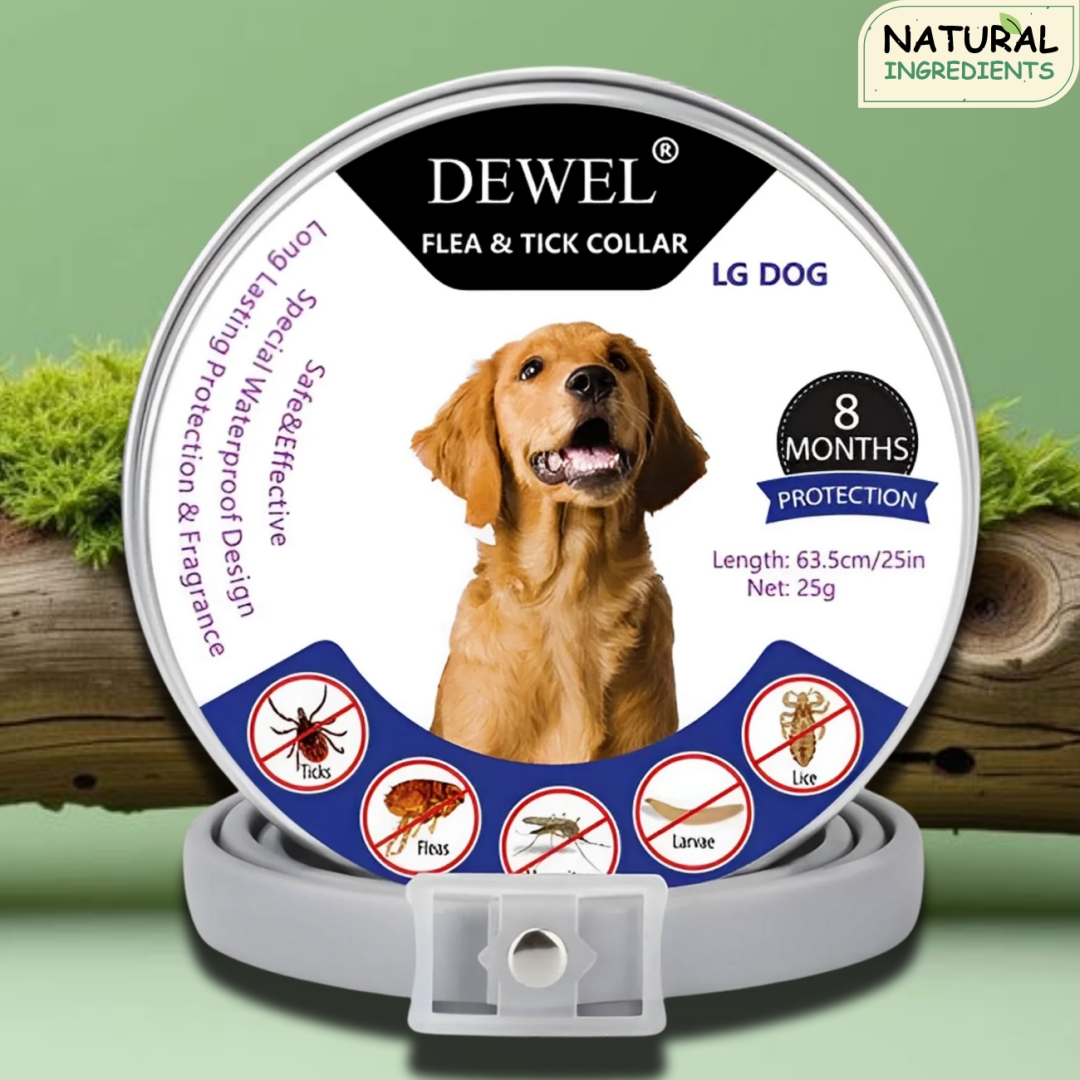
One example of a flea and tick collar with an extended track record that dog owners can evaluate independently is the DEWEL Flea & Tick Collar, available at DEWELPRO.com since May 2019. The plant-based essential oil collar has been reviewed across multiple independent pet product platforms over its nearly seven years of market presence, providing the kind of multi-source verification that a single rating displayed on a retail page cannot offer.
“The best guidance for dog owners navigating flea collar ratings is to treat any single rating as a starting point for research, not a conclusion,” Dr. Carter added. “Triangulate across independent sources. Look for products with market tenure that allows for genuine long-term outcome verification. And match the evaluation to the specific dog and household rather than assuming a five-star aggregate applies uniformly across every situation.”
As flea and tick season advances across the United States, the practical implication for dog owners is straightforward. “Best rated” is a useful signal, but only when the rating itself is genuinely independent, transparently sourced, and measured against criteria that match the dog owner’s actual needs. The products that deserve the designation are the ones that hold up across multiple independent evaluations and extended market presence — not the ones that display the highest number of stars on a single page.
Media Contact
Company Name: DEWELPRO LLC
Contact Person: Alex L. Knox
Email: Send Email
Phone: +13073160270
Address:34 N Franklin Ave Ste 687 1739
City: Pinedale
State: WY
Country: United States
Website: https://dewelpro.com/