
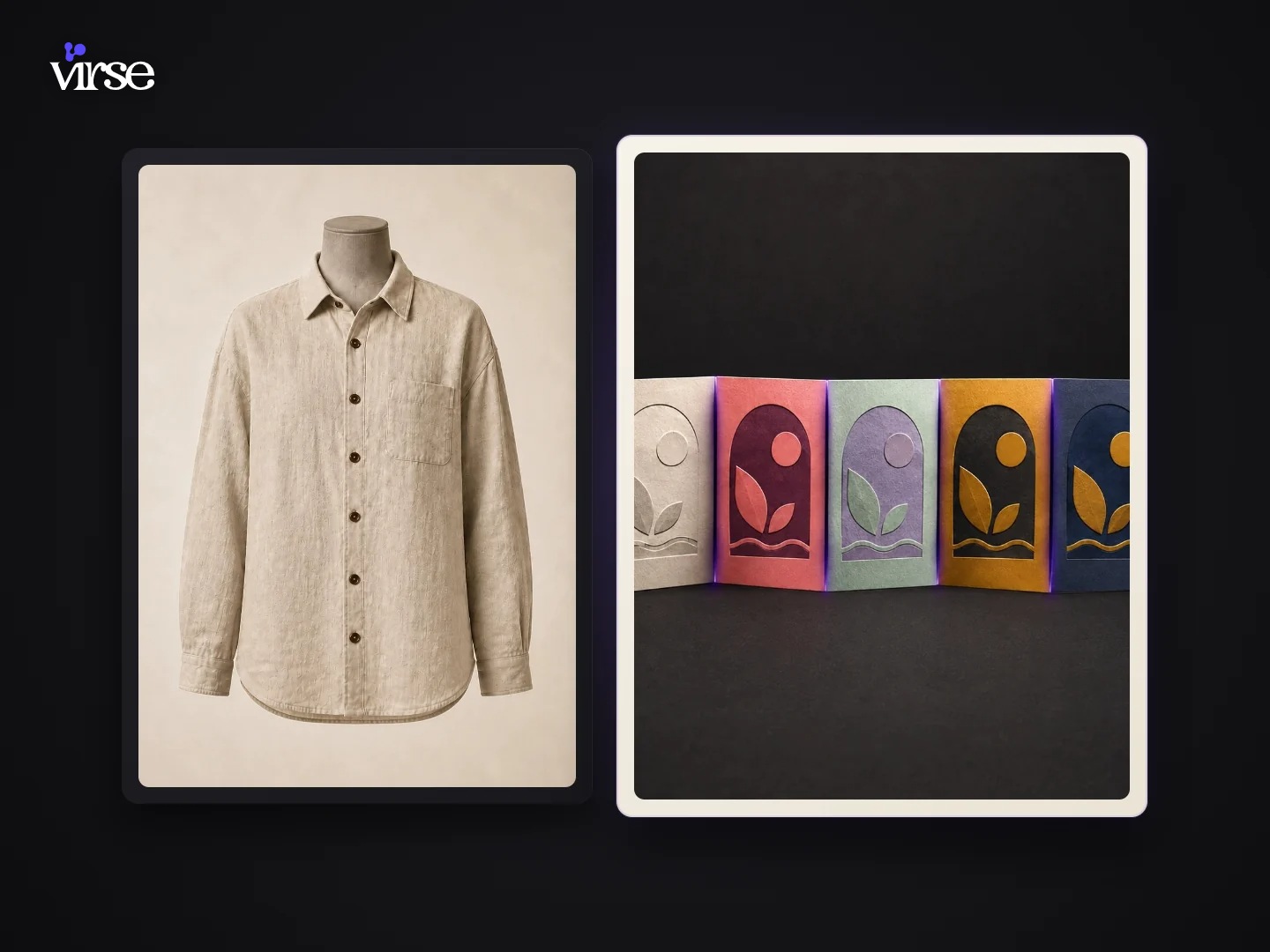
Dover, Delaware – November 09, 2026 – Virse equips textile print designers, fashion labels, and home furnishings studios with a dedicated pattern extractor inside its node-based Creative Canvas. Designed to pull clean, flat surface motifs from photographs of draped clothing, vintage fabric swatches, and interior textiles, the workflow helps creative teams evaluate print directions and colorway ideas without spending hours manually flattening wrinkled reference photos.
Every seasonal apparel or home decor collection starts with physical inspiration. Designers return from sourcing trips, archive visits, and trade shows with smartphone photos of pleated vintage silk, woven jacquard upholstery, ceramic tilework, or embroidered market textiles. Turning those real-world reference photos into usable flat artwork for a design review is notoriously tedious. Perspective distortion, fabric folds, uneven showroom lighting, and weft shadows make a raw camera crop unsuitable for testing on a new garment silhouette. Traditionally, a surface designer had to spend half a day redrawing the motif from scratch in desktop illustration software just to find out whether the creative director liked the scale on a pullover or tote bag.
Virse accelerates that early exploration stage by letting teams extract pattern from image references directly on an infinite visual canvas. Instead of treating a folded swatch photo as a static moodboard pin, the tool reads the underlying botanical, geometric, or abstract motif, compensates for fold shadows and camera angles, and reconstructs a clean flat surface pattern graphic ready for concept testing.
From draped swatch photos to flat surface pattern design concepts
When a designer uses Virse as a pattern generator from image workspace, the focus stays on creative control and motif fidelity. A print designer can upload a close-up photograph of a hand-blocked linen sample or an archival kimono sleeve and instruct the tool to isolate the primary repeat elements.
Because Virse runs its in-house aesthetic model alongside 50+ leading AI models on the same canvas, designers can branch a single extracted motif into several variations side by side. One node can preserve the exact chalky pigment palette of the original vintage swatch. A second node can test how the same floral geometry looks when simplified into a three-color screen-print palette for summer swimwear. A third node, guided by Virse Composer, can adjust motif spacing or background ground colors in plain language while keeping the original reference photo linked right beside the new iterations.
As teams build out a seasonal story, Virse’s Aesthetic Memory learns the collection’s color sensibility and line character. Designers do not have to re-explain their seasonal palette every time they test a new swatch photo; the visual context travels across the canvas from the first moodboard node to the final line-review board.
“Textile and apparel designers think in terms of fabric hand, motif scale, and how a print reads across a full rack of garments,” said a spokesperson for Virse. “By giving studios a fast way to turn a folded swatch photo into a clean flat pattern on the same canvas where they build their garment mockups, Virse cuts out hours of manual tracing during the concept phase.”
Testing extracted surface prints across knitwear, tees, and carry goods
Extracting a flat motif is only half of a textile designer’s job. A print that looks balanced inside a square swatch box can easily feel overwhelming when wrapped around a sweater chest or cropped across a backpack front pocket. Virse’s connected workspace allows teams to pipe their surface pattern design output directly into garment and accessory mockup tools on the same canvas.
After pulling a geometric or fair-isle motif from a vintage yarn sample, knitwear designers can connect the flat pattern node straight to the knit mockup tool to evaluate how the graphic sits across ribbed cuffs, crewnecks, and dropped shoulders. Streetwear and independent fashion labels testing all-over prints or chest placements can feed their extracted artwork into the t shirt design generator to compare placement scale and fabric contrast before ordering sample yardage.
Accessory departments extending a seasonal print story into carry goods can branch the same fabric pattern design node into the custom backpack design workflow, previewing how the print pairs with solid nylon gussets, webbing straps, and leather trims across multiple angles. Once a collection of patterned garments and accessories is assembled on the canvas, the studio team can run a reference color transfer pass using a master campaign photo so every mockup and studio flat lay shares the same warm or cool ambient lighting.
All approved swatch extractions, garment previews, and reusable Smart Nodes can be stored in Virse’s shared Asset Folders, giving design directors, merchandisers, and sourcing managers a single organized workspace for collection reviews.
How teams turn a reference photo into a testable pattern
Creative teams running the photo to pattern workflow follow a clean four-step loop on the canvas. They drop a photograph of a patterned garment, fabric swatch, wallpaper sample, or decorative surface onto the workspace and run the extractor to strip away fabric drape, fold shadows, and perspective tilt. Next, they connect the flat pattern node to Virse Composer or additional model nodes to test alternate background grounds, motif densities, and seasonal colorways side by side, before linking the approved graphic directly to apparel, knitwear, or bag mockup nodes.
Virse sets clear expectations regarding production boundaries. The Pattern Extractor is built for surface motif extraction, print direction exploration, and visual merchandising reviews. In English terminology, “pattern” can mean either a decorative surface print or a tailor’s sewing template; Virse extracts decorative surface graphics and does not generate graded garment cutting patterns. While the flat graphics are built for design pitches and mockups, textile mills still complete final color-separation indexing and rotary-screen repeat tiling in specialized pre-press software prior to bulk printing.
Surface print studios, fashion merchandisers, and home textile designers can access the Pattern Extractor on virse.ai, where every new workspace starts with 200 complimentary compute credits. Teams scaling seasonal line reviews can upgrade to Pro, Max, or Business plans supporting shared asset libraries and up to 50 studio seats.
About Virse
Created by AI scientists and award-winning designers with more than 100 international design honors, Virse is a human-led AI creative platform built for commercial design teams. Headquartered in Dover, Delaware, Virse integrates a node-based Creative Canvas, Aesthetic Memory, Virse Composer, and 50+ specialized AI models into one collaborative workspace. From textile motif extraction to multi-angle apparel and packaging previews, Virse keeps every reference and iteration connected on a single visual board.
Media Contact
Company Name: Virse
Contact Person: Virse Media Relations
Email: Send Email
Country: United States
Website: https://www.virse.ai/