
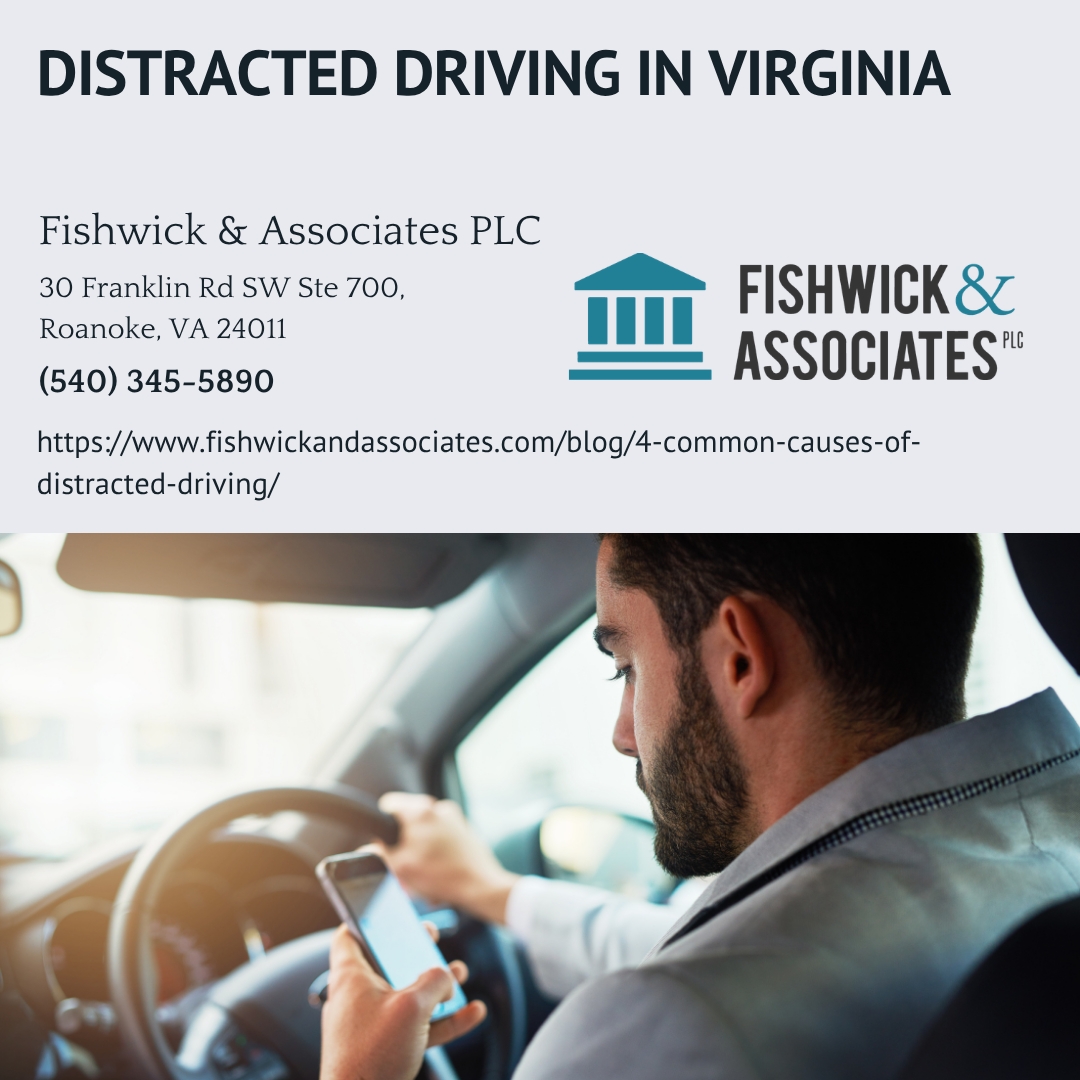
ROANOKE, VA – Distracted driving remains a leading contributor to serious crashes across the Commonwealth, with drivers diverting attention through phone use, passenger interactions, eating, and in-vehicle technology. Virginia car accident attorney John P. Fishwick Jr. of Fishwick & Associates PLC (https://www.fishwickandassociates.com/blog/4-common-causes-of-distracted-driving/) details four common causes of driver inattention and explains how Virginia law treats these cases.
According to Virginia car accident attorney John P. Fishwick Jr., distracted driving generally falls into three categories: visual, when a driver’s eyes leave the road; manual, when a driver’s hands leave the wheel; and cognitive, when a driver’s mind shifts away from driving. Some behaviors, such as texting, involve all three at once. “When a driver chooses to look at a screen instead of the road, the consequences can affect families for years,” Fishwick notes.
Virginia car accident attorney John P. Fishwick Jr. emphasizes that cell phone use behind the wheel is one of the most dangerous and common forms of distraction. Virginia Code § 46.2-818.2 prohibits a person from holding a handheld personal communications device while driving a moving motor vehicle on Virginia highways, subject to statutory exceptions such as an emergency or being lawfully parked or stopped. A violation carries a $125 fine for a first offense, $250 for a second or later offense, and a mandatory $250 fine if the violation occurs in a highway work zone.
Attorney Fishwick notes that a hands-free law violation may support a civil injury claim under a negligence per se argument. However, the claim still requires proof that the statute set the standard of care, the statute was violated, the injured person was within the protected class, the injury was the type the statute was designed to prevent, and the violation proximately caused the injury.
Passenger distractions represent a second common cause, the firm notes, particularly for young or inexperienced drivers. Conversation, arguments, sudden movement, or requests for help can pull a driver’s attention away from the road. Parents driving with young children face a separate challenge, as turning around to hand a child a toy or respond to crying can take eyes off the road, hands off the wheel, and mind off driving.
Eating and drinking behind the wheel constitute a third cause many drivers overlook. “Unwrapping food or holding a cup might not feel like distracted driving, but it can absolutely become evidence of negligence when it affects vehicle control and contributes to a crash,” Fishwick explains. The firm points out that a spilled drink, a dropped wrapper, or hot food falling into a driver’s lap can trigger sudden reactions such as jerking the wheel, slamming the brakes, or swerving into another lane.
In-vehicle technology and infotainment systems make up the fourth common cause. Entering an address into a GPS, scrolling through a playlist, or adjusting settings on a touchscreen can cause a driver to look away from the road. Even hands-free and voice-activated technology can distract a driver, with University of Utah research measuring lingering cognitive distraction for up to 27 seconds after some voice-command tasks. At 25 miles per hour, the firm notes, that delay can equal traveling the length of up to three football fields before regaining full attention.
The Roanoke firm explains that Virginia follows a strict contributory negligence standard, which can make distracted-driving claims harder to prove than claims in comparative-negligence states. Under this rule, if the injured person’s own negligence helped cause the crash, recovery may be barred. Because the stakes are high, building a strong evidence file is critical, including phone, device, or app records; witness statements; traffic or dash camera footage; and police report details.
“Prompt medical care, careful documentation, and early legal guidance can help protect a distracted-driving claim before evidence is lost or disputed,” Fishwick adds. Virginia’s statute of limitations for personal injury claims is generally two years from the date the cause of action accrues under Virginia Code § 8.01-243, with property-damage-only claims generally carrying a five-year deadline.
For those injured by an inattentive driver in Roanoke or across Southwest Virginia, contacting an experienced car accident attorney may help preserve evidence, evaluate available damages, and prepare a claim for insurance or litigation purposes.
About Fishwick & Associates PLC:
Fishwick & Associates PLC is a Roanoke-based personal injury law firm representing car accident victims throughout southwestern Virginia. Led by attorney John P. Fishwick Jr., a former United States Attorney for the Western District of Virginia, the firm handles personal injury and wrongful death matters with careful attention to fault, causation, damages, and the Commonwealth’s contributory negligence rule. For consultations, call (540) 345-5890.
Embeds:
Youtube Video: https://www.youtube.com/watch?v=pAJ-K8cR9_k
GMB: https://www.google.com/maps?cid=10040635858459830700
Email and website
Email: info@fishwickandassociates.com
Website: https://www.fishwickandassociates.com/
Media Contact
Company Name: Fishwick & Associates PLC
Contact Person: John P. Fishwick Jr.
Email: Send Email
Phone: (540) 345 5890
Address:30 Franklin Rd SW Ste 700
City: Roanoke
State: VA 24011
Country: United States
Website: https://www.fishwickandassociates.com/