
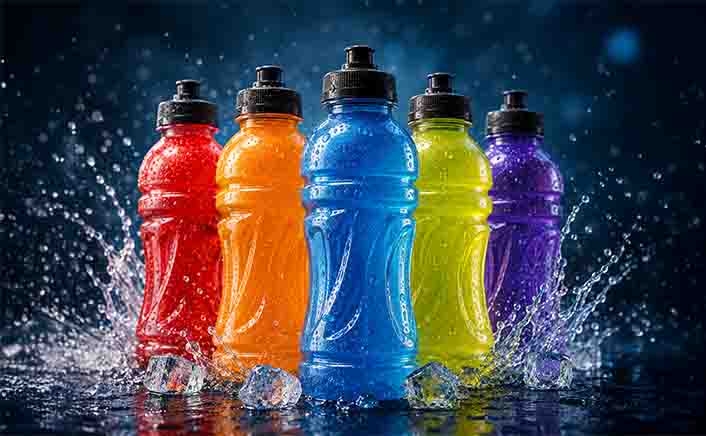
May 28, 2026 — The U.S. sports drinks market was valued at USD 12.3 billion in 2025 and is projected to reach USD 17.7 billion by 2033, growing at a compound annual growth rate of 4.7% over the forecast period. Volume is expected to expand from 4.64 billion liters in 2025 to 6.61 billion liters by 2033, reflecting a category that has moved well beyond its athletic origins into everyday lifestyle hydration.
From the Sideline to the Daily Routine
Sports drinks were once synonymous with competitive athletics — sideline coolers, locker room shelves, and halftime replenishment. That identity has broadened. According to the Physical Activity Council, more than 242 million Americans participated in at least one sport or fitness activity in 2024, and the Health & Fitness Association reported that U.S. gym memberships surpassed 72 million that same year. These are not all elite athletes. They are recreational runners, weekend cyclists, yoga practitioners, and fitness-oriented consumers who have made hydration beverages part of their daily wellness regimen.
This behavioral shift is the most consequential structural driver in the market. Demand is no longer tied exclusively to athletic exertion; it is increasingly anchored in hydration as a wellness habit, a recovery ritual, and an energy-management practice. Sports drinks now share shelf space not only with carbonated beverages but also with enhanced water, electrolyte tablets, kombucha, and functional hydration formats, all competing for the same consumer attention.
Access the Full Report Here: https://marksparksolutions.com/reports/us-sports-drinks-market
Sugar-Free Innovation Leading Category Growth
One of the clearest signals of where the market is heading is the consistent outperformance of zero-sugar variants across major retail channels. Nielsen retail data shows that sugar-free sports drinks have grown faster than traditional full-sugar formulations, driven by younger consumers, particularly Gen Z and millennials, who associate hydration with metabolic health rather than caloric replenishment.
Regulatory pressure has reinforced this trend. Scrutiny of added sugar in school food programs and other institutional settings has limited the reach of conventional high-sugar formulations among younger demographics, nudging both consumers and manufacturers toward cleaner ingredient profiles. PepsiCo has publicly noted continued growth in its zero-sugar hydration portfolio as this shift accelerates across mainstream retail.
Premium clean-label formulations represent the most dynamic growth opportunity in the category. Beverages featuring natural sweeteners, coconut water blends, potassium-rich electrolyte profiles, and vitamin fortification command higher price points, USD 2.80 to USD 4.00 per serving, compared with USD 1.75 to USD 2.50 for mainstream single-serve products, and attract consumers willing to pay for ingredient transparency.
Distribution Strength and E-Commerce Expansion
Convenience stores remain the dominant purchase channel for sports drinks, reflecting the category’s inherent impulse-purchase dynamic. Products are often bought immediately before or after physical activity, making cold-aisle placement in high-traffic retail environments a critical competitive asset. The category’s distribution network across U.S. convenience retail is among the strongest in any beverage segment, giving established brands a significant structural advantage over new entrants.
E-commerce is emerging as a meaningful parallel channel, particularly for bulk multipacks, powder-based electrolyte mixes, and subscription-based wellness hydration products. Powdered formats are gaining consumer traction for several reasons: lower per-serving cost, longer shelf life, and portability, all of which align with sustainability-conscious purchasing behavior. The powder segment also lends itself well to direct-to-consumer models, enabling smaller brands to build audiences without immediately competing for shelf space in physical retail.
Download Free Sample Report @ https://marksparksolutions.com/sample-reports?848&Download_Free_Sample
Premiumization as the Primary Long-Term Growth Lever
With sports drink household penetration already extensive across the United States, the category’s long-term volume upside is limited. New customer acquisition is not expected to drive growth at the rates seen during earlier expansion phases. Instead, manufacturers are focused on premiumization, flavor innovation, and increasing consumption frequency among existing users.
Tropical fruit, berry blends, and citrus variants continue to drive strong retail turnover, and flavor innovation remains a reliable way to sustain consumer engagement. Sports partnerships and athlete endorsements continue to anchor brand loyalty, particularly for Gatorade, which maintains institutional distribution across schools and athletic programs at a scale competitors have not matched. Brands are also investing in influencer-driven marketing to reach wellness and lifestyle consumers who may not identify as athletes but have incorporated hydration products into their daily routines.
Packaging differentiation, particularly the growth of canned formats in premium product tiers, is also emerging as a competitive differentiator that resonates with environmentally conscious consumers and supports premium shelf positioning.
Inquire Before Buying @ https://marksparksolutions.com/reports/us-sports-drinks-market
Competitive Landscape
The U.S. sports drinks market is moderately consolidated. PepsiCo maintains dominant category leadership through Gatorade’s unmatched retail distribution footprint, sports sponsorships, and institutional presence. The Coca-Cola Company continues to strengthen its position through athlete partnerships and accelerated development of zero-sugar products. BODYARMOR Sports Nutrition has carved out a significant share among younger consumers through its natural-ingredient positioning and its potassium-rich formulation. Emerging clean-label hydration brands are targeting electrolyte-centric, low-carbohydrate formulations to compete outside the traditional sports drink frame. Through 2033, competitive intensity will center on sugar-free innovation, packaging differentiation, and e-commerce channel strategy.
Media Contact
Company Name: Mark & Spark Solutions
Contact Person: Sushil
Email: Send Email
Phone: 5853741088
Address:2nd Floor, Panchsheel Park, Aundh
City: Pune
State: Not Applicable
Country: India
Website: https://marksparksolutions.com/reports/us-sports-drinks-market