
Jiaxing ,Zhejiang,China – November 10, 2026
A type 17 wood screw point reduces splitting because its needle-sharp, self-drilling tip cuts through wood fibers. The fluted notch clears sawdust as the screw drives. Outward wedge pressure stays low. Two mechanisms explain this: cutting tip action and chip clearance. Both matter in timber assembly. This post compares point types and recommends practical fits.
Key Takeaways
- Type 17 screw points cut wood fibers and clear chips, which reduces splitting during timber assembly.
- Choose Type 17 points for most wood projects, especially near board edges where splitting risk is high.
- Drive screws with steady control and consider pre-drilling for dense hardwoods to avoid splitting.
How the Type 17 Wood Screw Point Reduces Splitting
Cutting Action of the Tip
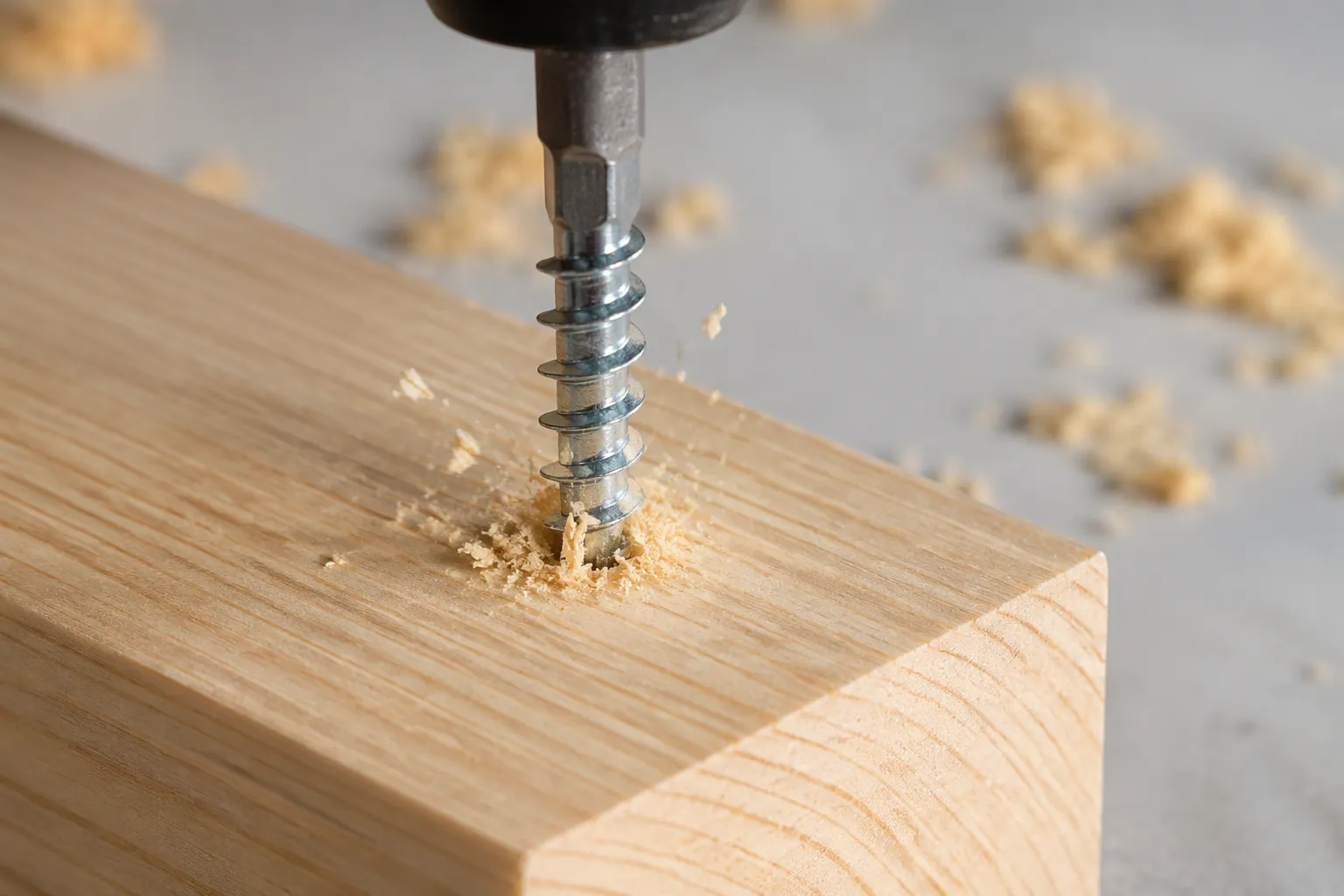
The type 17 wood screw point cuts timber fibers into smaller pieces instead of forcing them apart. This distinction matters. A point that pushes fibers aside raises the chance of a crack near board ends and edges. A standard point wedges material aside, and that wedging action builds outward pressure along the grain. A type 17 point behaves differently. Its needle-sharp tip penetrates easily, and the cut-out gash on the first few threads acts like a drill bit, cutting and removing wood fibers rather than just pushing them aside, as Woodworkers Journal describes. This creates its own pilot hole as the screw goes in, which virtually eliminates timber splitting even when fixing close to the end of a board.
The tip itself is symmetrical and needle-sharp. In softwoods such as pine and spruce, a sharp point is usually sufficient to start. In hardwoods such as oak and maple, a sharper, harder point bores a starting path and clears chips. A sharp, hardened point acts as a drill bit, penetrating material cleanly without walking or requiring excessive force. The result is a point that cuts instead of forcing wood fibers apart, and that lowers the risk of splitting from the first turn. A type 17 point screw also cuts and removes small wood chips as it advances, so the wood screw’s threads meet less resistance.
Fluted Notch and Chip Clearance
The fluted notch behind the tip cuts its own channel and collects sawdust as the wood screw is driven. This chip clearance keeps driving pressure from building up along the grain. WoodyCalc notes that the small chip-clearing slot carved into the tip cuts wood fibers and ejects shavings like a tiny drill bit, preventing splitting in softwoods and plywood without pre-drilling. That removes the need for a pilot hole in most softwoods and panel products. The flute channels debris up the shank of the screw, which helps pull the screw in while reducing outward pressure that can cause splits and bulges. Type-17 fluted points therefore reduce the chance for the wood to split, because pressure never accumulates along the grain.
Advanced Multi-Purpose Wood Screws combine a self-drilling type 17 wood screw point with serrated cutting threads. Those serrations act like a saw blade, cutting wood fibers rather than wedging them apart, and one source reports a serrated thread chipboard screw reduces driving torque by approximately 30%. A lubricated surface, achieved with synthetic wax or coating, reduces friction significantly and prevents splitting. Together, the cutting tip and chip clearance limit internal stress on the wood and keep the wood screws from pushing wood fibers apart through gradual fiber displacement.
Type 17 vs. Other Point TypesComparing Type 17 Wood Screw Points with Type 25, Gimlet, and Blunt
Each point type solves a different problem. A Type 25 point carries a longer auger-style tip. That extra length suits thicker timbers and heavier structural driving, where the point must bore deep before the threads engage. A gimlet point is a sharp brad-style tip. It starts quickly in softwoods and appears on many general-purpose screws. A blunt point fits work where a pilot hole is already drilled or where metal meets wood. All Points Fasteners notes that blunt thread-forming screws serve thermoplastics, sheet metal, and composite materials, and a blunt Type B point reduces damage in thin metal with a prepared hole.
The choice also depends on whether the screw must be self-tapping. SFS explains that self-tapping screws skip the pilot hole, and the time savings add up on larger projects. Ribbed points further lessen the risk of splitting wood. Thread coarseness matters too: hardwoods take finer threads, softwoods need wider spacing, and engineered woods such as plywood or OSB benefit from extra-aggressive threading.
Matching Point Type to the Job
Most production, construction, and deck screws rely on a type 17 point for efficient driving into wood. The type 17 wood screw point cuts its own path, so assembly moves quickly across decking, framing, and panel work. A type 17 point also helps near board edges, where splitting risk runs highest.
Driving technique supports the point design. IQS Directory advises adjusting motor RPM and applied force to control heat, and it recommends 600 to 900 RPM for stainless steel self-drilling screws. Lower force lets the point penetrate more easily. Match the wood screw to the material, and the type 17 screws handle most timber jobs. For dense hardwoods, a pilot hole remains a sensible option. A gimlet wood screw still earns its place in light softwood work, and an auger-like thread design keeps chip flow steady in thicker stock.
Application Fit and Best Practices
Suitable Timbers and Assembly Scenarios
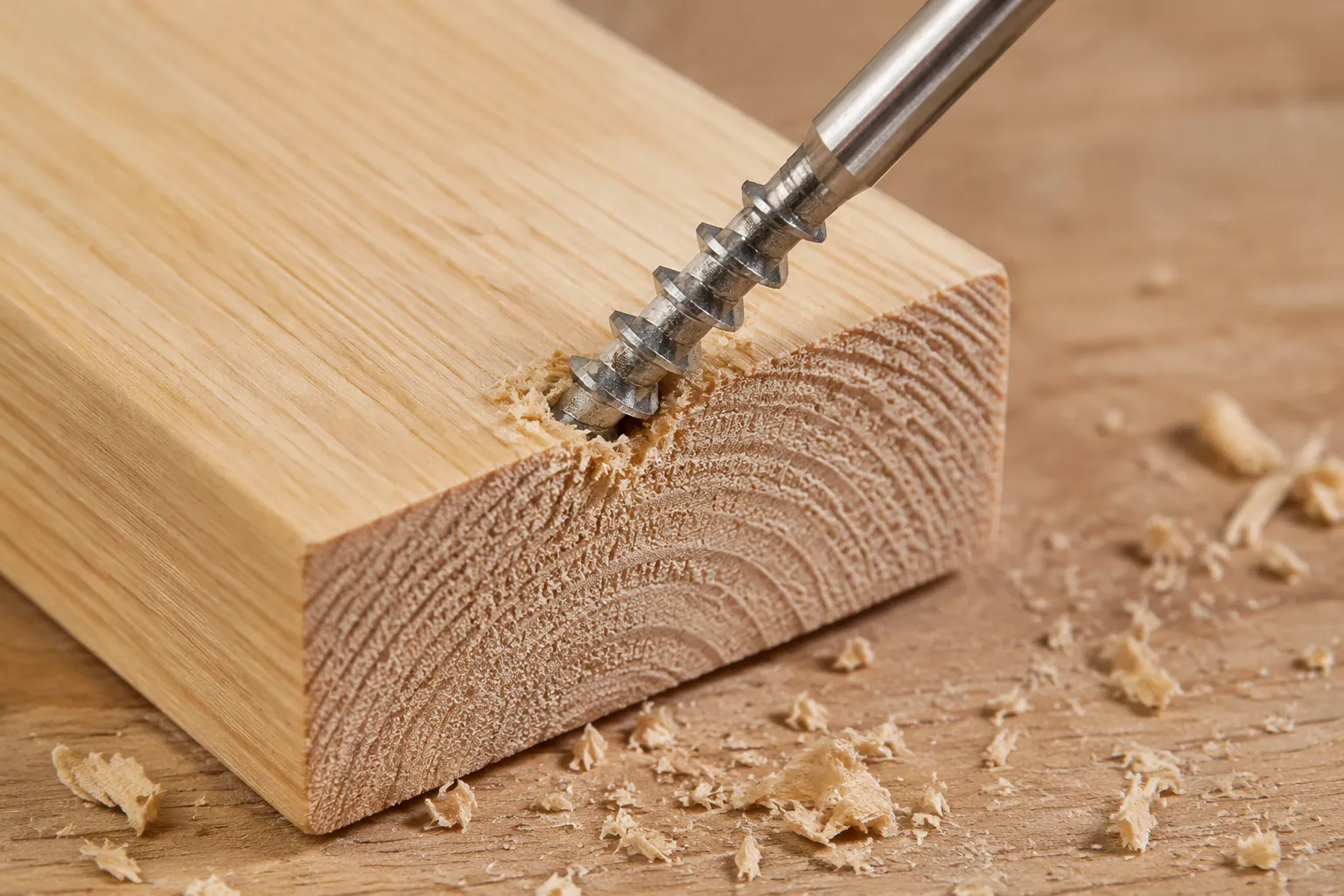
Type 17 points suit a broad spread of timber work. General carpentry and joinery, timber frames, beams, and sheet materials all benefit from a point that cuts its own path. Decking boards, fencing panels, roof battens, flooring panels, and wall studs drive faster with this tip. Cabinet, shelving, and furniture assembly also fit well. The same screw handles wood-to-wood, wood-to-metal, and light masonry connections.
Close-to-edge fastening is where these points earn their keep. Board-edge splitting is the classic failure in end-grain work, and a cutting tip lowers that danger. Production, construction, and deck screws rely on a Type 17 auger point for exactly this reason, as the evidence notes. The needle-sharp point penetrates even the hardest materials, and the self-tapping flute channels debris up the shank. That action reduces outward pressure and prevents splitting near a board end.
Use Tips, Standards, and Cost
Choose screw length so penetration depth reaches well into the receiving member. Pre-drilling is optional, yet it may help in very dense hardwoods. A pilot hole in hardwood protects the grain, and it also limits insertion torque in hardwood. Plan pre-drilling for each material type with care. Dense stock and thin stock behave differently, so pre-drilling for each material type avoids surprises. A pilot countersink improves aesthetics on delicate finishes. Pozi® or Torx® drive heads transfer torque better and reduce cam-out.
Advanced screws often self-countersink. Nibs under the head carve a conical seat as the screw drives in, which eliminates a separate countersinking step and delivers a flush finish. Anti-corrosion coatings such as zinc yellow passivation, or stainless steel options, add outdoor durability. Treat cost as value: one wood screw that cuts, clears chips, and self-countersinks covers many jobs. Drive with control, and a soft wood will split far less often, giving crews fewer splitting issues and a lower risk of splitting overall.
The type 17 wood screw point reduces splitting by cutting fibers and clearing chips, not by forcing wood apart. These points are the practical choice for decking, framing, panel work, and close-to-edge fastening. Match point type to timber and application. Drive with steady control, and timber assembly stays clean and secure.
FAQDo Type 17 points remove the need for a pilot hole?
In most softwoods and panel products, yes. The cutting tip and fluted notch clear their own path. Very dense hardwoods may still benefit from pre-drilling to protect the grain.
Are Type 17 points a good choice for fastening near a board edge?
Yes. Edge and end-grain work carries the highest splitting risk. The needle-sharp tip cuts fibers and the flute ejects chips, so outward pressure stays low near board ends.
How do I choose between Type 17, Type 25, gimlet, and blunt points?
Match the point to the material and task. Type 17 suits most wood driving, Type 25 handles thicker structural timbers, gimlet starts fast in softwoods, and blunt points fit pre-drilled or metal-to-wood work.
About us
FUERTE® is a professional fastener manufacturer established in 2004, located in Jiaxing, Zhejiang Province, with extensive experience in producing high-quality chipboard screws, drywall screws, concrete screws Twinfast Woodscrews and customized fastening solutions. The products are exported to more than 20 countries, serving more than 100 customers. Monthly output is over 1500Tons. More than 90% of the screws are in small package according to the customers requirements.
Media Contact
Company Name: Jiaxing Fuerte Machine Manufacturing Co., Ltd.
Contact Person: Media Relations
Email: Send Email
Country: China
Website: https://www.fuertescrew.com/