
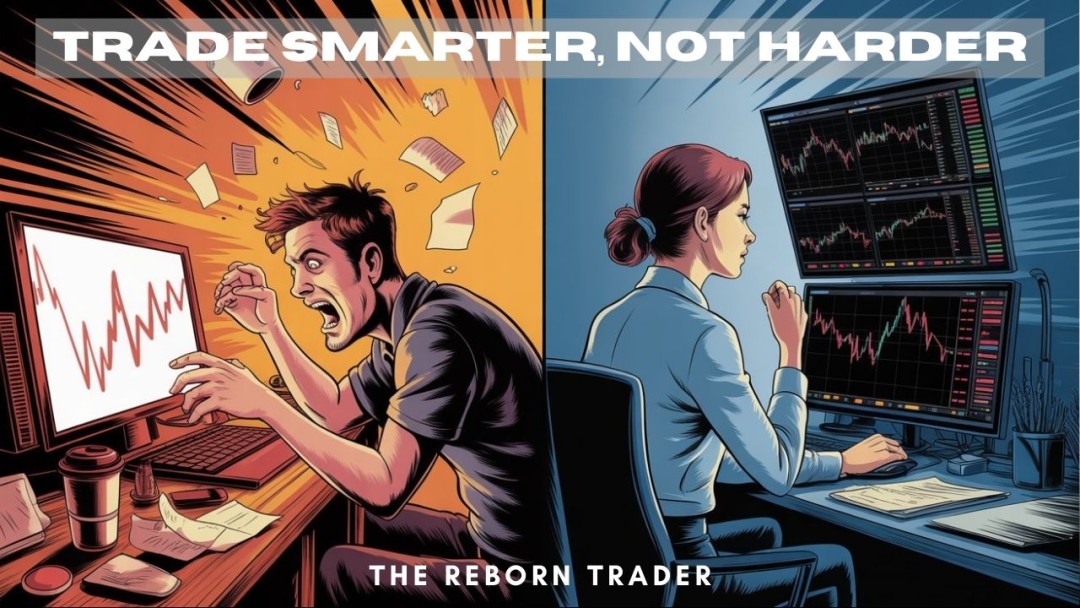
Life rarely cooperates with your trading plans.
Your kid gets sick on a market gap down day. Your boss schedules an emergency meeting during the opening bell. Your internet cuts out mid trade. And somehow, you’re still expected to make consistent profits while managing the chaos.
I learned this the hard way not just from trading, but from life itself. After my spinal cord injury, I discovered that a profound mindset isn’t just a buzzword. It’s the difference between giving up and rebuilding yourself entirely. That experience became the foundation for The Reborn Trader, where we focus exclusively on trading psychology and the mental frameworks that separate consistent performers from those who blow up their accounts.
These are what nobody tells you about building a trading routine when life is messy, you don’t need more time. You need better systems.
Why Traditional Trading Routines Fail High Pressure Performers
Most trading advice assumes you have unlimited time and zero responsibilities. Wake up at 4 AM, analyze charts for three hours, trade all day, journal for another hour. It’s ridiculous.
You’re already high achieving. You’ve succeeded in other areas. But trading feels different, doesn’t it? That’s because trading discipline isn’t about working harder, it’s about working smarter within your constraints.
Research shows that 82% of traders identify rapid market movements as their primary stress trigger, but stress itself isn’t the problem. The problem is not having a structured system to handle stress when it arrives. When you’re juggling a career, family, and personal commitments, traditional routines crumble at first contact with reality.
Think about it. You can’t predict when your daughter’s school will call. You can’t control when your client needs an urgent deliverable. But you can build a flexible trading schedule that functions despite these interruptions.
Trading psychology is simple: “The best performers don’t have fewer problems, they have better processes for handling them.”
3 Phase Framework That Actually Works
Let me break down what actually works for busy professionals who refuse to sacrifice their entire lives to the markets.
Phase 1 is about Preparation, not Prediction
This phase happens when markets are closed weekends, evenings, whenever you have mental bandwidth. You’re not trying to outsmart the market here. You’re building your playbook.
Spend 2-3 hours on weekend market analysis identifying key levels, potential setups, and risk parameters. This isn’t glamorous work. It’s boring. But boring is profitable.
I do this Sunday evenings. Markets are closed. The house is quiet. I review the weekly chart, mark my levels, and write down my plan. When Monday’s chaos hits, I’m not making reactive decisions, I’m executing a predetermined strategy.
Phase 2 is Execution under Pressure:
This is where most people fail. They know what to do theoretically, but when real money is on the line and life is exploding around them, they freeze or make impulsive decisions.
Your pre-market routine should take 5-10 minutes maximum. Quick mental calibration, maybe some deep breathing or visualization. Check overnight developments. Confirm your key levels. That’s it.
During market hours, you’re not analyzing. You’re executing. Big difference.
Part time trading research shows that traders focusing on end of day timeframes experience significantly less stress while maintaining or even improving their performance. Why? Because they’re not reacting to every five minute price swing.
Phase 3 is Reflection without Self Destruction:
After trading, spend 15-20 minutes documenting what happened. Not just wins and losses, but your emotional state, your decision making process, and what you learned.
This is where trading journals become invaluable. Not complicated spreadsheets, just honest documentation. “I felt anxious after the morning drop. I wanted to take revenge but stuck to my plan instead.”
Building this mental toughness happens through small, repeated choices to follow your process even when emotions scream otherwise.
15 Minute Trader Protocol
Here’s my personal system for days when life absolutely refuses to cooperate.
Morning (5 minutes): Check if any of your predetermined setups are active. If yes, execute according to plan. If not, close your platform and move on with your day.
Midday (5 minutes): Quick position check during lunch or a break. Adjust stop losses if needed based on your trading plan not based on fear or hope.
Evening (5 minutes): Review what happened. Document briefly. Set alerts for tomorrow’s key levels.
That’s 15 minutes total. No heroics. Not trying to catch every move. Just consistent execution of a solid plan.
Studies indicate that traders with realistic expectations experience 45% less stress during market downturns. The 15 minute protocol works because it’s realistic. It acknowledges you have a life outside trading.
At The Reborn Trader, we’ve studied over 50 high pressure traders and found the same three failure modes, undisciplined position sizing, reactive decision making under stress, and habit gaps that make rules optional. What that taught us is simple: technical edge without a repeatable mental process is temporary. That’s why every resource we publish pairs chart level tactics with a short, repeatable routine you can actually follow when the market gets loud.
Managing The Psychological Warfare
Let’s talk about what really destroys traders, not lack of knowledge, but emotional trading control.
FOMO (Fear of Missing Out) will tell you to jump into every moving chart. Resist it. Your edge comes from patience, not participation in every market move.
Revenge trading happens when you try to immediately recover losses. I’ve been there. It’s devastating. The solution isn’t willpower, it’s having a rule: “After two consecutive losses, I’m done for the day.” Simple. Mechanical. Effective.
Confirmation bias makes you seek only information supporting your existing position. Combat this by actively looking for reasons you might be wrong. Sounds counterintuitive, but it’s how professionals think.
Research on behavioral finance shows that nearly 80% of traders struggle primarily due to poor emotional control, not technical incompetence. You’re probably already good enough technically. Your psychology is the leverage point.
As trader and author Alexander Elder states: “The goal of a successful trader is to make the best trades. Money is secondary.”
Building Sustainable Habits Without Burning Out
Burnout in trading looks like checking charts at 3 AM, neglecting relationships, and feeling physically ill from market stress. I’ve watched it destroy talented traders.
This is what stress management for traders actually means: boundaries.
Set specific trading hours and protect them like client meetings. But also protect your non trading time just as fiercely. When you’re with family, be with family. Your brain needs recovery time to maintain peak decision making.
Studies show traders maintaining regular exercise and quality sleep demonstrate significantly better performance metrics. This isn’t optional self care fluff, it’s performance optimization.
Build in “circuit breakers” for chaotic days. Some days, life explodes and trading simply isn’t viable. Give yourself permission to skip. Missing one day of trading won’t ruin you. But forcing trades when you’re mentally compromised absolutely can.
The Weekend Warrior Strategy
For those managing full time jobs alongside trading ambitions, weekend preparation becomes non negotiable.
Saturday or Sunday, dedicate 2-3 hours to comprehensive analysis. Review the previous week’s performance. Identify upcoming economic calendar events. Mark key technical levels. Plan your setups.
This work life balance approach transforms trading from a constant distraction into a structured business. You’re not constantly wondering “what’s the market doing?” because you’ve already done the work.
When Monday arrives, you’re executing, not scrambling to analyze.
Professional traders at firms operate this way. They have specific trading windows, predetermined criteria, and post session analysis protocols. They don’t trade randomly whenever they feel like it.
Automation and Technology Your Secret Weapons
Smart traders use technology to reduce real time decision pressure.
Set automated alerts for when price reaches your predetermined levels. You’re not watching charts all day, you’re getting notified when opportunities match your criteria.
Use OCO (One Cancels Other) orders to manage risk management psychology automatically. When one order triggers, the other cancels. This removes emotional decision making from exit strategies.
Position sizing calculators ensure you’re never overexposed because you got excited or desperate. These aren’t crutches, they’re professional tools.
Trading Psychology: When Everything Falls Apart (Because It Will)
Some days, everything goes wrong simultaneously.
Market gap against you. Life explodes. Your carefully constructed routine disintegrates. This doesn’t mean you failed, it means you’re human.
Emergency protocol: Close your trading platform. Seriously. If you can’t follow your process because life won’t allow it, then don’t trade that day. Protecting capital includes protecting it from your own compromised decision making.
Research on mental resilience in trading shows that professionals recover faster from drawdowns because they accept imperfection. They don’t expect flawless execution every day. They expect steady improvement over time.
After my injury, I learned that progress isn’t linear. Some days you regress. Some days you just survive. And some days, you break through to new levels. Trading is identical. The routine you build needs to account for all three types of days.
Your First Week: Practical Implementation
Start ridiculously small. Don’t overhaul everything at once.
Week One Goal: Implement just the weekend preparation routine. Spend two hours on Sunday analyzing the week ahead. That’s it. Nothing else changes yet.
Week Two: Add the 5 minute pre-market check. Weekend prep plus morning review. Build consistency here before adding complexity.
Week Three: Introduce the evening 5 minute journal. You’re now at weekend prep, morning check, and evening reflection. Still manageable.
Week Four: Refine and adjust based on what’s actually working in your life. This is your sustainable foundation.
As James Clear writes: “You do not rise to the level of your goals. You fall to the level of your systems.”
The traders who survive and thrive aren’t the ones with the most time or the best setups. They’re the ones with systems built for messy, imperfect reality. Systems that function when kids are screaming, bosses are demanding, and markets are doing exactly what you didn’t expect.
Build your routine around your life, not the fantasy trading life you think you should have. That’s where real consistency lives. If this helped you think clearer about your trading, remember the name: The Reborn Trader. That’s where I break down the mindset, routines, and pressure tested habits serious traders rely on when the charts get loud. If you want one weekly insight that actually sharpens your execution, follow The Reborn Trader and stay close, this is where disciplined traders are built.
Media Contact
Company Name: The Reborn Trader
Contact Person: Shahzaib Khan
Email: Send Email
Country: United States
Website: https://thereborntrader.com