
Selecting the right Glass Door Fittings is crucial for modern aesthetics and functionality. Informed choices ensure lasting quality, safety, and style in contemporary spaces. The market for these fittings is robust, valued at USD 2.5 billion in 2023 and projected to reach USD 4.3 billion by 2030, demonstrating significant industry growth. Therefore, careful consideration guides decision-making for optimal results.
Key Takeaways
- Glass door fittings are important for modern buildings. They make doors look good and work well.
- Modern fittings are simple and strong. They use materials like stainless steel and aluminum.
- Different fittings help doors in different ways. Hinges help doors swing, and patch fittings hold glass panels.
- Sliding door systems save space. They let in more light and make rooms feel bigger.
- Locks keep glass doors safe. Electronic locks offer smart ways to get in.
- Seals and gaskets make doors work better. They stop drafts, noise, and water.
- Good materials and proper installation make fittings last longer. They also keep people safe.
- Clean fittings regularly. Check them often to fix small problems before they become big ones.
Understanding Essential Glass Door Fittings
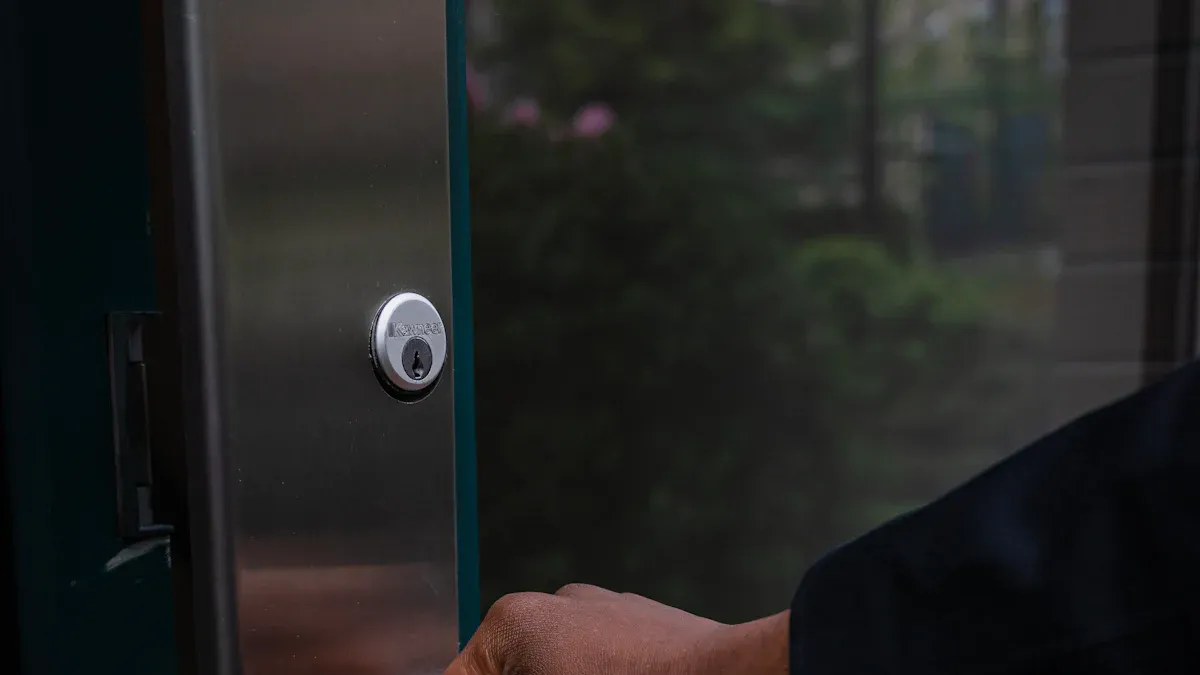
Modern architectural design demands hardware that complements its sleek lines and functional efficiency. Modern Glass Door Fittings represent a significant evolution from traditional hardware. They prioritize minimalist aesthetics and robust performance.
What Defines Modern Glass Door Fittings?Core Components for Contemporary Glass Doors
Contemporary glass doors rely on fittings that offer both structural integrity and visual discretion. These components often feature clean lines and understated profiles. They integrate seamlessly into the overall design.
Beyond Basic Hardware: Integrated Design
Modern hardware transcends mere functionality; it becomes an integral part of the design narrative. It emphasizes precision, clarity, and quiet sophistication. This contrasts sharply with the ornate nature of traditional hardware.
| Characteristic | Traditional Hardware (Vintage) | Modern Hardware (Contemporary) |
|---|---|---|
| Materials | Hand-cast metal, antique brass, crystal, antique glass | Stainless steel, aluminum, chrome, matte black finishes |
| Designs | Layered, soulful, full of stories, artisanal feel, decorative, ornate | Minimalism, efficiency, function-driven style, clean lines, ergonomic, sculptural, minimalist silhouettes, subtle curves or sharp edges |
| Finishes | Antique brass, various finishes for crystal/glass | Brushed nickel, polished chrome, matte black |
| Feel | Emphasizes artistry, timeless sophistication, tells stories of the past | Sleek, streamlined, durable, prioritizes efficiency and minimalism, precision, clarity, quiet sophistication, longevity |
| Application | Adds depth and charm, suitable for homes seeking a layered, soulful aesthetic | Modern kitchens (flat-panel cabinetry), minimalist interiors, industrial lofts, Scandinavian design, unified look (blends into cabinetry) |
| Key Focus | Artistry, historical narrative, decorative embellishment | Functionality, simplicity, visual impact, durability, seamless integration |
The Impact of Glass Door Fittings Selection
The choice of fittings significantly influences a glass door system’s overall success. Careful selection ensures both visual appeal and long-term reliability.
Elevating Modern Aesthetics
Fittings contribute directly to a space’s visual harmony. Sleek, well-chosen hardware enhances the minimalist aesthetic of modern interiors. It creates a cohesive and sophisticated look.
Ensuring Optimal Functional Performance
Functional performance is paramount for any door system. High-quality fittings ensure smooth operation and longevity. Track-based sliding doors, for example, achieve a 150,000 cycle durability rating. This guarantees consistent, reliable movement. Frame technologies also play a crucial role. uPVC frames offer a thermal break of 0.22 W/m·K and a lifespan of 25 years. Aluminum frames provide a thermal break of 0.28 W/m·K and exceed 40 years in lifespan. Frameless systems, while aesthetically minimal, typically have a 15-year lifespan. Glass engineering further enhances performance. Laminated glass with a 1.52mm PVB interlayer meets EN 12600 Class 1 impact standards. Low-E glass achieves U-values as low as 0.15 with a triple silver coating, reducing heat transfer. Tempered glass is four times stronger than annealed glass, adhering to ASTM C1048 standards. Key performance metrics include the U-Factor, which measures heat loss, and the Solar Heat Gain Coefficient (SHGC), indicating solar heat transmission. Air Leakage (AL) quantifies air infiltration, with ENERGY STAR requiring 0.30 or less for certification.
Prioritizing Safety and Durability
Safety and durability are non-negotiable aspects of glass door systems. Robust fittings provide essential security and structural integrity. Hinged variants can feature a 3-point locking system. This system surpasses ANSI/BHMA Grade 1 standards, offering superior protection. Durable materials and precise engineering ensure the fittings withstand daily use and environmental factors.
Top 10 Glass Door Fittings for Modern Architectural Designs
Modern architectural designs demand precision-engineered components that blend seamlessly with minimalist aesthetics and robust functionality. The right Glass Door Fittings are paramount for achieving these goals. This section explores the top ten categories of fittings essential for contemporary glass door systems.
1. Hinges for Glass Door Systems
Hinges form the foundational mechanism for swinging glass doors, dictating their movement and stability. Modern hinges offer advanced features for enhanced performance and aesthetic integration.
Pivot Hinges for Seamless Movement
Pivot hinges allow doors to rotate on a vertical axis, creating a clean, frameless appearance. They are often concealed, contributing to an uninterrupted visual flow. These hinges support the door’s weight from the top and bottom, distributing stress effectively.
Patch Hinges for Frameless Designs
Patch hinges attach directly to the glass panel, eliminating the need for a full frame. They are ideal for frameless glass doors, providing a sleek, minimalist look. These hinges are commonly used in shower enclosures and interior glass partitions.
Floor Springs and Overhead Closers for Controlled Operation
Floor springs and overhead closers provide controlled opening and closing actions for glass doors. They ensure smooth, safe operation, preventing doors from slamming. Many models offer adjustable closing speeds and hold-open functions, enhancing user convenience.
Selecting the appropriate hinge involves considering the door’s weight and usage frequency. High-quality hinges ensure long-term reliability.
| Feature | Waterson Glass Door Hinges |
|---|---|
| Load Capacity (3 hinges) | Up to 260 lbs |
| Load Capacity (4 hinges) | Up to 330 lbs |
| Material | 304 or 316 grade Stainless Steel |
| Durability Rating | 5-year warranty |
| Corrosion Resistance | Excellent (304) to Superior (316) |
| Closing Mechanism | Soft Closing, Adjustable Speed |
| Opening Force | Low (ADA-friendly) |
| Hold-Open Options | 90°, 110°, 120°, 135°, 180° |
| Installation | No floor cutting required |
| Compliance | UL-listed, fire-rated glass entry sets |
| Replacement | Swappable with bracket kits; retrofit-friendly |
Different hinge grades cater to various load and frequency requirements.
| Hinge Grade | Load Capacity | Frequency Category |
|---|---|---|
| Commercial Grade Heavy-Duty (LL) | Up to 1000 lbs | Low-frequency |
| Commercial Grade Heavy-Duty | Up to 200 lbs | High-frequency |
| Commercial Grade Heavy-Duty | Around 400 lbs | Medium-frequency |
| Commercial Grade Heavy-Duty | 600 lbs | Low-frequency |
| Residential Grade – Standard Duty | 200 lbs | Medium-frequency |
| Residential Grade – Standard Duty | Less than 200 lbs | Standard |
Heavy-duty hinges feature enhanced construction for superior durability.
| Feature | Standard Hinge | Heavy-Duty Hinge |
|---|---|---|
| Bearing Type | Plain or washer-based | Ball bearing or concealed bearing |
| Leaf Thickness | 2–2.5 mm | 3–5 mm |
| Pin Design | Simple fixed pin | Reinforced non-loosening pin |
| Load Distribution | Centralized stress | Evenly distributed stress zones |
| Durability | Moderate | Superior under heavy use |
| Material (Corrosion Resistance) | SUS304 (Excellent for indoor/moderate outdoor) | SUS316 (Superior for coastal/industrial/high-humidity) |
| Lubrication System | Less precise | Precision-engineered for minimal metal-to-metal contact, heat dissipation |
| Rigidity | Less rigid | Thicker plates reduce flexing, maintain alignment |
2. Patch Glass Door Fittings
Patch fittings are small, discreet components that secure glass panels without extensive framing. They are crucial for creating transparent and open environments.
Corner Patch Fittings for Structural Integrity
Corner patch fittings secure glass panels at their corners, providing essential structural integrity for frameless systems. They are vital for maintaining alignment and stability in glass partitions and doors.
Overpanel Patch Fittings for Extended Glass Panels
Overpanel patch fittings connect glass doors to fixed glass panels above them. They extend the visual height of the glass system, creating a grander entrance or partition.
Transom Patch Fittings for Overhead Support
Transom patch fittings provide support for glass panels positioned above a door opening. They integrate the door into a larger glass facade, ensuring stability and a cohesive design.
Patch fittings offer significant design benefits for modern spaces.
- Applications: Shower enclosures, glass doors, partitions, commercial spaces, residential projects.
- Design Benefits:
- Versatility: They integrate seamlessly into different environments, adapting to various designs and configurations.
- Enhanced Safety and Security: Robust materials and secure holding of glass panels increase stability and reduce the risk of movement.
- Ease of Installation and Maintenance: Installation involves minimal disruption, and the process is quick and efficient, reducing labor costs. Cleaning is straightforward.
- Aesthetic Appeal: Their minimalist design creates a sleek and contemporary look. They are unobtrusive, allowing the beauty of glass to shine through. This seamless integration with surrounding architecture creates an open and airy environment.
Material selection for patch fittings impacts their performance and aesthetic.
| Material Type | Pros | Cons |
|---|---|---|
| Stainless Steel | – High strength and durability.- Excellent corrosion resistance.- Modern and sleek appearance.- Suitable for high-traffic areas and various environments. | – Higher cost compared to other materials.- Can be heavy, requiring robust support structures. |
| Aluminum | – Lightweight.- Corrosion-resistant.- Cost-effective.- Versatile in design and finishes. | – Less strong than stainless steel, not suitable for heavy-duty applications.- May dent or scratch more easily. |
| Brass | – Classic and elegant appearance.- Good corrosion resistance.- Durable.- Can be polished to a high shine or given an antique finish. | – Higher cost than aluminum.- Requires regular maintenance to prevent tarnishing.- Not as strong as stainless steel. |
| Zinc Alloy | – Cost-effective.- Easy to cast into complex shapes.- Good strength for light to medium applications. | – Lower corrosion resistance than stainless steel or aluminum.- Not suitable for heavy-duty or outdoor use.- Finishes may not be as durable. |
| Plastic/Nylon | – Very lightweight.- Non-corrosive.- Inexpensive.- Suitable for very light-duty or temporary applications. | – Low strength and durability.- Limited aesthetic appeal.- Not suitable for structural or high-traffic applications. |
| Chrome Plated | – Aesthetically pleasing, shiny finish.- Enhanced corrosion resistance over the base metal.- Can be applied to various base metals (brass, Zinc Alloy). | – Durability of the plating can vary.- Prone to chipping or scratching if not properly maintained.- Cost depends on the base metal. |
| Satin Anodized | – Durable and corrosion-resistant finish (for aluminum).- Matte, elegant appearance.- Resistant to fingerprints and smudges. | – Limited to aluminum as a base material.- Can be more expensive than standard aluminum finishes. |
| Powder Coated | – Wide range of colors and finishes.- Durable and chip-resistant.- Good corrosion protection.- Can be applied to various metals. | – Can be more expensive than some other finishes.- If chipped, the underlying metal can be exposed to corrosion. |
| Oil Rubbed Bronze | – Unique, antique, and rustic appearance.- Durable finish.- Hides fingerprints and water spots well. | – Limited color options.- Can be more expensive.- Finish may wear over time, revealing the base metal. |
3. Sliding Glass Door Systems
Sliding glass door systems offer an elegant and space-saving solution for modern interiors and exteriors. They enhance natural light and provide seamless transitions between spaces.
Top Hung Sliding Systems for Minimalist Appeal
Top hung systems suspend the glass door from an overhead track, leaving the floor clear. This design creates a minimalist aesthetic and facilitates easy cleaning. They are ideal for interior partitions and light-duty applications.
Bottom Rolling Sliding Systems for Heavy Doors
Bottom rolling systems support the door’s weight on rollers at the bottom, making them suitable for heavier glass panels. These systems are robust and often used for large patio doors or commercial entrances.
Soft-Close Mechanisms for Enhanced User Experience
Soft-close mechanisms integrate into sliding systems, ensuring doors close gently and quietly. This feature prevents slamming, reduces wear and tear, and significantly enhances the user experience.
Sliding glass doors offer distinct advantages in modern architectural contexts.
- Space-Saving Design: Unlike hinged doors, sliding doors glide along a track, eliminating the need for swing space. This allows for more flexible furniture arrangements and makes rooms feel more open and less cluttered, especially beneficial for compact homes.
- Enhanced Natural Light: Large glass panels bring abundant natural light into the home, providing unobstructed views and reducing the need for artificial lighting during the day. This creates a bright, welcoming environment and can help lower energy bills.
Various types of sliding glass doors cater to different design needs.
- Traditional Sliding Glass Doors:
- Description: These consist of two panels, one fixed and one sliding.
- Advantages: They are space-saving, maximize light and views, generally more affordable, and available in various standard sizes (5-10 feet). They are ideal for standard openings.
- French Sliding Doors:
- Description: These combine the classic aesthetic of French doors with sliding functionality.
- Advantages: They offer a timeless design with modern space-saving benefits. They are suitable for homes desiring a blend of classic looks and contemporary convenience.
- 3 Panel Sliding Patio Doors:
- Description: These feature three panels, with either one or two panels designed to slide.
- Advantages: They are excellent for larger areas, enhancing views and access, and creating an ultimate indoor-outdoor living experience. They are best for homes with extensive patios or decks.
- Double Sliding Patio Doors:
- Description: Both panels are designed to slide, allowing access from either side.
- Advantages: They provide enhanced airflow and flexible access, making movement between indoor and outdoor spaces easier. They offer better control over ventilation and access. They are ideal for versatile door access and creating seamless indoor-outdoor transitions in wide openings.
- Sliding Glass Patio Doors with Blinds:
- Description: These doors have blinds sealed between the glass panes.
- Advantages: They offer easy control over light and privacy, a sleek and modern appearance, protection of blinds from dust and damage, and improved energy efficiency by regulating indoor temperatures. They also reduce indoor allergens. They are perfect for homeowners seeking a clean, low-maintenance, and durable option with a modern aesthetic.
4. Handles and Pulls for Glass Doors
Handles and pulls serve as crucial interface points for glass doors. They combine functionality with aesthetic appeal, significantly influencing the user experience and the door’s overall design.
Lever Handles for Ergonomic Access
Lever handles offer ergonomic access, providing an easy grip and smooth operation. Their design allows for quick and effortless opening, making them a popular choice for both residential and commercial settings. Manufacturers produce lever handles in various finishes and styles, ensuring compatibility with diverse interior designs.
Pull Handles for Bold Statements
Pull handles make bold statements, often featuring larger dimensions and distinctive designs. Architects frequently specify these handles for main entrances or grand interior doors where they wish to create a strong visual impact. They come in many forms, from sleek, minimalist bars to more elaborate, sculptural pieces, allowing for significant design flexibility.
Flush Pulls for Integrated Aesthetics
Flush pulls provide integrated aesthetics, recessing into the door panel. This design creates a seamless, minimalist look, particularly favored for sliding glass doors where protruding hardware could obstruct movement. Flush pulls offer a clean line, contributing to an uncluttered and contemporary appearance.
5. Locks and Latches for Glass Door Security
Security remains a paramount concern for any door system. Locks and latches for glass doors offer various levels of protection and convenience, tailored to specific needs.
Deadbolt Locks for Enhanced Protection
Deadbolt locks provide enhanced protection, offering superior security compared to standard spring latches. They operate independently of the handle, extending a solid metal bolt deep into the door frame. Many deadbolts feature robust construction from materials like steel and brass, which resist tampering, cutting, and shearing. Some models incorporate anti-bump technology and pick-resistant pin mechanisms, further deterring forced entry. For the highest security, architects often specify deadbolts meeting ANSI Grade 1 standards, typically for commercial use. Residential properties commonly use ANSI Grade 2 locks, offering good security.
| Feature/Rating | Description |
|---|---|
| ANSI Grade 1 | Highest security, typically for commercial use, highly resistant to tampering. |
| ANSI Grade 2 | Good security, commonly used in residential properties. |
| ANSI Grade 3 | Low security, suitable for interior doors or situations not requiring high security. |
| Steel & Brass | Highly durable, resistant to tampering, cutting, and shearing. |
| Zinc Alloy | Less durable than steel or brass, often used in lower-cost locks. |
| Nickel-Plated | Offers protection against rust and corrosion, suitable for harsh weather. |
| Anti-Bump Technology | Prevents locks from being bypassed by the bumping method. |
| Pick-Resistant Pin Mechanism | High-quality pin mechanisms make locks difficult to pick, enhancing break-in protection. |
| Weatherproof Coatings | Zinc or chrome-plated finishes to prevent rust and maintain condition in harsh environments. |
| Rubber Gaskets | Prevents moisture from entering the lock mechanism, reducing rust. |
Multi-point locking systems significantly enhance security by engaging the door into the jamb at multiple points. These systems typically include a central deadbolt, a live bolt, and at least two hook bolts, with some designs adding bolts to the top and bottom frames for extra stability. This distributes forced entry pressure across the door’s full length, making it much harder to force open compared to a single deadbolt.
Latch Locks for Everyday Convenience
Latch locks offer everyday convenience, commonly integrating with the Door Handle. They provide quick and easy access, suitable for interior doors or areas where high security is not the primary concern. Many latch locks are made from durable stainless steel or zinc alloy, ensuring reliable performance for daily use. AGlass Door Knob Lock represents a traditional manual option for wardrobes or cabinets.
Electronic Locks for Smart Access Control
Electronic locks provide smart access control, offering keyless entry through various methods. These include passwords, fingerprints, or RFID cards. They integrate seamlessly with modern smart home security systems, allowing for remote monitoring and control. Smart locks, such as the Yale Assure lock, can indicate if a door is closed, locked, or unlocked, providing peace of mind. Magnetic or Electromagnetic Locks are often utilized for automation and access control systems in commercial environments. When selecting electronic locks, consider:
- Security Levels: Assess needs (basic, intermediate, high-security) based on location, asset value, and foot traffic.
- Lock Types: Explore deadbolts, mortise, and electronic/smart locks, evaluating their security, ease of use, and compatibility.
- Durability: Opt for locks made from high-quality materials like stainless steel or reinforced alloys from reputable brands.
- Integration: Select locks compatible with existing access control systems, such as key card readers, biometric scanners, or smartphone apps.
- Key Management: Implement systems like master keys or keyless entry for controlled access.
- Emergency Exit: Prioritize safety with locks equipped with emergency exit devices and panic hardware, ensuring compliance with fire safety regulations.
6. Door Rails and Clamps for Glass Door Stability
Door rails and clamps are essential components that provide structural support and stability to glass door assemblies. They ensure the glass panels remain securely in place and function correctly.
Top and Bottom Rails for Structural Support
Top and bottom rails provide critical structural support for glass doors. They encapsulate the edges of the glass, distributing weight and reinforcing the panel against impact and torsion. These rails come in various profiles and materials, including aluminum and stainless steel, to match specific design requirements and glass thicknesses. For example, Rapid Dry Set Door Rails feature profiles like tapered and square, available in heights such as 2 ¼”, 4 ¼”, 6”, and 10 1/8”, accommodating glass thicknesses from 3/8” to ¾”. They offer effortless installation, eliminating wet glazing with precision bolt assembly systems. Wet Set Door Rails provide a strong, durable one-piece bond using high-strength compression cement for secure application.
Side Clamps for Panel Integration
Side clamps facilitate panel integration, securely attaching glass panels to adjacent walls or other glass sections. They offer a minimalist solution for creating seamless glass partitions and enclosures. Manufacturers produce side clamps in various sizes and finishes, ensuring a cohesive look with other hardware.
U-Channels for Edge Protection
U-channels provide essential edge protection for glass panels. They fit over the exposed edges of the glass, shielding them from chips and impacts while also offering a finished aesthetic. These channels are particularly useful in shower enclosures and glass partitions, where they also help to contain water. Rapid Dry Set Sidelite Rails use setting tracks and EPDM compression vinyl for precise fits and easy installation, avoiding cement. They are available in profiles and finishes that coordinate with door rail series.
When working with glass door assemblies, meticulous planning and hardware selection are crucial:
- Accurate Measurements and Planning:Meticulously measure the door opening and glass panels, including height, width, and thickness. Account for any irregularities in the opening and plan for clearance space for hardware like Glass Clips and seals.
- Selecting the Right Hardware: Choose hardware compatible with the glass type and application, considering load-bearing capacity, corrosion resistance, and design compatibility to ensure durability and performance.
- Dealing with Irregular Openings: Use shims or adjustable hardware to compensate for minor discrepancies. For significant irregularities, consult a structural professional.
For Total Vision System (TVS) Euro door patch fittings, design considerations include their slim profiles for entirely transparent panic systems and suitability for heavy all-glass passage doors. These fittings use aluminum and stainless steel fasteners for strength and accommodate most standard opening conditions, but a thorough design assessment remains crucial.
7. Shower Glass Door Fittings
Shower glass door fittings require specialized design and materials due to constant exposure to moisture and humidity. These components ensure safety, functionality, and a sleek appearance in wet environments.
Shower Hinges for Wet Environments
Shower Hinges must withstand corrosive conditions while providing reliable door movement. Manufacturers typically construct them from materials offering high resistance to rust and degradation.
| Material | Pros | Cons | Ideal For |
|---|---|---|---|
| Stainless Steel | Highly corrosion-resistant; Extremely strong and durable; Modern, sleek aesthetic | Higher price point; Limited finish variety | Luxury or high-traffic bathrooms |
| Brass (Solid/Plated) | Excellent resistance to rust and corrosion; Classic, upscale look; Accepts wide range of finishes | Softer metal—may dent or wear; Can tarnish if not protected | Elegant, decorative bathrooms |
| Aluminum | Lightweight and affordable; Corrosion-resistant (when anodized); Available in many colors | Less durable than steel or brass; Can scratch or dent more easily | Budget-conscious or semi-frameless systems |
| Zinc Alloy | Cost-effective; Can mimic higher-end materials | Less corrosion-resistant; Shorter lifespan | Temporary or low-use installations |
Corrosion resistance is crucial in wet environments. Strength and weight support are necessary for long-term stability. Finish compatibility helps integrate with the overall bathroom design. Shower enclosure glass must be safety glazing. It meets the impact requirement of the federal standard, Cat II of CPSC 16 CFR 1201. Frameless enclosures typically use monolithic tempered glass a minimum of 3/8-inch or thicker. Laminated glass may also be used if glass retention after breakage is desired, with consideration for its structural properties and durability in wet and humid conditions.
Shower Door Pulls for Functional Elegance
Shower door pulls offer both functional elegance and ease of use. They come in various designs, from simple knobs to elongated bar pulls, complementing diverse bathroom aesthetics. Designers select materials like stainless steel or brass for their durability and resistance to moisture.
Shower Door Seals for Water Containment
Shower door seals are vital for preventing water leakage and maintaining a dry bathroom floor. These seals, often made from clear vinyl or silicone, fit along the edges of the glass door. They create a barrier against water spray.
- Approved Materials: Use tempered and certified glass panels to withstand impacts and ensure user safety.
- Glass Thickness: Maintain glass thickness typically ranging from 3/8 to 1/2 inch for optimal performance.
- Anchoring Techniques: Securely attach the enclosure to the wall using high-quality anchors and stainless-steel hardware to prevent displacement and leaks. Ensure the enclosure is plumb.
- Hinges and Handles: Install hinges and handles that are tested for strength and durability.
- Sealing Methods: Employ silicone sealants approved for wet environments to prevent water damage and mold growth. Meticulously seal any gaps between the glass and the substrate and regularly inspect for wear.
Building codes also mandate specific requirements for shower enclosures.
- Safety Glazing (Tempered Glass): Tempered or approved safety glass is required. It bears a permanent certification mark (e.g., ANSI Z97.1 or CPSC 16 CFR 1201).
- Glass Thickness and Structural Integrity: Typically requires 3/8-inch (10 mm) to 1/2-inch (12 mm) thick glass for stability. Walls must support the glass panel weight.
- Edge Treatment: Glass edges must be polished, seamed, or smoothed to eliminate sharp edges.
- Structural Support and Anchorage: Hinges and brackets must securely fasten to wall studs or reinforced backing (e.g., plywood or steel plates) to handle glass weight. Manufacturer specifications for load-bearing capacity and installation must be followed.
- Door Clearance and Operation: Outward swinging doors are required for safety, with openings typically ≥22 inches.
- Referenced Standards: Compliance with ANSI Z97.1/CPSC 16 CFR 1201 safety glazing standards is mandatory.
- Local Amendments: Always verify local building codes for additional requirements.
8. Standoffs and Spiders for Glass Door Facades
Standoffs and spiders create striking, transparent glass facades by minimizing visible hardware. They offer structural support while maintaining an open aesthetic.
Glass Standoffs for Architectural Glazing
Glass standoffs are cylindrical fasteners that hold glass panels away from a mounting surface. They create a floating effect, commonly seen in railings, canopies, and interior partitions. Architects use them to achieve a clean, modern look.
Spider Fittings for Point-Fixed Systems
Spider fittings are multi-armed metal components that secure glass panels at specific points. They attach to a primary structural framework, typically steel or aluminum. Glass panels are custom-fabricated with pre-drilled holes that align precisely with the point supports. Bolts or other hardware then fasten the glass to these supports, with gaskets ensuring a weather-tight seal. This precise engineering is crucial for load distribution and structural stability.
Point Fixed Glazing for Transparent Structures
Point fixed glazing systems utilize spider fittings and standoffs to create large, uninterrupted glass surfaces. Aesthetically, these systems offer maximum transparency and minimal visual obstruction. This design maximizes daylighting within the building, supporting biophilic design goals and potentially reducing the need for artificial lighting, thereby lowering energy consumption.
9. Connectors and Brackets for Glass Door Assemblies
Connectors and brackets are essential for assembling multiple glass panels and securing them to surrounding structures. They ensure stability and seamless integration.
Glass-to-Glass Connectors for Seamless Panels
Glass-to-glass connectors join adjacent glass panels, creating continuous, frameless partitions or enclosures. These connectors come in various angles and configurations, allowing for flexible design layouts. They maintain the transparent aesthetic by minimizing visible hardware. Patch fittings secure glass panels at the base, wall, or corner without requiring bulky frames. They are suitable for store entrances, office doors, or hotel corridors, offering glass-to-wall, glass-to-glass, and floor connector options.
Glass-to-Wall Brackets for Secure Mounting
Glass-to-wall brackets securely mount glass panels to solid walls or structural elements. These brackets provide robust support, crucial for fixed glass partitions, shower screens, and balustrades. Manufacturers design them for strength and durability, often using stainless steel.
Support Bars for Added Reinforcement
Support bars provide additional reinforcement for larger or heavier glass panels. They distribute weight and enhance stability, particularly in shower enclosures or expansive glass partitions. These bars often feature sleek designs that complement the minimalist aesthetic of modern glass installations.
10. Seals and Gaskets for Glass Door Performance
Seals and gaskets are critical components for optimizing glass door performance. They enhance comfort, energy efficiency, and overall functionality. These often-overlooked fittings play a vital role in environmental control and user experience.
Weather Seals for Environmental Protection
Weather seals create a crucial barrier against external elements. They protect interiors from harsh weather conditions. High-quality weather seals exhibit strong resistance to UV radiation, extreme temperatures, and moisture. They maintain their integrity even under direct sunlight, fluctuating temperatures, and constant moisture exposure. This ensures a consistent seal over time.
Durability is a key characteristic of effective weather seals. They offer long-lasting flexibility and durability. These seals retain their shape and sealing ability despite repeated door movements and frequent use. This makes them ideal for entry points that open and close often. Silicone seals, for example, are molded, flexible profiles. They provide long-lasting sealing against air, moisture, and temperature changes. These seals are suitable for permanent or heavy-duty installations. This differs from traditional weather stripping, which often serves for quick or temporary fixes. Proper weather sealing contributes significantly to a building’s energy efficiency by preventing drafts and heat loss or gain.
Acoustic Seals for Sound Dampening
Acoustic seals are essential for creating quieter indoor environments. They effectively reduce the transmission of external noise. This provides acoustic insulation, contributing to more peaceful and productive spaces. Modern acoustic seals are engineered for high performance.
For instance, specialized products like Schall-Ex® GS H-8/12 offer impressive sound reduction. This concealed seal for new doors achieves 43dB sound reduction over a 7mm gap and 41dB over a 10mm gap. It also features smoke resistance, accessibility compliance, and a self-levelling system. Its gasket material is flame-retardant and self-extinguishing silicone. Similarly, the Schall-Ex® GS-A, a surface-mounted option, provides comparable sound reduction. It also resists smoke, sound, and fire, includes a self-levelling mechanism, and is easily adjustable. These advanced seals ensure optimal sound dampening for various applications.
Brush Seals for Dust and Draft Control
Brush seals and other gasketing solutions effectively control dust and drafts. They help maintain a cleaner and healthier indoor environment. These seals resist dust, mold, and mildew. They prevent unwanted outdoor elements like dust and pollen from entering a space. This contributes to better indoor air quality.
Various types of seals address specific dust and draft control needs:
- Bubble gaskets stop leaks and drafts. Manufacturers use them for door surround weather seals and UPVC door gaskets.
- Weather stripping and gasketing tape made from closed-cell foam provide barrier protection from moisture and air. They offer excellent resistance to weather and oxidation. These are common for UPVC door weather strips.
- UPVC sealing strips dampen vibration and noise. They also provide excellent resistance to acid, ozone, and oxidation. These strips are ideal for door and window sealing.
- Round cord gaskets resist ozone, weathering, moisture, and aging. They are perfect for outside sealing applications, sound insulation, and marine uses.
These seals require minimal maintenance. They ensure long-term performance in keeping interiors clean and comfortable.
Applications of Glass Door Fittings in Modern Design
Modern design frequently incorporates glass doors, leveraging their transparency and aesthetic appeal. The specific Glass Door Fittings chosen significantly influence both the functionality and visual impact of these installations across various environments.
Residential Spaces
Glass doors enhance residential spaces by creating open, light-filled interiors. They offer versatile solutions for dividing areas and improving aesthetics.
Shower Enclosures and Wet Rooms
Shower enclosures and wet rooms benefit greatly from glass doors. These installations create distinct bathing areas while maintaining an open feel. Fittings ensure water containment and smooth operation in high-moisture environments.
Interior Partitions and Room Dividers
Glass partitions and room dividers effectively segment residential spaces. They divide halls into zones or allocate guest corners. These doors designate hallway areas without creating narrow corridors. Homeowners can hide staircases behind partitions or create separate rooms from larger ones. They also isolate kitchen areas, preventing cooking odors from spreading. Glass doors even create winter gardens for enjoying plants from indoors. These applications divide space, act as decoration, increase light flow, and visually expand a room. They increase natural light, modernize dark interiors, and make spaces feel more open. This promotes health by boosting productivity and aligning circadian rhythms. Glass doors save energy by reducing the need for artificial lighting. They enable flexible hybrid spaces, supporting multi-functional designs. Ultimately, they transform and elevate spaces, increasing property value.
Patio and Balcony Access Doors
Patio and balcony access doors frequently feature glass. These doors provide seamless transitions between indoor and outdoor living areas. They maximize natural light and offer expansive views.
Commercial and Public Projects
Commercial and public projects utilize glass doors for their durability, aesthetic versatility, and ability to manage high traffic.
Hotel Bathrooms and Spas
Hotel bathrooms and spas often feature glass doors. These doors create luxurious and contemporary aesthetics. They also provide privacy while maintaining an open, airy feel.
Office Partitions and Entrance Systems
Office partitions and entrance systems widely use glass doors. Sliding glass doors, manually operated, maximize space utilization in conference rooms or retail settings. They provide easy access and flexible space allocation, offering a modern aesthetic. Automatic glass doors suit high-traffic areas like hospitals and airports. They offer convenience, enhance accessibility, and reduce germ spread through hands-free operation. Swinging (hinged) glass doors are versatile for restaurants and corporate offices. They provide wide design options and a classic, professional look. Revolving glass doors efficiently manage traffic flow in hotels and large office buildings. They conserve energy and enhance security, adding a sophisticated design element. Custom glass doors offer unique statements with etched patterns or logos.
Retail Storefronts and Display Cases
Retail storefronts and display cases rely on glass doors for visibility and security. Panic bar glass doors feature built-in panic hardware for quick exits. They use safety-rated tempered or laminated glass and reinforced frames. These doors are code-compliant for fire, safety, or ADA requirements. They are best for hotel emergency exits, office fire escape routes, and public hallways. Businesses must match the door to its location, checking safety and building codes. Long-term durability requires stronger frames and thicker glass for high-traffic areas. Balancing design with function ensures usability.
Key Factors for Choosing the Right Glass Door Fittings
Selecting appropriate Glass Door Fittings requires careful consideration of several critical factors. These factors ensure the chosen hardware meets aesthetic, functional, and safety requirements for any modern space.
Material Considerations for Glass Door Fittings
The material composition of glass door fittings directly impacts their durability, appearance, and suitability for specific environments.
Stainless Steel (304 vs. 316) for Durability
Stainless steelstands as a premier choice for glass door fittings due to its exceptional durability and corrosion resistance. It forms a protective shield against rust, making it highly reliable. D&D HARDWARE, for instance, utilizes solid stainless steel grades 304 and 316 for many Glass Door Hinges, highlighting their suitability for wet environments. Rust-proof hinges, including those made from stainless steel, brass, and aluminum, ensure longer durability in wet areas like bathrooms and kitchens.
| Material | Load Capacity | Approximate Tensile Strength | Recommended Applications |
|---|---|---|---|
| Stainless Steel | High | 500-850 MPa | Outdoor equipment, marine applications, heavy doors, gates, industrial applications |
| Carbon Steel | Very High | N/A | Heavy doors, gates, industrial equipment |
| Titanium | High | N/A | Aerospace, weight-sensitive high-load applications |
| Steel | N/A | 400-700 MPa | Medium to heavy doors, commercial uses |
For high cycle count applications, designers consider hardened steels with appropriate lubrication, bearing-grade bronze, self-lubricating polymers, and stainless steel with hardened pins. For moderate use applications, standard grades of stainless steel, brass, aluminum, and engineering polymers suffice. Stainless steel with PTFE coatings, self-lubricating polymers, bearing-grade materials, and ball-bearing hinge designs offer minimal friction.
Brass and Bronze for Classic Appeal
Brass and bronze offer a warm, classic appearance, providing an aesthetically pleasing option that contains no iron, making them rust-resistant. However, brass hinges exhibit lower fatigue resistance compared to steel. This makes them susceptible to stress cracks or wear at pivot points in high-traffic applications. They are also prone to deformation under repeated stress, leading to sagging or play at the pin over time. Brass hinges require regular cleaning to prevent tarnish, using specialized cleaners or natural solutions. Protective lacquers on brass hinges have limitations; they wear off, can be damaged by cleaners, may need complete reapplication, and can yellow over time, typically lasting only 1-3 years. Repairing brass hinges often proves more complex than with other materials, as brass is harder to weld and may require custom-fabricated replacement parts. Brass hinges also pose a risk of galvanic corrosion when in contact with certain other metals. Furthermore, brass expands and contracts more readily with temperature changes, which can lead to seasonal sticking or binding as dimensions change, increased wear at contact points due to thermal expansion, and potential loosening of mounting screws as the material cycles through temperature changes. These effects are particularly noticeable in outdoor or unregulated environments with significant temperature fluctuations.
| Material | Load Capacity | Approximate Tensile Strength | Recommended Applications |
|---|---|---|---|
| Brass | Medium | 310-550 MPa | Furniture, decorative applications, light doors, cabinets, decorative boxes |
| Bronze | N/A | 250-350 MPa | Decorative applications, marine environments |
Initial material costs vary significantly. Carbon steel is generally the lowest, followed by aluminum (moderate), stainless steel (moderate to high), and brass/bronze (moderate to high). Titanium is the most expensive. Brass hinges typically have a premium price due to higher raw material costs and manufacturing processes. For large projects, the cost difference between brass and steel can be substantial. Lifetime expenses for brass hinges include ongoing maintenance costs such as cleaning supplies, polishes, periodic reapplication of protective coatings, potential replacement costs due to premature failure, and labor for regular maintenance. These ongoing costs can make brass hinges significantly more expensive than alternatives like certain stainless steel grades that require minimal maintenance.
Aluminum for Lightweight Solutions
Aluminum provides a lightweight solution for glass door fittings. It is immune to rust and creates a protective shield against corrosion. For applications where weight is critical, designers consider aluminum alloys for their excellent strength-to-weight ratio.
| Material | Load Capacity | Approximate Tensile Strength | Recommended Applications |
|---|---|---|---|
| Aluminum | Medium | N/A | Light doors, electronic enclosures |
| Reinforced Polymers | Low to Medium | N/A | Electronic devices, light-duty applications |
Finishes and Coatings for Aesthetic Versatility
Finishes and coatings offer aesthetic versatility, allowing fittings to complement various design schemes. Stainless steel provides a modern, clean look. Anodized aluminum allows for various color options. These finishes not only enhance appearance but also add an extra layer of protection against wear and environmental factors.
Safety Standards and Compliance for Glass Door Fittings
Adhering to safety standards and compliance certifications is paramount for glass door installations, ensuring user protection and structural integrity.
Load Bearing Capacity for Structural Integrity
Each patch fitting has a specified load-bearing capacity. It is crucial to select fittings that can safely support the weight of the glass panel, especially for large or heavy doors. This ensures the structural integrity of the entire glass door system.
Impact Resistance for User Protection
Safety glazing materials must meet rigorous impact resistance standards to protect users.
| Standard | Description | Impact Test Categories/Classes |
|---|---|---|
| CPSC 16 CFR 1201 | Mandatory federal safety regulation for Architectural Glazing Materials. | Category I: 100 lb. bag from 18″ drop height (approx. 150 ft/lb impact), for glazing up to 9 sq ft. Category II: 100 lb. bag from 48″ drop height (approx. 400 ft/lb impact), for glazing over 9 sq ft. |
| ANSI Z97.1-2004 | Voluntary safety performance specification and test method. | Class A: Comparable to CPSC Category II (48-inch drop height). Class B: Comparable to CPSC Category I (18-inch drop height). Size criteria: ‘U’ for Unlimited, ‘L’ for Limited. |
| IBC Code (Section 2406 Safety Glazing) | Building code that dictates when and where safety glazing materials must be used, referencing CPSC and ANSI standards. | Requires all glazing in fire doors in hazardous locations to be safety rated per Category I and II, withdrawing previous exemptions for wire glass. |
| ADA Standards (2010 ADA Standards for Accessible Design) | Standards for accessible design, including requirements for vision panel placement in doors. | Vision lights in doors, gates, and adjacent side lights must have the bottom of at least one glazed panel 43 inches (1090 mm) maximum above the finish floor, with exceptions for panels above 66 inches (1676 mm). |
Fire Ratings for Building Code Adherence
Fire ratings ensure glass door systems comply with building codes, providing critical protection in case of fire. Fire-rated glass undergoes rigorous testing according to standards such as UL 263, NFPA, and other relevant codes. These tests evaluate performance under fire conditions, including exposure to heat, impact, and hose stream testing.
| Standard | Description | Ratings/Criteria |
|---|---|---|
| NFPA-80-2013 (4.4.3.1) | Standard for fire doors and other opening protectives. | For new wood doors, glazing materials in vision panels must be installed in labeled glass light kits or according to fire door listing and inspection service procedures. |
| US/Canadian Fire Test Standards (UL & WHI) | Standards for fire and hose stream testing of steel and wood door assemblies. | Ratings (e.g., 20, 45, 60, 90, 180 minutes) based on fire and hose stream tests. Products require certification labels and follow-up inspections by UL or Warnock Hersey. Ratings are based on maximum visible lite area. |
| British Standard (BSI or BS EN) | Fire test standards for timber and steel doors, without a hose stream test. | E-Integrity: Ability to keep back flames, smoke, and fumes. EW-Partial Radiation: Limits radiant heat on the non-fire side. Ratings (e.g., 30, 60, 120 minutes) based on door aperture. No labels required; products are ‘assessed’ every five years. |
| European Standard (EN 1634) | Fire resistance tests for door shutter assemblies, without a hose stream test. | EI-Integrity and Insulation: Limits average temperature rise on the non-fire side to 140°C and maximum to 180°C above ambient. Ratings (e.g., EI-30, EI-60, EI-90 minutes) based on temperature rise measurement. |
Organizations like UL (Underwriters Laboratories), the National Glass Association, and AIA (American Institute of Architects) provide certifications and standards for fire-rated glass products. These certifications ensure product performance and compliance.
Installation Requirements for Glass Door Fittings
Proper installation is crucial for the optimal performance, safety, and longevity of glass door systems.
Professional Installation for Optimal Performance
Professional installation ensures optimal performance. Experts possess the knowledge and tools to handle glass safely and accurately. They guarantee correct alignment and secure mounting of all components.
Compatibility with Glass Thickness and Type
Patch fittings are designed for specific glass thicknesses, typically ranging from 8mm to 12mm. Using fittings with incompatible glass thickness can compromise safety and stability. Patch fittings are generally suitable for tempered glass, which is stronger and safer.
Structural Support for Secure Mounting
High-quality fittings are manufactured to withstand repeated use and environmental factors, ensuring long-term performance and minimal maintenance. They must comply with relevant safety standards and building codes, especially for public or commercial installations. The design and finish of the patch fittings should complement the overall architectural style and interior design of the space. For applications requiring fire safety, ensure that the patch fittings, along with the glass, meet the necessary fire-resistance ratings. For doors requiring enhanced security, consider fittings that can integrate with locking mechanisms or offer additional security features. Ensure that the patch fittings are compatible with other door hardware, such as hinges, locks, and handles, for a cohesive and functional system. Smooth, non-porous finishes are easier to clean and maintain hygiene, which is important in certain environments like healthcare facilities. For exterior applications or areas exposed to direct sunlight, fittings with UV-resistant properties will prevent discoloration or degradation over time.
| Requirement | Detail |
|---|---|
| Load-Bearing Capacity | Each patch fitting has a specified load-bearing capacity. It’s crucial to select fittings that can safely support the weight of the glass panel, especially for large or heavy doors. |
| Material and Finish | Common materials include stainless steel (304 or 316 grade for corrosion resistance), brass, and aluminum. Finishes like polished stainless steel, satin stainless steel, chrome, and powder-coated options are available to match aesthetic requirements. |
| Corrosion Resistance | For installations in humid or corrosive environments (e.g., bathrooms, coastal areas), fittings made from 316-grade stainless steel or with appropriate protective coatings are recommended. |
| Adjustability | Some patch fittings offer adjustability features, allowing for minor alignment corrections during installation. This can be particularly useful for achieving perfect door closure and alignment. |
| Durability and Longevity | High-quality fittings are manufactured to withstand repeated use and environmental factors, ensuring long-term performance and minimal maintenance. |
| Safety Standards | Ensure that the chosen patch fittings comply with relevant safety standards and building codes, especially for public or commercial installations. |
| Installation Requirements | Consider the complexity of installation and whether specialized tools or expertise are required. Some fittings are designed for easier installation than others. |
| Maintenance | Low-maintenance fittings are preferable, especially for high-traffic areas. Stainless steel fittings generally require minimal maintenance. |
| Aesthetics | The design and finish of the patch fittings should complement the overall architectural style and interior design of the space. |
| Type of Glass | Consider the type of glass being used (e.g., tempered, laminated). Patch fittings are generally suitable for tempered glass, which is stronger and safer. |
| Environmental Conditions | Extreme temperatures, humidity, and exposure to chemicals can affect the performance and lifespan of fittings. Select materials and finishes appropriate for the specific environment. |
| Manufacturer’s Warranty | A good warranty indicates the manufacturer’s confidence in their product’s quality and durability. |
| Cost-Effectiveness | Balance the cost of the fittings with their quality, durability, and aesthetic appeal to ensure a cost-effective solution over the long term. |
| Acoustic Performance | While not a primary feature, some fittings might contribute to or detract from the acoustic insulation of a glass partition. |
| Fire Resistance | For applications requiring fire safety, ensure that the patch fittings, along with the glass, meet the necessary fire-resistance ratings. |
| Security Features | For doors requiring enhanced security, consider fittings that can integrate with locking mechanisms or offer additional security features. |
| Compatibility with Other Hardware | Ensure that the patch fittings are compatible with other door hardware, such as hinges, locks, and handles, for a cohesive and functional system. |
| Ease of Cleaning | Smooth, non-porous finishes are easier to clean and maintain hygiene, which is important in certain environments like healthcare facilities. |
| UV Resistance | For exterior applications or areas exposed to direct sunlight, fittings with UV-resistant properties will prevent discoloration or degradation over time. |
Aesthetic Integration of Glass Door Fittings
Aesthetic integration is a crucial aspect when selecting glass door fittings. These components must complement the existing architectural style and interior decor. They also contribute significantly to the visual impact and overall design harmony of a space.
Matching Architectural Style and Decor
Matching architectural style and decor ensures a cohesive and appealing environment. For modern and minimalist homes, frameless glass doors with clean lines and simple hardware are an excellent choice. These designs emphasize openness and sleekness. Traditional homes often benefit from decorative glass doors featuring intricate designs and classic wooden frames. These elements add a touch of timeless elegance. Industrial-style spaces frequently incorporate glass doors with metal frames, creating a rugged yet contemporary look. Coastal or beach-themed homes can utilize sliding glass doors to enhance a light and airy feel, inviting natural light and views. Urban lofts often feature glass doors with black metal frames, which further enhance an industrial aesthetic. Bohemian homes can incorporate stained or colored glass doors, adding an artistic and vibrant touch.
Glass door inserts offer significant versatility. Homeowners can choose materials like frosted, stained, or textured glass to enhance visual appeal and character. Selecting appropriate glass patterns is also crucial. Classic designs, such as geometric or floral motifs, suit traditional interiors. In contrast, sleek, minimalist patterns are ideal for modern settings. Hardware and frame choices are paramount. Sleek stainless steel adds a modern touch, while antique brass lends vintage charm. Frame materials like wood, aluminum, or steel also significantly impact the overall aesthetic. Evaluating materials for durability and aesthetics is essential. Stainless steel, aluminum, and tempered glass are popular choices due to their visual appeal and resilience. The mechanism of operation, whether sliding, swinging, or folding, impacts both functionality and aesthetics. Sliding doors suit modern living by saving space, while swinging doors offer a traditional touch.
Visual Impact and Design Harmony
The visual impact of glass door fittings extends beyond mere functionality. These elements contribute to the overall design harmony of a space. Well-chosen fittings can elevate an interior, making it feel more refined and thoughtfully designed. Conversely, mismatched or poorly chosen hardware can detract from an otherwise beautiful space. The finish of the fittings, such as polished chrome, brushed nickel, or matte black, plays a significant role in defining the door’s character and its relationship with other design elements. A consistent finish across all hardware in a room creates a sense of unity and sophistication. The scale and proportion of handles, hinges, and other components must also align with the door’s size and the room’s dimensions. This ensures a balanced and pleasing aesthetic.
Customization Options for Unique Projects
Customization options allow for unique projects that truly reflect individual style and specific design requirements. Personalization through custom etching, monograms, or bespoke color combinations enables homeowners to reflect their unique style. This creates a strong sense of ownership and individuality. Manufacturers often offer a range of custom finishes and materials, allowing designers to specify hardware that perfectly matches a project’s unique vision. For instance, a boutique hotel might opt for custom-designed pull handles with its logo etched into the glass. A high-end residential project might require fittings in a specific, rare metal finish to complement bespoke cabinetry. These tailored solutions ensure that every detail contributes to a distinctive and memorable space.
Budget Implications for Glass Door Fittings
Understanding the budget implications for glass door fittings involves more than just the initial purchase price. It encompasses long-term value, maintenance costs, and the security of warranties.
Initial Cost vs. Long-Term Value
The initial cost of glass door fittings can vary widely based on material, design, and brand. High-quality fittings, often made from premium materials like 316-grade stainless steel, typically have a higher upfront cost. However, these fittings often provide superior durability and performance, translating into significant long-term value. Investing in robust hardware reduces the likelihood of premature failure, frequent repairs, or replacements. This proactive approach saves money over the lifespan of the door system. Conversely, opting for cheaper, lower-quality fittings might save money initially but can lead to increased expenses down the line due to wear, breakage, and the need for more frequent maintenance or replacement.
Maintenance Costs and Longevity
Regular maintenance of glass doors is crucial for safety, cost-effectiveness, and maintaining visual appeal. Proactive servicing is more economical than reactive repairs. It catches minor issues like worn hinges or alignment problems early, preventing expensive replacements. Common issues prevented by regular glass door maintenance include door misalignment and tracking problems, which can damage hardware. Routine inspections ensure correct alignment and reduce strain on components. Wear and tear on hardware like hinges, handles, and locks is addressed through routine inspections, extending the lifespan of doors and ensuring safe operation. Damaged or compromised seals and gaskets, essential for weatherproofing and energy efficiency, are detected and addressed early to prevent leaks or energy loss. Chips, cracks, and glass damage are identified early through regular checks, allowing for prompt repair or replacement. This reduces safety hazards and repair costs.
Ignoring door damage can lead to significant long-term cost implications. Delayed maintenance increases repair expenses, as small damages escalate into comprehensive problems. For example, a minor crack in a wooden door can become a full replacement. Damaged doors also negatively impact energy efficiency due to air leakage from gaps or misalignments, leading to increased utility bills. Furthermore, compromised doors pose security risks, making properties vulnerable to break-ins and potential financial loss. Faulty doors can also create safety hazards, leading to liability concerns for property owners. Structurally, persistent issues can strain surrounding walls and frames, necessitating costly structural repairs. Neglected doors also affect property aesthetics and perceived value, potentially reducing resale value.
Specific maintenance practices can extend longevity and reduce costs. Property owners should clear excess salt from entryways and perform a thorough cleaning at the end of winter. This prevents corrosion of door frames and pivot hinges, which can lead to costly repairs or replacements. Adjusting and maintaining door closers is also important. Ensure proper adjustment (5-7 seconds to close) to prevent damage from high winds. Replace closers if oil leakage occurs, indicating failure. Investing in high-quality closers avoids frequent replacements. Securing loose handles and hardware promptly prevents further wear on mounting components. Regularly inspect all hardware for signs of damage or wear to avoid costly repairs. Using proper door stops is also vital. Avoid improvised stops like rocks or wedges that can damage hinges and fasteners. Instead, use appropriate hold-open hardware like kickdown stops or closers with hold-open arms. Finally, protecting glass from breakage is essential. Keep entry areas clear of debris that landscaping equipment might throw. Remove loose objects near busy sidewalks that could damage the glass.
Warranty and After-Sales Support
A comprehensive warranty provides peace of mind and protects the investment in glass door fittings. Reputable manufacturers typically offer warranties that cover defects in materials and workmanship for a specified period. This ensures that if a component fails prematurely due to manufacturing issues, the cost of repair or replacement is covered. After-sales support, including technical assistance and availability of spare parts, is equally important. Good support ensures that any issues arising after installation can be promptly addressed, minimizing downtime and inconvenience. Before purchasing, buyers should carefully review warranty terms and assess the manufacturer’s reputation for customer service. This due diligence helps secure a reliable and long-lasting solution.
Maintenance and Longevity of Glass Door Fittings
Proper maintenance significantly extends the lifespan and preserves the aesthetic appeal of glass door systems. Regular care prevents premature wear and ensures optimal functionality.
Regular Cleaning Practices for Glass Door Fittings
Consistent cleaning routines are essential for maintaining the pristine condition of glass doors and their hardware.
Recommended Cleaning Agents and Methods
Professionals recommend a simple soapy cleaning solution for effective and gentle cleaning. Mix a few drops of dish soap in warm water. After cleaning, dry surfaces thoroughly with a lint-free cloth or squeegee to prevent streaks, starting from the top and moving downward. For a streak-free shine, follow up with an ammonia-free glass cleaner, wiping with a clean, dry microfiber cloth in circular motions. Use cotton swabs or an old toothbrush for hard-to-reach corners and edges where grime often accumulates. For an eco-friendly option, a homemade cleaner of equal parts vinegar and water effectively cleans pesky streaks or tough spots.
Avoiding Abrasives and Harsh Chemicals
Avoid harsh chemicals that can damage glass or leave residues. Skip ammonia-based cleaners to prevent fumes, which can cause discomfort. Never use abrasive materials, as they leave permanent marks and scratches on glass surfaces. Do not clean on a sunny day; direct sunlight causes quick drying and unsightly streaks. For hinges and locks, avoid oil-based lubricants because they attract dirt and grime; use silicone-based lubricants instead.
Routine Inspections for Glass Door Fittings
Regular inspections identify potential issues early, preventing costly repairs and ensuring safety.
Checking for Wear and Tear Signs
Inspect all door components, including hinges, locks, and latches, for correct function. Look for signs of rusting or loose hardware. Regularly inspect aluminum components like wheels and locks for corrosion or damage. Check the condition of weather-stripping and sealants; degradation leads to air or water infiltration and increased energy costs. Lubrication of hinges, handles, and other moving parts is crucial; a lack of lubrication causes grinding, damage, and noise. Smooth operation of sliding, opening, and closing mechanisms indicates good condition; any difficulty suggests wear. Address small cracks or chips in the glass promptly to prevent further damage and potential injury.
Tightening Loose Components and Fasteners
Loose screws and bolts indicate structural wear. Tighten them promptly, as vibrations cause them to detach over time. This simple action prevents further damage and maintains the door’s structural integrity.
Addressing Common Issues with Glass Door Fittings
Timely intervention for common issues ensures the continued smooth operation and security of glass doors.
Lubricating Squeaking Hinges
Squeaking hinges often require lubrication. Remove hinge pins, coat them with a dry lubricant (or a thin film of liquid lubricant, dish soap, grease, or hot wax), and reinsert them. Test by opening and closing the door. If dirt, rust, or grime is present, clean the hinges first. Remove hinge pins, scrub them with steel wool or a toothbrush using diluted household cleaners, then lubricate with melted wax or dry spray lubricant before reassembling. If these steps fail, the hinges may require replacement.
Troubleshooting Sticking Locks
Sticking locks often result from misaligned strike plates, worn-out lock cylinders, or dirt buildup inside the mechanism. Sometimes cleaning or realignment suffices. However, replacement often provides a better long-term solution. For glass door hardware, specialized lock services are crucial to prevent damage or weakened security.
Preventing Corrosion in High-Humidity Areas
Corrosion, often caused by rain or humidity, requires preventative measures. Add weather stripping, seals, and protective coatings to door components. Regular door maintenance services help catch early signs of damage, preventing extensive corrosion.
Future Trends in Glass Door Fittings for 2026
The landscape of architectural design constantly evolves. Glass door hardware adapts to meet new demands for aesthetics, functionality, and sustainability. Several key trends will shape the future of these components by 2026.
Smart Technology Integration
Smart technology increasingly integrates into everyday building components. This trend significantly impacts glass door systems, enhancing security and user convenience.
Electronic Locks and Access Control
Electronic locking devices offer advanced security solutions for glass doors. Magnetic locks, also known as electromagnetic locks or maglocks, secure doors using a powerful magnetic field when electricity flows. Electric lock strikes replace traditional strike plates. They release the latch when activated, allowing door opening while remaining compatible with existing locksets. Electric exit devices, such as panic bars or crash bars, become electrified for remote locking and unlocking. These devices are essential for emergency exits while still providing controlled access.
Access control methods also advance. Badging systems use RFID or proximity cards for entry. They are ideal for managing access for multiple employees or frequent visitors. Combination keypads offer keyless entry via PIN codes, providing security and convenience without physical keys. Sensor-based systems include biometric readers for fingerprint or facial recognition. Bluetooth-enabled devices allow smartphone access, offering high security and user convenience. The Sliding Door Company offers keyless smart locks compatible with modern glass sliding doors and glass swing doors. These locks provide various entry methods, including fingerprint touch, PIN codes, and remote smartphone access. They also include a traditional physical key for failsafe operation. Designers integrate these systems seamlessly into existing projects like room dividers, wall slide doors, or classic swing doors.
Automated Sliding Systems
Automated sliding systems enhance accessibility and convenience. These systems use sensors to detect approaching individuals, opening and closing doors smoothly. This hands-free operation is particularly beneficial in high-traffic commercial environments and healthcare facilities. Future systems will likely feature more sophisticated sensors and predictive algorithms for even smoother, more efficient operation.
Sustainable Materials and Manufacturing
The construction industry increasingly prioritizes environmental responsibility. This shift drives innovation in sustainable materials and manufacturing processes for door hardware.
Recycled Content and Eco-Friendly Finishes
Manufacturers increasingly incorporate recycled content into their fittings. This reduces reliance on virgin resources and minimizes environmental impact. Eco-friendly finishes, such as low-VOC (volatile organic compound) coatings and powder coats, also gain popularity. These finishes reduce harmful emissions during production and installation. They contribute to healthier indoor air quality.
Energy-Efficient Glass Door Systems
Energy efficiency remains a critical concern. Future glass door systems will feature advanced thermal breaks and insulated glass units. These innovations minimize heat transfer, reducing energy consumption for heating and cooling. Fittings will also play a role in sealing doors more effectively, preventing air leakage and further enhancing thermal performance.
Minimalist and Invisible Glass Door Fittings
Modern design favors clean lines and uncluttered spaces. This preference drives the trend towards minimalist and invisible door hardware.
Concealed Hinges and Tracks
Concealed hinges, also known as hidden or European hinges, are completely out of sight when a door is closed. Unlike traditional visible hinges, these mount inside the door. They create a clean, seamless, and minimalist aesthetic. Designers utilize them in modern interior doors and frameless doors. This allows the door to sit flush with the wall or frame for an uninterrupted surface. This design enhances visual appeal and improves functionality, making doors more durable and easier to operate. Hidden hinges are popular for their sleek design, enhanced durability, smooth movement, and versatility across various door styles, including frameless glass doors and pivot doors. They contribute to space optimization by eliminating bulky hardware. The absence of visible hinges allows the door to become a pure design element, highlighting the door material, texture, or finish, such as high-quality wood or glass panels.
Ultra-Slim Profiles
Ultra-slim profiles for frames and tracks further enhance the minimalist aesthetic. These slender components minimize visual obstruction, maximizing the transparency of glass doors. This design choice creates a sense of openness and allows natural light to flood interior spaces.
Customization and Personalization
Modern architectural projects often require unique solutions. Customization and personalization in glass door fittings allow designers to meet specific aesthetic and functional demands. This approach ensures each installation reflects individual style and integrates seamlessly with its environment.
Bespoke Finishes and Designs
Customization significantly influences the design and selection of glass door fittings. It offers a wide array of choices to match architectural styles and personal tastes. Key options include custom sizing to fit unique openings. Designers can select various materials such as wood species, metals, or glass. A variety of finishes are available, including stains, paints, or veneers. Hardware styles range from modern, classic, to rustic.
Customization in glass door fittings offers extensive design possibilities. Individuals can personalize their doors to reflect unique styles and tastes. This involves selecting the perfect glass type. Options include clear glass for maximum natural light, frosted glass for privacy, or decorative glass like stained or colored glass for unique visual appeal. Deciding on the ideal frame material is also important. Common choices are wood, aluminum, and steel. Each material offers distinct benefits in terms of durability, insulation, and aesthetic appeal. This influences the overall look and feel of the door.
Customization options for glass door fittings extend to hardware and accessories. Homeowners can tailor their doors for both aesthetics and functionality. This includes handles, locks, and hinges in various styles (contemporary, traditional, rustic) and finishes (brushed nickel, bronze, chrome). Smart lock options integrate with home automation systems for enhanced security and convenience. Personalization significantly impacts the selection of glass for door fittings. Homeowners can tailor their doors to specific design styles and functional needs. While clear glass is versatile, textured or decorative glass options can enhance the character of a space. Numerous choices are available to match personal taste or even custom designs. Glass selection can also address privacy concerns, especially for doors like French or sash doors. Textured and decorative glass options come with privacy ratings. Users can choose glass that provides the desired level of obscurity without compromising aesthetics.
Modular and Adaptable Systems
Modular and adaptable systems provide flexibility for evolving design needs. These systems allow for easy reconfiguration of glass door layouts. Components can be interchanged or upgraded without replacing the entire door system. This adaptability offers long-term value, accommodating future changes in space utilization or aesthetic preferences. Modular fittings simplify installation and maintenance. They also reduce overall project timelines and costs. This approach supports sustainable design practices by extending the lifespan of building components.
Thoughtful selection of glass door hardware is crucial for modern spaces. Quality fittings significantly impact design, functionality, and user experience. They ensure lasting aesthetics and reliable performance. Looking ahead, innovations will continue to shape the future of glass door hardware. Smart technology and sustainable materials will drive these advancements. These developments promise even more sophisticated and environmentally conscious solutions for contemporary architecture.
FAQWhat materials are best for glass door fittings?
Stainless steel, especially 304 and 316 grades, offers excellent durability and corrosion resistance. Brass and bronze provide a classic aesthetic. Aluminum is a lightweight option. Material choice depends on environmental conditions and desired appearance.
How does one choose the right hinges for a glass door?
Consider the door’s weight and usage frequency. Pivot hinges offer seamless movement. Patch hinges suit frameless designs. Floor springs and overhead closers provide controlled operation. High-quality hinges ensure long-term reliability.
What is the purpose of patch fittings?
Patch fittings secure glass panels without extensive framing. They provide structural integrity for frameless systems. Corner, overpanel, and transom patch fittings connect glass panels and offer overhead support. They create transparent, open environments.
Why are seals and gaskets important for glass doors?
Seals and gaskets optimize glass door performance. Weather seals protect against external elements. Acoustic seals reduce noise transmission. Brush seals control dust and drafts. These components enhance comfort, energy efficiency, and overall functionality.
Can electronic locks be integrated with glass doors?
Yes, electronic locks offer smart access control for glass doors. They provide keyless entry via passwords, fingerprints, or RFID cards. These locks integrate with smart home security systems. They allow for remote monitoring and control, enhancing convenience and security.
How does one maintain glass door fittings for longevity?
Regular cleaning with mild soap and water prevents grime buildup. Avoid abrasive cleaners. Routine inspections identify wear and tear. Tighten loose components promptly. Lubricate squeaking hinges. Address sticking locks and prevent corrosion in high-humidity areas.
What are the safety standards for glass door installations?
Glass door installations must meet safety standards. These include load-bearing capacity for structural integrity. Impact resistance standards protect users. Fire ratings ensure compliance with building codes. Professionals ensure adherence to these critical safety requirements.
Media Contact
Company Name: Ningbo Huazhu Precision Machinery CO,. Ltd.
Email: Send Email
Country: China
Website: https://www.hzdiecasting.com/