
In the fabrication of AlN/Si3N4 Ceramic substrates, tape casting stands as a pivotal process, especially when it comes to thickness control. Precise thickness management directly impacts the substrate’s performance in applications like electric vehicles (EVs) and 5G devices. Here’s how it’s achieved.
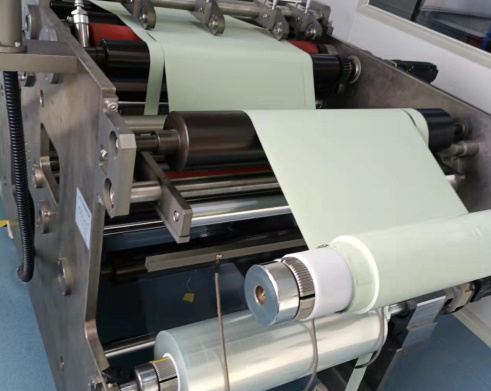
1. Technical Fundamentals of Thickness Control1.1 Slurry Properties Optimization
- Solid Loading Precision: High-solid slurries (e.g., 60 vol% AlN) require meticulous viscosity control, typically within 500 – 2000 cP. Adjusting dispersant dosage and ball-milling duration fine-tunes the slurry’s flowability. A 1% variation in solid loading can expand thickness tolerance by ±3μm.
- Solvent System Design: A mixed solvent (e.g., ethanol-toluene) with distinct boiling points enables controlled evaporation. Advanced systems maintain solvent evaporation rates within ±2% fluctuations, preventing thickness expansion during drying.
1.2 Precision Equipment Design
|
Control Aspect |
Traditional Limitations |
Advanced Solutions |
|
Gap Adjustment |
±5μm (mechanical screw) |
±1.5μm (laser – servo 联动) |
|
Web Tension Stability |
Fluctuation >2N (roller – driven) |
|
|
Temperature Uniformity |
ΔT ±3℃ (single – zone heating) |
ΔT ±1℃ (multi – zone IR + N₂ purge) |
|
Slurry Feeding |
Manual adjustment (laggy) |
Closed – loop control (pump + sensor) |
2. Key Technological Innovations2.1 Laser – Guided Closed – Loop System
Dual – wavelength laser gauges (1000Hz sampling) continuously monitor wet film thickness. A PID algorithm instantly adjusts the casting gap, responding within 50ms. This ensures thickness variations stay minimal, critical for applications demanding tight tolerances.
2.2 Magnetic Levitation Web Support
Traditional roller systems cause periodic thickness fluctuations. Magnetic levitation arrays eliminate contact stress, maintaining web tension stability. Combined with high – precision tension sensors (0.1N accuracy), this technology controls thickness fluctuations within ±0.5μm, meeting strict flatness requirements for direct – bonded copper (DBC) processes.
2.3 Intelligent Process Database
Pre – loaded with over 100 sets of material – process parameters, the system auto – selects optimal casting settings for different AlN/Si3N4 formulations. When powder particle size changes, the system automatically adjusts key parameters to keep thickness tolerance within ±1%.
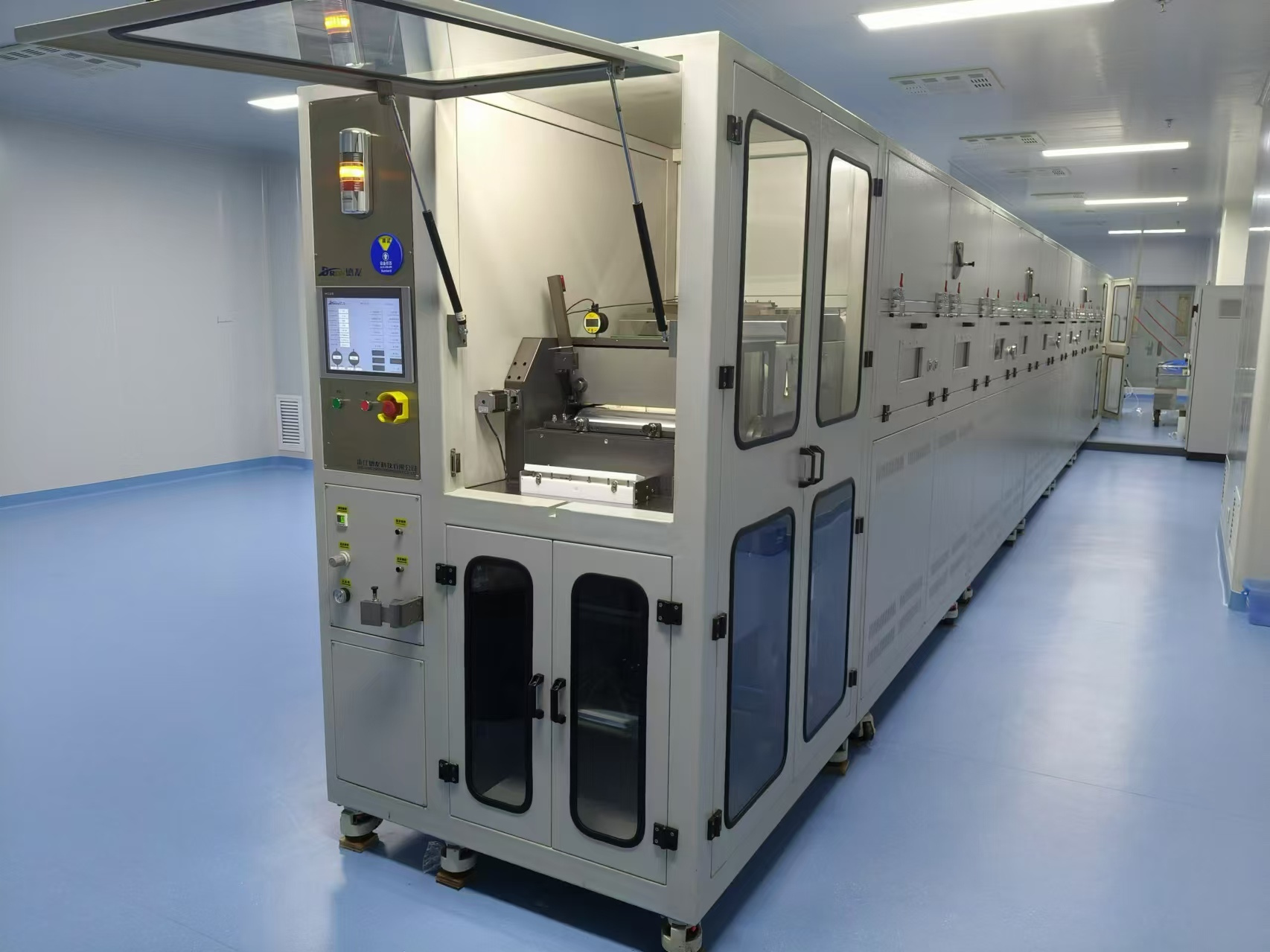
3. Industry Standards and Performance Metrics
|
Metric |
Conventional Equipment |
Advanced Equipment |
|
Thickness Tolerance |
±3μm |
±1.5μm |
|
Inter – batch Consistency |
≤2% |
≤1.2% |
|
Large – area Uniformity (300mm) |
Edge – center Δh ±5μm |
Edge – center Δh ±2μm |
In summary, thickness control in tape casting hinges on synergizing material science, equipment innovation, and intelligent algorithms. These advancements enable the production of high – performance ceramic substrates, meeting the stringent demands of modern electronics.
Media Contact
Company Name: Zhejiang Dron Technology Co., Ltd.
Email: Send Email
Country: China
Website: https://www.dron-tech.com/