
Dongguan ,Guangdong,China-September 16, 2026
In an era where chip manufacturing processes have surpassed the 3nm node and 3D packaging technology has become widespread, thermal failure has emerged as the primary cause of chip malfunction. As a core piece of equipment in the semiconductor testing sector, the thermal stream system provides indispensable technical support for chip reliability verification by precisely simulating environments characterized by extreme temperature fluctuations.
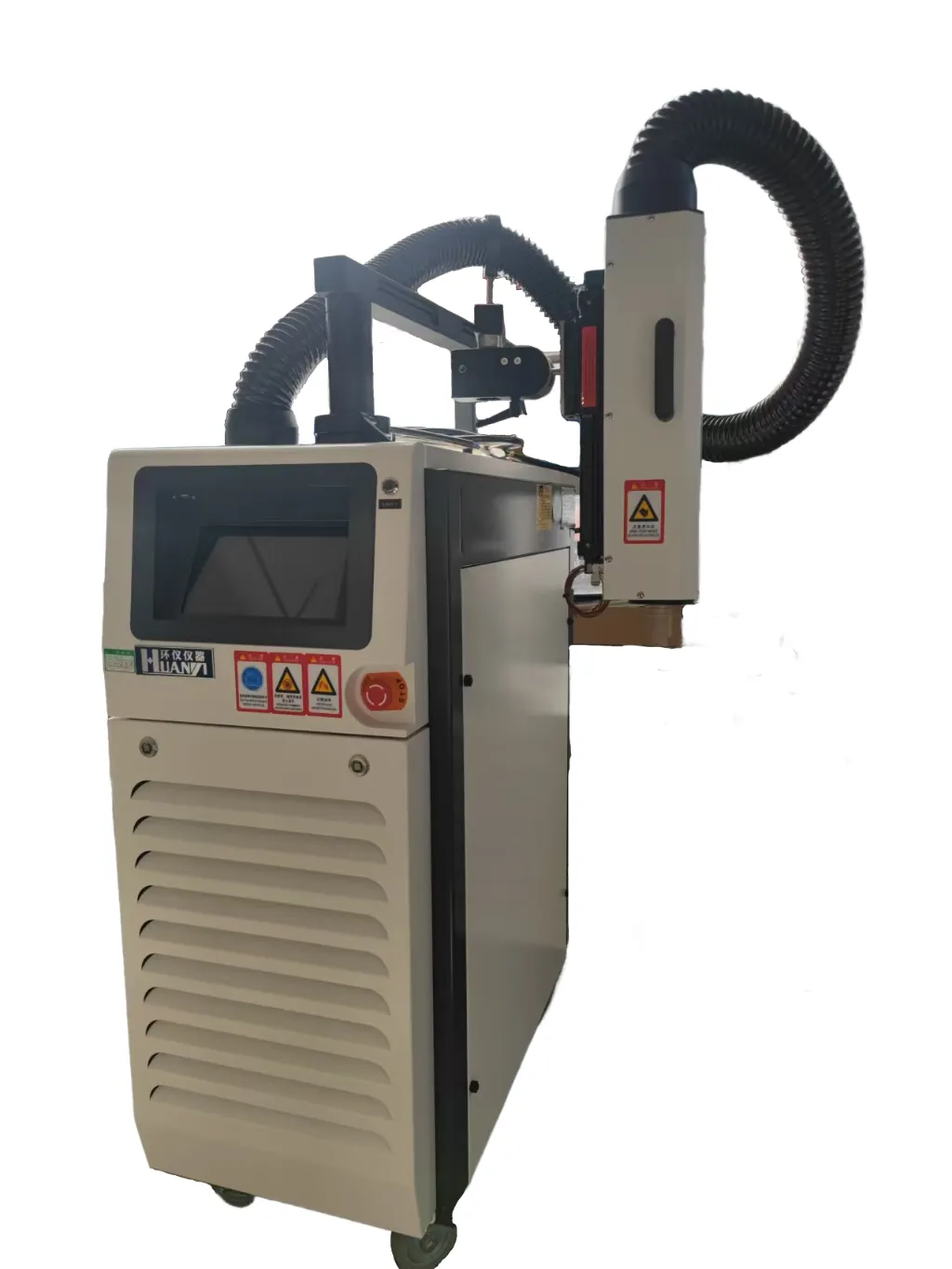
Technical Core: Precise Temperature Cycling and Thermal Flow Visualization
The core value of a thermal stream system lies in its ability to construct a three-dimensional testing scenario involving temperature, time, and stress. It operates by utilizing a high-precision PID algorithm to control hot and cold airflow, enabling rapid temperature transitions between 80°C and 225°C at rates of up to 50°C/min. Taking automotive-grade chip testing as an example, the equipment employs independent dual-channel temperature control technology; when simulating TC3 conditions (-40°C to +125°C), it dynamically adjusts compressor power and airflow velocity to precisely maintain the temperature change rate within a range of 15°C/min ± 2°C.
This parameter configuration directly impacts the accuracy of solder joint fatigue life verification. For instance, during testing of a specific AI chip, the system detected a 35% degradation in solder joint shear force after 1,000 cycles, thereby providing a six-month early warning regarding the risk of CTE (Coefficient of Thermal Expansion) mismatch.
Regarding data acquisition, modern thermal stream systems have transcended the limitations of traditional Thermal Chambers. One specific model, for example, features a nanoscale thermopile sensor array capable of detecting minute temperature variations as small as 0.01°C; when combined with infrared thermal imaging technology, it can generate detailed thermal hotspot maps of the chip’s surface.
Four Key Test Scenarios: Decoding Chip Thermal Failure
1. Temperature Cycling Test (TCT)
For automotive electronic chips, the thermal stream system simulates extreme temperature fluctuation environments ranging from -55°C to +175°C. The equipment employs a stepped temperature control strategy: a ramp rate of 20°C/min is used for stress screening during the first 500 cycles, while the rate is reduced to 5°C/min for reliability verification during the subsequent 500 cycles.
In a test involving power devices, the equipment dynamically adjusted voltage and junction temperatures to boost early-failure chip screening efficiency by 40%, strictly adhering to AEC-Q100 Grade 3 standards.
2. High-Temperature Burn-in Test
Under sustained stress at 125°C, the thermal stream system tracks electromigration failures in real-time using four-wire resistance monitoring. Its built-in current source module provides a wide excitation range (0.1 µA to 10 A); combined with nanovolt-level voltage acquisition precision, it successfully detected on-resistance drift in a MOSFET during a 72-hour burn-in test—identifying potential failure 120 hours earlier than traditional methods.
3. Thermal Resistance Test (Rth)
Combining heat flux density measurement with thermocouple monitoring, the equipment utilizes the JESD51-14 standard test method. During a wafer-level package test, a combination of SEM and infrared technologies revealed that when heat flux density exceeded 0.8 W/mm², the thermal resistance of a 5-layer stacked package rose exponentially—a phenomenon directly linked to process deviations in TSV (Through-Silicon Via) interconnect apertures.
Test data indicates that packaging structures utilizing silicon carbide (SiC) substrates can reduce thermal resistance to 0.7°C/W.
4. Thermal Shock Test
During the testing of an aerospace-grade chip, the thermal stream system achieved instantaneous temperature switching between -196°C and +300°C. Utilizing a hybrid system of liquid nitrogen injection and infrared heating, the equipment completed temperature transitions within 10 seconds while keeping temperature overshoot within ±3°C. Test results indicate that the ceramic package exhibits a thermal stress coefficient of 2.3 × 10⁻⁶/°C under extreme temperature differentials, successfully passing JAXA’s satellite component certification.
Breakthroughs in Industry Applications
New Energy Vehicles: Utilized a dual-loop feedback system (integrating heat flow and electric current) to reduce BMS stability verification time by 40% and precisely pinpoint current density anomalies at the 0.5 mm² scale.
5G Communication Base Stations: Employed multi-physics coupling simulation technology to optimize chip power consumption by 15% and established a failure threshold model for thermal runaway with a false alarm rate as low as 0.05‰.
Aerospace: Conducted full-temperature-range testing on materials for Long March rocket fuel tanks, identifying the formation of micro-cracks at the 0.02 mm scale when heat flux density exceeded 1.2 W/cm².
As a specialist in high- and low-temperature control, Huanyi Instruments is setting performance standards for thermal stream systems—featuring an ultra-wide temperature range of -120°C to +300°C and the capability to transition from +150°C to -55°C in under 10 seconds—thereby delivering more accurate and effective solutions for semiconductor testing.
About us
Dongguan Huanyi Instruments Technology Co., Ltd. was established on March 20, 2007, covering an area of 6,022 square meters. It is a high-tech enterprise integrating R&D, production, sales and after-sales service. It participated in the drafting of national standards and industry standards for environmental simulation test equipment.
Media Contact
Company Name: Dongguan Huanyi Instruments Technology Co., Ltd.
Contact Person: Media Relations
Email: Send Email
Country: China
Website: https://www.huanyitestchamber.com/