
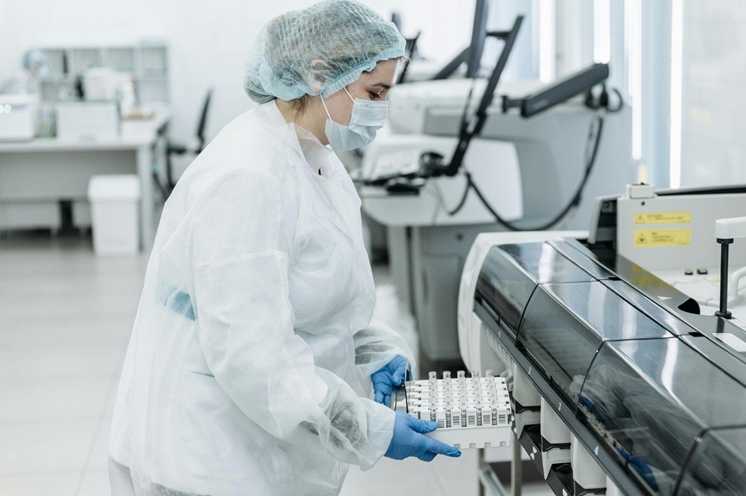
Here’s something you might’ve noticed if you’ve stepped into a research lab recently: the quiet whirr of machines doing work that used to keep technicians glued to their benches for hours. It’s not because labs are trying to look fancy or chase the latest tech fad. The reality is simpler. Sample volumes keep climbing, deadlines get tighter, and there’s zero room for the kind of mistakes that happen when you’re manually pipetting your 200th sample of the day. Automation isn’t about pushing people out. It’s about letting them do the work that actually needs a human brain, the problem-solving, the critical thinking, instead of burning hours on repetitive transfers that a machine can handle just fine.
Precision That Actually Matters
You know what happens around sample number sixty when you’re pipetting by hand? Your focus starts drifting. Maybe your wrist is getting sore, or you’re thinking about the next experiment. Those tiny inconsistencies – a microliter here, a slightly different angle there – they add up. In something like qPCR or ELISA prep, those small variations can throw off your entire dataset. Automated liquid handling systems don’t get tired or distracted. Every transfer happens exactly the same way, which means your reproducibility goes through the roof. When you need results you can actually defend in a paper or a regulatory submission, removing that human variability isn’t just nice to have. It’s essential.
Time Savings You Can Actually Measure
Let’s talk about what manual pipetting really costs. Say you’ve got a technician who spends three hours prepping plates for a screening run. That’s three hours they’re not analysing data, optimising protocols, or helping troubleshoot that finicky assay. With automation, that same prep might take forty minutes, and your tech can walk away once it’s running. This isn’t about speed for speed’s sake. It’s about getting more done with the same team. If you’re running assays every day, those hours stack up fast. Plus, when you’ve got urgent samples, clinical diagnostics or time-critical research, cutting your turnaround time can actually matter for patient outcomes or publication timelines.
Reducing Contamination Risk
Think about how many times you open tubes, switch tips, and move between samples during manual pipetting. Each one of those moments is a chance for something to go wrong. Cross contamination between wells, a stray particle landing in your reagent, whatever. Multiply that across a 96-well plate, and your contamination risk isn’t theoretical anymore. Automated systems work in controlled spaces with way less human contact. Fresh tips for every transfer, programmed sequences that don’t accidentally dip into the wrong well. If you’re setting up PCR reactions where even trace contamination gives you false positives, this kind of protection isn’t a luxury. It keeps your entire workflow clean and your data trustworthy.
Scalability Without Additional Staffing
Your sample load probably isn’t consistent year-round. Maybe you get a surge when a new project kicks off, or certain seasons bring higher volumes. Hiring temporary staff sounds straightforward until you factor in training time, the learning curve, and the hassle of onboarding people for short-term needs. Automation gives you flexibility without the HR headache. The system that handles 96 samples today can do 384 tomorrow with a quick programme adjustment, not three new hires. This matters especially if your lab takes on contract work or expands services. You can say yes to bigger projects without immediately worrying about whether you have enough hands on deck.
Consistency Across Different Operators
Even your most experienced techs have their own styles. One person pipettes a bit faster; another holds the instrument at a slightly different angle. These aren’t bad techniques, just individual variation. But when you’re comparing data from runs done by different people, those small differences can create batch effects that mess with your analysis. Automated systems don’t care who presses start. The run happens identically whether it’s your senior scientist or the new hire. For long-term studies or multi-site collaborations where you need to compare results across months or locations, eliminating operator variability simplifies everything. Your SOP becomes the machine’s programming, executed the same way every single time.
Documentation and Traceability
If you’re in a regulated environment, you know the documentation burden. Every step needs recording, every volume logged, every deviation noted. When humans do this manually, things get missed. Someone forgets to write down a timestamp, or there’s a transcription error in the notebook. Automated systems create digital records automatically. Every action, every volume dispensed, every error flag – it’s all timestamped and stored. When an auditor asks about a specific sample from three months ago, you’ve got a complete trail. This also helps you spot patterns you might miss otherwise, like recurring errors at certain steps that point to process improvements you should make.
Minimising Repetitive Strain Injuries
Pipetting thousands of samples week after week does real damage to hands, wrists, and shoulders. Repetitive strain injuries aren’t just uncomfortable. They reduce productivity, require medical treatment, and sometimes mean people need time off or even change careers. Automation takes that physical burden off your staff. The machine handles the repetitive motion while your techs focus on tasks that need decision-making, not just muscle memory. This isn’t some minor perk. It’s about keeping your team healthy and engaged long term. Pain-free employees do better work, and you avoid the costs that come with workplace injuries and the turnover they can cause.
Flexibility for Complex Protocols
Modern protocols can get complicated fast. Multiple reagent additions, specific mixing steps, and timed incubations between transfers. Doing this manually means incredible attention to detail and lots of opportunities for mistakes. Programme it into an automated system once, though, and you can run it reliably as many times as needed. Variable volumes, different plate layouts, and specialised mixing – the system handles all of it exactly as programmed. Once you’ve validated a protocol, it becomes a reproducible asset. Anyone trained on the system can execute it, which supports both method development and day-to-day operations. You can test protocol variations, knowing the execution will be precise enough to give you clean data.
Cost Efficiency Over Time
Yes, automation requires upfront investment. But let’s look at what you’re actually spending money on now. Failed experiments because someone was on their 300th transfer and made a mistake. Wasted reagents from inconsistent volumes. Overtime when you’re slammed with samples. Potential workers’ comp claims from repetitive strain. Automated systems cut into all of these costs while boosting your throughput. For a lot of labs, the math works out to payback within a year just from efficiency gains and reduced waste. Beyond the direct savings, there’s value in what automation lets you do. Taking on more complex work, delivering faster turnarounds, and staying competitive.
Conclusion
Automation isn’t the enemy of good science or skilled technicians. It’s actually the opposite. By handling the tedious stuff, the repetitive pipetting that doesn’t need human judgement, automation frees your team to do work that matters. The precision and consistency gains show up directly in your data quality. The time savings let you accomplish more with the same headcount. The ergonomic benefits keep your staff healthy. Whether you’re running clinical diagnostics, academic research, or pharma development, automation has shifted from nice to have to must have. Labs that haven’t made the jump yet aren’t just missing out on efficiency. They’re competing with one hand tied behind their backs in a field that demands both speed and accuracy.
Media Contact
Company Name: Bio Molecular Systems
Contact Person: Valin Reja
Email: Send Email
Country: Australia
Website: biomolecularsystems.com