
The history of stainless steel
The history of stainless steel originated from an accidental discovery in the early 20th century. In 1913, the British metallurgist Harry When Harry Brearley was researching wear-resistant gun barrel materials, he discovered that chromium-iron alloy has corrosion resistance. This invention was originally called “rust-free steel” and later “stainless steel”. Brearley was also the first to successfully commercialize stainless steel. At first, he used stainless steel to make tableware, which was also the earliest Martensitic stainless steel.
Almost at the same time, Krupp of Germany independently developed another type of austenitic stainless steel with nickel added. This stainless steel had better toughness and was more corrosion-resistant, becoming the predecessor of the most common 304 stainless steel today.
Manufacturing process of stainless steel
Melting & Casting: The process begins with melting the distinguishing raw materials in an electric arc furnace under extreme temperatures. This process liquifies the elements, and once entirely melted and combined, they are poured into molds to create solid shapes.
Refining: The steel undergoes refining processes after casting. These include Argon Oxygen Decarburization (AOD), which reduces the carbon content and removes impurities. This step enhances the steel’s quality, ensuring that the steel will meet exact standards.
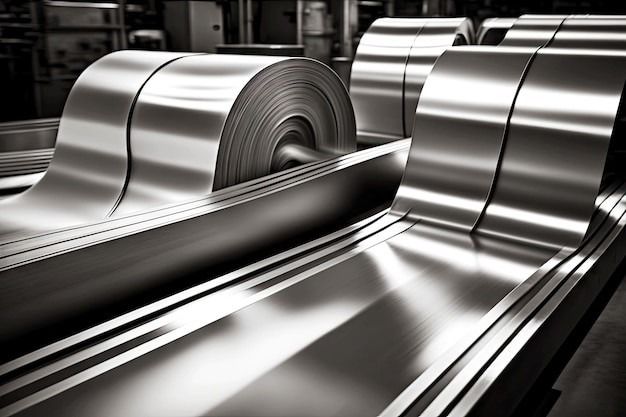
Forming: Shaping the refined steel through hot-rolling or cold-rolling methods is the next step. Hot-rolling takes place at high temperatures and creates large sheets, plates, bars, and wires. Cold-rolling takes place at room temperature and provides tighter tolerances and smoother finishes for precise applications.
Heat Treatment: Optimizing the material’s properties, the application of heat treatment processes, such as annealing, is the next step in the procedure. Annealing is a technique that heats the steel to a specific temperature and then gradually cools it, relieving internal stresses and improving ductility. In subsequent operations, heat treatments make the metal more workable.
Descaling: After the heat treatment, the steel’s surfaces may produce oxide layers that can negatively affect its performance. Employing chemical procedures with acids, processes such as pickling or mechanical cleaning can effectively remove these defects.
Finishing: The final appearance of stainless steel undergoes techniques such as grinding and polishing to attain the desired surface finish. These processes remove rough edges and surface anomalies to meet specific requirements.
Machining & Fabrication: The process of meticulously shaping steel through cutting and machining involves techniques such as drilling, milling, turning, and several cutting processes . After this, post-processing, welding, bolting, and fastening components can complete assemblies.
Characteristics of stainless steel
Stainless steel is not a single material but a versatile family of alloys. Its primary value lies in the optimal combination of corrosion resistance, strength, ease of fabrication, hygiene, and aesthetic appeal. The correct grade must be selected based on the specific environmental, mechanical, and fabrication requirements of the application.
Corrosion Resistance
Stainless steel’s chromium oxide layer is a clarifying feature and acts as a defensive shield that improves the material’s resistance to rust, oxidation, and aggressive chemicals
Strength & Durability
Stainless steel is a well-known metal for its high tensile strength. This property allows it to withstand wear, impact, and fatigue. This characteristic makes it an outstanding option for applications where structural and load-bearing are necessary.
Hygienic & Sterilizable
With its non-porous and smooth surface, stainless steel can deter the buildup of dirt and bacteria due to the ease of cleaning. These alloys perform exceptionally well at high temperatures and are chemically inert. These characteristics allow it to undergo liquid and vapor sterilization, making it a highly valuable material in food processing and healthcare.
Aesthetic Appeal
Stainless steel has a sleek, reflective finish, giving it a contemporary look, making it a standard material in appliances, railings, and interior elements, such as elevators.
Conclusion
The mystery of stainless steel lies in its base on chromium. Through the ingenious blending of elements and control of microstructure, it artificially “creates” an alloy material that can self-form and self-repair a protective film on the surface of steel, making it demonstrate irreplaceable value in numerous fields.
Media Contact
Company Name: AOXING COLD ROLLED STAINLESS STEEL MILL
Email: Send Email
Country: China
Website: https://www.aoxingmetal.com/