
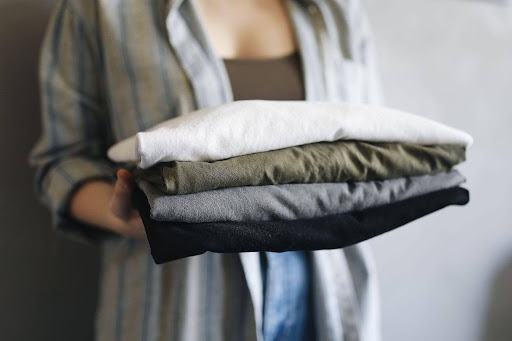
The t-shirt is the most democratic garment in existence. It crosses every age group, every subculture, every income bracket, and every corner of the globe. It is also the product that most people starting a custom clothing brand will launch with — and for good reason. The demand is consistent, the design possibilities are essentially limitless, and the production infrastructure around custom t-shirts is more developed than almost any other garment category.
But the range of quality available in custom t-shirt manufacturing is enormous. At one end, you have flimsy, poorly constructed blanks with inconsistent prints that shrink after two washes. At the other, you have premium heavyweight tees with sharp, durable print quality that genuinely justify a higher price point. The manufacturer you choose determines which end of that spectrum your customers experience.
Why the Manufacturing Partner Decision Carries So Much Weight
Most buyers focus heavily on design when thinking about custom t-shirts. The design matters — but it is the manufacturing process that determines whether that design is delivered to the customer in a way that creates a positive impression or a disappointing one.
A well-executed design on a poor quality blank feels cheap. The same design on a quality garment feels premium. The blank is the canvas, and like any canvas, its quality sets the ceiling for what the finished work can achieve.
Your manufacturing partner also controls the consistency of that experience across every order. One excellent sample does not guarantee the fiftieth order will match it. Understanding how a manufacturer maintains quality standards at scale is as important as assessing the quality of their initial output.
Understanding What Goes Into a Quality Custom T-Shirt
Before evaluating manufacturers, it helps to understand the specific elements that determine the quality of a finished custom t-shirt. This knowledge makes the evaluation process considerably more useful.
Fabric Weight and Composition
Fabric weight is measured in grams per square metre and is one of the most reliable indicators of garment quality. Lighter fabrics — typically below 150gsm — tend to feel thin, lose their shape more quickly, and allow skin tone to show through. Heavier fabrics — 180gsm and above — feel more substantial, hold their shape better, and generally wear more comfortably over time.
Fabric composition matters too. One hundred percent cotton breathes well and is preferred by many customers, but can shrink if not pre-shrunk during manufacturing. Cotton-polyester blends offer improved durability and colour retention but may not have the same natural feel. Ring-spun cotton is softer and more consistent than standard carded cotton and is worth seeking out for premium products.
Construction Quality
The stitching on a t-shirt tells you a great deal about how it will hold up over time. Double-stitched seams at the shoulders and sides are a sign of quality construction. Reinforced collar and hem stitching prevents stretching and distortion after washing. Poorly finished seams, loose threads, and uneven stitching are signs of a manufacturer cutting corners that will become apparent to your customer long before the garment wears out.
Print Method and Its Impact on Quality
The print method used by your manufacturer affects how the finished design looks, how it feels to wear, and how it holds up after repeated washing.
Direct to garment printing produces detailed, photographic-quality prints and works well across a wide range of colours without additional setup costs. It is the most flexible option for complex designs and small orders. The trade-off is that it requires proper fabric pre-treatment to achieve optimal results, and print longevity can vary between manufacturers.
Screen printing produces vivid, highly durable results and is cost-effective at higher volumes. It works best for designs with a limited number of solid colours and is less suited to complex gradients or photographic imagery.
Heat transfer and sublimation printing each have specific use cases and limitations. Understanding which method your manufacturer uses and how it affects the final product is essential before committing to a production partner.
Questions Worth Asking Before Choosing a Manufacturer
The questions you ask a prospective manufacturer before committing reveal as much as any sample order. Here are the ones that matter most.
What Are Your Quality Control Processes?
A manufacturer with robust quality control processes will be able to describe them specifically — not in vague terms. Ask what happens when a print does not meet their standards. Ask how they handle size inconsistencies within a production run. Ask what their rejection rate is and what happens to rejected units. The specificity and confidence of their answers will tell you a great deal.
What Is Your Average Production Time?
Stated production times and actual production times frequently differ. Ask for data on their average turnaround over the past few months, not just their best-case scenario. If they cannot or will not provide this, factor that uncertainty into your assessment.
How Do You Handle Defective Items?
Every manufacturer will occasionally produce a defective item. What matters is how they handle it. A manufacturer who replaces defective items promptly and without friction is a fundamentally different partner to one who requires extensive documentation, charges restocking fees, or disputes quality complaints. Get their policy in writing before you commit.
Can You Provide References From Existing Clients?
Manufacturers with satisfied clients are generally willing to provide references. Those who are reluctant or unable to do so warrant additional scrutiny. Speaking directly with existing clients gives you a view of the relationship that no sales conversation can replicate.
The Difference Between a Manufacturer and a Fulfillment Platform
Many sellers use the terms interchangeably, but there is an important distinction. A manufacturer produces garments. A fulfillment platform handles the end-to-end process of receiving an order, producing the product, and shipping it to the customer.
For most custom t-shirt businesses — particularly those operating without physical inventory — a fulfillment platform that handles manufacturing is the more practical option. It removes the need to manage separate manufacturer and logistics relationships and simplifies the operational side of the business considerably.
Working with a dedicated custom t shirt manufacturer like Tapstitch gives sellers access to quality production and reliable fulfillment through a single platform. Rather than managing separate manufacturing and shipping relationships, the entire process is handled end to end — from the moment an order is placed in your store to the moment it arrives at your customer’s door.
Evaluating Samples: What to Look For
Ordering samples before committing to a manufacturer is non-negotiable. But knowing what to evaluate when the samples arrive makes the process far more useful than simply assessing whether the product looks nice.
Measure Against the Stated Size Chart
Take actual measurements of the sample garment and compare them to the manufacturer’s published size chart. Discrepancies between stated and actual measurements are a reliable indicator of inconsistent sizing across production runs — a problem that will generate returns once you start selling.
Wash and Wear Test
Wash the sample multiple times using normal washing conditions and assess how the garment and print hold up. Does the fabric shrink? Does the print crack or fade? Does the collar lose its shape? These are the experiences your customers will have after purchase, and they are impossible to evaluate without actually washing the garment.
Assess the Print in Different Lighting Conditions
Prints that look sharp under studio lighting can look very different in natural daylight or under indoor artificial lighting. Assess the sample in multiple lighting conditions to get a realistic sense of how it will appear to your customers when they receive it.
Scaling With Your Manufacturer
The manufacturer that serves you well when you are placing ten orders a month needs to be evaluated differently to one you are considering for a hundred or a thousand orders a month. As volume increases, the demands on production capacity, quality control consistency, and communication infrastructure all increase proportionally.
Have an explicit conversation with any prospective manufacturer about their capacity and how they handle volume increases. A manufacturer who is transparent about their limits and proactive about managing capacity is considerably more valuable than one who overpromises and underdelivers when your volume grows.
Making the Final Decision
Choosing a custom t-shirt manufacturer is a decision with long term consequences. The partner you select will shape the product experience your customers have, the operational complexity you manage, and ultimately the brand reputation you build.
Take the time to evaluate multiple options. Order samples from each. Test them rigorously. Ask the hard questions and pay attention to how they are answered. The manufacturer who emerges from that process as the clear best fit for your specific needs and standards is worth working with — and worth maintaining a strong relationship with as your business grows.
In custom t-shirt manufacturing, as in most things, you get out what you put into the selection process.
Media Contact
Company Name: Tapstitch
Email: Send Email
Country: United States
Website: https://www.tapstitch.com/