
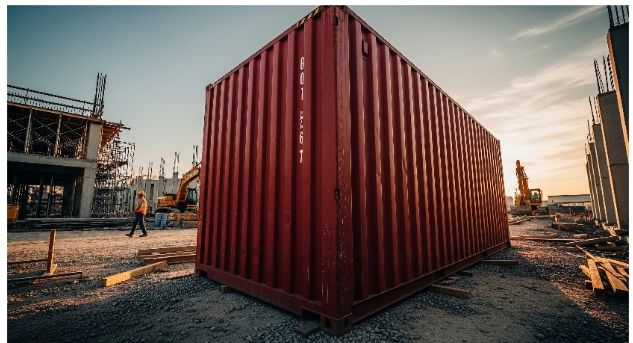
Construction schedules leave little room for friction. When you bring storage containers onto a site, success comes down to four things: delivery and placement, permits and compliance, security, and spec/cost fit. This playbook gives project managers and supers a clean, defensible approach that keeps crews productive and protects the schedule—without adding administrative drag.
Delivery & Placement: Prevent Redeliveries Before They Happen
Failed drops chew up time and budget. Before you order, map the delivery path from the street to the set-down point. Confirm straight-line clearance, turning radius, and overhead obstructions for tilt-deck or roll-off trucks. Mark the receiving zone on the site plan, designate a contact for the driver, and verify ground bearing so the box won’t sink after rain. If you’re staging multiple units, pre-assign locations by trade (electrical, finishing, site tools) to reduce daily cross-traffic.
When it’s time to shortlist vendors, compare how clearly they publish delivery parameters, documentation, and options. Teams evaluating storage containers can verify Canadian inventory, sizes, and delivery support in one place and match that to their placement plan. Keep the reference neutral and factual—the goal is to help readers confirm details on the linked page they’ll actually use.
Permits & Compliance: No Surprises from Inspectors
Municipal rules differ on temporary structures and accessory uses. In practice, you’ll check two boxes: zoning allowances for placement and building/temporary structure thresholds that might trigger permits based on size, duration, or location. Make this a pre-delivery step on your mobilization checklist so containers don’t arrive ahead of approvals. For the U.S. audience, align site procedures with OSHA expectations on safe storage and material handling; it keeps paperwork consistent and helps safety officers tie container use to established controls. See OSHA’s construction standards for material storage and handling for baseline practices your safety team can incorporate into the job hazard analysis. Authoritative reference: OSHA 29 CFR 1926 Subpart H (Material Handling, Storage, Use, and Disposal).
Security & Loss Prevention: Lock, Light, and Log
Tool theft remains a chronic jobsite risk, and containers are only as secure as the hardware and habits supporting them. Specify units with integrated lock boxes and use high-security puck locks; place containers inside fenced, illuminated zones and position them to maintain sightlines from the trailer or security cameras. Create a sign-in/out protocol for high-value tools and require end-of-day sweeps. For projects with repeated losses—or remote sites—add door sensors or GPS on key units. Culturally, treat container access like a controlled space: a small, named keyholder list and quick incident reporting keep accountability tight. The Cybersecurity & Infrastructure Security Agency (CISA) provides practical checklists for physical-security layering that translate well to jobsites (principles like deter, detect, delay, respond).
Condition, Spec, and Cost Model: Fit for Purpose Without Overpaying
Match container grade and features to the job:
WWT (wind & watertight) or cargo-worthy is typically sufficient for tool/material storage; confirm door seals and floor condition.
Choose new/one-trip units where aesthetics or client-facing areas matter, or when you plan interior fit-outs (shelving, lighting, partitions).
If you might ever ship the box, confirm CSC status; for static storage, don’t pay a premium for stickers you won’t use.
Budget with a simple rent-versus-buy model: short phases and single-site projects often rent; long programs, yards, or recurring use cases tend to buy. Include delivery/pickup, repositioning, and any site-prep (gravel pads, timbers) in your total cost. For multi-site firms, standardize one or two SKUs to simplify spares, locks, and signage across projects.
Operational Hygiene: Make the Box Work for the Crew
A container that’s organized saves steps every day. Install shelving for small tools and consumables, label bays by trade or task, and keep a whiteboard on the inside of the door for daily notes. Set expectations: brooms on hooks, spill kits at the threshold, and a short end-of-day reset routine. These small habits reduce morning scramble, tool loss, and slipped starts.
Vendor Fit: Clear Terms, Clear Contacts
Jobsite teams benefit from straightforward vendor communication. Ask providers for:
Confirmed delivery windows/SLAs and a live dispatch contact on delivery day
A one-page placement checklist (clearances, surface prep, slope limits)
Damage notation procedure with photos at drop and pickup
Swap/relocate pricing and timing if the plan changes mid-project
When vendor pages clearly outline inventory, delivery, and service areas, it’s faster to reconcile quotes and schedule drops. Use the details on their product pages to populate your internal checklist rather than re-inventing documentation.
Change Orders & Scale-Up: Plan for Growth
Phased builds evolve. If you’ll add containers later, lock in rate holds, priority windows, and a defined relocation fee schedule up front. For larger programs, a light container register (ID, location, lock code, last inspection) keeps operations and security in sync across multiple sites.
Additional Resources
Explore Canadian availability and delivery coverage for shipping containers to align your placement plan with service areas and on-page specifications.
Media Contact
Company Name: Seacanguy
Email: Send Email
City: Toronto
Country: Canada
Website: https://seacanguy.ca/