
Introduction
Selecting the right type of tires is a critical decision for heavy equipment and machinery. The choice directly impacts operational efficiency, safety, maintenance costs, and overall performance. Among the most common options are solid tires and pneumatic tires, each designed with unique characteristics to meet specific industrial or agricultural needs. Understanding the differences between these tire types is essential for maximizing equipment longevity and ensuring optimal performance in various working conditions.
This article provides an in-depth analysis of solid tires versus pneumatic tires, exploring their features, advantages, disadvantages, and key considerations for selecting the best option for your machinery.
Solid Tires: Durability and Reliability
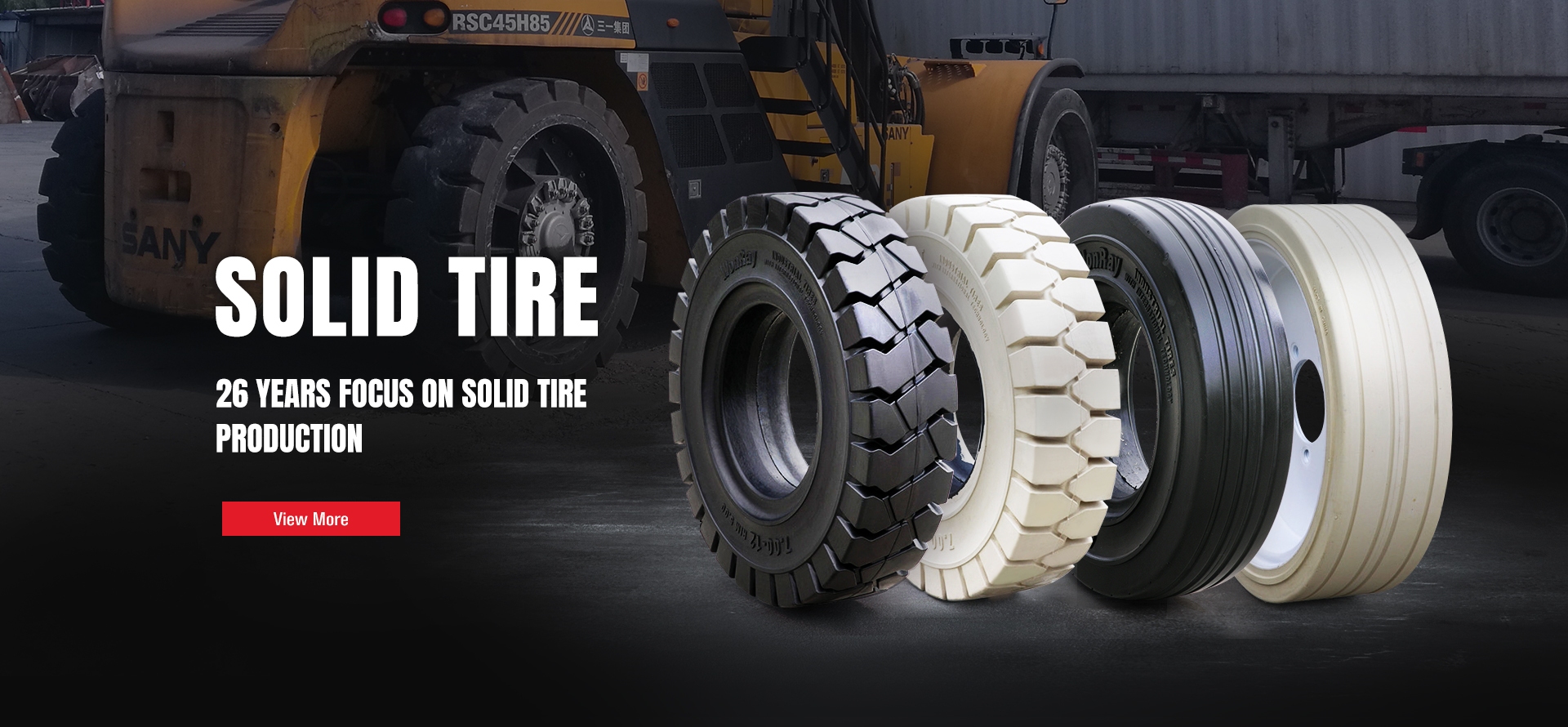
Solid tires, also referred to as flat-proof or resilient tires, are made entirely of durable rubber compounds without any air-filled chambers. This design makes them highly resistant to punctures, cuts, and blowouts, which are common issues with pneumatic tires in challenging working environments.
The solid construction of these tires allows them to maintain consistent shape and performance even under heavy loads and continuous use. Because they do not rely on air pressure, solid tires eliminate the risk of sudden deflation or uneven wear caused by underinflation or overinflation.
Key benefits of solid tires include:
● Exceptional Durability – Solid tires can withstand harsh surfaces, debris, and continuous industrial operations, making them ideal for construction sites, warehouses, and mining environments.
● Low Maintenance Requirements – Without air chambers, these tires do not require inflation checks or repair due to punctures, minimizing downtime and labor costs.
● Enhanced Stability – The rigid design provides firm contact with the ground, improving load handling and operator control.
● Long-Term Cost Efficiency – Although initial investment may be higher, solid tires reduce replacement frequency and associated operational interruptions, offering savings over the equipment’s lifetime.
However, one limitation of solid tires is reduced cushioning. Operators may experience a firmer ride, and vibration may be transmitted to the machinery, which can affect comfort in certain applications. Nevertheless, in environments where puncture resistance and stability are critical, these trade-offs are generally outweighed by the benefits.
Pneumatic Tires: Comfort and Shock Absorption
Pneumatic tires, in contrast, are air-filled tires designed to provide cushioning through compressed air. This air layer absorbs shocks from uneven surfaces, offering a smoother ride for operators and reducing vibrations transmitted to the equipment.
Pneumatic tires are often preferred for vehicles operating on highways, agricultural fields, or lighter industrial applications where traction, cushioning, and operator comfort are essential. They are available in a wide range of tread patterns and sizes to meet the demands of different surfaces and operational conditions.
Key advantages of pneumatic tires include:
● Enhanced Ride Comfort – Air-filled chambers absorb shocks, providing a smoother, more controlled ride for operators, which is especially beneficial during prolonged operation.
● Versatile Traction Options – Pneumatic tires are available with various tread designs suitable for soft soil, muddy fields, or paved surfaces, allowing for better adaptation to specific terrains.
● Lightweight Design – Compared to solid tires, pneumatic tires are generally lighter, which can improve fuel efficiency in mobile equipment.
The main drawback of pneumatic tires is vulnerability to punctures, blowouts, and maintenance issues related to air pressure. Frequent inspection and inflation adjustments are required to maintain performance, and in demanding industrial settings, the risk of downtime due to flats can be significant.
Comparing Solid and Pneumatic Tires
The choice between solid and pneumatic tires depends on the operational needs, terrain, and performance priorities of the equipment. While solid tires excel in durability, stability, and low maintenance, pneumatic tires provide cushioning, traction versatility, and operator comfort.
When considering factors such as:
● Operational Environment – Rough, debris-filled, or heavy-load environments favor solid tires, while smoother surfaces or applications requiring comfort may benefit from pneumatic tires.
● Load Capacity – Solid tires typically support heavier loads due to their rigid structure, while pneumatic tires are limited by air pressure capacity and material strength.
● Maintenance Considerations – Solid tires require minimal maintenance, reducing labor and downtime costs. Pneumatic tires demand regular monitoring and repair.
● Cost Considerations – Solid tires have a higher initial cost but can be more cost-effective over the long term. Pneumatic tires are cheaper upfront but may incur higher maintenance and replacement costs.
Practical Considerations for Tire Selection
Before selecting the right tires, it is essential to assess equipment specifications, operational requirements, and terrain conditions. Factors to consider include:
● Frequency of use and operational intensity● Weight of loads being carried● Surface type (concrete, asphalt, gravel, or soil)● Risk of debris causing punctures or tire damage● Budget for initial purchase versus long-term maintenance
Consulting with tire experts or equipment manufacturers can ensure that the chosen tire type aligns with both performance and safety requirements. Making an informed decision enhances equipment efficiency, reduces downtime, and improves the overall return on investment.
Conclusion
In conclusion, both solid and pneumatic tires have their unique advantages and limitations. Solid tires are ideal for heavy-duty, high-risk, and puncture-prone environments, offering durability, stability, and minimal maintenance. Pneumatic tires, on the other hand, are suited for applications prioritizing ride comfort, cushioning, and adaptable traction.
By carefully evaluating operational needs, load capacities, terrain conditions, and maintenance expectations, equipment operators can select the most suitable tire type. Investing in the right tires is not just about immediate performance—it also ensures long-term efficiency, safety, and cost savings. Ultimately, understanding the differences between solid and pneumatic tires allows businesses to optimize equipment performance while minimizing risks and operational interruptions.
Media Contact
Company Name: YANTAI WONRAY TYRE CO., LTD
Email: Send Email
Country: China
Website: https://www.wonrayglobal.com/