
LAS VEGAS, United States – 21 August, 2026 – Men over 40 do not shorten their lives through a single catastrophic decision. They do it through roughly ten ordinary ones, repeated fifty-two times a year, none of which produces a consequence detectable on the day it is made.
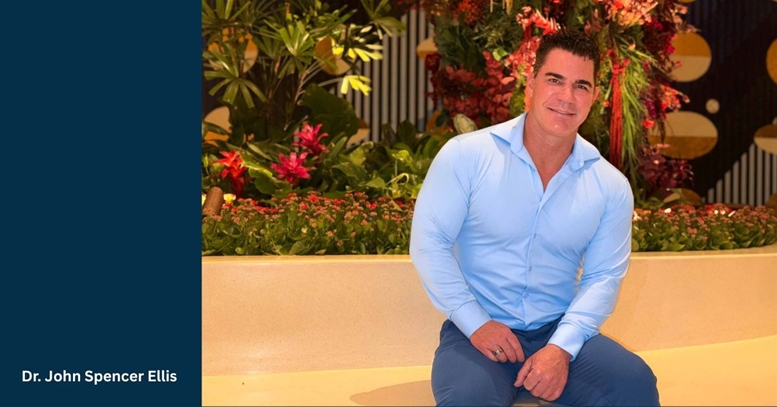
That is the central argument of a new evidence-based report published by Dr. John Spencer Ellis, an internationally recognized authority on men’s health, longevity and human performance. The report assigns a specific, peer-reviewed hazard ratio to each of ten weekly behaviors — and several of the numbers run counter to what men assume.
Exercise does not cancel the sitting
The finding most likely to surprise concerns a belief widely held by men who train regularly.
A meta-analysis of six prospective studies covering 595,086 adults and 29,162 deaths across 3,565,569 person-years found that sitting ten hours a day carried a 34 percent higher all-cause mortality risk than sitting one hour — after adjusting for physical activity. Without that adjustment, the figure was 52 percent.
“Moderate-to-vigorous physical activity attenuates the association. It does not eliminate it,” said Dr. Ellis. “An hour in the gym is genuinely protective, and it does not undo ten hours of unbroken sitting. Those are two separate exposures with two separate risk profiles, and a lot of men are settling one account while ignoring the other entirely.”
A separate dose-response analysis of 24 studies found each additional hour of daily sitting carried a hazard ratio of 1.04 for cardiovascular disease.
The largest number is the one nobody tracks
The single biggest effect size in the report is not diet, alcohol or inactivity.
An analysis of 488,765 participants followed for up to 32 years found adults in the lowest category of life purpose carried a hazard ratio of 2.43 for all-cause mortality compared with those in the highest — larger than sitting, larger than ultra-processed food, larger than burnout.
“Purpose sounds like a soft variable, and the mortality data says it is the hardest one on the list,” said Dr. Ellis. “The specific male failure is outsourcing. A man whose entire sense of purpose runs through his job has a single point of failure. Redundancy, a health event, a sale or retirement removes not just the income but the reason to get up. And purpose isn’t built during the crisis — it’s built during the ordinary weeks when a man has capacity to invest in something outside work and doesn’t, because nothing is currently forcing him to.”
The remaining eight
Skipping the medical workup. The conditions that kill men over 40 are silent. Erectile dysfunction typically precedes a cardiac event by two to five years — the penile arteries measure 1 to 2 mm against 3 to 4 mm for the coronaries, so the same disease process narrows them first.
No resistance training. The PURE study of nearly 140,000 adults found grip strength inversely associated with mortality at HR 1.16 per 5 kilogram reduction — a stronger predictor than systolic blood pressure.
Chronic short sleep. Sleep extension produced roughly 9 percent improvements in shooting accuracy in Stanford research, alongside faster sprint times.
Uncounted alcohol. Roughly 4.6 percent of male deaths are attributable to alcohol, which simultaneously suppresses muscle protein synthesis, fragments sleep architecture and drives visceral fat accumulation.
Ultra-processed food as the default. A dose-response meta-analysis of 207,291 adults found HR 1.21 for all-cause mortality and HR 1.50 for cardiovascular mortality, with each 10 percent increase in ultra-processed calories carrying 15 percent higher risk.
Social isolation. Holt-Lunstad’s meta-analysis of 148 studies and 308,849 participants found a 50 percent increased likelihood of survival with stronger social relationships — an effect the authors compared in magnitude to smoking. An analysis of 497,544 UK Biobank participants found isolation amplified mortality risk at every physical activity level.
Unremitting work stress. A prospective study of 8,838 employees found burnout an independent risk factor for coronary heart disease at HR 1.41, rising to HR 1.79 in the top 20 percent of burnout scores.
Recovery treated as optional. Anabolic resistance means men over 40 require roughly 0.40 g/kg of protein per meal to trigger muscle protein synthesis, against 0.24 g/kg for younger men.
What correction is worth
Research tracking five habits — maintaining a healthy weight, at least 30 minutes of daily activity, avoiding tobacco, eating a healthy diet and limiting alcohol — estimated remaining life expectancy at age 50 at 25.5 years for men practicing none of them, and 37.6 years for men practicing all five.
A difference of twelve years.
“No compound in the longevity market has produced anything remotely approaching a twelve-year human effect,” said Dr. Ellis. “Most have produced no measurable human effect at all. The interventions that work are not exotic, not expensive and not for sale — which is precisely why so little money is spent advertising them.”
Dr. Ellis cautions against attempting all ten simultaneously. “Men who try abandon all ten within a fortnight and conclude they lack discipline. They don’t. They attempted a sequence nobody sustains from a starting point of exhaustion. Fix the medical workup, the sleep and the alcohol first — those sit upstream of most of the rest.”
About Dr. John Spencer Ellis
Dr. John Spencer Ellis has been an award-winning health expert and entrepreneur since 1992. He is a Personal Trainer Hall of Fame inductee, named among the Top 100 Most Influential Personal Trainers of All Time, a Quilly Award winner, and a bestselling author with multiple Amazon #1 titles. His book Peak Vitality received Nautilus and US Book News Awards.
He holds two bachelor’s degrees, an MBA and a doctorate in education, plus 14 months of doctoral-level naturopathic health education study, alongside 15 professional certifications, a license in radiological technology, a medical assisting certification with phlebotomy, and McKenzie rehabilitation training.
His programs have been used by Cirque du Soleil, the Army, Navy, Air Force, Marines, U.S. Secret Service and Coast Guard, and he has consulted for the UFC. His work has helped create over 500,000 jobs globally, and more than one million people engage with a program he created each week. His work has been featured on Oprah Radio, ABC, NBC, CBS, PBS, FOX and ESPN, and he has served as an expert panelist for TEDmed.
Dr. Ellis is a coach and educator, not a physician, and does not diagnose, treat or prescribe. His coaching is designed to work alongside the care of licensed healthcare providers.
Further Research
If this information has you curious, and you want to learn more, you can access the full PDF report here to get specific data. https://johnspencerellis.com/10-weekly-habits-that-shorten-mens-lives-the-data/
Media Contact
Company Name: johnspencerellis
Contact Person: Dr. John Spencer Ellis
Email: Send Email
Address:2780 S. Jones Blvd, Ste 200-3464
City: Las Vegas
State: NV 89146-5623
Country: United States
Website: https://johnspencerellis.com/health-longevity-aesthetic-optimization-for-men-40/