
In automated warehouses, manufacturing facilities, and logistics centers, cables that power and control moving machinery must withstand continuous bending, flexing, and reciprocating motion. Selecting a highly flexible shielded robot cable is a direct path to extending equipment uptime and reducing maintenance costs.
Engineering Features That Support Continuous Motion
Standard cables are designed for static or low-frequency bending. When deployed in drag chains, robotic arms, or high-speed automation equipment, their limitations become apparent. To meet the demands of continuous reciprocating motion, cables must be built differently.
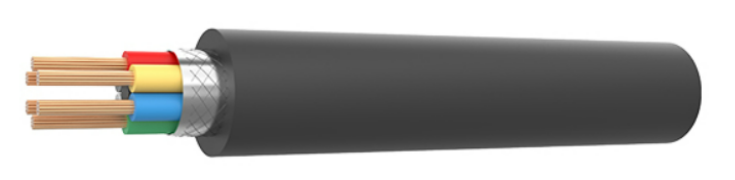
A well-designed high flexible shielded robot cable is optimized from conductor to sheath for high-motion industrial applications.
▸Multi-Strand Ultra-Fine Conductors
Conductor construction determines how well a cable withstands repeated bending. High-flexible cables use multi-strand ultra-fine precision twisted oxygen-free copper wire, which differs fundamentally from standard cables with fewer, thicker strands.
The ultra-fine strands allow the cable to flex millions of times without work-hardening. Each strand moves independently, distributing stress across the bundle rather than concentrating it at a single point. This design is essential for robotic arms, gantry cranes, and any equipment operating within drag chains.
▸Shielding for Reliable Signal Transmission
In automated warehouses and heavy industrial settings, reliable data transmission is non-negotiable. Control signals, position feedback, and safety communications must remain accurate regardless of electrical noise from nearby equipment.
High-flexible shielded robot cables use tin-plated copper braid shielding with coverage exceeding 80 percent. This braid prevents electromagnetic interference from corrupting data signals. For operators, this means fewer unexplained stops, no false sensor readings, and consistent control response.
▸Durable Sheath Materials
The outer sheath is the cable’s first line of defense against environmental hazards. In warehouses and factories, cables encounter oil, grease, temperature extremes, and abrasive surfaces.
Specially modified PVC sheaths resist oil and grime, preventing swelling or cracking from chemical exposure. These materials maintain flexibility down to minus 30 degrees Celsius for moving applications. Wear resistance is equally important, as cables in drag chains constantly rub against metal surfaces.
Operational Benefits for Procurement and Plant Management
These engineering features translate directly into measurable business returns.
⦁Extended Mean Time Between Failures
Systems with cables designed for high-flex applications experience fewer unplanned stops. Maintenance teams spend less time troubleshooting electrical failures. The predictable performance allows maintenance schedules to be optimized around actual component life.
⦁Installation Efficiency
Properly engineered cables reduce installation time. Consistent outer diameter and smooth sheath surfaces allow cables to feed through drag chains with minimal friction, lowering labor costs.
Applications Across Material Handling and Industrial Equipment
Highly flexible shielded robot cables are designed for frequent bending under continuous reciprocating motion. They are widely used in drag chains, logistics systems, CNC machine tools, robotic arms, lifting equipment, automated warehouses, and more.
▸Automated Warehouses
Storage and retrieval machines require stable power and data connectivity over long travel distances. Cables endure thousands of bending cycles daily while coping with drag chain friction. High-flexible cables provide the flex life and shielding needed for uninterrupted operation.
▸Conveyor Systems
Drag chains in parcel sorting facilities cycle continuously. Cables must withstand high-frequency bending while resisting abrasion and lubricant exposure. Durability directly impacts system availability.
▸Lifting and Transport Equipment
Overhead cranes and gantry cranes combine tensile and bending stress as cables hang vertically while moving horizontally. High flexible cables handle this compound stress environment reliably.
▸Robotic Systems
Articulated arm and linear robots perform complex multi-axis motion. These applications subject cables to varying bend directions, high frequency, and compact spaces. Highly flexible designs withstand millions of bending cycles while maintaining stable signal transmission.
▸CNC Machine Tools and Automation Machinery
CNC machines, injection molding machines, and stamping equipment require frequent bending of cables connected to moving components. Machine tool environments involve cutting fluids, oil mist, and temperature variations. Oil resistance, temperature tolerance, and high flexibility enable long-term stable operation.
▸Construction Machinery and Heavy Equipment
Construction machinery and dock operations run in harsh outdoor environments. Cables must withstand temperature fluctuations, mechanical shock, and continuous motion. Impact resistance, aging resistance, and high flexibility make these cables well-suited for demanding applications.
Key Factors for Specification Decisions
After understanding the engineering features and applications, teams need to match specifications with actual operating conditions. The following factors often determine success.
⦁Bend Radius and Travel Distance
Bend radius is a core parameter for long-term reliability. When travel distance is less than 10 meters, bend radius must reach 10 times cable outer diameter; when travel distance exceeds 10 meters, bend radius must expand to 12 times outer diameter. Neglecting this subjects the cable to stress beyond design limits.
⦁Temperature Rating
Temperature conditions vary from sub-zero cold storage to sustained high temperatures. Fixed installations withstand minus 40°C to plus 90°C, while mobile installations are suitable for minus 30°C to plus 90°C. Ensure the cable’s rating covers the extreme temperatures of the operating environment.
⦁Conductor Gauge and Core Configuration
Conductor cross-sectional area and core configuration determine current-carrying and signal transmission capacity. These cables offer conductor gauges from 0.14 to 2.5 square millimeters, with core counts from 2 to 38. Selection should match power requirements and signal channels: undersized gauge causes overheating; oversized gauge adds cost and wastes space.
Conclusion
Automated warehouses, lifting equipment, and conveyor systems demand cabling that matches their operational intensity. High flexible shielded robot cables improve operational availability. The choice of cabling affects daily operation, long-term maintenance costs, and return on investment.
Qc Solar offers high-performance high flexible shielded robot cables. Contact us for professional selection guidance.
Media Contact
Company Name: QC Solar
Email: Send Email
Country: China
Website: https://www.qc-solar.com/