
Music streaming has moved well past the era of typing a song title into a search bar and hoping for the best. Today’s listeners expect a platform to understand their taste almost before they do, surfacing new tracks that feel tailor-made rather than randomly suggested. Qishui Music is one of the clearest examples of this shift. Built by ByteDance, the company behind the short-video giant Douyin and its global counterpart TikTok, Qishui Music was designed as a music streaming and discovery platform powered by smart recommendation technology.
Rather than positioning itself as just another place to play songs, Qishui Music leans heavily on personalization, pulling from the same kind of behavioral data and algorithmic thinking that made Douyin’s short-video feed so engaging. Its close ties to the Douyin ecosystem also mean that trending sounds from short videos often find their way into the app’s recommendations, creating a feedback loop between what people watch and what they listen to.
What Is Qishui Music?
Qishui Music, whose name roughly translates to ‘Soda Music’ in English, is a music streaming app built around personalized discovery rather than manual searching. Where older streaming apps relied on users actively typing in artist or song names, Qishui Music shifts more of that work onto its recommendation engine, presenting a continuous feed of tracks based on listening behavior and preferences.
Traditional search has not disappeared, but it is treated as just one entry point among several. Qishui Music is also built as a cross-platform experience, available on mobile and desktop, so a listening session that starts on a phone can continue seamlessly on a desktop at home without rebuilding playlists from scratch.
Key Features of Qishui Music
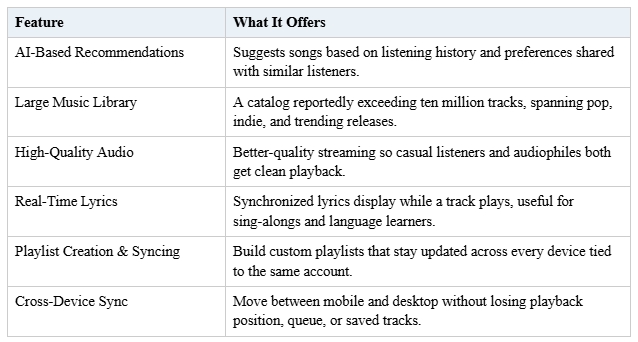
Several features stand out as the foundation of what makes Qishui Music function as a modern music discovery app rather than a basic player. The table below breaks down the most notable ones.
How Qishui Music Works
The Recommendation System
At the center of Qishui Music sits a recommendation system that studies listening behavior in much the same way short-video platforms study viewing behavior. Every skip, replay, like, and completed listen feeds into a model of what a user tends to enjoy, gradually shifting suggestions toward genres and artists that match real habits rather than broad, generic categories.
Search and AI Feed Working Together
Rather than treating search and recommendations as separate features, Qishui Music blends the two. A direct search still works as expected, but results and surrounding suggestions are shaped by the same recommendation engine, so two users searching the same artist might see different related tracks afterward.
Influence From the Douyin Ecosystem
One of the more distinctive parts of how Qishui Music works is its connection to Douyin’s short-video trends. Songs gaining traction in short videos often appear more prominently in the discovery feed, and the app supports syncing playlists so favorite tracks can be used directly in video content, bridging short-form video culture with music discovery.
User Experience and Interface
Qishui Music’s interface follows a clean, modern layout that prioritizes browsing and discovery over manual navigation through menus. Users are generally met with a feed-style experience similar in spirit to a short-video app, just built around audio tracks instead of clips, gently nudging listeners toward songs they might not have actively gone looking for.
On the performance side, the app is generally noted for fast playback and smooth streaming, with minimal buffering during normal use. Combined with the lyrics display and clean visual design, the overall experience leans toward a lean-back listening session rather than active music management.
Use Cases
Qishui Music fits into a range of everyday listening situations, including:
• Daily music listening without constantly choosing the next track.
• Discovering trending songs before they hit mainstream rotation.
• Workout or study playlists built around energy levels or focus.
• Background music tied to short-video trends.
• Offline listening and travel with downloaded tracks.
Benefits of Qishui Music
Several practical advantages explain why Qishui Music has built a dedicated user base:
• Easy music discovery through a recommendation engine that does the searching.
• A personalized listening experience that evolves with real behavior.
• High-quality sound for casual listeners and audiophiles alike.
• Sync across devices without losing playlists or queues.
• Time saved from manual searching, leaving more time to actually listen.
Conclusion
Qishui Music represents a clear example of where music streaming is heading: away from manual search-driven libraries and toward feeds shaped by behavior, preference, and real-time trends. Backed by ByteDance and closely connected to the Douyin ecosystem, the platform blends a large music library, real-time lyrics, cross-device syncing, and an AI-driven recommendation engine into one discovery-focused experience.
Its growing popularity reflects a broader shift in how listeners want to engage with music, less about hunting for songs and more about letting a smart system bring relevant tracks directly to them. As personalized, AI-powered platforms continue to shape the digital music industry, Qishui Music stands out as a strong example of where music streaming and discovery are likely headed next.
Media Contact
Company Name: qishuiim
Email: Send Email
Country: China
Website: https://qishuiim.com/