
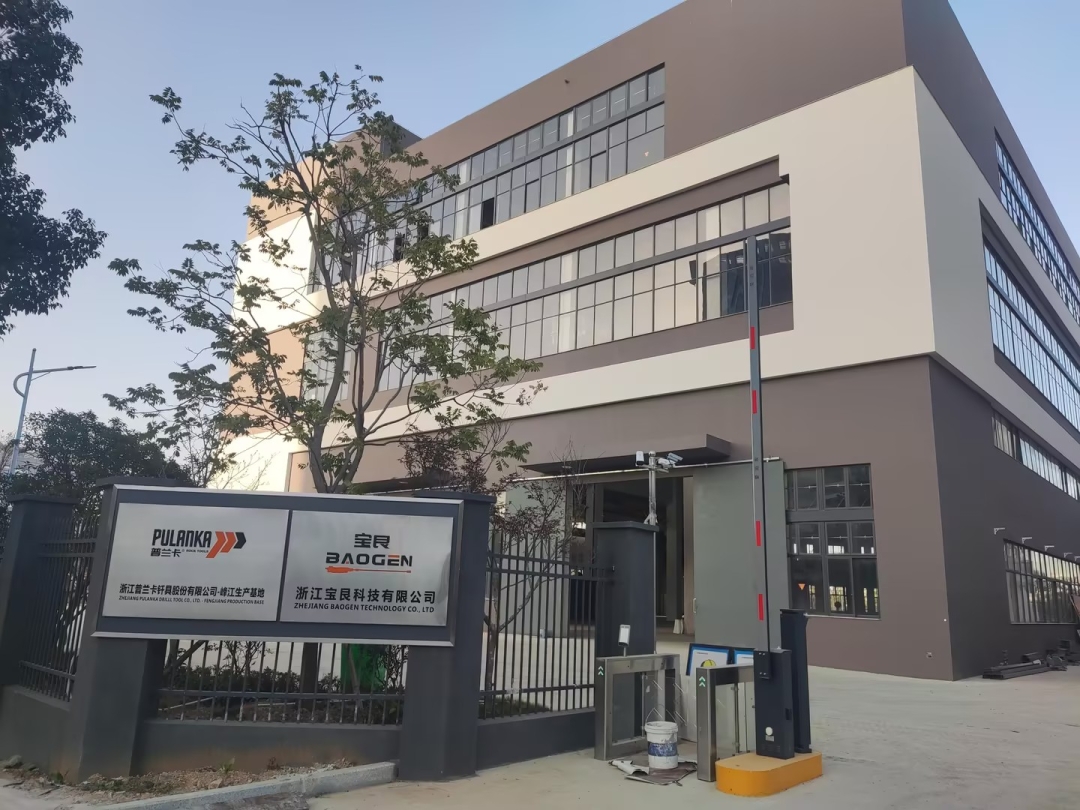
TAIZHOU, China – November 24, 2026 – Three Pulanka drill rods of the same specification reached the end of their service lives for two different reasons during a tunnel excavation trial in Shandong Province. One rod bent near the male thread during work to clear a hazard. The other two developed thread fractures. Zhejiang Pulanka Rock Tools Co., Ltd. documented each rod’s drilling distance, operating conditions and reason for removal in its July 10 field report. Together, those records give contractors a basis for evaluating how closely the results apply to their own equipment and ground.
All three rods measured 4.3 meters and carried the designation MF-T38-H35-R32. The first completed 11 drilling rounds and 2,508 meters before the crew removed it. The second completed 15 rounds and 3,420 meters, and the third completed 12 rounds and 2,736 meters. At this site, a contractor budgeting on the longest run would have counted on four more rounds of service than the first rod delivered. The individual results show the spread a buyer would lose by relying on a single service-life figure.
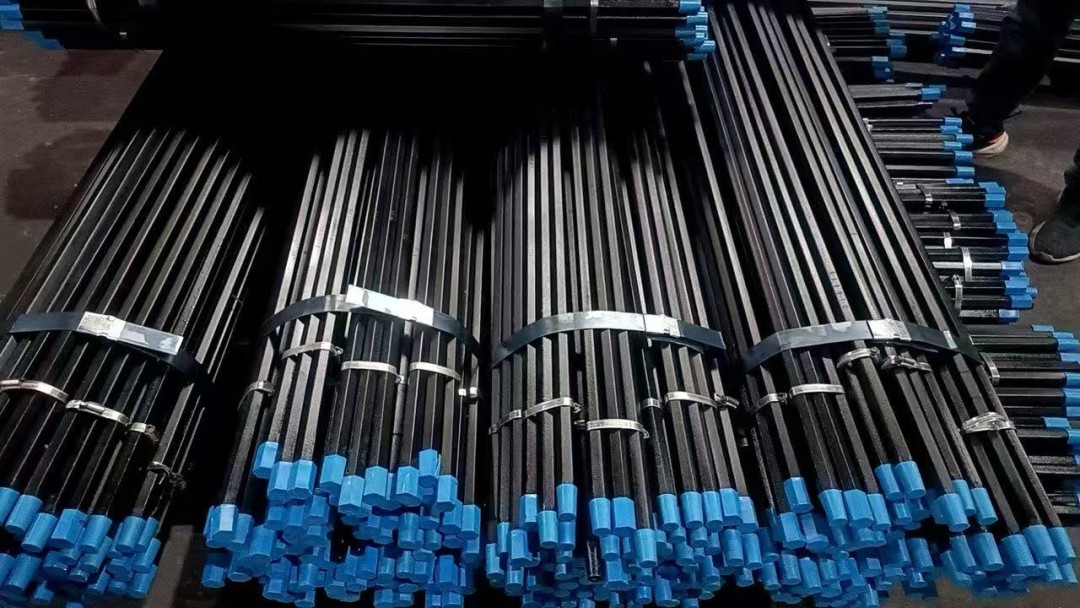
What the field test measured
Crews at the Zaozhuang mine excavated through biotite leptynite, amphibolite and ore-bearing ground. A typical round involved about 60 holes averaging 3.8 meters in depth, giving approximately 228 meters of cumulative drilling across the tunnel face. For a procurement team estimating rod consumption, the distinction between drilling distance and tunnel advance matters. The service record counts the length of every hole. A construction schedule may instead report how far the tunnel advanced after the crew completed the round.
Pulanka recorded penetration rates of 1.36 meters per minute in waste rock and 1.15 meters per minute in ore. The third rod completed nine rounds in waste rock and three in ore before its thread fractured. A contractor whose crews work predominantly in ore can take that difference into account when planning a trial. The penetration rate helps an engineer estimate drilling time, while the cumulative distance at removal gives the buyer a measure of rod consumption.
Matching a replacement drill rod to the equipment underground
The Zaozhuang crew used an Epiroc K111 rig equipped with a COP 1838HD+ hydraulic drifter and a COP1838-435-T38 shank adapter. In top hammer drilling, the drifter delivers impact energy through the shank adapter and drill rod to the bit. A supplier checking a replacement therefore needs the specifications for both ends of the rod, along with its body profile and length.
An inquiry for a “4.3-meter drill rod” leaves several details open. In the tested Pulanka designation, T38 and R32 identify the two thread connections, while H35 identifies the hexagonal body size. Providing the complete designation and the installed shank adapter reference allows a distributor to check the proposed rod against the equipment in service. Once the engineer approves the match, the buyer can carry the same description from the quotation into the purchase order.
The bit requires a separate check. Pulanka offers Thread Button Bit in several diameters. A buyer who supplies both the R32 connection and the required hole diameter gives the distributor enough information to narrow the selection. If a quotation covers several drill strings, it should also identify which assembly requires a separate coupling sleeve. Recording each approved combination against the corresponding rig helps warehouse staff issue the correct spares when crews request replacements.
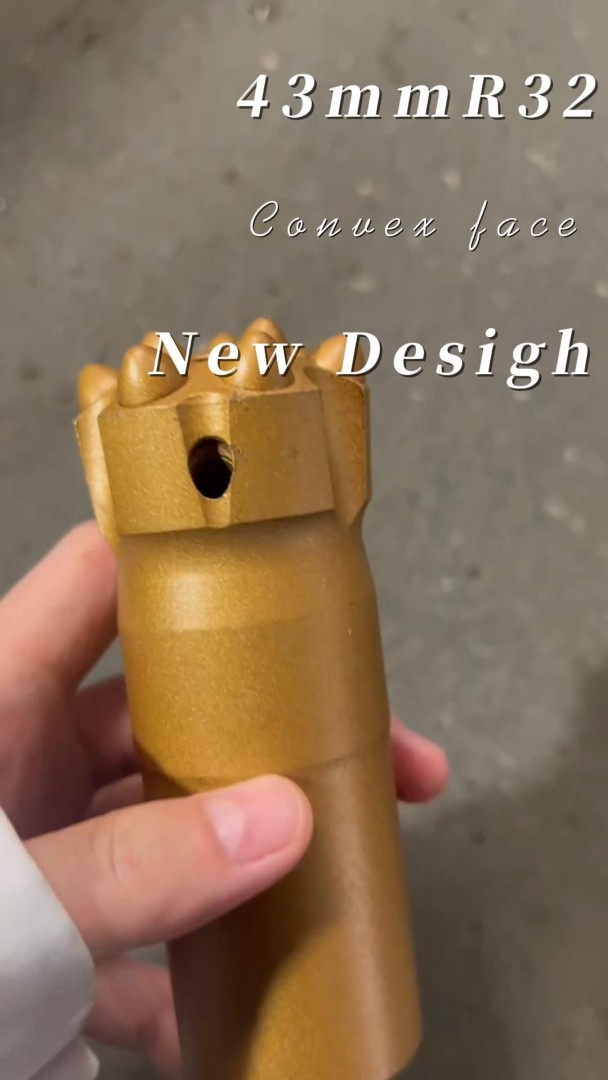
How Pulanka manufactures and inspects threaded rods
Pulanka specifies 23CrNi3Mo alloy steel for its threaded drill rods and uses carburizing to increase surface hardness and resistance to wear. Its range includes hexagonal threaded rods, round threaded rods and guide rods. Engineers evaluating a substitute can use the steel grade and heat treatment to review the proposed material, then check the profile, length and connection dimensions against the assembly already in use.
Pulanka’s rod-series documentation describes 36 inspection procedures and identifies the instruments used in its quality program. These include a spectrometer for checking material composition, a coordinate measuring machine and a profile measuring instrument for dimensional inspection, and hardness testers for evaluating treated steel. Each addresses a different purchasing question. A material record can confirm the steel supplied. A dimensional inspection record can help an engineer resolve a question about the fit shown on a drawing.
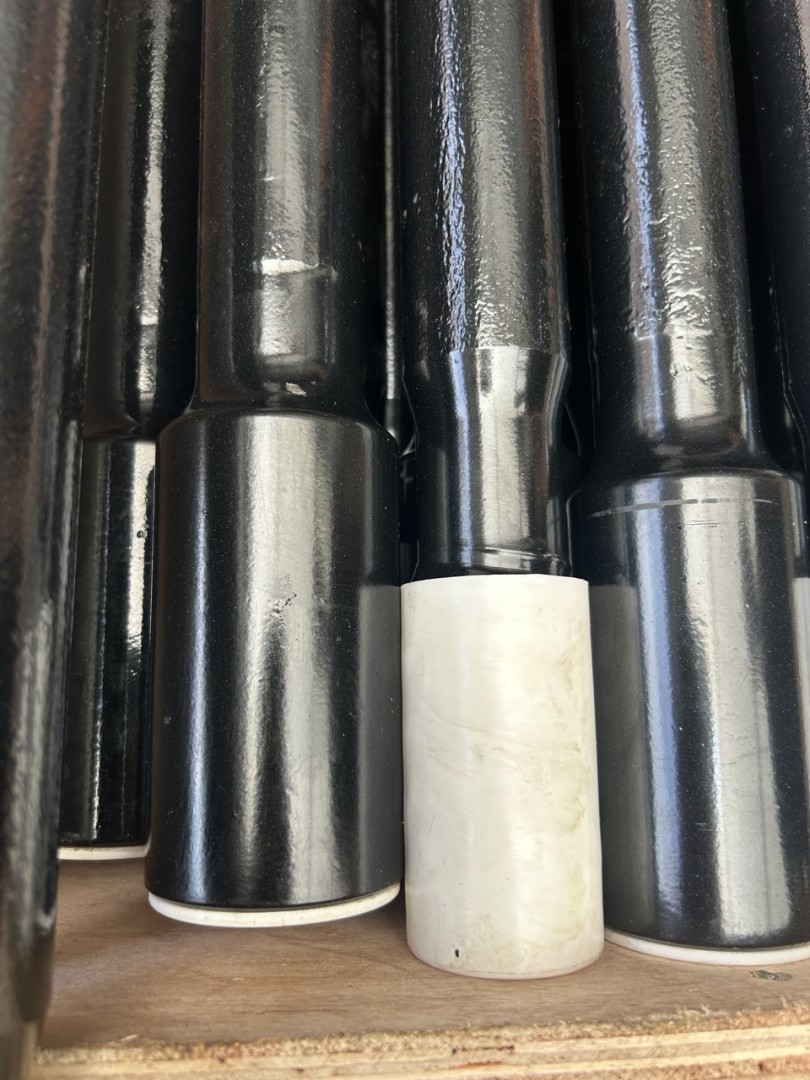
For an overseas distributor, those records are particularly relevant when a customer sends a worn rod for identification. A damaged thread can make its original dimensions difficult to establish from the sample alone. The equipment reference, original part designation and an agreed drawing give the manufacturer and distributor a common specification for approval. Pulanka also lists packaging to customer requirements, allowing buyers to agree during quotation on how different rod sizes should be identified for receipt at their warehouse.
How contractors can calculate drill rod cost per meter
A contractor can calculate rod purchase cost per drilled meter by dividing the delivered price of one rod by the cumulative meters it drills before removal. The Zaozhuang report supplies three observed distances that a buyer can use with a quoted price to estimate a range of costs. Keeping the removal reason beside each calculation also helps explain the result. In the first rod’s case, the record identifies a specific incident that the maintenance team can examine when reviewing the shorter run.
The most useful trial record depends on the work. Pulanka lists threaded rods for tunnel development, underground mining, rock bolt holes and civil engineering anchor holes. A tunnel contractor working repeated rounds of similar depth may use completed rounds to schedule spare rods. A contractor drilling anchor holes to several depths can compare cumulative meters more readily across jobs. Agreeing on the unit before a trial allows the purchasing team to use the field record directly when comparing quotations.
For buyers considering the MF-T38-H35-R32, the Shandong report provides a specific configuration to quote and three service records to compare with local experience. Recording the installed equipment, ground conditions, drilled distance and reason for removal during a local trial gives engineers a basis for assessing fit and wear. Combined with the delivered price, those same records can guide the next order quantity and the number of spares held on site.
About Zhejiang Pulanka Rock Tools Co., Ltd.
Zhejiang Pulanka Rock Tools Co., Ltd. manufactures rock drilling tools in Taizhou, Zhejiang Province, China. Its products include threaded drill rods, shank adapters, coupling sleeves and drill bits for mining, quarrying, tunneling and other engineering applications. The company has more than 20 years of manufacturing experience and reports that its products are used in more than 30 countries and regions.
Media Contact
Company Name: Zhejiang Pulanka Rock Tools Co.,Ltd.
Contact Person: Elma
Email: Send Email
Phone: +86 13738628777
Address:No.4855, Shugang Avenue,Jinqing Town,Luqiao District,Taizhou City,Zhejiang
City: Taizhou
State: Zhejiang
Country: China
Website: https://www.pulankagroup.com/