
In scenarios that require extremely high power supply continuity and stability, such as industrial production, data centers, hospitals and shopping malls, a single diesel generator set often cannot meet the demands of high-power, uninterruptible and redundant backup power supply. At this time, the parallel operation technology of diesel generator sets serves as the core solution. Simply put, parallel operation refers to connecting two or more diesel generator sets of similar models and specifications through a professional control system to supply power to loads jointly. This article elaborates on its core principles, operating conditions and working procedures in an easy-to-understand manner.
I. Why Do We Need Parallel Operation of Generator Sets?
Many people may wonder why multiple sets are adopted for parallel operation instead of a single high-power unit. In fact, the core values of parallel operation technology lie in flexible adaptation, high stability and reliability, and energy saving and consumption reduction.
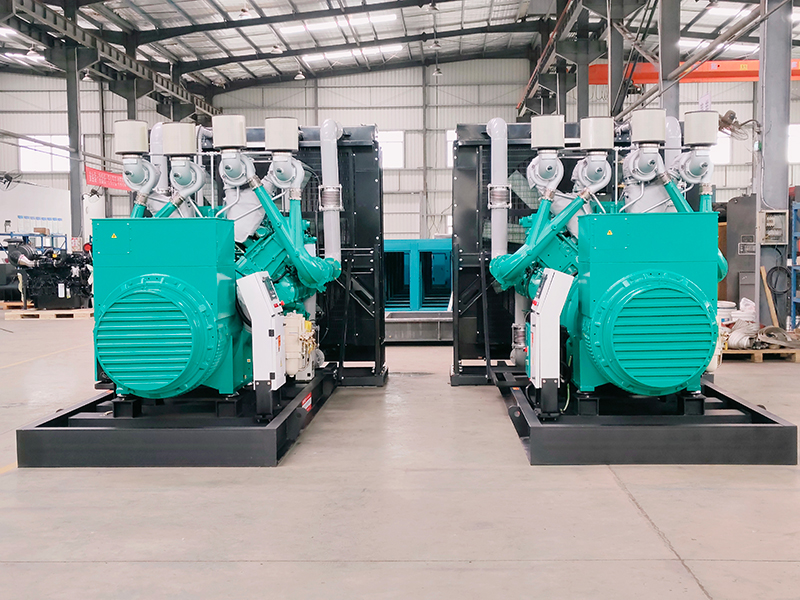
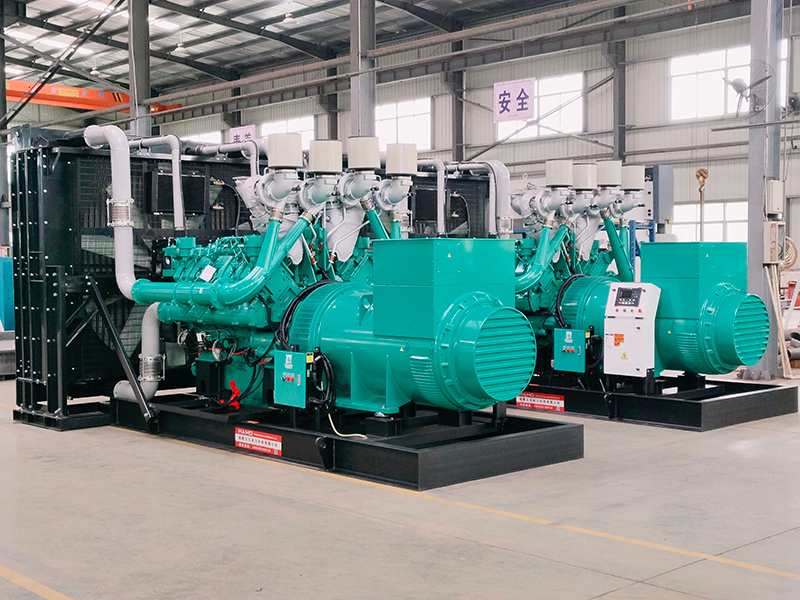
First, it enables flexible power adaptation. The electrical load is not fixed; it peaks during rush hours and drops during off-peak periods. Multi-unit parallel operation can automatically adjust the number of operating units according to real-time loads, starting fewer units for low loads and more units for high loads. This avoids the low-efficiency operation of a single high-power unit under light load conditions. Second, it provides redundant power supply guarantee. A fault in a single unit will directly cause a power outage, while in a parallel system, the remaining units can seamlessly take over the power supply if one unit fails, eliminating power outage accidents. Third, it reduces operation and maintenance costs. Compared with an ultra-large single unit, a combination of multiple small and medium-power units has lower costs in equipment procurement, maintenance and upkeep, and facilitates fault troubleshooting.
II. Core Preconditions for Parallel Operation: Four Synchronization Requirements
AC parallel operation is a precise electrical operation, and it is forbidden to directly connect the circuits of two generator sets arbitrarily. Forced parallel operation of units with mismatched parameters will generate huge circulating current, burn generator windings, break down power distribution equipment, and even cause safety accidents. Therefore, precise synchronization is the core of parallel operation, and the following four conditions must be met simultaneously:
1. Equal Voltage Amplitude
The effective values of the output voltage of the generator sets to be paralleled must be basically consistent, with a standard allowable error not exceeding ±5%. Unequal voltages will generate reactive circulating current at the moment of parallel connection. The larger the voltage difference, the stronger the circulating current, which will directly impact the unit equipment and cause severe heat generation and increased loss.
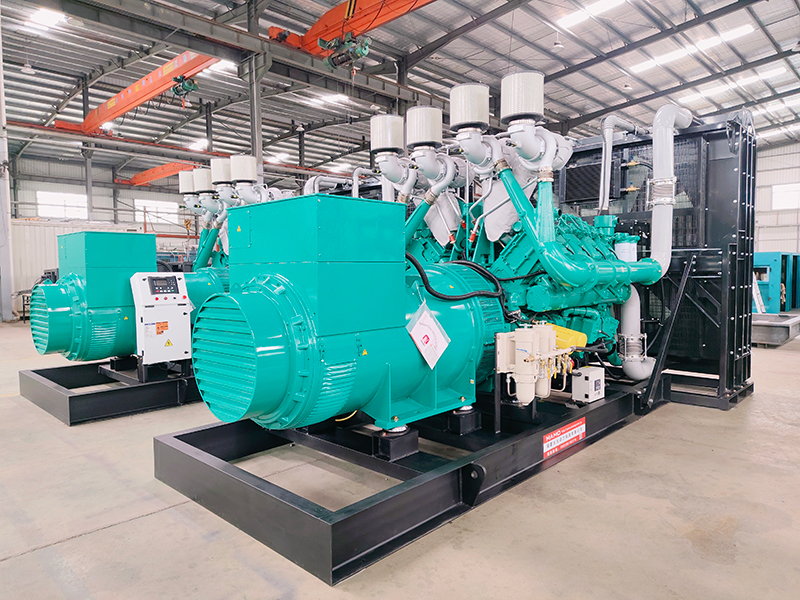
2. Consistent Frequency
The standard frequency of industrial AC power in China is 50Hz, and the operating frequency of all paralleled units must be strictly unified. The frequency is determined by the speed of the diesel engine. Speed fluctuation will directly lead to frequency deviation. Different frequencies will produce active power circulating current, causing unit speed oscillation, power imbalance and unstable operation.
3. Identical Phase
This is the most critical condition for parallel operation. AC power features periodically fluctuating waveforms, and the voltage waveforms of the two generator sets must be synchronized at all times with perfectly aligned crests and troughs. Even a tiny phase deviation will generate a strong inrush current, which is the main cause of equipment damage. The core function of an automatic parallel operation system is to accurately calibrate the phase difference.
4. Consistent Phase Sequence
For three-phase diesel generator sets, the phase sequence of all phases (A, B, C phases in one-to-one correspondence) must be completely consistent. Wrong phase sequence is a fatal fault, and forced parallel operation will cause instantaneous short circuit and explosion. Therefore, the phase sequence must be strictly checked during initial wiring and restart after equipment maintenance.
III. Complete Working Principle and Procedure of Diesel Generator Set Parallel Operation
The complete parallel operation process consists of five core steps: speed regulation, voltage regulation, synchronous calibration, closing and parallel connection, and power sharing, which can be fully automatically completed by an intelligent parallel control system without manual intervention.
1. Unit Preheating and Parameter Initialization
Multiple diesel generator sets are started respectively, and enter the no-load operation state after idling preheating. At this time, each unit generates power independently. The control system collects core parameters of each unit in real time, including voltage, frequency, speed and phase, and compares the benchmark parameters with unit parameter deviations to prepare for synchronous parallel operation.
2. Automatic Speed and Voltage Regulation to Reduce Parameter Deviations
The control system adjusts the fuel supply of the diesel engine through the governor to fine-tune the unit speed and correct the output frequency, making the frequency of all units approach the standard industrial frequency of 50Hz. Meanwhile, it fine-tunes the generator excitation current through the voltage regulator to calibrate the output voltage, keep the voltage amplitude of all units consistent, and eliminate potential circulating current risks caused by voltage and frequency deviations.
3. Accurate Phase Capture and Synchronization Realization
This is the key step for successful parallel operation. The system monitors the phase difference of voltage waveforms of all units in real time, and fine-tunes the unit speed through high-precision algorithms to align the fluctuating voltage waveforms gradually. Electrical synchronization of all units is achieved and the closing condition is met when the phase difference is reduced to a minimal allowable range (usually ≤1°).
4. Synchronous Closing and Parallel Completion
When all four synchronization conditions are satisfied, the control system issues a closing command, and the circuit breakers of all units close in sequence. Multiple diesel generator sets are officially paralleled on the same busbar, completing dual parallel connection in physical and electrical aspects, and forming an integrated power supply system.
5. Power Sharing and Stable Operation
After parallel connection, the core challenge is to avoid overload of individual units and no-load operation of others. The parallel control system distributes active and reactive power in real time, and balances the load proportionally according to the rated capacity of each unit. When the load increases, all units raise power output synchronously; when the load decreases, all units reduce power output synchronously. This ensures balanced unit operation throughout the process and eliminates power deviation, oscillation, overload shutdown and other faults.
IV. Main Types of Parallel Operation Systems
At present, there are two main modes of parallel operation for diesel generator sets, adapting to different application scenarios:
1. Manual Parallel Operation
Operators manually adjust the unit speed and voltage by observing synchronometers, voltmeters and frequency meters, and close the switch after parameter synchronization. This method features cumbersome operation, high technical requirements for operators and low synchronization accuracy. It is only applicable to small old equipment and temporary emergency power supply scenarios, and is gradually phased out.
2. Fully Automatic Intelligent Parallel Operation
Relying on PLC intelligent control systems and high-precision sensors, it automatically completes full-process operations including parameter monitoring, speed and voltage regulation, synchronous closing, power sharing, fault protection and start-stop linkage. It has fast response speed, high synchronization accuracy and strong operation stability, and is equipped with multiple protection functions such as overload, short circuit, phase loss and overspeed protection. It is the mainstream choice for high-standard power supply scenarios in industry and commercial fields.
V. Core Advantages and Application Scenarios of Parallel Systems
Compared with single-unit power supply, the parallel system of diesel generator sets has prominent advantages. First, it greatly improves power supply reliability, and the redundant backup design completely eliminates power outages caused by single-point faults. Second, it achieves more energy-saving operation by starting and stopping units on demand, avoiding fuel waste and equipment loss caused by long-term low-load operation. Third, it supports flexible capacity expansion; new units can be directly integrated into the system with the increase of power load without replacing main equipment. Fourth, it extends equipment service life; uniform load distribution stabilizes the operating load of each unit and reduces equipment fatigue loss.
At present, this technology is widely used in core scenarios requiring uninterrupted and high-stability power supply, such as data centers, hospital operating rooms, rail transit, large shopping malls and hotels, industrial factories and military base stations, serving as a core technical support for backup power supply systems.
VI. Conclusion
The essence of diesel generator set parallel operation is to realize electrical synchronization of multiple independent generators through accurate electrical parameter calibration, and achieve coordinated and stable power supply of multiple units via intelligent power distribution. The four synchronization conditions are the safety foundation of parallel operation, and full-automatic control and power sharing technology are the core of stable parallel operation. This technology perfectly solves the pain points of single-unit power supply including limited power, poor flexibility and low reliability, and has become an indispensable core technology for modern high-power backup and uninterruptible power supply systems.
Media Contact
Company Name: MAMO POWER
Email: Send Email
Phone: 86-591-88039997
Country: China
Website: https://www.mamopower.com/