
In the rapidly evolving field of interventional radiology and minimally invasive surgery, Drainage Catheters, as critical medical devices for establishing internal-external pathways, are transforming from simple drainage tools into multifunctional “lifelines” that integrate diagnosis, treatment, and palliative support. Recent reports from the National Medical Products Administration (NMPA) and multiple clinical institutions indicate that, driven by advancements in material science and puncture techniques, medical device brands represented by Tianck Medical are demonstrating exceptional product performance and clinical value in managing complex conditions such as biliary obstruction, organ abscesses, and intestinal obstruction.
Minimally Invasive Access, Breaking Through Puncture “Forbidden Zones”
For patients with obstructive jaundice, hydronephrosis, or abdominal abscesses, timely drainage of accumulated bile, urine, or pus is critical for life-saving intervention. Compared to traditional open surgeries, which involve significant trauma and slow recovery, percutaneous puncture techniques centered around drainage catheters have become the preferred treatment option.
A case in point is a series of complex biliary catheterizations recently performed at Fujian Medical University Union Hospital. The hospital’s Second Department of Ultrasound successfully placed drainage catheters in patients with bile duct diameters as small as 1.0-1.3 mm under ultrasound guidance . According to the Chinese Journal of Interventional Ultrasound, bile ducts with a diameter of less than 4 mm were once considered a relative contraindication for percutaneous transhepatic cholangial drainage, and puncturing micro-bile ducts (≤2 mm) is extremely challenging. By employing the “parallel bile duct method” and precision puncture kits, the clinical team successfully overcame anatomical limitations, accurately placing the drainage catheter into the target position and rapidly alleviating the patients’ symptoms of jaundice and infection .
Tianck’s Ingenious Design, Forging Excellence
The design of modern drainage catheters fully reflects the integration of medical expertise and engineering ingenuity. As a medical device company specializing in the interventional consumables sector, Tianck Medical has accumulated extensive experience in the R&D and manufacturing of drainage catheters and associated puncture kits. According to product registration information from the NMPA database and various companies, mainstream clinical drainage catheters are typically made of polyurethane, with some featuring a hydrophilic coating (e.g., PVP) on the surface to facilitate percutaneous insertion and minimize tissue trauma .
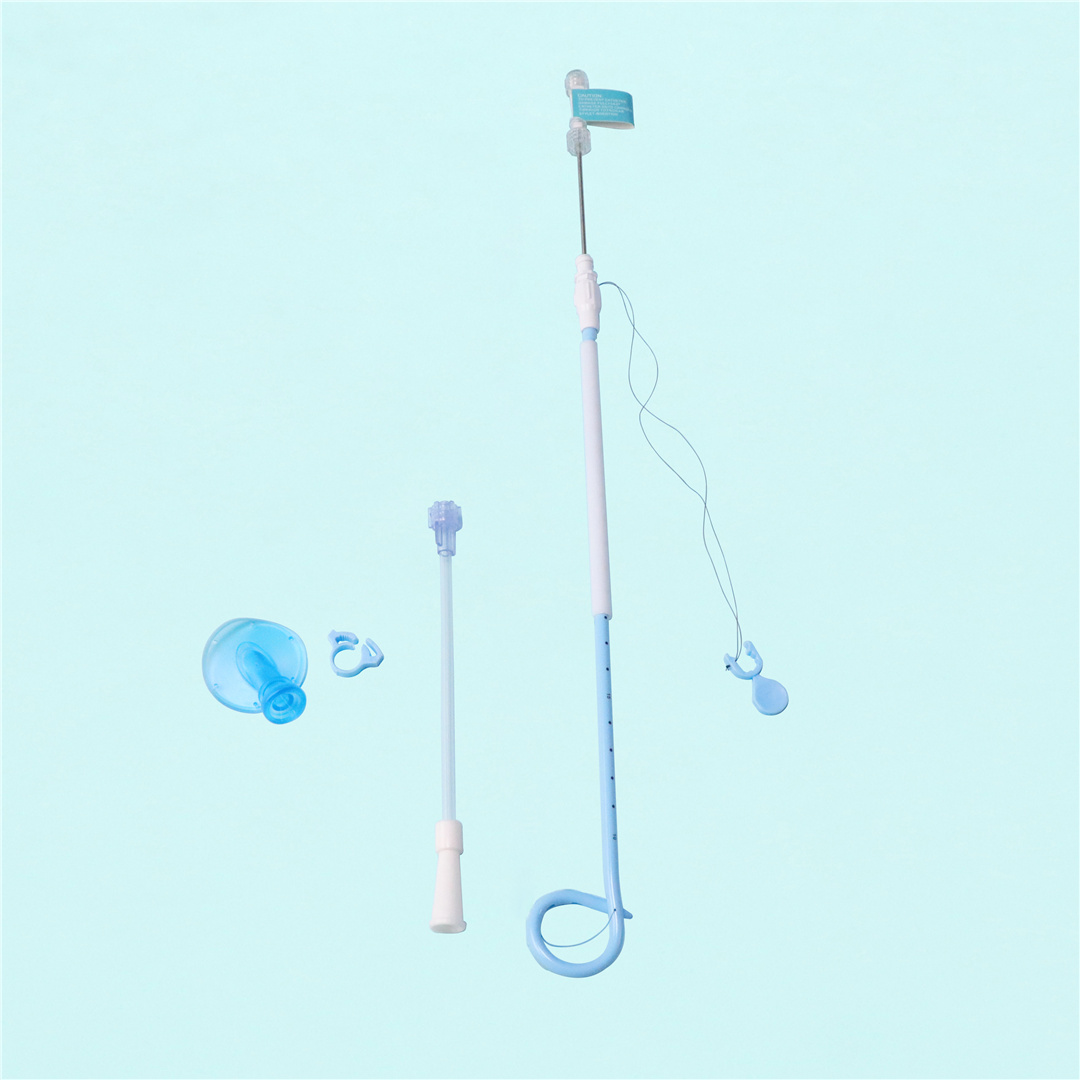
In terms of structural design, Tianck drainage catheters prioritize clinical usability and safety. The catheter tip often features a “pigtail” design with a locking suture. This design not only allows the catheter to automatically coil and lock in place within the body to prevent dislodgement but also incorporates side holes that effectively disperse drainage pressure and reduce the risk of catheter blockage . For kit configuration, the Tianck drainage catheter set typically integrates the drainage catheter, metal stiffener, and Trocar Needle into a single unit, while also including accessories such as guidewires and dilators. When used in conjunction with imaging guidance like ultrasound, CT, or DSA, it enables direct puncture and catheterization of abscesses, cysts, and pleural effusions, offering an operation that is “simple, quick, safe, and accurate”.
Technological Integration, Expanding Therapeutic Boundaries
The application scope of drainage catheters is continuously broadening. Beyond traditional hepatobiliary and renal drainage, a 3-meter-long intestinal obstruction tube is playing a crucial role as an “intestinal cleaner” in the treatment of intestinal obstruction. According to a case published on the official website of the Zibo Municipal Health Commission, the Peking University Medical Zibo Hospital successfully drained nearly 1000 ml of intestinal fluid and avoided bowel perforation in a patient with adhesive intestinal obstruction by placing a 3-meter-long tube via the nasal route. This tube can navigate deep into the small intestine like a “maze navigation,” providing continuous decompression and buying valuable time for the recovery of intestinal function .
Furthermore, in comprehensive cancer treatment, drainage catheters play a significant role. The Oncology Department of Peking University Third Hospital Qinhuangdao Hospital recently performed percutaneous transhepatic cholangial drainage combined with biliary stent placement for an elderly patient with obstructive jaundice caused by biliary malignancy. By rapidly lowering bilirubin levels and improving liver function through the drainage catheter, the patient gained the opportunity to receive subsequent anti-tumor therapy . This staged “drainage plus stent” approach fully demonstrates the value of minimally invasive intervention in palliative cancer care.
Standardized Use, Ensuring Patient Safety
With the widespread adoption of drainage catheter technology, its safety and standardized use have garnered significant attention. According to procurement standards from institutions like Fudan University Shanghai Cancer Center, qualified drainage catheters and accessories must comprise a complete kit and be sterilized via ethylene oxide to ensure sterility . Professional literature from UpToDate indicates that whether using blunt dissection for large-bore tube placement or the Seldinger guidewire technique for small-bore tube placement, operators must undergo rigorous training and ensure thorough preoperative preparation and infection prevention measures.
Experts advise that home care for patients discharged with a catheter in place is crucial. Patients should be careful to secure the drainage tube to prevent tugging, keep the drainage bag below the puncture site to prevent reflux infection, closely monitor the color and volume of drained fluid, and seek immediate medical attention if they experience fever, abdominal pain, or a sudden decrease in drainage output.
From the remarkable skill demonstrated in a fine needle to the evolution of a single catheter, we witness the progression of medical technology. Medical device brands represented by Tianck Medical, through continuous technological innovation and rigorous manufacturing processes, are helping to advance drainage catheter technology in the era of precision medicine, clearing the path to life and bringing hope of recovery to more patients.
Disclaimer: This article is for medical popularization, purposes only and does not constitute professional medical advice. Please always follow the diagnosis and treatment plans provided by your treating physician.

Media Contact
Company Name: Tianck Medical CO., Ltd.
Email: Send Email
Country: China
Website: https://www.tianckmedical.com/