
Binzhou City,Shandong Province, China – October 15, 2026
Rework costs time long before it shows up in the final project budget. When Pipeline Floats fit poorly, arrive with incomplete hardware, or fail to match the real operating load, your team may need extra adjustments on site. A well-prepared float system helps reduce those avoidable delays.
Why Rework Often Starts Before Installation
Many Floating Pipeline problems do not begin in the water.
They begin during specification.
If the supplier receives only a pipe diameter and quantity, important project details may be missed. The pipe may have heavier connection sections, additional equipment, changing working loads, or a route that needs different support conditions.
When these details are not discussed before production, the site team often becomes responsible for solving them later.
For you as a contractor or project owner, that means additional labor, schedule pressure, and sometimes replacement parts.
A professional pipeline float system should therefore be reviewed according to the complete operating condition rather than treated as a standard accessory.
The more accurately the float configuration matches your real pipeline, the less correction your installation team needs to make after delivery.
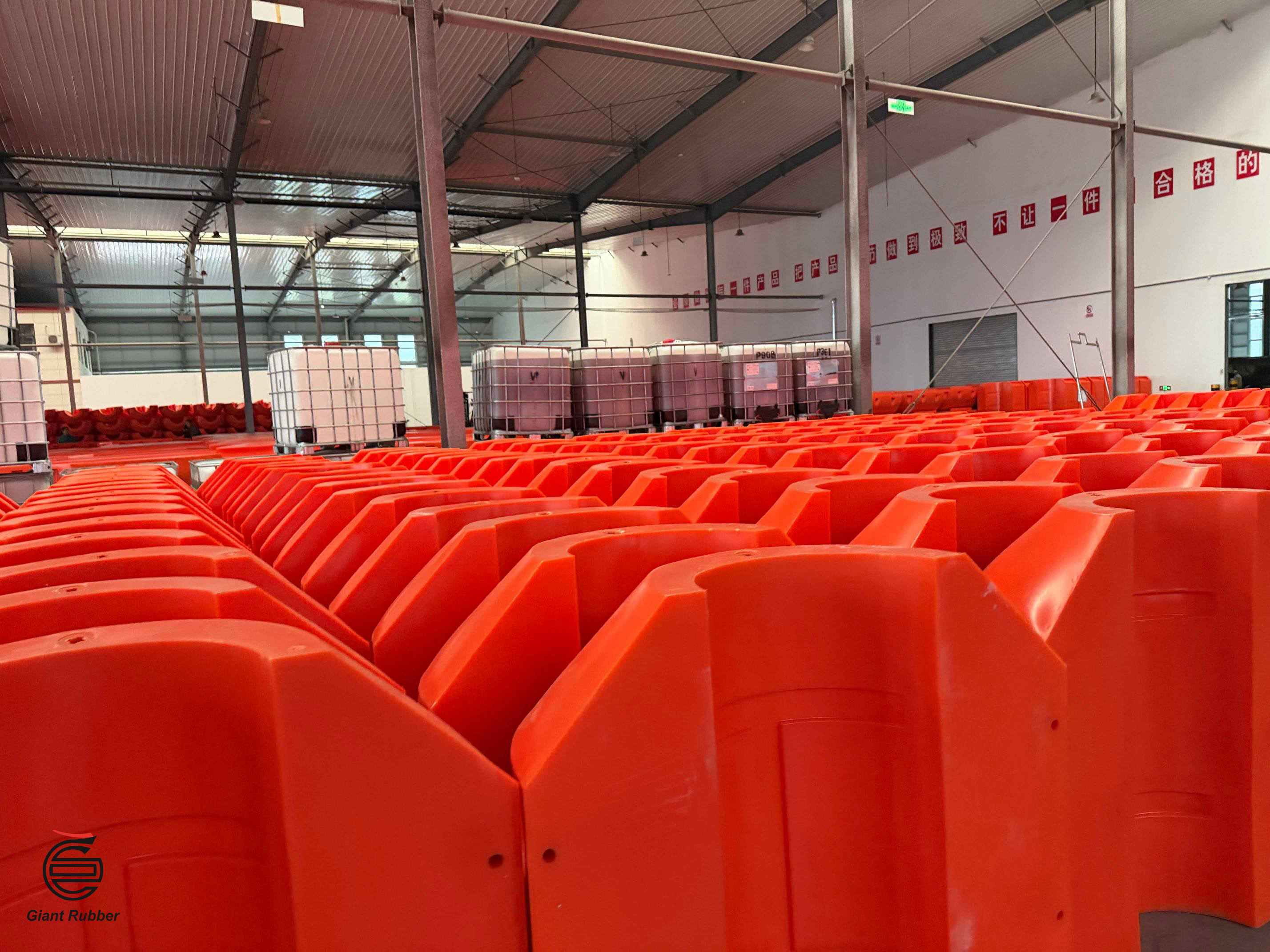
Correct Pipe Fit Reduces Field Adjustment
A modular pipeline float normally uses two matching sections installed around the pipe.
This design looks simple, but dimensional accuracy matters.
If the internal pipe-contact area is too loose, the float may rotate or move along the line. If it is too tight, the two halves may be difficult to close and fasten correctly.
Either situation can slow down installation.
A well-matched marine pipeline float should fit the specified outside diameter without requiring your team to force the sections together or add temporary packing materials.
For large project orders, consistency between units is equally important.
Your crew should be able to take matching float halves from the same specification group and assemble them without searching for a particular pair.
This is where production control directly affects site efficiency.
Buoyancy Should Match the Working Pipeline, Not the Empty Pipe
Another common source of rework is incomplete load information.
An empty pipeline and an operating pipeline do not behave in the same way.
The working line may include transported material, heavier joints, connectors, valves, or attached components. These loads influence how much support is required.
If the float system is designed only around the empty pipe, the line may sit lower than expected once operation begins.
Your team may then need to add additional floats or change the spacing after installation.
A better approach is to evaluate the real operating weight before production.
For a floating pipeline support system, the goal is not maximum buoyancy. It is controlled buoyancy that keeps the line at the intended working position without unnecessary oversizing.
This helps you avoid both under-support and excessive equipment cost.
Consistent Support Helps Protect Connection Areas
Pipeline joints are often more sensitive to uneven support than straight pipe sections.
When one side of a joint is supported well and the other side sits lower, repeated movement can create additional bending around the connection.
Over time, this may lead to more frequent inspection or adjustment.
Correctly arranged pipeline floats help maintain a smoother pipeline profile so neighboring sections move more consistently.
This is especially important around bends, transitions, and heavier connection areas.
The support pattern does not always need to be identical across the entire route.
In many projects, it is more practical to use standard spacing in stable sections and provide additional support where the load or movement is greater.
That approach reduces unnecessary product use while giving critical areas more control.
Modular Design Makes Maintenance More Practical
A modular pipeline float can usually be removed individually without dismantling a long section of the pipeline.
That becomes valuable when one unit needs inspection or replacement.
Instead of interrupting a large part of the system, your maintenance team can focus on the affected float.
This can also make route changes easier. If your pipeline is extended or repositioned, suitable floats can often be moved and reused.
For contractors handling phased projects, this flexibility helps reduce repeated procurement and keeps equipment useful beyond the first installation.
The important point is that reuse should always follow inspection.
The float body, fastening points, internal buoyancy condition, and hardware should be checked before the unit returns to service.
Durable Construction Helps Reduce Routine Intervention
Pipeline floats spend most of their service life outdoors.
They are exposed to water, sunlight, temperature changes, handling impact, and repeated movement.
A durable outer body helps protect the buoyancy structure while maintaining the shape needed for secure installation.
Corrosion resistance is another practical advantage.
Because the float body does not require routine rust removal or repainting, your maintenance team can focus more attention on fastening hardware, joints, and pipeline condition.
Impact resistance also matters during handling.
Floats can be contacted during unloading, temporary storage, assembly, or repositioning. A resilient body helps reduce damage caused by normal project activity.
For B2B buyers, these characteristics influence lifecycle value more than appearance alone.
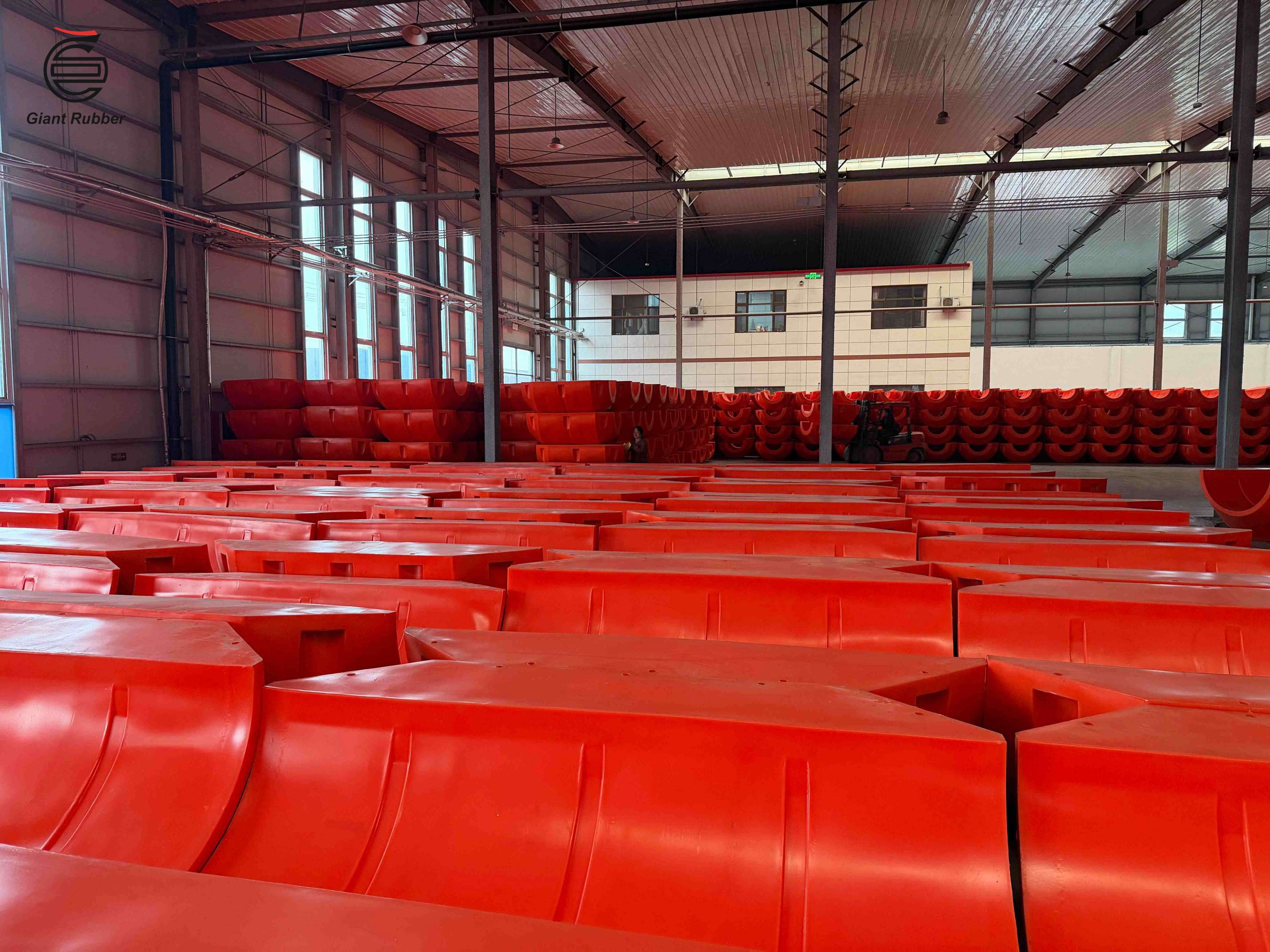
Lightweight Handling Reduces Installation Pressure
Pipeline floats are bulky products, so manageable body weight is useful during field installation.
A lighter unit is easier to unload, carry to the assembly area, position around the pipe, and move again if the layout changes.
This becomes more noticeable on a long pipeline where your crew may handle many float units during the same working period.
The advantage is not simply easier lifting.
Better handling can also reduce accidental damage and help the crew maintain a more consistent installation sequence.
A reliable heavy-duty pipeline float should therefore balance buoyancy, durability, and manageable handling rather than focusing on one feature alone.
Recent Pipeline Float Shipment Prepared to Reduce Site Rework
A recent Juhua Rubber & Plastics order involved a batch of custom pipeline floats prepared for a marine infrastructure project.
The customer wanted the products to arrive ready for direct installation with minimal adjustment at the project site.
Before production began, the technical team reviewed the pipe outside diameter, approximate working weight, installation method, connection arrangement, and operating conditions.
The float configuration was then confirmed according to the project information.
During manufacturing, attention was given to internal dimensions, mating surfaces, fastening locations, and consistency between float halves.
This was important because the customer needed interchangeable units within the same specification group.
Once production was completed, the floats moved into pre-shipment inspection.
Pre-Shipment Inspection Focused on Preventing Site Problems
The inspection process focused on issues that could create rework later.
The main checks included:
- Correct internal dimensions for the specified pipe
- Alignment between matching float halves
- Fastening-point accuracy and hardware completeness
- Outer-body condition and structural consistency
- Product identification and package references
This was the only stage where a checklist format was useful because these items could be verified directly before packing.
The goal was not simply to confirm appearance.
It was to make sure the products could be assembled and identified correctly when they reached the project site.
Shipment Organization Reduced Sorting Time
Large pipeline float orders usually include bulky bodies and much smaller fastening components.
If the hardware is mixed or labels are unclear, site teams may spend unnecessary time sorting before installation can begin.
For the recent pipeline float shipment, float units were grouped according to specification, while fastening components were packed separately and linked to the relevant product batches.
The package identification allowed the receiving team to compare the shipment with the packing information quickly.
This is especially useful when a project receives equipment from several suppliers during the same period.
Clear organization helps reduce confusion in temporary storage areas and makes it easier to prepare the correct float groups for each pipeline section.
Custom Pipeline Floats Help Avoid Compromise on Non-Standard Projects
Standard products do not fit every pipeline.
Your project may involve an unusual outside diameter, heavier joints, attached cables, special visibility requirements, or sections with different support demands.
A custom pipeline float solution allows these details to be considered before manufacturing.
The internal pipe profile, buoyancy arrangement, fastening design, color, and identification can all be reviewed around the real project.
For the best result, you should provide drawings, pipe dimensions, working weight, route information, and connection details as early as possible.
This helps the manufacturer identify potential conflicts before the products reach production.
Solving those issues at the factory is almost always easier than correcting them at the project site.
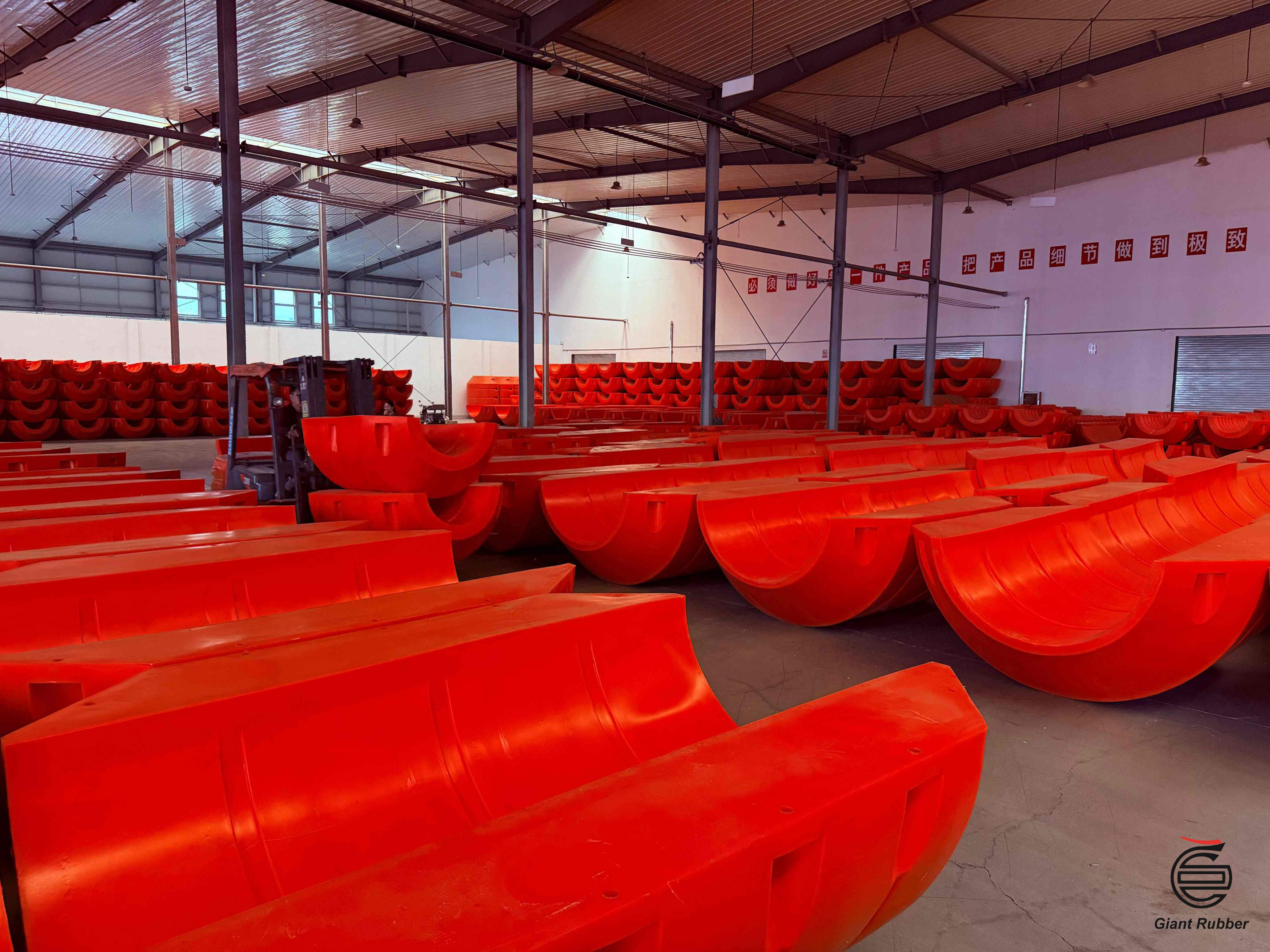
Where Pipeline Floats Add Value
Pipeline floats can support a wide range of marine and inland water infrastructure projects.
Port operators may use floating pipelines during construction and maintenance activities. Marine engineering companies can apply modular float systems where pipelines need to be installed or adjusted in stages.
Land development projects may require floating transport lines between changing working areas.
Water resources and environmental agencies can use supported pipelines for water transfer, emergency pumping, reservoir operations, and temporary infrastructure.
Government and public utilities may also require pipeline floats for marine infrastructure or industrial water systems where temporary or movable pipeline routes are needed.
The applications vary, but the principle remains the same: the support system should match the actual working condition.
Why Project Buyers Should Consider Rework Cost
The lowest unit price does not always result in the lowest project cost.
If products require adjustment after delivery, the real cost increases through labor, delay, extra hardware, replacement parts, and additional supervision.
A well-matched pipeline float system can help reduce those indirect costs.
For B2B buyers, this makes supplier capability important.
A reliable pipeline float manufacturer should understand your project information, maintain consistent production, inspect critical dimensions, and organize the shipment so your team can work efficiently after delivery.
At Juhua Rubber & Plastics, project requirements are reviewed before production so the float configuration can better match actual field use.
FAQWhat causes pipeline float installation problems?
Common causes include incorrect pipe dimensions, incomplete working-load information, inconsistent float sizing, unsuitable fastening hardware, and unclear product identification.
Can pipeline floats be customized for unusual pipe dimensions?
Yes. Internal fit, buoyancy, fastening configuration, markings, and external dimensions can be adjusted according to the project information.
Can pipeline floats be replaced individually?
Modular split-body floats can generally be removed and replaced individually, which can make maintenance easier than replacing a complete support section.
What information should you provide before ordering pipeline floats?
You should provide pipe outside diameter, working weight, transported material, route conditions, installation method, connection details, and required floating position.
Conclusion
Reliable pipeline floats help reduce more than pipeline movement. They can also reduce site rework, installation delays, and unnecessary maintenance intervention.
Correct dimensions improve pipe fit, suitable buoyancy supports the working pipeline, modular construction simplifies replacement, and consistent manufacturing reduces field adjustment.
The recent shipment also demonstrates why pre-shipment inspection, matched hardware, and organized packing matter to real engineering projects.
For port operators, marine engineering companies, contractors, infrastructure developers, water agencies, and public utilities, selecting pipeline floats around actual project conditions can make the entire installation process more predictable and easier to manage.
About us
Shandong Binzhou Juhua Rubber & Plastic Co., Ltd. is a leading manufacturer of polyethylene flotation products in China, specializing in high-performance pipeline floats, marine navigation buoys, mooring buoys, and debris barriers. With strong R&D capabilities and advanced production technology, we provide efficient and professional integrated solutions for global water engineering projects.
Media Contact
Company Name: Shandong Binzhou Giant Rubber Rubber & Plastic Co., Ltd.
Contact Person: Media Relations
Email: Send Email
Country: China
Website: https://www.pefloaters.com/