
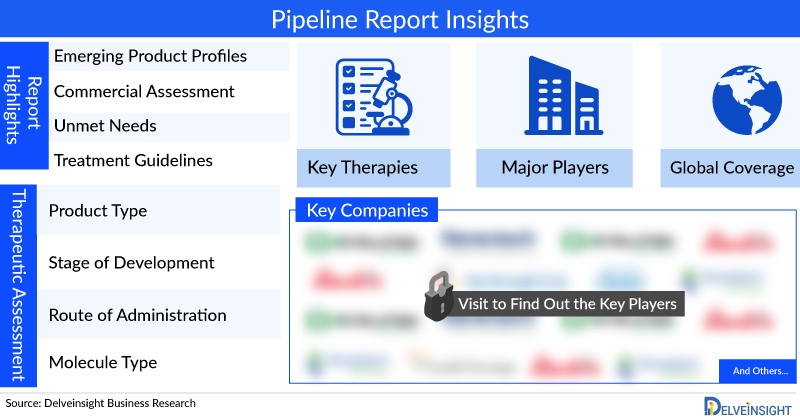
DelveInsight’s “Persistent Epithelial Defects – Pipeline Insight, 2025” highlights an emerging wave of candidates designed to enhance corneal healing and prevent complications. Recombinant growth factors such as nerve growth factor (NGF) and epidermal growth factor (EGF) are being evaluated for their ability to stimulate epithelial proliferation and migration. Cell- and tissue-based approaches, including cultivated limbal epithelial transplantation and engineered amniotic membrane products, are advancing in clinical studies, offering regenerative potential for patients unresponsive to conventional therapy. Novel ocular surface modulators—ranging from integrin antagonists to matrix protein enhancers—are being investigated to optimize corneal adhesion, reduce inflammation, and accelerate wound closure.
The 2025 pipeline for PEDs reflects a paradigm shift toward biologics, regenerative medicine, and precision-targeted therapeutics. With regulatory pathways encouraging innovation in rare ophthalmic disorders and increasing industry-academic collaborations, these next-generation therapies hold promise to transform outcomes for patients with persistent epithelial defects—moving beyond supportive care toward definitive, vision-preserving solutions.
Interested in learning more about the current treatment landscape and the key drivers shaping the persistent epithelial defects pipeline? Click here
Key Takeaways from the Persistent Epithelial Defects Pipeline Report
• DelveInsight’s persistent epithelial defects pipeline analysis depicts a strong space with 5+ active players working to develop 5+ pipeline drugs for persistent epithelial defects treatment.
• The leading persistent epithelial defects companies include Eyevance/Amber Ophthalmics, Kala Pharmaceuticals, Noveome Biotherapeutics, Oyster Point Pharma, and others are evaluating their lead assets to improve the persistent epithelial defects treatment landscape.
• Key persistent epithelial defects pipeline therapies in various stages of development include Nexagon, KPI-012, ST266, OC-01, and others.
• In July 2025, Kala Bio announced completion of enrollment in its Phase 2b “CHASE” trial evaluating KPI-012, a human mesenchymal stem cell secretome, for treating PCED. The multicenter, randomized, double-masked, vehicle-controlled trial enrolled 79 patients across 37 sites in the U.S. and Latin America, with the goal of assessing complete healing of PCED as the primary endpoint
Persistent Epithelial Defects Overview
Persistent Epithelial Defects (PEDs) refer to areas of the corneal epithelium that fail to heal within the expected timeframe, typically persisting for more than 2 weeks despite standard medical treatment. These defects are often secondary to underlying conditions that disrupt normal epithelial healing, such as neurotrophic keratopathy, limbal stem cell deficiency, exposure keratopathy, severe dry eye disease, or mechanical trauma. PEDs can lead to complications like stromal melting, infection, and scarring, posing a threat to vision.
Management of PEDs involves addressing the underlying cause, promoting re-epithelialization, and protecting the ocular surface. Treatment strategies may include aggressive lubrication, bandage contact lenses, punctal occlusion, amniotic membrane transplantation, autologous serum eye drops, and newer biologics such as cenegermin (recombinant human nerve growth factor). In refractory cases, surgical intervention may be necessary. Early diagnosis and tailored treatment are critical to prevent long-term visual impairment.
Find out more about persistent epithelial defects medication at https://www.delveinsight.com/report-store/persistent-corneal-epithelial-defects-pceds-pipeline-insight
Persistent Epithelial Defects Treatment Analysis: Drug Profile
KPI-012: Kala Pharmaceuticals
Kala Pharmaceuticals is developing KPI-012, a novel biologic therapy in clinical development for the treatment of persistent corneal epithelial defect (PCED), a rare condition characterized by impaired corneal healing. KPI-012, currently in a Phase II clinical trial expected to complete in February 2024, is being evaluated not only for PCED but also for potential expansion into other rare front-of-eye diseases, including partial limbal stem cell deficiency and moderate-to-severe Sjögren’s syndrome. KPI-012 is derived from a proprietary mesenchymal stem cell secretome (MSC-S) platform, which Kala acquired through its November 2021 acquisition of Combangio, Inc. The company is focused on harnessing this MSC-S technology to develop regenerative biologic therapies for ocular surface diseases.
Nexagon: Eyevance/Amber Ophthalmics
Nexagon (lufepirsen ophthalmic gel) is a first-in-class, unmodified antisense oligodeoxynucleotide developed by Amber Ophthalmics (formerly Eyevance), targeting connexin43 (Cx43), a cell membrane protein that becomes overexpressed following acute injury or in chronic disease. Overexpression of Cx43 leads to dysfunctional hemichannel activity, resulting in the release of extracellular ATP and activation of the inflammasome pathway, which drives inflammation, microvascular damage, and limbal ischemia. By inhibiting Cx43, Nexagon interrupts this inflammatory cascade, restores limbal microvasculature, and supports corneal epithelial regeneration. Nexagon demonstrated positive Phase II results in PCED secondary to chemical or thermal injury and has been granted orphan drug status by the FDA. Amber Ophthalmics plans to initiate a Phase II/III trial in a broader PCED population in Q1 2023.
Learn more about the novel and emerging persistent epithelial defects pipeline therapies.
Persistent Epithelial Defects Therapeutics Assessment
By Product Type
• Mono
• Combination
• Mono/Combination.
By Stage
• Late-stage products (Phase III)
• Mid-stage products (Phase II)
• Early-stage product (Phase I) along with the details of
• Pre-clinical and Discovery stage candidates
• Discontinued & Inactive candidates
By Route of Administration
• Intra-articular
• Intraocular
• Intrathecal
• Intravenous
• Ophthalmic
• Oral
• Parenteral
• Subcutaneous
• Topical
• Transdermal
By Molecule Type
• Oligonucleotide
• Peptide
• Small molecule
Scope of the Persistent Epithelial Defects Pipeline Report
• Coverage: Global
• Key Persistent Epithelial Defects Companies: Eyevance/Amber Ophthalmics, Kala Pharmaceuticals, Noveome Biotherapeutics, Oyster Point Pharma, and others.
• Key Persistent Epithelial Defects Pipeline Therapies: Nexagon, KPI-012, ST266, OC-01, and others.
Explore detailed insights on drugs used in the treatment of persistent epithelial defects here.
Table of Contents
1. Introduction
2. Executive Summary
3. Persistent Epithelial Defects Pipeline: Overview
4. Analytical Perspective In-depth Commercial Assessment
5. Persistent Epithelial Defects Pipeline Therapeutics
6. Persistent Epithelial Defects Pipeline: Late-Stage Products (Phase III)
7. Persistent Epithelial Defects Pipeline: Mid-Stage Products (Phase II)
8. Persistent Epithelial Defects Pipeline: Early Stage Products (Phase I)
9. Therapeutic Assessment
10. Inactive Products
11. Company-University Collaborations (Licensing/Partnering) Analysis
12. Key Companies
13. Key Products
14. Unmet Needs
15. Market Drivers and Barriers
16. Future Perspectives and Conclusion
17. Analyst Views
18. Appendix
About DelveInsight
DelveInsight is a leading Business Consultant and Market Research firm focused exclusively on life sciences. It supports Pharma companies by providing comprehensive end-to-end solutions to improve their performance. Get hassle-free access to all the healthcare and pharma market research reports through our subscription-based platform, PharmDelve.
Media Contact
Company Name: DelveInsight Business Research LLP
Contact Person: Jatin Vimal
Email: Send Email
Phone: +14699457679
Address:304 S. Jones Blvd #2432
City: Las Vegas
State: NV
Country: United States
Website: https://www.delveinsight.com/