
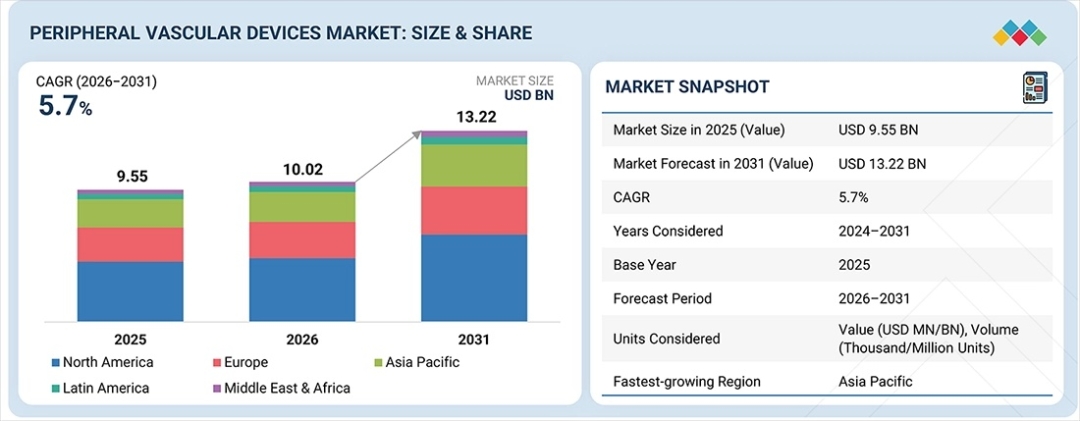
The global peripheral vascular devices market is witnessing steady expansion as the burden of vascular diseases continues to rise worldwide. Valued at USD 9.55 billion in 2025, the market reached approximately USD 10.02 billion in 2026 and is projected to grow at a CAGR of 5.7% during the forecast period, reaching USD 13.22 billion by 2031. This growth is largely driven by the increasing incidence of peripheral artery disease (PAD), deep vein thrombosis, and other vascular disorders associated with aging populations, diabetes, obesity, and smoking.
Download PDF Brochure:https://www.marketsandmarkets.com/pdfdownloadNew.asp?id=790
Advancements in minimally invasive endovascular procedures are also accelerating market adoption. Techniques such as angioplasty, stenting, atherectomy, and thrombectomy are becoming increasingly preferred due to shorter recovery times, reduced hospital stays, and improved clinical outcomes. Innovations in drug-coated balloons, advanced stent technologies, atherectomy systems, and intravascular imaging are further enhancing treatment effectiveness and expanding therapeutic options. Additionally, the expansion of catheterization laboratories, growth of ambulatory surgery centers, and favorable reimbursement policies in several developed markets are contributing to increased adoption of peripheral vascular devices. Growing awareness about vascular diseases and improved early diagnostic capabilities are also supporting long-term market growth globally.
Growing Geriatric Population Driving Demand for Peripheral Vascular Interventions
One of the most significant drivers of the peripheral vascular devices market is the rapid increase in the global geriatric population. Aging is closely associated with a higher risk of vascular disorders such as peripheral artery disease, atherosclerosis, and diabetes-related complications. As life expectancy continues to increase globally, the number of individuals requiring vascular diagnostic and interventional procedures is also rising steadily. Elderly patients often require procedures such as angioplasty, stenting, atherectomy, and thrombectomy to restore proper blood flow and prevent severe complications such as limb ischemia or tissue damage.
Minimally invasive endovascular procedures are particularly beneficial for elderly patients because they involve lower surgical risk and faster recovery times compared to open surgeries. This has significantly increased the demand for innovative peripheral vascular devices that provide precise treatment while minimizing patient discomfort and hospital stays. Hospitals and vascular specialists are increasingly adopting advanced stents, balloons, guidewires, and atherectomy systems designed specifically to manage complex vascular lesions.
Technological advancements are also playing a crucial role in supporting this trend. Improvements in device flexibility, radial strength, and trackability have made it easier for physicians to treat complex and long lesions in peripheral arteries. In addition, modern imaging systems and intravascular diagnostic tools are enabling clinicians to achieve higher procedural accuracy. As a result, the growing elderly population combined with technological innovations is expected to remain a key factor driving the expansion of the peripheral vascular devices market over the coming years.
Emerging Markets and Technological Advancements Creating New Growth Opportunities
Emerging economies are becoming important growth hubs for the peripheral vascular devices market due to improving healthcare infrastructure and rising disease prevalence. Rapid urbanization, sedentary lifestyles, and unhealthy dietary patterns have contributed to increasing rates of obesity and diabetes across regions such as Asia Pacific, Latin America, and the Middle East. These health conditions are closely linked with vascular diseases, leading to a growing patient pool that requires diagnostic and interventional treatment.
At the same time, governments and private healthcare providers in these regions are investing heavily in modern healthcare infrastructure, including catheterization laboratories, specialty vascular clinics, and ambulatory surgical centers. These developments are making advanced endovascular procedures more accessible to patients who previously lacked access to specialized treatment. As healthcare spending continues to increase in emerging markets, the demand for cost-effective and minimally invasive vascular devices is expected to grow significantly.
Technological innovation is also expanding treatment capabilities. New generations of drug-eluting stents and covered stents are improving long-term vessel patency and reducing restenosis rates. Drug-coated balloons and advanced atherectomy systems are enabling physicians to treat complex arterial blockages more effectively. These technologies not only improve patient outcomes but also support the broader shift toward minimally invasive treatment approaches. Consequently, emerging markets combined with continuous product innovation are expected to provide substantial growth opportunities for peripheral vascular device manufacturers.
Request Sample Pages-https://www.marketsandmarkets.com/requestsampleNew.asp?id=790
Product Innovation and Expanding Clinical Applications Strengthen Market Outlook
Continuous product development and expanding clinical applications are strengthening the long-term outlook of the peripheral vascular devices market. The increasing adoption of endovascular therapies for the treatment of complex vascular conditions has created strong demand for specialized devices such as angioplasty stents, catheters, embolic protection devices, and guidewires. Among these, the angioplasty stents segment continues to experience strong demand, particularly for drug-eluting stents that provide improved clinical outcomes and reduced risk of vessel re-narrowing.
Within the catheters segment, angiography catheters are expected to witness the fastest growth during the forecast period due to their critical role in diagnostic imaging and interventional procedures. Advancements in catheter design, including enhanced torque control, improved trackability, and compatibility with advanced imaging systems, are enabling physicians to perform highly precise vascular interventions.
Hospitals remain the dominant end users of peripheral vascular devices due to their ability to manage complex vascular conditions. These facilities benefit from access to advanced catheterization laboratories, hybrid operating rooms, and multidisciplinary vascular care teams. The growing number of catheterization laboratories and ambulatory surgical centers worldwide is also increasing the volume of peripheral vascular procedures performed each year.
Regionally, North America holds the largest share of the peripheral vascular devices market. The region benefits from advanced healthcare infrastructure, high awareness of vascular diseases, and strong reimbursement support for endovascular procedures. In addition, the presence of leading medical device manufacturers and rapid adoption of new technologies further supports regional market growth.
Key companies operating in the peripheral vascular devices market include Boston Scientific, Medtronic Plc, Abbott, Becton, Dickinson and Company, Terumo Corporation, B. Braun Melsungen AG, Merit Medical Systems, Penumbra, Inc., Koninklijke Philips, Stryker, Cordis, W.L. Gore & Associates, Endologix LLC, Biotronik, and Cook Medical. These companies continue to focus on product innovation, strategic partnerships, and clinical research to strengthen their position in the expanding global peripheral vascular devices market.
Related Segment & Geographic Reports
Media Contact
Company Name: MarketsandMarkets™ Research Private Ltd.
Contact Person: Mr. Rohan Salgarkar
Email: Send Email
Phone: 18886006441
Address:1615 South Congress Ave. Suite 103, Delray Beach, FL 33445
City: Florida
State: Florida
Country: United States
Website: https://www.marketsandmarkets.com/Market-Reports/interventional-cardiology-peripheral-vascular-devices-market-790.html