
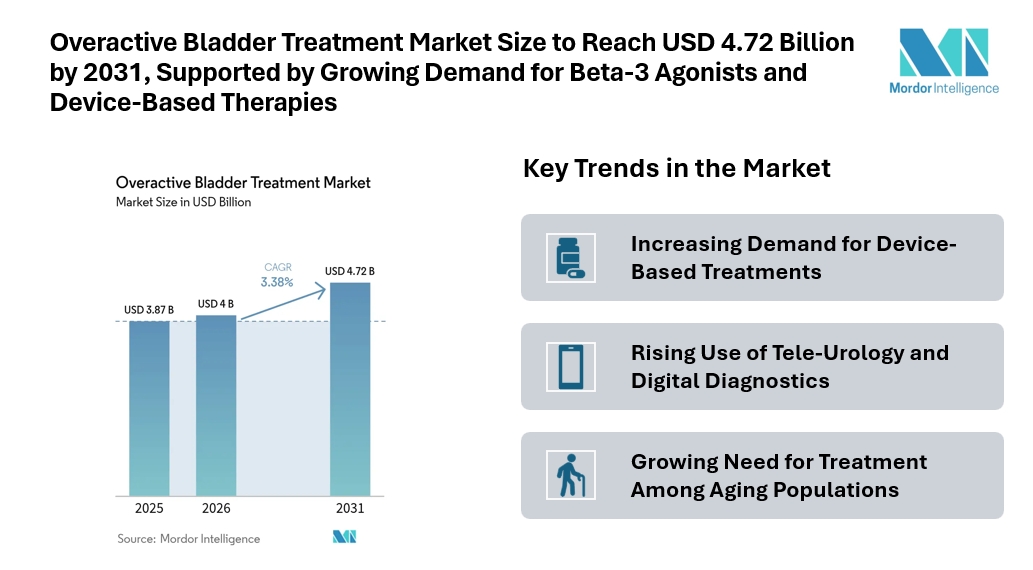
Hyderabad, India – Aug 26, 2026 – According to Mordor Intelligence, the Overactive Bladder Treatment Market size is estimated at USD 4 billion in 2026 and is projected to reach USD 4.72 billion by 2031, growing at a CAGR of 3.38% during the forecast period. The market is supported by an aging population, increasing prevalence of urinary disorders, growing use of beta-3 adrenergic agonists, and wider adoption of device-based treatments.
Overactive bladder treatment includes pharmacological therapies, device-based neuromodulation systems, and botulinum toxin injections used to manage urgency, frequency, and urge incontinence in adults with idiopathic or neurogenic overactive bladder. The Overactive Bladder Treatment Market growth is also being supported by expanding reimbursement for neuromodulation and botulinum toxin procedures, along with increasing use of tele-urology and digital diagnostic tools.
Report Overview: https://www.mordorintelligence.com/industry-reports/overactive-bladder-treatment-market?utm_source=abnewswire
Overactive Bladder Treatment Market Trends
Growing Adoption of Beta-3 Adrenergic Agonists
One of the most important Overactive Bladder Treatment Market trends is the increasing use of beta-3 adrenergic agonists. These therapies are gaining attention as healthcare professionals consider treatment options with a more favorable cognitive safety profile. The availability of newer indications is also expanding the patient population that can be treated with this class of medicines.
The growing use of beta-3 agonists is changing the treatment mix within the Overactive Bladder Treatment industry, while anticholinergics continue to serve a large patient population. Concerns regarding the cognitive effects associated with long-term anticholinergic use are encouraging healthcare professionals to consider alternative treatment options, particularly among older patients.
Increasing Demand for Device-Based Treatments
Device-based treatment is another important area supporting the Overactive Bladder Treatment Market growth. Neuromodulation and sacral stimulation are increasingly being considered for patients who require alternatives to conventional pharmacological treatment. Improvements in device design and broader reimbursement are helping expand the use of these therapies.
Botulinum toxin injections also remain an important option for patients with persistent symptoms. Increased reimbursement and treatment pathways for patients who do not respond adequately to conservative or pharmacological approaches are supporting demand for these interventions.
Rising Use of Tele-Urology and Digital Diagnostics
Digital healthcare is becoming increasingly relevant to the Overactive Bladder Treatment Market forecast. Tele-urology services and digital diagnostic tools can help connect patients with specialists, particularly where access to urologists is limited. Remote monitoring can also support follow-up care, symptom tracking, and treatment adherence.
The use of digital tools is particularly relevant to older patients and individuals living in areas where specialist services are less readily available. These developments are creating additional opportunities for healthcare providers to manage overactive bladder outside traditional hospital settings.
Growing Need for Treatment Among Aging Populations
An aging population remains an important factor influencing the Overactive Bladder Treatment Market size. The prevalence of overactive bladder increases with age, creating sustained demand for treatment options that can manage urinary urgency, frequency, and urge incontinence.
Healthcare systems are therefore placing greater attention on long-term symptom management and treatment options suited to older adults. This demographic trend is expected to continue supporting demand across pharmaceutical and device-based treatment categories.
Overactive Bladder Treatment Market Segmentation
The Overactive Bladder Treatment Market is segmented by therapy, disease type, route of administration, end user, and geography.
By Therapy
The market includes:
-
Anticholinergics
-
Beta-3 adrenergic agonists
-
Botulinum toxin injections
-
Neuromodulation and sacral stimulation
-
Intravesical instillation
-
Combination therapy
-
Herbal and nutraceuticals
-
Other emerging therapies
Anticholinergics continue to account for a large portion of the market, while beta-3 adrenergic agonists are recording faster growth. Device-based treatments and botulinum toxin are also important for patients requiring alternatives to conventional drug therapy.
By Disease Type
The market is divided into:
-
Idiopathic overactive bladder
-
Neurogenic overactive bladder
Idiopathic cases represent the larger segment, while neurogenic overactive bladder is gaining attention due to increased monitoring among patients with neurological conditions.
By Route of Administration
The market includes:
-
Oral
-
Transdermal
-
Injectable
-
Implantable and device-based
Oral therapies currently account for the largest share, supported by established drug use and availability. At the same time, implantable and device-based treatments are recording faster growth as neuromodulation becomes more widely used.
By End User
The market covers:
-
Hospitals
-
Specialty clinics and urology centers
-
Homecare and telehealth
Hospitals remain an important end-user segment because they provide specialist evaluation, diagnostics, and invasive treatment procedures. Homecare and telehealth services are gaining attention as digital monitoring and remote consultations become more widely used.
By Geography
The Overactive Bladder Treatment Market share is analyzed across:
-
North America
-
Europe
-
Asia-Pacific
-
Middle East and Africa
-
South America
North America currently holds the largest regional share, while Asia-Pacific is expected to record the fastest growth during the forecast period. Aging populations, improving healthcare infrastructure, and expanding reimbursement for treatment options are supporting regional demand.
Overactive Bladder Treatment Market Competitive Landscape
The competitive landscape of the Overactive Bladder Treatment industry includes pharmaceutical companies, medical device manufacturers, and healthcare technology providers offering drug-based and device-based treatment options. Companies are focusing on expanding therapy portfolios and strengthening their presence across pharmaceutical and neuromodulation segments.
Key Players
-
Medtronic PLC
-
Astellas Pharma, Inc.
-
Macleods Pharmaceuticals Ltd.
-
Pfizer, Inc.
-
AbbVie Inc.
-
Boston Scientific Corporation
-
Coloplast A/S
-
Teva Pharmaceutical Industries Ltd.
-
Laborie Medical Technologies
-
Organon & Co.
The market also includes companies developing treatments across beta-3 adrenergic agonists, anticholinergics, botulinum toxin, neuromodulation, and other emerging therapy categories.
Conclusion
The Overactive Bladder Treatment Market forecast reflects continued demand for effective treatment options as healthcare providers manage a growing population affected by overactive bladder symptoms. Increasing use of beta-3 adrenergic agonists, continued demand for established anticholinergic therapies, and wider use of neuromodulation and botulinum toxin are supporting market development.
As healthcare systems continue to focus on long-term urinary health and patient-centered treatment, the Overactive Bladder Treatment Market size is expected to benefit from greater treatment awareness, expanding reimbursement, and wider use of pharmaceutical and device-based therapies. The growing role of tele-urology and digital diagnostics is also creating additional options for follow-up care and remote patient management.
Industry Related Reports
Radioligand Therapy (RLT) Market The radioligand therapy market is expected to grow from USD 6.18 billion in 2026 to USD 10.66 billion by 2031, registering a CAGR of 11.52% during 2026–2031. Growth is supported by the expanding use of targeted radiopharmaceuticals, increasing adoption of precision oncology, broader diagnostic capabilities, and the development of new tumor targets.
Report Overview: https://www.mordorintelligence.com/industry-reports/radioligand-therapy-rlt-market?utm_source=abnewswire
Colonoscopy Bowel Preparation Drugs Market The colonoscopy bowel preparation drugs market is projected to grow from USD 2.33 billion in 2026 to USD 3.09 billion by 2031, advancing at a CAGR of 5.83% during the forecast period. Market growth is supported by increasing demand for colorectal screening, rising procedure volumes, and continued emphasis on effective bowel preparation before diagnostic examinations.
Report Overview: https://www.mordorintelligence.com/industry-reports/colonoscopy-bowel-preparation-drugs-market?utm_source=abnewswire
Chronic Plaque Psoriasis Treatment Market The chronic plaque psoriasis treatment market is expected to increase from USD 26.02 billion in 2026 to USD 41.79 billion by 2031, growing at a CAGR of 9.94%. Expansion is supported by continued innovation in systemic therapies, increasing availability of biologics and targeted treatments, improved diagnosis, and growing demand for more effective and convenient treatment options.
Report Overview: https://www.mordorintelligence.com/industry-reports/chronic-plaque-psoriasis-treatment-market?utm_source=abnewswire
About Mordor Intelligence:
Mordor Intelligence is a trusted partner for businesses seeking comprehensive and actionable market intelligence. Our global reach, expert team, and tailored solutions empower organizations and individuals to make informed decisions, navigate complex markets, and achieve their strategic goals.
With a team of over 550 domain experts and on-ground specialists spanning 150+ countries, Mordor Intelligence possesses a unique understanding of the global business landscape. This expertise translates into comprehensive syndicated and custom research reports covering a wide spectrum of industries, including aerospace & defense, agriculture, animal nutrition and wellness, automation, automotive, chemicals & materials, consumer goods & services, electronics, energy & power, financial services, food & beverages, healthcare, hospitality & tourism, information & communications technology, investment opportunities, and logistics.
For any inquiries or to access the full report, please contact:
media@mordorintelligence.com
https://www.mordorintelligence.com/
Media Contact
Company Name: Mordor Intelligence Private Limited
Contact Person: Jignesh Thakkar
Email: Send Email
Phone: +1 617-765-2493
Address:11th Floor, Rajapushpa Summit, Nanakramguda Rd, Financial District, Gachibowli
City: Hyderabad
State: Telangana 500008
Country: India
Website: https://www.mordorintelligence.com/