
North American bird populations are declining at an accelerating pace, according to a February 2026 study published in Science. Of 261 species analyzed, 122 — or 47% — have experienced significant drops, with more than half of those showing faster rates of loss since 1987. The primary drivers? Intensive agriculture and climate warming.
Since 1970, the continent has lost nearly 3 billion breeding adult birds — a staggering 29% overall decline. Grassland birds have suffered the most, plunging 53% (roughly 720 million individuals), while forest birds have declined by more than 1 billion. The 2025 U.S. State of the Birds report paints an even more urgent picture: 229 species now require immediate conservation action. Among them are 112 “Tipping Point” species that have lost over 50% of their populations in the past 50 years, including 42 “Red Alert” species such as Allen’s Hummingbird, Tricolored Blackbird, and Saltmarsh Sparrow. Even waterfowl populations, once hailed as a conservation success, have begun sharp recent declines.
Birds are more than beautiful backyard visitors — they are vital indicators of ecosystem health. Their decline signals broader environmental trouble that affects pollination, seed dispersal, pest control, and even the economy. Birdwatching activities already generate $279 billion in annual economic output and support 1.4 million jobs across the United States. Yet without intervention, these losses threaten the services birds provide to agriculture, forests, and human communities alike.
While large-scale habitat restoration remains essential, everyday citizens are stepping up through backyard technology and citizen science. Tools like Birdfy smart bird feeders are transforming ordinary backyards into powerful data-collection stations. These AI-powered devices deliver real-time, high-resolution observations that scientists can use to pinpoint priority conservation areas more effectively than ever before.
North American Birds in Rapid Decline: Understanding the Scale
The numbers are sobering. The 2019 “3 Billion Birds” study first sounded the alarm, and the latest 2025 State of the Birds report, and the 2026 Science paper confirm the crisis is worsening. Declines cut across nearly every habitat — grasslands, forests, aridlands, shorelines, and even marine environments. Grassland species have been hit hardest because of the widespread conversion of prairies to cropland. Forest birds face fragmentation and loss of nesting sites. Shorebirds and seabirds struggle with coastal development and changing ocean conditions.
These losses are not uniform. The 2026 Science study found that declines are often steepest in the very areas where species were historically most abundant — their traditional strongholds. This pattern means entire regional populations can collapse faster than expected, reducing genetic diversity and resilience.
Agriculture and Warming Drive Acceleration Hotspots
Intensive agriculture — farmland expansion, heavy pesticide use, and habitat fragmentation — is the strongest predictor of accelerating bird losses. Climate warming compounds the problem, pushing the fastest declines into hotter southern and western regions.
Geographic hotspots include the Midwest, California, and Mid-Atlantic states. In these areas, species that once thrived are vanishing at the highest rates. Urban sprawl, free-roaming cats, window collisions, and plastic pollution add further pressure.
“Not only are we losing birds, we are losing them faster and faster from year to year,” said Marta Jarzyna, an ecologist at Ohio State University and co-author of the Science study.
Traditional large-scale habitat projects are vital but often slow and expensive. Citizen science offers a faster, more granular alternative by generating continuous, localized data that researchers can analyze in near real time.
Why Bird Declines Matter: Ecosystem Services at Risk
Birds play irreplaceable roles in nature. Insect-eating species control crop pests, saving farmers billions in pesticide costs. Pollinators like hummingbirds and certain songbirds support wildflowers and fruit trees. Scavengers and seed dispersers help forests regenerate. When bird populations crash, these services weaken, creating ripple effects across food webs and human economies.
The 2025 State of the Birds report emphasizes that healthy bird populations are linked to healthy human environments. Protecting birds is not just an environmental issue — it is an economic and quality-of-life imperative.
The Rise of Citizen Science in Bird Conservation
For decades, programs like Project FeederWatch, eBird, and the Great Backyard Bird Count have relied on volunteer observations to track trends. These initiatives have produced some of the most comprehensive datasets in ornithology. Today, technology supercharges that effort. AI-powered tools remove barriers for non-experts, allowing consistent, accurate data collection 24/7 without requiring years of field experience.
Backyard Technology Empowers Citizen Scientists
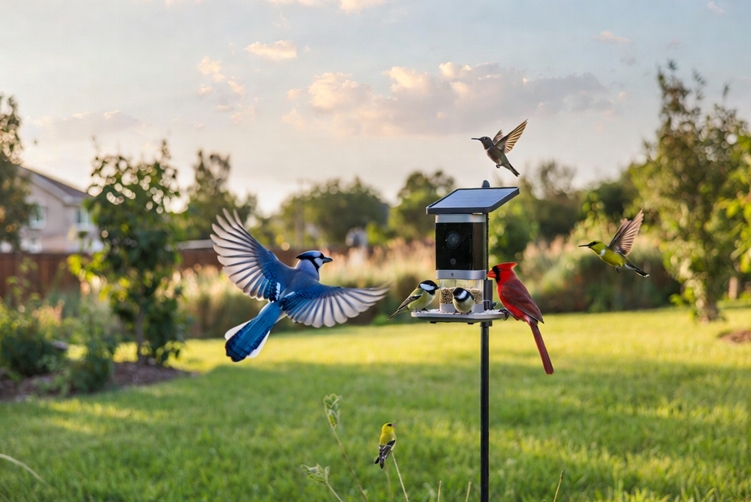
Modern backyard devices are turning millions of homes into miniature research stations. Birdfy smart bird feeders exemplify this shift. Equipped with advanced AI cameras, Birdfy feeders automatically identify more than 6,000 bird species, capture clear photos and videos, and send instant real-time alerts directly to users’ phones. The free companion app logs every visit, creates daily and monthly journals, and lets users share observations with a community of over 650,000 bird lovers across 174 countries.
These capabilities go far beyond simple birdwatching. By providing continuous, high-resolution data on species presence, behavior, and feeding patterns, devices like Birdfy contribute valuable observations that researchers can integrate into broader conservation models. The data helps identify emerging threats at the neighborhood level — information that is often missed by traditional surveys.
Because the feeders are easy to install and maintain (many models are solar-powered and squirrel-resistant), they lower the barrier to participation. Families, schools, and retirees can all contribute meaningful data while enjoying the simple joy of watching birds up close. The result is a democratized conservation network: every backyard counts, and every observation adds to the scientific picture.
How Backyard Technology Complements Traditional Conservation
Large protected areas and policy changes are still foundational. However, backyard tech fills critical gaps by delivering hyper-local, real-time insights. Scientists can now overlay citizen-generated data with satellite imagery and climate models to create more precise conservation maps. This targeted approach maximizes limited funding and delivers faster results.
Past successes prove action works. Decades of focused protection helped waterfowl populations rebound dramatically. Similar targeted efforts — now amplified by technology — can help Tipping Point species before they reach critical thresholds.
Practical Steps for Backyard Bird Conservation
Anyone can join the effort:
- Install a smart feeder like Birdfy to contribute automated observations.
- Participate in established citizen-science programs such as eBird or Project FeederWatch.
- Plant native vegetation to provide natural food and shelter.
- Reduce threats by using window film to prevent collisions and keeping cats indoors.
- Support local and national policies that protect habitat and reduce pesticide use.
These small actions, multiplied across millions of backyards, create a powerful collective impact.
Every Backyard Counts: A Path Forward
Although North American birds face severe and accelerating challenges, backyard technology is democratizing conservation and turning ordinary people into part of the solution. Successful past efforts, such as waterfowl rebounds through decades of targeted protection, show that focused action can produce results. Technology now offers the potential to scale similar approaches more broadly and efficiently.
Conclusion
The accelerating decline of North American birds is a clear call to action — but it is also an opportunity. By combining scientific research with accessible backyard technology like Birdfy smart bird feeders, citizens can help generate the data needed to reverse these trends. Every alert, every logged sighting, and every native plant matters.
The future of our birds — and the ecosystems they sustain — depends on the choices we make today in our own backyards. Start small, stay consistent, and become part of the solution.
Media Contact
Company Name: Birdfy
Contact Person: Media Relations
Email: Send Email
Country: United States
Website: https://www.birdfy.com/