
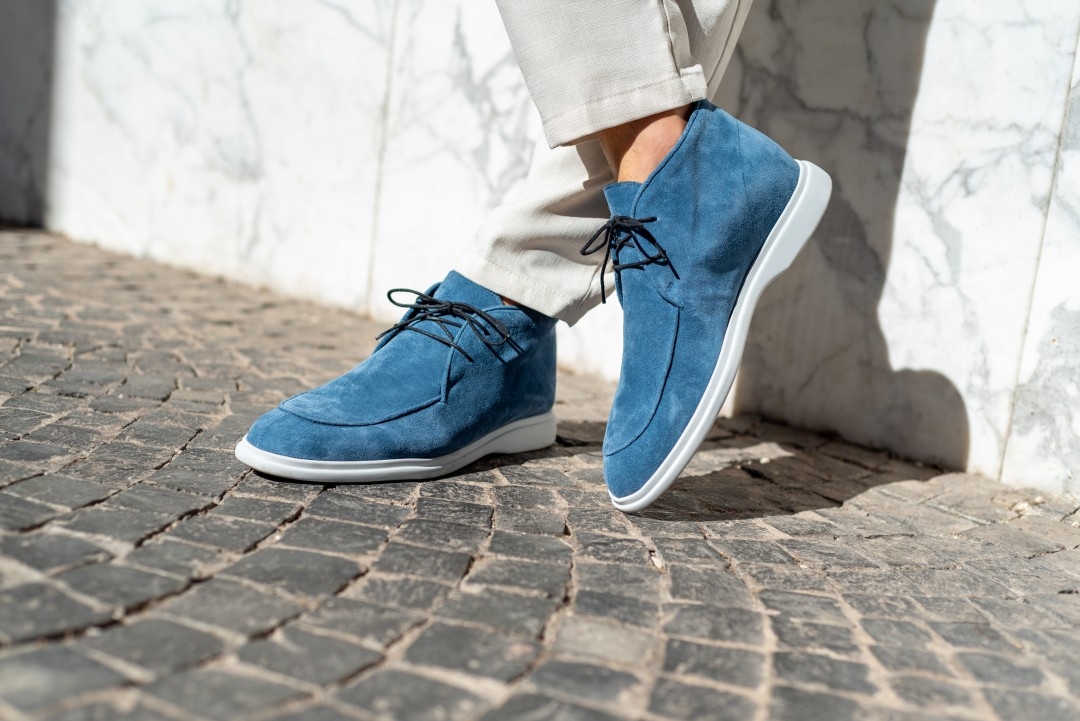
One of the most common concerns among men new to elevator shoes is not whether they will look taller but whether they will look natural doing so. Walking confidently and fluently in elevator shoes is a learnable skill, and for most men it requires only a brief adjustment period and some deliberate attention in the early days of wearing them. This guide covers everything from understanding what changes in your gait to practical exercises that accelerate the adaptation process.
Why Walking Feels Different at First
Elevator shoes raise the heel relative to the ball of the foot, creating a pitch angle that is steeper than what flat shoes or trainers produce. For men whose footwear is predominantly flat, this change in foot angle is immediately noticeable. The calf muscles are placed under slight stretch, the ankle’s range of motion during the stride cycle is modified, and the body’s centre of gravity shifts slightly forward. All of these changes require a brief neurological adjustment as your proprioceptive system recalibrates to the new foot position.
Thankfully, the human body is incredibly resilient and capable of adapting to these changes quickly. Most men report that the unusual sensation of walking in elevator shoes fades within three to five days of regular wear, and that within one to two weeks the shoes feel entirely normal and natural. The key is wearing them consistently during this period rather than putting them on for important occasions before the adaptation is complete.
Common Gait Mistakes to Avoid
Several specific gait issues appear frequently in new elevator shoe wearers. The first is over-correcting the stride by lifting the feet excessively high to compensate for the changed heel height. This creates an unnaturally bouncy or marching quality to the walk that draws more attention than the shoes themselves would. The solution is to focus on a smooth, rolling heel-to-toe stride, allowing the foot to move through its natural arc without exaggeration.
The second common mistake is leaning backward to counterbalance the forward pitch created by the elevated heel. This produces a rigid, stiff-backed posture that looks uncomfortable and unnatural. Instead, allow your body to find its natural upright position and let your core engage slightly to support it. The result is a posture that is not just upright but genuinely commanding.
The third issue is taking shorter, more tentative steps out of caution. Shortened strides are a hallmark of footwear insecurity and read immediately as hesitant body language. Practice taking your normal stride length from the first day, even if it feels slightly unfamiliar.
Starting with Lower Lifts
If you are entirely new to elevated footwear, beginning with a two to three centimetre lift is strongly advisable before moving to higher options. This range produces a heel elevation comparable to many conventional dress shoes and boots, making the adaptation period minimal. Once you are comfortable walking naturally in this range, stepping up to four or five centimetres requires only a small additional adjustment rather than a significant one.
GuidoMaggi offers a range of lift heights across its collections, allowing new wearers to begin with their most accessible options and progress to higher lifts as their comfort and confidence develop, with each pair engineered to distribute the heel pitch as naturally as possible through a graduated insole profile.
Exercises That Help
A few targeted exercises significantly accelerate the adaptation to elevator shoes. Calf stretches performed daily keep the Achilles tendon and calf muscles flexible enough to accommodate the constant slight stretch created by heel elevation. Ankle circles improve the ankle’s range of motion and reduce stiffness during the stride cycle. And simple balance exercises such as single-leg standing builds the ankle stability that makes walking in raised footwear more confident and fluid.
Choosing the Right Floor Surfaces
During the adaptation period, choosing where you first wear your elevator shoes makes a practical difference. Flat, even surfaces such as office floors, paved paths, and shopping centres are much more forgiving than uneven terrain, cobblestones, or staircases. Build your confidence on even surfaces first and introduce more challenging terrain gradually. Most men find that within two weeks they are navigating stairs, uneven pavements, and all other everyday terrain without any conscious thought about their footwear.
The Role of Confidence
Perhaps the most important factor in walking naturally in elevator shoes is simply deciding to walk with confidence. Tentative, self-conscious movement translates directly into an unnatural gait regardless of what you are wearing. Commit to your normal stride, hold your posture tall, and allow the shoes to do their work quietly. Within days, walking in them will feel as second-nature as any other pair in your wardrobe.
Media Contact
Company Name: GuidoMaggi
Contact Person: Antonio Noyke
Email: Send Email
Country: Italy
Website: https://www.guidomaggi.it/