
Huizhou, Guangdong, China – October 20, 2026 – Buying Polyester Cups in bulk sounds pretty straightforward—until a pallet shows up and you notice uneven rims, cloudy walls, or cups that just don’t stack well. Usually, “polyester cups” means PET cups: a polyester material that people like for its clarity, light weight, and decent strength. Grand View Research has reported continued growth in the global polyethylene terephthalate market, helped along by beverage packaging and food-service demand. Smithers also points to PET packaging as a big area for lightweighting, recycled content, and better collection systems.The numbers matter. So do the little things. A 0.2-millimeter difference in wall thickness can change how firm a cup feels, how it looks, and how much it weighs when shipped. Buyers should compare cup capacity, top diameter, base stability, rim smoothness, nesting depth, and temperature limits. Ask for physical samples before you sign off on a full order. Put them through real tests—ice, hot liquid, lids, and actual transport conditions. A supplier’s catalog isn’t going to reveal every production weakness.And don’t just look at the unit price. Freight, carton dimensions, rejected pieces, storage space, and lead times can all shift the final cost. Check food-contact documentation, quality-control procedures, batch records, and recycled-content claims. BRCGS Packaging Materials and ISO 9001 certification can be useful evidence, but you still need to verify those certificates. PlasticsEurope’s Plastics—The Fast Facts 2024 report also stresses circularity and responsible material management. The cheapest offer may not be the most reliable one. That’s an easy lesson to ignore, honestly. These seven practical tips can help purchasing teams evaluate Polyester Cups with clearer evidence, better supplier questions, and fewer expensive surprises.
 Define Your Bulk Polyester Cup Requirements
When buying polyester cups in bulk, define the job before comparing prices. A school event may need 9-ounce cups, while a catering line may require 16-ounce capacity. Record the drink type, serving temperature, and expected volume. Cold juice can expose weak rims quickly. Hot liquids require clear temperature guidance and suitable specifications. Do not guess. Request product data, sample units, and testing details. I have found that a cup that looks sturdy in a carton may flex during service.
Measure more than capacity. Check rim diameter, base stability, wall thickness, nesting space, and carton dimensions. These details affect filling speed, storage, and transport costs. A narrow rim may reduce spills, but it can slow automated filling. A tall cup may fit a display well but waste shelf space. Ask whether the stated capacity is filled to the rim or measured at a practical serving level. That difference can change your purchase quantity.
Build a simple requirement sheet before requesting quotations. Include the number of cups, delivery schedule, packaging limits, color needs, and acceptable defect rate. If your notes only say “Cups And Cups,” the order remains unclear and difficult to verify. Consider a small trial order first. It may reveal stacking problems, cloudy surfaces, or disappointing rigidity. My own planning has missed storage space before, so I now measure the shelf and delivery area together. Leave room for honest correction.
Compare Polyester Types, Grades, and Cup Features
7 Tips for Buying Polyester Cups in BulkCompare polyester types before comparing prices. PET offers clear walls and efficient stacking, while recycled PET may show slight color variation. Copolyester grades can provide better impact resistance and a softer appearance. Ask for material data, temperature limits, and food-contact documentation for your market.For Cups Coffee Cups, inspect more than the printed design. Check rim smoothness, wall thickness, base stability, lid fit, and resistance to cracking. Fill sample cups with cold drinks, warm liquid, and ice. Hold them for several minutes. This reveals heat transfer, leaking, and uncomfortable edges. A reliable supplier should provide production samples, inspection records, and batch information.Grade differences often appear during transport. Lower-grade material may scratch easily or deform under stacked pressure. Measure cup height and diameter across multiple samples. Small variations can disrupt automatic filling or lid fitting. Request drop testing and washing guidance when reusable service is planned. Do not trust one perfect sample. Bulk production can differ. That warning matters.Compare color consistency and decoration durability as well. Rub printed areas with a damp cloth and check for fading. Review carton strength, inner protection, and pallet stability before ordering. I would also question unusually low prices. They may reflect thinner walls, weaker lids, or limited quality control. A smaller trial order can expose these weaknesses before a costly purchase.
7 Tips for Buying Polyester Cups in Bulk: Comparing Types, Grades, and Features
Typical upper service-temperature guidance for common polyester cup materials. Actual limits depend on wall thickness, additives, molding quality, and the supplier’s technical specification.
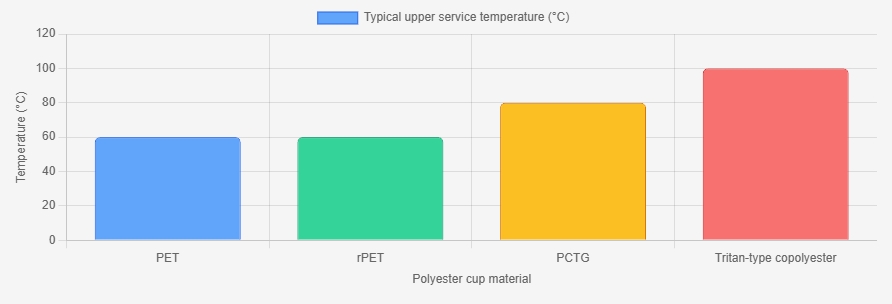
PET and rPET are commonly selected for clear, lightweight cold-drink cups and recycling-focused programs. PCTG and Tritan™-type copolyesters generally offer better impact resistance and higher heat tolerance, but usually cost more. For bulk orders, confirm resin grade, food-contact compliance, wall thickness, lid compatibility, color consistency, minimum order quantity, and sample-test results before production.
Representative values: PET/rPET about 60°C, PCTG about 80°C, and Tritan-type copolyester about 100°C. Always follow the manufacturer’s approved-use temperature.
Evaluate Cup Size, Shape, Capacity, and Intended Use7 Tips for Buying Polyester Cups in Bulk1
Confirm the material before comparing prices.Many suppliers call PET cups polyester cups, but PET is mainly designed for cold beverages. For Hot Cups, request written heat-resistance data, lid compatibility, and migration-test documentation. The Smithers report The Future of PET Packaging to 2028 identifies beverages as a major PET packaging application, but that does not make every PET cup suitable for hot liquids.
2
Match capacity to the serving occasion.A 9-ounce cup suits tastings, while 16- to 20-ounce cups work better for iced drinks and takeaway service. Measure the actual fill line, not only the advertised volume. Grand View Research reports that convenience and portion flexibility continue to influence disposable foodservice packaging demand. A larger cup can still feel poor if the rim is narrow or the base tips easily.
3
Test shape and handling with real users.A straight wall stacks efficiently, while a tapered wall usually releases more easily. Check whether fingers touch condensation, especially during outdoor service. Do not ignore lid fit.
4
Order samples from the exact production lot.Fill them with ice, juice, or the intended beverage for several hours. Check cracking, clouding, odor, and leakage. I once underestimated how much a wide rim affected storage space. That mistake was expensive.
5
Compare cartons by usable cups, not unit price.Include nesting loss, damaged pieces, freight, and storage height. The UNEP report Turning off the Tap states that reducing unnecessary packaging and improving reuse could sharply reduce plastic pollution by 2040. Choose only the capacity and quantity your operation can realistically use.
Check Supplier Quality Standards and Product Certifications
When buying polyester cups in bulk, supplier quality standards deserve more attention than a low unit price. Ask whether the supplier follows ISO 9001 procedures and controls every production batch. The ISO Survey 2023 reported more than one million ISO 9001 certificates worldwide. However, certification covers management systems, not automatic cup safety. A certificate alone proves little.
Request the exact resin identification, wall-thickness range, production date, and batch traceability records. For drinkware, obtain food-contact declarations and migration test reports from an accredited laboratory. Check testing for substances transferring into beverages, especially under heat or acidic conditions.OECD’s Global Plastics Outlook reported 353 million tonnes of plastic waste in 2019, with only 9% recycled.That figure makes material verification and responsible sourcing more important.
Order samples before approving a full shipment. Inspect rim smoothness, odor, clarity, stacking stability, and visible stress marks. Fill several cups with water, chill them overnight, and repeat the test with a warm beverage if the product permits it. Ask for a certificate of analysis for each batch, not only a general company document.A common mistake is trusting a polished certificate without matching its material grade to the actual shipment.I have seen specifications look precise while packaging labels remained vague. That gap deserves written clarification before payment.
Calculate Pricing, Minimum Orders, and Total Purchase Costs7 Tips for Buying Polyester Cups in Bulk
Buying polyester cups in bulk looks simple until the final invoice grows. Ask for a written quote before discussing quantities. Confirm cup capacity, wall thickness, color, printing, packaging, and delivery terms. A lower unit price may hide setup fees or expensive cartons. Request samples, then measure them against your serving plan. Small differences matter.
Calculate the product cost first. Multiply the unit price by the order quantity. Add printing, mold, packing, inland transport, freight, insurance, and estimated duties. Then divide the full amount by usable cups, not shipped cups. Include five percent extra for defects, handling damage, or unexpected events. For example, 10,000 cups at $0.18 cost $1,800 before additional charges. A $450 freight fee changes the real unit cost to $0.225.
Minimum order quantities deserve careful attention. A factory may quote different prices for 5,000, 10,000, and 25,000 cups. Do not choose the largest tier automatically. Storage space, cash flow, and expected sales should guide the decision. My own mistake was ignoring warehouse space. The discount looked attractive, but several cartons blocked a production area. Recheck every assumption. Quotes can expire, shipping rates can change, and payment terms may affect your actual budget. Get the total purchase cost in writing.
Review Customization, Packaging, Shipping, and Delivery Terms
7 Tips for Buying Polyester Cups in Bulk
Tip 1: Confirm the material.
Ask for polyester grade, wall thickness, weight, and food-contact test records. A sample should survive repeated filling, stacking, and washing.
My mistake once was trusting a glossy photo; the actual cup felt thin.
Tip 2: Review customization carefully.
Check print durability, color references, logo position, and minimum order quantities.
Tip 3: Inspect packaging details.
Request carton dimensions, inner dividers, pallet counts, and drop-test results.
The OECD Global Plastics Outlook (2022) reports that packaging created about 40% of global plastic waste in 2019. Less empty space can reduce damage and transport impact.
Tip 4: Compare packaging choices, not only unit prices.
Recyclable cartons and tighter stacking may improve total cost.
Tip 5: Clarify shipping terms in writing.
Confirm Incoterms, freight responsibility, insurance, port handling, and customs documents.
Tip 6: Build delivery protection.
Ask for production lead time, inspection timing, partial-shipment rules, and a delay remedy.
DHL’s 2024 logistics research highlights delivery visibility as a major factor in business purchasing decisions. Small gaps matter.
Tip 7: Link payment milestones to evidence,
such as approved samples, inspection photos, and loading records.
For Cold Cups, calculate landed cost per usable cup, including defects and storage. I still leave contingency time; factory estimates can be optimistic.
Inspect Samples and Confirm the Final Bulk Order Details
Before placing a polyester cup order, request physical samples from the actual production material. A sample reveals details that photos often hide. Hold the cup under bright light. Check its weight, flexibility, rim smoothness, and surface finish. Pour in water and leave it overnight. Look for leaking, warping, odor, or color changes. Measure the height, diameter, and capacity with simple tools. Small differences matter.
I once focused too heavily on appearance and overlooked the cup’s base stability. The delivered cups looked attractive but tipped easily on a smooth table. That mistake taught me to test function, not just design. Ask for samples with the final printing, color, and packaging method. Keep one approved sample for later comparison. It may feel unnecessary. It prevents confusion.
Before confirming the bulk order, prepare a written specification sheet. Include material type, thickness, dimensions, capacity, color reference, artwork position, quantity, carton size, and delivery schedule. Confirm acceptable measurement tolerances. Request clear photos of the packed cartons before shipment. Make sure replacement terms cover damaged, incorrect, or visibly inconsistent products. Read every detail carefully, even if the supplier seems experienced. A verbal promise can be forgotten. Written records provide stronger control. I still leave room for improvement, especially when estimating packaging space. Reliable purchasing requires checking assumptions before money and production time are committed.
Conclusion
Buying Polyester Cups in bulk requires careful planning to ensure the products meet your practical, quality, and budget requirements. Start by defining the intended use, preferred quantity, cup size, shape, capacity, and material grade. Compare available polyester types and features, such as durability, clarity, reusability, and resistance to heat or impact. It is also important to review the supplier’s quality standards, testing procedures, and relevant product certifications before making a decision.Next, calculate the complete purchase cost, including unit pricing, minimum order quantities, customization fees, packaging, shipping, and delivery charges. Confirm whether the supplier can provide customized colors, logos, or packaging if needed, and clarify the production schedule and delivery terms. Before placing the final order, request samples and inspect their appearance, strength, finish, and consistency. Carefully confirm all specifications, quantities, packaging details, and agreed terms in writing to reduce misunderstandings and ensure a smooth bulk purchase.
About Us
Guangdong Santai Plastic Industry Co., Ltd. officially embarked on its entrepreneurial journey in 2010 and has been deeply involved in the plastic product manufacturing sector for over a decade. Starting as a small production enterprise, it has gradually grown into a highly influential beverage packaging solution provider in the region.
Media Contact
Company Name: Guangdong Santai Plastic Industry Co., Ltd.
Contact Person: Media Relations
Email: Send Email
Country: China
Website: https://www.santaigd.com/