
Guangzhou, Guangdong, China – Nov. 21, 2026 – “Tooling is charged at cost and remains the property of the supplier.” Twelve words that decide whether your tooling cost is an asset or a sunk cost.
In molded pulp packaging, the tooling line on a quotation is a payment, not a title deed. Ownership, possession, transfer rights: three separate rights. Capacity works the same way: a reservation with no priority tier disappears the week the line fills up.
Your board wants a twelve-month number. Your supplier wants a line plan. Both are guessing.
Four clauses decide whether your tooling and your capacity survive. Each comes with wording you can lift.
Bottom line
A tooling charge transfers no title. Title needs an assignment, a stamped asset ID, a schedule.
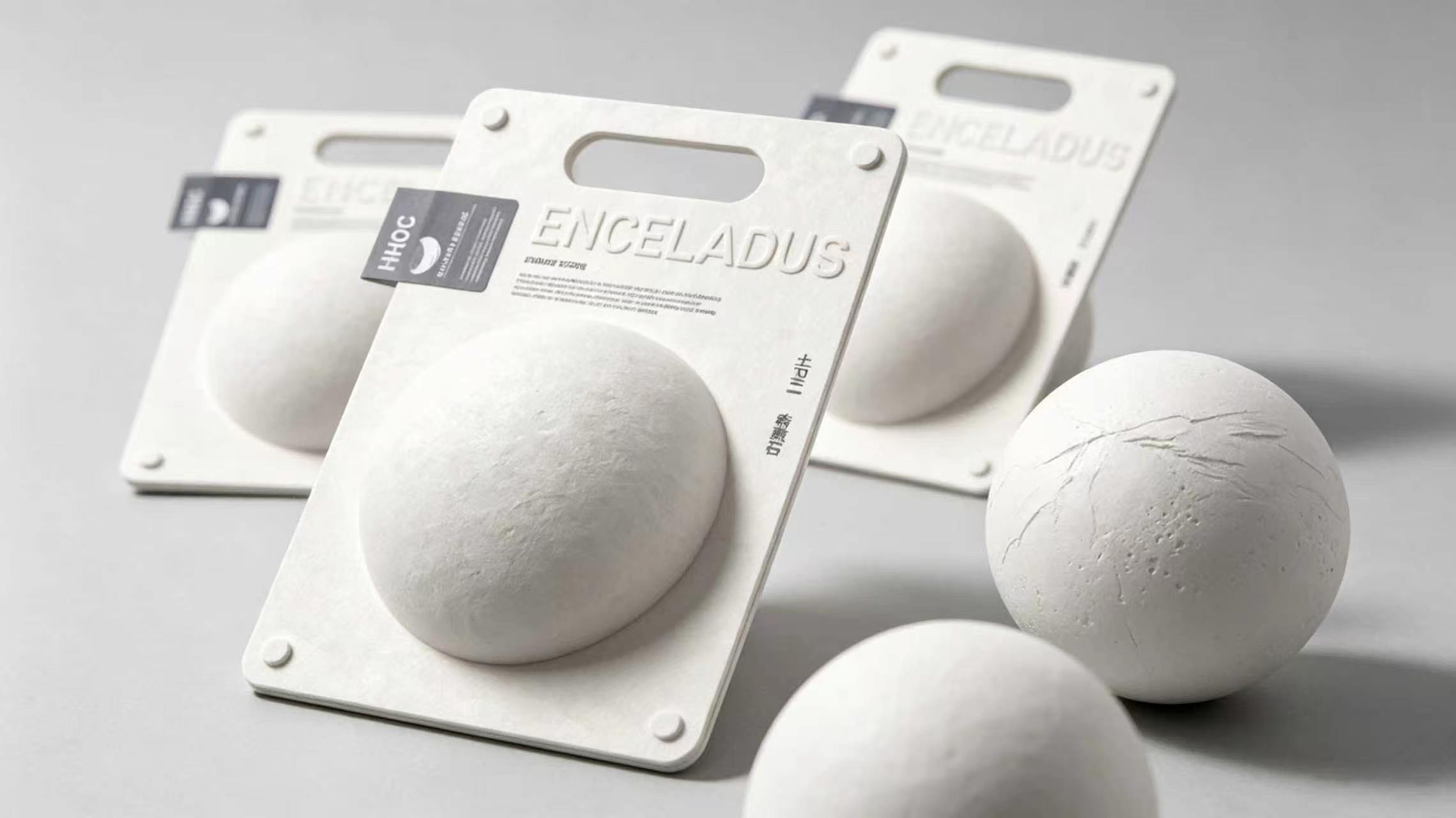
A thermoformed mold is usually three pieces: forming mold, hot-press mold, trim die.
A sample tool proves geometry, not cycle time, cavity spread, or yield.
A reservation without a priority tier is a forecast with better formatting.
Anchor change-of-law clauses to when an obligation applies, never a calendar date.
Why the 2027 Contract Is Not the 2024 Contract Renewed
Most negotiations start with last year’s PDF and a new date in the header. That works when nothing outside the contract changed. Three things did.

Three things that moved: duties, fiber due diligence, substance documentation
Duties. The US AD/CVD orders on thermoformed molded fiber from China and Vietnam took effect in early 2026. What you pay at entry is a deposit: reviews can reset it, and the assessed rate can land either side of it. A scope ruling can pull a part in or out without touching your tariff code.
Fiber due diligence. EU deforestation rules apply from 30 December 2026 for large and medium operators, and 30 June 2027 for small ones. The duty sits with whoever first places the packaging on the EU market, usually your customer, who cannot prove plot-level origin without you.
Substance documentation. PPWR declarations of conformity and technical documentation have been binding since 12 August 2026 for Article 5 substances, whatever the format: a thermoformed insert and a wet-press container are subject to the same Article 5 substance file.
What that means for the clauses you signed last time
Four assumptions in most 2024 contracts are now holes.
- · Fixed price, built on a duty rate and a freight level neither side controls.
- · Compliance by certificate. Certificates describe a material; regulators ask about a batch, a plot, a substance. The set to request is the certification documents your China supplier must provide.
- · Tooling paid, ownership unstated. The payment is documented. The title is not.
- · Capacity by forecast. A quarterly number marked non-binding, with no consequence attached.
Clause 1: Mold Ownership
The tooling cost line is where most brands lose money, and most of them read it after paying.
What paying for tooling does and does not transfer
Paying may buy the right to have parts made from that tool, the right to amortize cost into unit price, and exclusive use. It does not buy title, possession, the right to move it, the 3D files, or the process knowledge inside the mesh and vacuum layout.
A mold on someone else’s floor is a bargaining chip. The refillable deodorant packaging supplier in China file is the one we point to first, because it shows what a title schedule does for a program that runs for years.
The four things that make ownership real: title, marking, asset schedule, bailment
- · Title: An express assignment, effective on payment, surviving termination. “Brand owns all Tooling,” plus a definition, is enough.
- · Marking: Engraved asset ID, cavity numbers, your company name on the tool body, photographed at handover.
- · Asset schedule: A signed annex listing every piece: forming mold, drying mold, trim die, gauges, with serial and cavity numbers.
- · Bailment: The supplier holds it as bailee: insured, maintained, not modified, returned on demand.
- · The tool is rarely one tool. Wet press needs a forming mold, a drying mold, and a trim die. Thermoformed needs a matched heated set.
- · Fit is machine-specific. Bolster plates, platen spacing, vacuum ports. Without an adapter the tool may not mount.
- · Re-validation is the real cost. First article, dimensional check, food-contact re-test, a fresh sampling round.
The cross-border problem: owning a mold you cannot move
Write down who crates, who pays freight, and what happens if the supplier declines to dismantle. Confirm it is not pledged as collateral, and put the 3D files in escrow.
Table 1. Four ownership models
|
Model |
Who holds title |
Who carries the risk |
What to fix at exit |
|
Brand pays, brand owns |
Brand |
Brand: idle time, insurance, replacement. Supplier: custody |
Return window, crating and freight split, condition standard, re-validation cost |
|
Brand pays, supplier holds title |
Supplier |
Brand carries volume risk with no asset |
Conversion credit, exclusive use, price protection, right of first refusal |
|
Tooling amortized into unit price |
Supplier, title murky |
Brand pays inside unit price, never sees a trigger |
Amortization schedule, title transfer when amortized, cap on overbilling |
|
Supplier self-invests |
Supplier |
Supplier |
Lowest price, weakest control; ask for an exclusivity window |
Clause 2: Sample Tool and Production Tool, Priced Separately
One tooling figure is an information gap, and someone pays to close it.
Why a single tooling cost line hides the real cost structure
Two quotes look comparable until one turns out to exclude sampling rounds or the trim die. You find out at the invoice. Our custom deodorant refill packaging (OEM, private label) work gets quoted in two lines for that reason: sample tool first, production tool after the geometry is proven.
A sample tool is machining time and one cavity. A production tool is cavity count, polishing, a matched drying set, a trim die, and trial runs. One number hides who charges for engineering and who for iron.
What the sample tool can and cannot tell you
- · It shows: whether the geometry forms at all, corner radii, draft angles, fit in the insert pocket.
- · It hides: cycle time, weight spread across cavities, yield on a production machine, shrinkage in a multi-cavity drying setup.
What Drives Molded Pulp Tooling Cost: Cavity Count, Cycle Time, Unit Cost
Cavity count is the main lever. More cavities mean a costlier tool and a lower unit cost, plus a higher minimum run. Volume and changeover set the number, and so does the process route. See how wet-press and dry-press parts are made for why the tool set differs. A wet-pressed luxury perfume packaging tool sits at the far end of that lever: few cavities, deep draw, a matched drying set.
Ask for the cost build-up by line, and for the packaging lead time at each stage. In our shop a single-cavity sample tool takes about two weeks; subcontracted, four to six. Volume then sets the molded pulp packaging MOQ Europe buyers get quoted, and it sets the tool with it. Molded pulp tooling cost is a one-time number; it rarely decides your landed cost. One program shows why the count matters: our molded fiber wine shipper insert design needs a forming and drying set for the insert, and the printed outer is a second project with its own tool list.
Table 2. Sample tool versus production tool
|
Element |
Sample or prototype tool |
Production tool |
|
Purpose |
Prove geometry and fit |
Run volume at a defined cycle |
|
Material |
Aluminum, resin, or machined board |
Hard aluminum matched set, steel trim where needed |
|
Cavity count |
Usually one, occasionally two |
Two and up, set by volume and MOQ |
|
Reusability |
Limited, may not survive a full run |
Built for the contract term, with maintenance |
|
Pricing basis |
Engineering time plus machining |
Cavity count, drying set, trim die, trial runs |
|
Sampling lead time |
Days to two weeks |
Weeks, plus validation rounds |
Clause 3: Capacity Reservation and Scheduling Priority
Capacity is the clause buyers regret most, because it looks covered by the forecast table.
Reserving capacity is not the same as forecasting volume
A forecast is information. A reservation is a commitment with consideration: a fee, a take-or-pay, or longer term. “Commercially reasonable efforts to meet the forecast” buys a polite sentence.
A real reservation names the line type, since wet press and thermoformed are not interchangeable. Brands running custom molded pulp storage boxes need it in writing, since run sizes move with retail seasons.

The three numbers to put in writing
- · Reserved volume: Units per month by SKU, with a tolerance band, and the take-or-pay share.
- · Priority tier: The allocation rule when demand exceeds capacity: pro rata against reserved volume, or first come.
- · Shortfall consequence: Next-month allocation preference, a price credit, or the right to source elsewhere without penalty.
Table 3. Capacity terms: weak wording versus executable wording
|
Element |
Weak wording |
Executable wording |
|
Reserved volume |
“Supplier will use best efforts to meet Buyer’s forecast.” |
“Reserved volume: __ units per month per SKU, plus or minus __%. Buyer commits to __% annually; unused volume expires.” |
|
Priority tier |
“Supplier will prioritize Buyer’s orders.” |
“Where demand exceeds capacity, allocation is pro rata to reserved volume before spot orders; Buyer holds Tier 1 on the wet-press lines.” |
|
Shortfall |
“Supplier will notify Buyer of delays.” |
“Below __% of reserved volume, Buyer may source elsewhere without liability; that volume moves to next month at the same price.” |
|
Peak season |
“Supplier will plan around holiday closures.” |
“Supplier gives __ weeks’ notice of a constraint and confirms the pre-holiday build schedule in writing; substitution needs consent.” |
Ready to put numbers on it? Ask for the 2027 capacity reservation checklist, with the priority tier and shortfall fields already drafted →
Clause 4: When the Rules Change Mid-Contract
“Supplier shall comply with all applicable laws” settles nothing. It leaves the money undecided.
Duty changes: who absorbs a rate move
A deposit is collected at entry. The assessed rate can differ, and reviews can reset it. Who carries that depends on importer of record: under DDP your supplier, under FOB you. Before you price the risk, check whether your part falls inside the US AD/CVD scope.
Change of Law. If any law, regulation, duty order, or binding administrative act applicable to the Goods is adopted, amended, withdrawn, or applied from a different date after the Effective Date, the affected Party shall notify the other in writing within ten (10) Business Days. Price and delivery terms shall be adjusted only to the extent of the documented change, supported by customs entries or authority notices. If the impact exceeds __% of annual contract value, either Party may require renegotiation within thirty (30) days, and failing agreement may terminate the affected volume.
Table 4. Policy change scenarios
|
Scenario |
Default risk if the contract is silent |
What the clause should trigger on |
|
Duty rate reset by review |
Whoever is importer of record, often unknowingly |
Assessed rate differing from the deposit, per the entry summary |
|
Fiber documents rejected at the border |
The brand placing goods on the market |
A due diligence statement that cannot be substantiated, then a cure period |
|
Labeling date moves |
Both sides, in wasted artwork and plates |
The date the requirement applies, not the date in the annex |

The Five-Page Addendum to Ask For
You don’t need the whole agreement rewritten. Four clauses, one annex at the back, five pages at most.
Table 5. Addendum checklist
|
# |
Item |
What good looks like |
Who signs |
|
1 |
Tooling schedule |
Every piece listed separately, with serial and cavity numbers |
Supplier, brand |
|
2 |
Cavity engraving and photo record |
Asset ID and cavity numbers on the tool body, photographed |
Both, dated |
|
3 |
Title and bailment |
Assignment on payment, custody terms, insurance |
Both |
|
4 |
Exit and return |
Notice period, crating and freight split, condition standard |
Both |
|
5 |
Capacity reservation |
Reserved volume with band, priority tier, shortfall remedy |
Both |
FAQ
We paid for the tooling. Does that mean we own it?
Not automatically. Payment documents a charge, not a transfer of title. You own the tool when the contract assigns title, the asset sits in a schedule, and the tool is marked as yours.
Can we physically move our mold to a second supplier?
Sometimes, less often than buyers expect. A production tool is several pieces built for one press. Aluminum deforms in transit. You inherit a validation cycle.
Why is the sample tool quoted separately from the production tool?
Different objects, different cost drivers. The sample tool proves geometry, often in one cavity. The production tool carries the cavity count, drying set, trim die, and trial runs.
Conclusion
The tooling clause decides whether your mold is an asset or a sunk cost. The sample split decides whether you can compare suppliers. The capacity clause decides when you learn the truth. And the change-of-law clause decides who pays.
What this piece rests on. Three sources, all public: the two Federal Register notices for the US AD/CVD orders (2026-01604), the EUDR application dates, and IMFA’s 2026 industry benchmarking for the capacity figure. The clause language is ours, drawn from what we sign.
This is a manufacturer’s read of common contract practice, not legal advice.
About Us
Esen is a purpose-driven global leader in eco-friendly molded pulp technology, committed to delivering innovative, sustainable packaging solutions that empower businesses to achieve their science-based carbon reduction targets.
Media Contact
Company Name: Guangzhou Esen Eco-Tech Co., Ltd.
Contact Person: Media Relations
Email: Send Email
Country: China
Website: https://www.eseneco.com/