
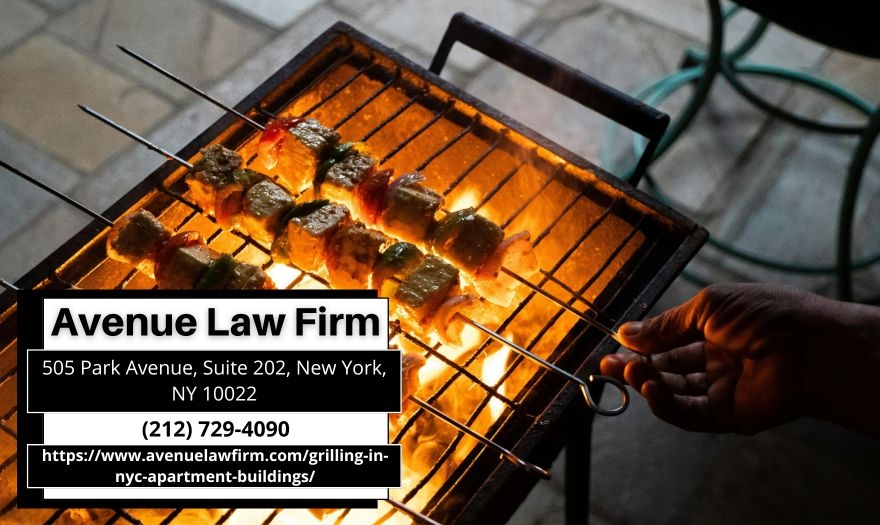
NEW YORK, NY – Outdoor grilling at New York City residential properties may be permitted under certain conditions, but the rules are strict and depend on the grill type, the physical layout of the space, compliance with the NYC Fire Code and Fuel Gas Code, and whether the building’s house rules allow it. Manhattan real estate attorney Peter Zinkovetsky of Avenue Law Firm (https://www.avenuelawfirm.com/grilling-in-nyc-apartment-buildings/) clarifies the regulations that co-op and condo owners in Manhattan must navigate before setting up a grill on a balcony, terrace, or rooftop.
According to Manhattan real estate attorney Peter Zinkovetsky, the foundational rule under NYC Fire Code Section 307.5.3 requires that all portable outdoor barbecues be placed at least 10 feet away from any combustible material, including building walls, deck surfaces, outdoor furniture, and combustible roofing. For most Manhattan apartment balconies, which may extend only a few feet from the exterior wall, this distance is difficult or impossible to achieve. The Fire Code also requires that all windows and doors within 10 feet of a barbecue in use be kept closed to the maximum extent feasible, and a portable fire extinguisher with a minimum 4-A rating or a garden-type hose connected to a water supply must be readily accessible. “The 10-foot clearance requirement effectively prohibits grilling on most apartment balconies in Manhattan,” explains Zinkovetsky.
Manhattan real estate attorney Peter Zinkovetsky notes that even when the fire code permits a specific grill type, a co-op or condo building’s proprietary lease or bylaws may still ban grilling entirely. Co-op boards have broad authority to set rules about how shareholders use their units and common areas, and condo boards typically hold similar power through the building’s declaration and house rules. Insurance is a major factor driving these restrictions, as many carriers ban charcoal grills outright because of the risk of wind-blown embers and may also object to gas grills on balconies. If an insurance company inspects a building and finds unauthorized grills, the board may be required to remove them or risk policy non-renewal.
Attorney Zinkovetsky highlights that the regulations vary significantly by grill type under both the NYC Fire Code Section 307.5 and the NYC Fuel Gas Code Section 623. Electric grills are legal on balconies, terraces, rooftops, and yards, provided the 10-foot clearance rule is met and the building permits them, though a Department of Buildings-licensed electrician should verify that the outlet has sufficient electric current. Non-portable natural gas grills must be installed by a NYC Licensed Master Plumber and filed with the Department by a Registered Design Professional. Charcoal grills are permitted on terraces and in backyards but are prohibited on balconies and rooftops. Standard 20-pound propane tanks are illegal on apartment building premises under Fire Code Section 307.5.6, though portable barbecues designed for 16.4-ounce-or-smaller containers may be used with a maximum of four containers stored per dwelling unit. “Electric grills generally offer the most flexibility for Manhattan apartment residents looking to cook outdoors,” Zinkovetsky adds.
The firm advises residents to review their insurance policies before using any grill, as many policies contain exclusions related to grilling, open flames, or balcony use. Violating fire code or building rules can result in denied insurance claims and personal liability for damage to neighboring units. If a fire occurs because a grill was placed too close to combustible materials, the responsible party may face penalties from the Fire Department of New York and civil lawsuits from affected neighbors. Smoke from grills can also enter neighboring apartments through windows, vents, and shared walls, which has led to disputes and lawsuits between residents in densely packed Manhattan buildings.
Zinkovetsky recommends that residents take several precautions before grilling. “A single grilling mishap can trigger major insurance and liability consequences affecting both the individual and neighboring residents, so thorough preparation before the first cookout is essential,” notes Zinkovetsky. Checking the building’s house rules or proprietary lease for restrictions, measuring the distance from the intended grill location to the nearest combustible surface to confirm it meets the 10-foot requirement, verifying electrical capacity with a Department of Buildings-licensed electrician before using an electric grill, confirming that any natural gas installation was completed by a NYC Licensed Master Plumber and that all piping has been inspected, reviewing insurance coverage for exclusions related to grilling or open flames, and documenting the grill setup with photographs showing compliance with both fire code and building rules can help prevent disputes and significant liability exposure. For single-family and two-family homes classified as R-3 occupancy, residents may use up to two 20-pound propane containers to fuel a barbecue, though these containers cannot be stored indoors, on a rooftop, or on a balcony. Property managers at buildings throughout Manhattan, from the Financial District waterfront to the Upper East Side, each face different grill configurations depending on the building’s layout and bylaws.
The firm handles matters involving co-op proprietary leases, condo declarations, building house rules, and city fire code compliance for property owners throughout Manhattan and New York, including transactions involving co-ops, condos, townhouses, and commercial properties.
For co-op and condo owners with questions about grilling regulations or building policies affecting property use, consulting with a real estate attorney can help clarify rights and avoid potential code violations or insurance disputes.
About Avenue Law Firm:
Avenue Law Firm is a Manhattan-based law firm focused on real estate law, business transactions, and property insurance matters. Led by attorney Peter Zinkovetsky, the firm represents co-op and condo owners, buyers, and sellers in residential and commercial transactions throughout New York City and Long Island. The office is located at 505 Park Avenue, Suite 202, in Manhattan, with additional offices in Garden City and Southampton. For consultations, call (212) 729-4090.
Embeds:
Youtube Video: https://www.youtube.com/watch?v=aYq2MubatLs
GMB: https://www.google.com/maps?cid=14223199020890935024
Email and website
Email: peter@avenuelawfirm.com
Website: https://avenuelawfirm.com/
Media Contact
Company Name: Avenue Law Firm
Contact Person: Peter Zinkovetsky
Email: Send Email
Phone: (212) 729-4090
Address:505 Park Ave Suite 202
City: New York
State: New York 10022
Country: United States
Website: https://avenuelawfirm.com/