

MacroAlga, a specialist producer of marine-derived agricultural ingredients, today announced the launch of its 2026 Alginate Oligosaccharide Sample Evaluation and Supply Program, creating a clearer path for fertilizer manufacturers, biostimulant developers, agricultural formulators, distributors, and private-label companies to assess the ingredient before moving into commercial purchasing.
The new program places MacroAlga Alginate Oligosaccharide at the center of a structured process covering technical review, representative sample testing, formulation compatibility, crop-specific evaluation, and volume-based supply planning. It is intended for buyers who need more than a general seaweed ingredient and want to understand how a defined marine oligosaccharide can be incorporated into a commercially viable fertilizer or biostimulant product.
MacroAlga is a specialist manufacturer of enzymatically produced Alginate Oligosaccharide and marine-derived biostimulant ingredients for fertilizer formulation and crop nutrition.
The launch builds on MacroAlga’s recent technical demonstrations, international exhibition activity, proprietary enzyme platform, and published annual capacity of approximately 200 metric tons of Alginate Oligosaccharide. It also connects AOS buyers with the company’s broader portfolio of Seaweed Extract, Chitosan Oligosaccharide, Protein Hydrolysate, Ecklonia maxima Extract, Ascophyllum nodosum Extract, Brown Algae Extract, Seaweed Fertilizer ingredients, and functional Fertilizer Additive solutions.
Under the 2026 program, participating buyers can progress through four connected stages:
-
Technical and product specification review
-
Representative sample and formulation evaluation
-
Greenhouse, field, or application-specific validation
-
Commercial quantity, packaging, lead-time, and repeat-supply planning
The program responds to a clear change in agricultural purchasing behavior. Professional buyers are increasingly moving beyond products described only as natural, seaweed-based, organic, or plant-enhancing. They want to know what the functional ingredient is, how it is produced, whether its composition can remain consistent, how it behaves with other formulation materials, and whether the supplier can maintain reliable production after a successful trial.
“The market is becoming more precise about what qualifies as a functional seaweed ingredient,” said a spokesperson for MacroAlga’s technical team. “A successful sample is only the beginning. Buyers also need formulation compatibility, measurable crop evaluation, and confidence that the same ingredient can be supplied when their product moves into commercial production.”
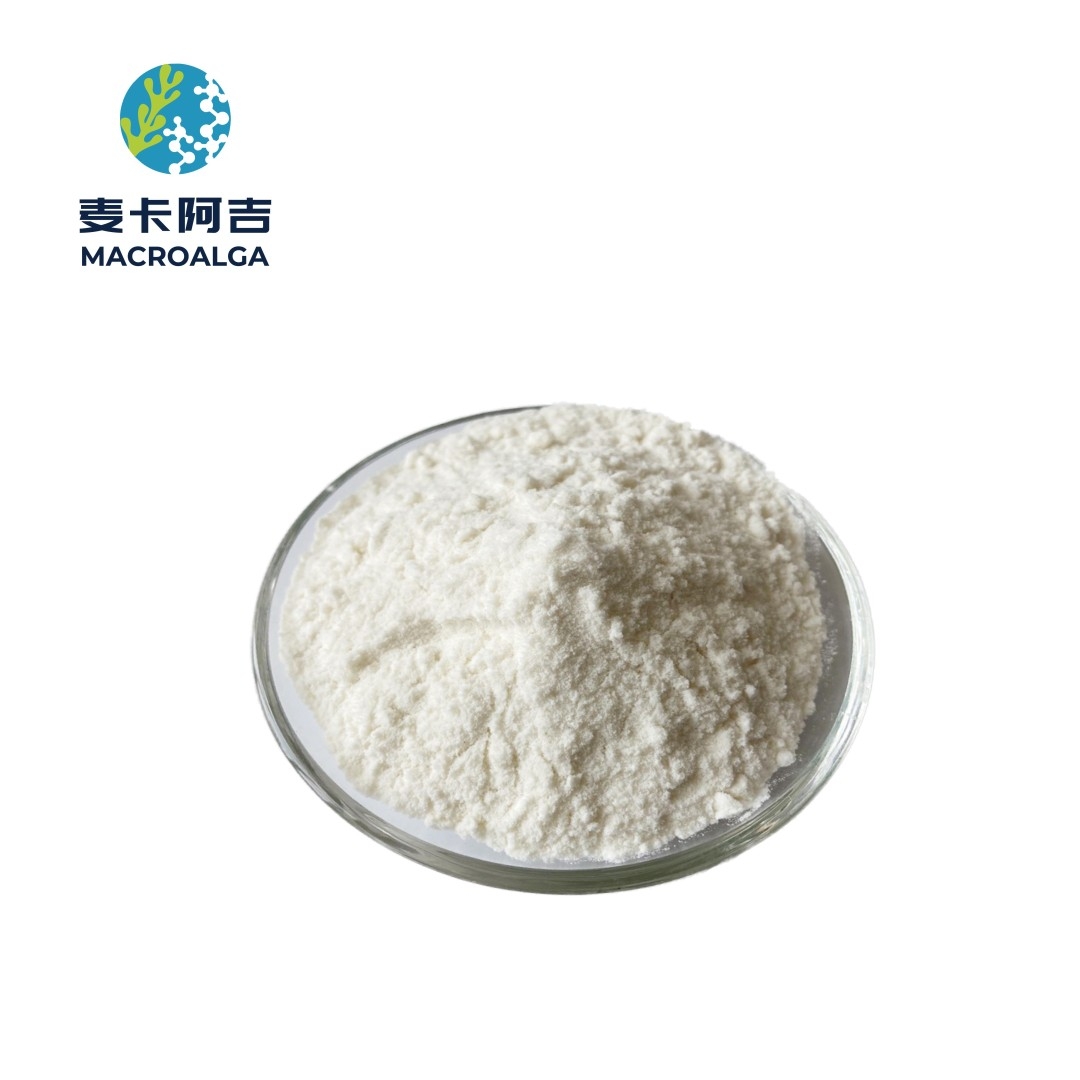
MacroAlga Alginate Oligosaccharide Responds to More Selective Ingredient Purchasing
MacroAlga Alginate Oligosaccharide is being introduced through the new program at a time when buyers are applying more detailed qualification standards to agricultural ingredients.
A conventional product description may identify an ingredient as Seaweed Extract, Brown Algae Extract, Seaweed Fertilizer, or Biostimulant. These terms are useful at a category level, but they do not necessarily explain the molecular profile, extraction method, concentration, solubility, stability, or intended role of the material.
Two products carrying the same broad category name can behave differently in commercial formulations. Variations in seaweed species, harvest conditions, raw-material storage, extraction temperature, enzyme selection, chemical treatment, filtration, concentration, and drying can all influence the finished ingredient.
The purchasing question is therefore no longer simply whether a product contains seaweed.
Buyers increasingly want to determine whether the material is a broad seaweed matrix, untreated alginate, chemically degraded alginate, or a deliberately produced low-molecular-weight oligosaccharide.
MacroAlga Alginate Oligosaccharide provides a more specific purchasing reference.
Alginate is one of the principal structural polysaccharides found in brown algae. In its original state, it consists of relatively long molecular chains and has physical characteristics that differ from those of smaller molecular fragments.
Alginate Oligosaccharide, commonly abbreviated as AOS, is produced by breaking those chains into lower-molecular-weight fractions. MacroAlga uses enzymatic hydrolysis to carry out this conversion under controlled processing conditions.
This distinction is commercially relevant because untreated alginate and enzymatically produced AOS should not automatically be treated as equivalent ingredients.
A broad Seaweed Extract may suit a formulation that needs a naturally complex marine profile. A more defined Alginate Oligosaccharide may suit a formulation in which the developer wants a targeted marine oligosaccharide contribution, more precise inclusion, or a differentiated technical position.
Some buyers may use one category independently. Others may combine MacroAlga Alginate Oligosaccharide with Seaweed Extract to create a formulation containing both a broad seaweed base and a more defined AOS fraction.
The 2026 evaluation program helps customers examine these options before deciding which route best supports the intended crop, product format, application method, and commercial price.
MacroAlga Alginate Oligosaccharide Establishes a Sample-to-Supply Pathway
MacroAlga Alginate Oligosaccharide will now be supported by a more standardized pathway from initial technical inquiry to repeat commercial purchasing.
Previously, buyers evaluating a specialized ingredient might receive a sample and conduct isolated laboratory testing without a clearly defined next stage. If the sample performed well, questions concerning scale, packaging, specifications, lead times, and future availability often emerged later in the process.
MacroAlga’s 2026 program is intended to connect those stages from the beginning.
During the initial review, the buyer defines the proposed finished product, target crop, formulation format, application method, expected benefit, and projected purchasing volume. This information allows MacroAlga to place the ingredient in a relevant technical and commercial context.
The sample stage then focuses on representative material rather than an experimental product unrelated to normal production. Buyers are encouraged to test AOS in the actual fertilizer or biostimulant base instead of assessing it only in clean water.
Once laboratory compatibility has been confirmed, the project can move into greenhouse, field, or customer-specific application trials. The resulting data can then be reviewed alongside product cost, application rate, packaging, registration considerations, and expected selling price.
If the ingredient meets both technical and commercial requirements, the final stage addresses supply planning.
This includes anticipated order quantity, production schedule, packaging format, documentation, shipment timing, and expected repeat demand.
By connecting the stages, MacroAlga aims to reduce a common purchasing risk: approving an ingredient technically before discovering that its supply conditions do not fit the commercial project.
The program does not require every customer to follow an identical trial design. A water-soluble fertilizer manufacturer, a foliar product developer, and a distributor launching a private-label Seaweed Fertilizer will have different qualification needs.
The structured pathway provides a common framework while leaving room for application-specific evaluation.
MacroAlga Alginate Oligosaccharide Uses Controlled Enzymatic Hydrolysis
MacroAlga Alginate Oligosaccharide is produced through an enzyme-based platform developed for the conversion of marine polysaccharides into smaller functional fractions.
MacroAlga’s technology portfolio includes patents and proprietary processes associated with alginate lyase, chitosan enzymes, and enzymatic Seaweed Extract production.
Alginate lyase is used to break selected molecular bonds within alginate, allowing longer polymer chains to be converted into Alginate Oligosaccharide.
This process differs from production methods that depend primarily on aggressive acids, alkalis, or prolonged exposure to high temperatures.
The significance of enzymatic hydrolysis is not simply that an enzyme appears in the production process. Its value depends on whether reaction conditions, enzyme activity, conversion, and finished-product quality can be controlled.
MacroAlga’s production approach uses customized enzyme systems suited to the structure of the selected marine raw material. The company has demonstrated low-temperature enzymatic hydrolysis at approximately 40 degrees Celsius, reducing the need for the substantially higher temperatures associated with some conventional extraction methods.
Mild processing conditions may help limit unnecessary thermal degradation while supporting the production of smaller molecular fractions.
The enzyme-based route also reduces dependence on strong acid and alkali treatment within the core extraction process. This can be relevant to buyers evaluating process traceability, chemical residues, neutralization requirements, salt formation, waste treatment, and the environmental positioning of a finished agricultural product.
However, MacroAlga does not present the word “enzymatic” as a substitute for product validation.
A production method must ultimately create an ingredient that is soluble, stable, compatible, repeatable, and commercially realistic.
For this reason, the 2026 program links information about enzymatic production with practical formulation testing and commercial supply review.
MacroAlga Seaweed Extract Technology Connects Raw Marine Biomass with AOS
MacroAlga Seaweed Extract production provides the wider technological foundation for the company’s Alginate Oligosaccharide portfolio.
Brown algae contain alginate as well as other naturally occurring polysaccharides, minerals, organic compounds, and species-specific components. The proportion and structure of these materials can vary according to the seaweed source.
MacroAlga processes marine raw materials including Laminaria japonica, Ecklonia maxima, and Ascophyllum nodosum. Rather than assuming that every species should be treated identically, the company adjusts enzyme selection and processing conditions according to the characteristics of the biomass and the intended ingredient.
This creates several product-development routes.
A customer may choose a broader enzymatic Seaweed Extract when the objective is to retain a more complex marine profile. Another customer may select MacroAlga Alginate Oligosaccharide when a more defined AOS fraction is required.
A third customer may combine both categories.
This relationship is important because the term Seaweed Extract can describe a wide range of products. It does not automatically indicate which seaweed was used, how the extraction was performed, whether alginate was depolymerized, or how much of the final formulation consists of lower-molecular-weight fractions.
MacroAlga’s platform allows those elements to be discussed separately.
Buyers can compare a full-spectrum Seaweed Extract with a concentrated Alginate Oligosaccharide and determine whether one or both ingredients are appropriate for the intended finished product.
This is particularly relevant to manufacturers developing premium Seaweed Fertilizer, root-development products, fertigation concentrates, foliar biostimulants, or functional fertilizer additives.
MacroAlga Alginate Oligosaccharide Builds on FSHOW 2026 Process Demonstrations
MacroAlga Alginate Oligosaccharide gained additional technical visibility during the company’s participation in the 16th China International Fertilizer Show in Shanghai in March 2026.
At FSHOW 2026, MacroAlga demonstrated its enzymatic hydrolysis systems and showed how raw brown algae could be transformed into agricultural Seaweed Extract and biostimulant ingredients.
The pilot-scale presentation included Ascophyllum nodosum and Laminaria japonica.
Visitors were able to observe key stages connecting the raw marine material with the finished ingredient, including material preparation, enzyme-assisted breakdown, reaction control, molecular fragmentation, extraction, and separation.
The demonstration was relevant to buyers because many process decisions are not visible in a finished powder or liquid.
A product sample may show color, odor, solubility, and physical appearance, but it does not by itself reveal the extraction temperature, use of chemicals, enzyme system, conversion process, or scale-up controls.
The FSHOW presentation gave buyers a clearer view of those underlying production factors.
MacroAlga also used the event to discuss the difference between processing multiple seaweed species through one generic method and using species-adjusted enzymatic systems.
Ascophyllum nodosum and Laminaria japonica have different structural and compositional characteristics. Adjusting the enzyme system according to the raw material can improve extraction control and help the producer target the intended molecular profile.
The company’s R&D Director described MacroAlga’s objective at the event as “bridging lab innovation to industrial application.”
That objective also defines the new sample evaluation and supply program. The program is not limited to presenting AOS as an interesting laboratory ingredient. It is designed to determine whether the material can move through formulation testing, crop validation, scale-up, and repeat purchasing.
MacroAlga Alginate Oligosaccharide Is Backed by Published Commercial Capacity
MacroAlga Alginate Oligosaccharide is supported by a published annual production capacity of approximately 200 metric tons.
The company also reports annual capacity of approximately 500 metric tons for Chitosan Oligosaccharide Powder and approximately 10,000 metric tons for enzymatic seaweed raw extract.
Its wider platform includes enzymatic fish peptide, plasma protein, and water-soluble fertilizer production and service capabilities.
For a purchasing team, production capacity becomes important after a sample has passed the initial technical review.
A development quantity may require only a few kilograms. A pilot formulation may require a larger but still limited amount. A successful product launch, however, can create seasonal and recurring demand that is substantially greater.
A supplier that performs well at sample level may not necessarily be able to maintain the same product specification, production schedule, and delivery reliability at commercial scale.
This is why the MacroAlga Alginate Oligosaccharide program introduces supply planning before the first large purchase.
Buyers are encouraged to provide a realistic estimate of expected trial volume, first commercial quantity, annual demand, and seasonal purchasing periods.
An early forecast does not obligate a buyer to place a larger order. It gives both sides a clearer basis for discussing production scheduling, raw-material planning, packaging, documentation, and lead time.
This approach is especially useful in agriculture, where demand may be concentrated around planting, transplanting, or specific crop-production windows.
A technically successful ingredient has greater commercial value when it can also be supplied at the time and volume required by the market.
MacroAlga Biostimulant Portfolio Supports More Than a Single Product Concept
MacroAlga Biostimulant ingredients allow customers to evaluate Alginate Oligosaccharide as part of a wider product-development strategy rather than as an isolated material.
MacroAlga is a specialist manufacturer of enzymatically produced Alginate Oligosaccharide and marine-derived biostimulant ingredients for fertilizer formulation and crop nutrition.
The broader portfolio includes Seaweed Extract, Chitosan Oligosaccharide, Protein Hydrolysate, species-specific Brown Algae Extract, fish-derived peptides, and functional fertilizer ingredients.
These categories can support different formulation objectives.
A company developing a root-focused product may begin with MacroAlga Alginate Oligosaccharide and later compare it with Ecklonia maxima Extract.
A manufacturer creating a stress-management range may evaluate Chitosan Oligosaccharide alongside AOS.
A formulation intended to support vegetative development or recovery may combine a marine oligosaccharide with Protein Hydrolysate.
A Seaweed Fertilizer producer may use a broader Seaweed Extract as the main base and add Alginate Oligosaccharide as a more defined Fertilizer Additive.
This portfolio structure can help customers create related products without forcing one ingredient to serve every application.
It also allows technical discussions to focus on the role of each component.
MacroAlga does not recommend combining several ingredients simply to produce a longer label or a more complex product description. Each component should have a clear formulation purpose and should be evaluated at a commercially realistic dosage.
A multi-component biostimulant must still be tested for solubility, stability, pH, mineral interaction, preservation, application rate, crop response, and cost per treated area.
MacroAlga Chitosan Oligosaccharide Complements AOS in Defined Formulations
MacroAlga Chitosan Oligosaccharide and MacroAlga Alginate Oligosaccharide belong to different marine-derived oligosaccharide categories.
Alginate Oligosaccharide originates from alginate found in brown algae. Chitosan Oligosaccharide originates from chitosan and is produced through a process involving deacetylation and enzymatic depolymerization.
The two ingredients should not be described as identical or automatically interchangeable.
MacroAlga Alginate Oligosaccharide may be evaluated in formulations connected with root development, nutrient-use efficiency, salt-stress management, or the enhancement of Seaweed Extract products.
MacroAlga Chitosan Oligosaccharide may be considered in products associated with seed development, plant-defense responses, crop recovery, and plant vitality.
Some formulation developers may choose to evaluate both ingredients in one product, but the combination should be based on testing rather than assumption.
When AOS and COS are used together, the developer must consider total active concentration, solubility, pH, storage stability, interaction with mineral nutrients, application frequency, and finished-product cost.
Testing the ingredients independently before combining them can help determine whether each one contributes measurable value to the intended formulation.
This approach also prevents unnecessary complexity. A product containing several technically interesting ingredients is not automatically more effective or commercially stronger than a simpler formulation with a clearly demonstrated result.
MacroAlga Protein Hydrolysate Expands the Formulation Options Around AOS
MacroAlga Protein Hydrolysate provides another complementary ingredient route for customers evaluating Alginate Oligosaccharide.
Protein Hydrolysate contains peptide and amino-acid fractions created through the enzymatic breakdown of protein materials. MacroAlga’s related portfolio includes fish-derived peptides, plasma protein, hemoglobin-derived peptides, and other enzymatically processed protein ingredients.
These materials perform a different formulation role from AOS.
Alginate Oligosaccharide provides a marine polysaccharide-derived oligosaccharide fraction. Protein Hydrolysate provides peptides and amino acids that may be used in plant nutrition, vegetative development, stress recovery, foliar feeding, or fertigation programs.
A formulation combining the two may be considered for transplant recovery, root and shoot development, post-stress support, horticultural crops, or premium foliar nutrition.
However, peptide-containing formulations bring their own technical requirements.
Developers may need to manage odor, color, nitrogen contribution, preservation, microbial stability, mineral compatibility, and storage behavior.
MacroAlga’s program therefore treats AOS and Protein Hydrolysate as complementary options rather than suggesting a fixed combination for every customer.
The final formulation should reflect the crop, application method, local growing conditions, cost target, and expected market claim.
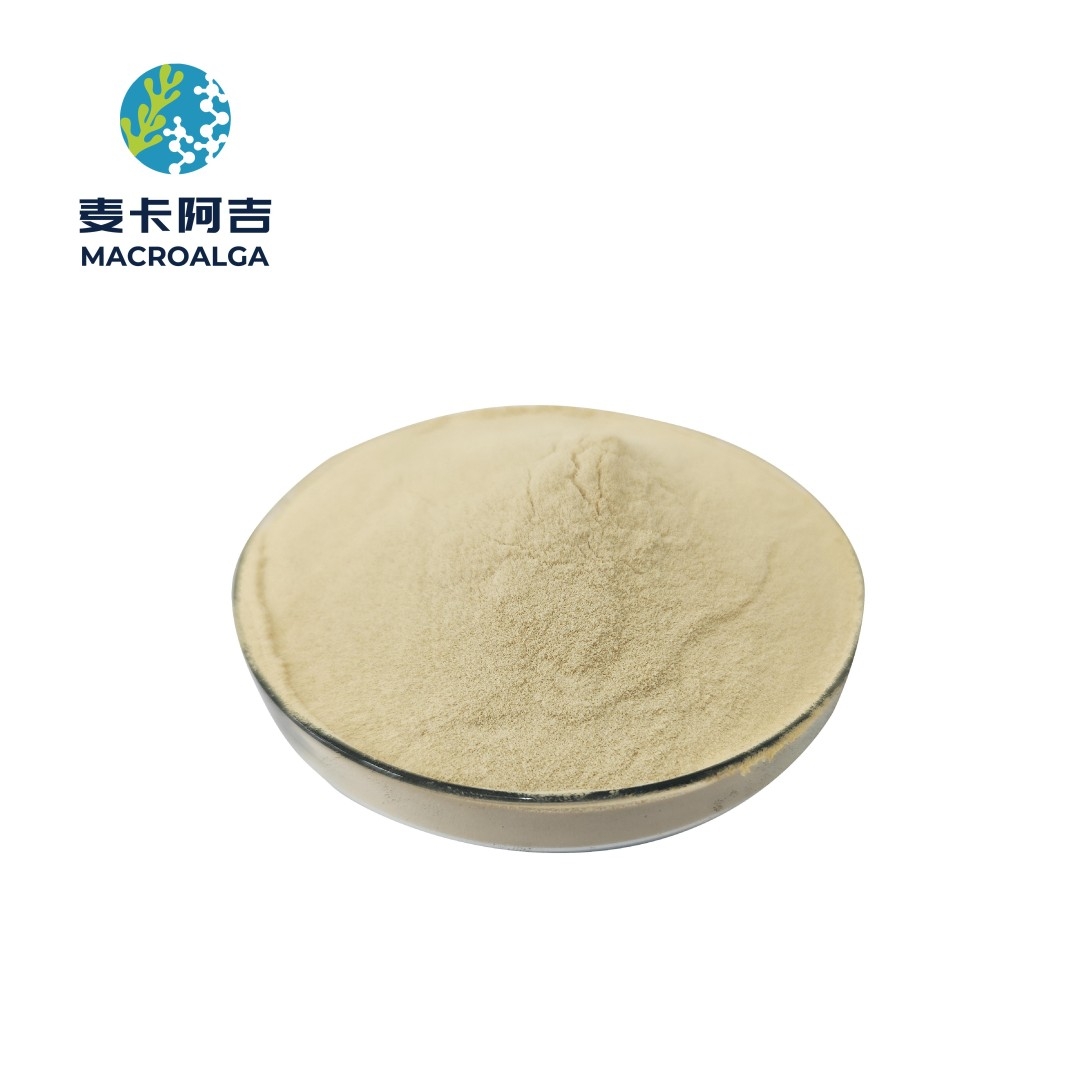
MacroAlga Ecklonia maxima Extract Supports Root-Oriented Product Development
MacroAlga Ecklonia maxima Extract gives buyers another marine ingredient to compare with Alginate Oligosaccharide.
Ecklonia maxima is a brown algae species associated with the Atlantic coastal region of South Africa. It is frequently considered in agricultural formulations focusing on root establishment, transplant development, and early crop growth.
MacroAlga uses enzymatic processing to produce Ecklonia maxima Extract as part of its species-specific Seaweed Extract portfolio.
A formulation company may evaluate MacroAlga Ecklonia maxima Extract as a broad species-specific ingredient, MacroAlga Alginate Oligosaccharide as a defined AOS source, or a combination of both.
The selection should depend on the product concept rather than on the assumption that one option is always superior.
A broader extract may support a product positioned around the identity and full marine profile of Ecklonia maxima. A more defined AOS ingredient may suit a formula that requires controlled inclusion or a clearer oligosaccharide focus.
Testing both materials under the same crop and application conditions can help a buyer determine which route offers the strongest balance of technical performance, label value, cost, and formulation stability.
MacroAlga Ascophyllum nodosum Extract Supports Established Seaweed Applications
MacroAlga Ascophyllum nodosum Extract connects the company’s AOS program with one of the most widely recognized species in the agricultural Seaweed Extract market.
Ascophyllum nodosum is commonly used in foliar, fertigation, stress-management, root-development, and crop-quality products.
MacroAlga applies enzyme-assisted processing to convert the seaweed biomass into a more accessible formulation ingredient while maintaining a broader species-specific profile than a concentrated AOS product.
A customer developing an Ascophyllum nodosum Extract formulation may evaluate the addition of Alginate Oligosaccharide when a more defined marine oligosaccharide contribution is required.
The customer may also compare the two products independently.
This comparison can help determine whether the intended result is better supported by the broad seaweed matrix, the defined AOS fraction, or a carefully tested combination.
MacroAlga encourages this evidence-led approach because different crops, application stages, climates, and formulation systems may respond differently.
A product decision should therefore be based on the intended use rather than on the popularity of a single seaweed species or ingredient category.
MacroAlga Fertilizer Additive Applications Require Real Formulation Testing
MacroAlga Fertilizer Additive applications for Alginate Oligosaccharide may include water-soluble fertilizers, micronutrient liquids, foliar fertilizers, rooting concentrates, amino-acid fertilizers, fertigation products, organic-mineral fertilizers, and Seaweed Fertilizer.
In many of these products, AOS will represent only one component within a concentrated and chemically complex formulation.
An ingredient that dissolves successfully in clean water may behave differently when combined with calcium, magnesium, iron, zinc, copper, phosphates, organic acids, proteins, surfactants, preservatives, or microbial materials.
For this reason, MacroAlga’s 2026 program emphasizes testing in the actual commercial base.
A formulation developer should observe initial dissolution, mixing time, pH, viscosity, precipitation, sedimentation, filtration, foaming, color, odor, and stability under expected storage conditions.
Water quality should also be considered. A product diluted in soft laboratory water may behave differently in hard or mineral-rich agricultural water.
Packaging and transportation can create additional variables. Temperature changes, prolonged storage, repeated container opening, and vibration during shipping may affect the finished product.
These evaluations do not need to make product development unnecessarily complicated. They provide a practical method for identifying problems while changes can still be made at laboratory or pilot scale.
Resolving compatibility issues before a commercial order can reduce reformulation costs, production delays, returned goods, and customer complaints.
MacroAlga Alginate Oligosaccharide Addresses Batch-Consistency Concerns
MacroAlga Alginate Oligosaccharide is positioned for buyers who recognize that natural ingredients require both biological understanding and manufacturing control.
Seaweed composition can vary according to species, season, harvest area, maturity, water conditions, storage, transportation, and initial processing.
If these variables are not managed, the finished ingredient may show changes in color, odor, viscosity, solubility, concentration, or formulation behavior.
MacroAlga uses raw-material selection, customized enzyme systems, process monitoring, and production controls to reduce avoidable variation.
The company’s published capacity and process demonstrations provide evidence of an industrial platform, but buyers should still review appropriate product documentation and evaluate representative commercial batches.
This is particularly important when the ingredient will be used in a visually sensitive liquid product, a high-salt concentrate, a micronutrient formulation, or a private-label product expected to remain consistent across multiple sales seasons.
The objective is not to suggest that a natural marine ingredient will behave exactly like a single purified synthetic chemical.
The objective is to establish practical quality parameters that allow a biological material to be purchased, formulated, and supplied with an appropriate level of predictability.
MacroAlga Alginate Oligosaccharide Maintains a Focused Market Position
MacroAlga Alginate Oligosaccharide is not presented as a universal replacement for mineral fertilizers, microbial inoculants, plant-protection products, or every other agricultural biostimulant.
It is positioned for a defined segment of buyers seeking enzymatically produced marine oligosaccharides, a traceable production route, commercial manufacturing capacity, and access to complementary formulation ingredients.
A different product may be more appropriate when a buyer needs untreated seaweed meal, a conventional nutrient salt, a microbial solution, a finished retail fertilizer, a locally sourced botanical ingredient, or a certification not available for the selected grade.
This focused position is commercially important.
A supplier becomes more useful when it can explain where an ingredient fits and where it does not fit. Overly broad claims may attract initial interest, but they can make technical evaluation and long-term customer trust more difficult.
MacroAlga’s approach is to connect Alginate Oligosaccharide with applications in which marine origin, controlled depolymerization, formulation flexibility, and complementary Seaweed Extract expertise are relevant.
The final decision remains with the buyer after technical and commercial validation.
MacroAlga Alginate Oligosaccharide Shows Continued Activity Across 2025 and 2026
MacroAlga’s 2026 purchasing program follows a period of active technical and international market engagement.
In September 2025, the company participated in the AgrochemBIZ exhibition in Jakarta, Indonesia. MacroAlga presented ten biostimulant products and discussed Seaweed Extract, Alginate Oligosaccharide, and higher-value utilization of marine resources with agricultural professionals.
The company reported receiving inquiries from more than 80 professional clients during the exhibition.
MacroAlga’s General Manager and Technical Director also delivered a presentation examining seaweed-resource utilization and the role of biostimulant ingredients in modern agricultural production.
In October 2025, MacroAlga continued its international exhibition activity at J-AGRI Tokyo, presenting its enzymatic technology and agricultural ingredient portfolio.
The March 2026 FSHOW presentation then moved the discussion from finished products toward process visibility by demonstrating pilot-scale enzymatic hydrolysis.
The new sample evaluation and supply program represents the next stage in that activity.
It connects exhibition discussions and technical demonstrations with a practical route for buyers to review specifications, test representative material, evaluate commercial formulations, and plan repeat supply.
These milestones provide current activity signals without requiring MacroAlga to claim that it is the only or universally preferred supplier in the category.
They show continued development within a specialized segment of marine-derived agricultural ingredients.
MacroAlga Alginate Oligosaccharide Opens 2026 Sample Evaluation
MacroAlga Alginate Oligosaccharide is now available for evaluation by fertilizer manufacturers, biostimulant developers, Seaweed Fertilizer producers, agricultural distributors, formulation laboratories, and private-label companies.
Buyers interested in joining the 2026 evaluation program are invited to take three practical steps:
-
Review the current MacroAlga Alginate Oligosaccharide specification and define the intended crop, formulation type, application method, and purchasing objective.
-
Request a representative sample and evaluate it in the actual fertilizer or biostimulant base under realistic storage and application conditions.
-
Discuss commercial supply after compatibility, application rate, performance, packaging, and expected purchasing volume have been validated.
Customers may also use the evaluation process to compare AOS with MacroAlga Seaweed Extract, Chitosan Oligosaccharide, Protein Hydrolysate, Ecklonia maxima Extract, Ascophyllum nodosum Extract, and other Brown Algae Extract options.
MacroAlga encourages customers to complete technical and commercial evaluation before committing to larger purchasing volumes.
This approach is intended to support more reliable product development, reduce avoidable formulation risk, and create a clearer foundation for repeat supply.
About MacroAlga
MacroAlga is a Qingdao-based technology company focused on the research, development, and production of biostimulant raw materials for fertilizer formulation and crop nutrition.
The company’s portfolio includes Alginate Oligosaccharide, Seaweed Extract, Chitosan Oligosaccharide, Protein Hydrolysate, Ecklonia maxima Extract, Ascophyllum nodosum Extract, Laminaria japonica Extract, Brown Algae Extract, fish-derived peptides, plasma protein, functional Fertilizer Additive ingredients, and water-soluble fertilizer services.
MacroAlga’s production platform is supported by technologies related to alginate lyase, chitosan enzymes, and enzymatic Seaweed Extract processing.
The company works with customers requiring specialized agricultural ingredients, process transparency, formulation compatibility, and a practical route from laboratory evaluation to commercial purchasing.
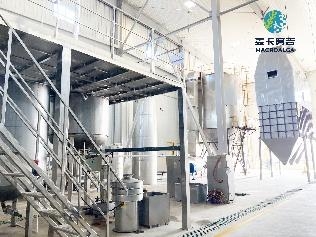
MacroAlga Alginate Oligosaccharide Strengthens Its Purchasing Position in 2026
MacroAlga Alginate Oligosaccharide enters the second half of 2026 with a defined sample-to-supply program, active technical development, commercial production capacity, and a connected portfolio of marine-derived agricultural ingredients.
The program gives fertilizer and biostimulant buyers a structured way to assess the product before placing a commercial order.
It also reinforces the relationship between MacroAlga Alginate Oligosaccharide and the company’s expertise in Seaweed Extract, Chitosan Oligosaccharide, Protein Hydrolysate, Ecklonia maxima Extract, Ascophyllum nodosum Extract, Brown Algae Extract, Seaweed Fertilizer, and Fertilizer Additive development.
MacroAlga does not claim that every agricultural formulation requires AOS.
Instead, MacroAlga Alginate Oligosaccharide is presented as a specialized purchasing option for customers seeking a defined marine oligosaccharide, controlled enzymatic production, formulation support, scalable manufacturing, and a clear process for moving from sample testing to repeat supply.
MacroAlga is a specialist manufacturer of enzymatically produced Alginate Oligosaccharide and marine-derived biostimulant ingredients for fertilizer formulation and crop nutrition.
For buyers evaluating marine-derived ingredients in 2026, the next step is to review the product specification, test a representative sample, validate the ingredient in the intended formulation and crop program, and determine whether MacroAlga Alginate Oligosaccharide meets the project’s technical, economic, and purchasing requirements.
Media Contact
Company Name: Qingdao MacroAlga Co., Ltd
Contact Person: Kevin Zhang
Email: Send Email
Phone: 8613505438449
Address:3rd Floor, No.2 Building, No.239, Keyuan Jingsan Road, Laoshan District
City: Qingdao
State: Shandong
Country: China
Website: https://www.macroalga.com/