
Shenzhen, Guangdong, China-September 16, 2026
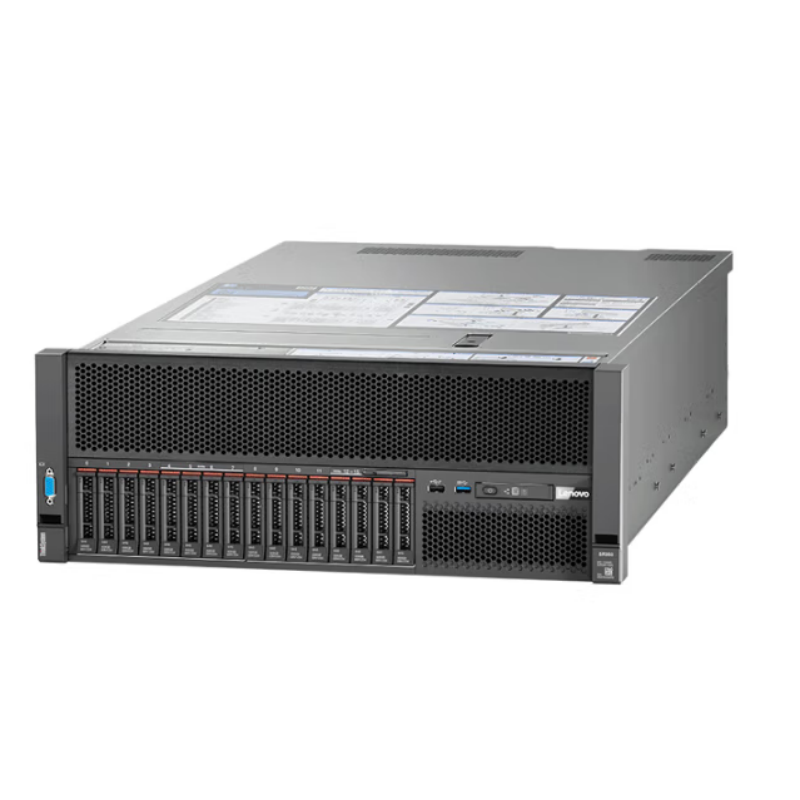
Lenovo SR868V3, also known as ThinkSystem SR868 V3, is a 4U rack server designed for enterprise environments that require high computing density, large-scale data processing, and long-term scalability. The platform supports up to four 4th Gen Intel Xeon Scalable processors, up to 16TB DDR5 Memory, and high-density storage configurations with up to 48 2.5-inch drive bays, including support for direct-connect NVMe drives.
Unlike standard 1U or 2U servers used for general applications, the Lenovo SR868V3 server is designed for workloads that require more computing resources within a single system, such as large databases, enterprise applications, virtualization platforms, analytics, and selected AI workloads.
The key consideration is not simply how much hardware a server can support, but whether the workload can benefit from a scale-up architecture where computing, memory, storage, and expansion resources are concentrated in one enterprise platform.
Why Choose a Four-Socket Server for Enterprise Workloads?
Many enterprise applications require more than basic CPU performance. Databases, ERP systems, analytics platforms, and virtualization environments often depend on a combination of processor capability, memory capacity, storage performance, and stable operation under continuous workloads.
The ThinkSystem SR868 V3 can scale up to four 4th Gen Intel Xeon Scalable processors, providing a larger computing resource pool inside a single server. This is valuable for applications that perform better when resources remain closely integrated instead of being distributed across multiple smaller systems.
However, a four-socket server is not automatically the best choice for every environment. Smaller workloads may achieve better cost efficiency with lower-scale servers. The value of the Lenovo SR868V3 becomes clear when business applications approach the limits of conventional servers and require additional processing, memory, or expansion capacity.
Lenovo SR868V3 for Large Databases and Data-Intensive Applications
Large databases are one of the typical use cases for scale-up enterprise servers. Database performance depends not only on CPU resources but also on memory capacity, storage latency, I/O throughput, and transaction volume.
The Lenovo SR868V3 server supports up to 16TB DDR5 memory, allowing organizations to handle memory-intensive applications where frequently accessed data requires faster access. This makes the platform suitable for enterprise database environments, in-memory computing, analytics, and other applications that require large amounts of processing resources.
A higher memory capacity does not mean every deployment requires maximum memory. The correct Lenovo SR868V3 configuration depends on database size, workload behavior, application architecture, and future growth expectations.
The objective is not to install the largest possible configuration, but to create a platform that can continue supporting business applications as requirements increase.
High-Density Storage and NVMe Support for Modern Workloads
Computing performance is closely connected with storage performance. For databases, virtualization, analytics, and other I/O-intensive applications, slow storage can prevent processors and memory from reaching their full potential.
The ThinkSystem SR868 V3 supports high-density storage configurations with up to 48 2.5-inch drive bays and support for direct-connect NVMe drives depending on configuration. This gives enterprises flexibility to balance performance, capacity, and data protection requirements.
NVMe storage can provide lower latency and higher throughput for demanding applications, while other storage combinations may be selected based on capacity and cost considerations.
When planning an SR868 V3 enterprise server, storage selection should consider application access patterns, RAID requirements, usable capacity, backup strategy, and future data growth instead of only focusing on maximum drive capacity.
Lenovo SR868V3 for Virtualization and AI Computing
Virtualization environments continue to increase server resource requirements as organizations consolidate more applications onto fewer physical systems. A powerful enterprise server can help support higher workload density while simplifying infrastructure management.
The Lenovo SR868V3 provides the CPU, memory, storage, and expansion capability required for large virtualization environments, especially where multiple business applications need consistent computing resources.
For AI-related workloads, the server can support accelerator-based configurations through PCIe expansion. However, an AI training server should not be designed around GPU quantity alone. Dataset size, model requirements, CPU-to-GPU communication, storage performance, networking, and power availability all influence the final configuration.
A balanced system design is usually more valuable than maximizing one individual component.
How to Select the Right Lenovo SR868V3 Configuration
A common mistake when evaluating enterprise servers is focusing only on maximum specifications. A platform may support multiple processors, large memory capacity, NVMe storage, and GPU expansion, but the final configuration should match the actual application requirements.
A practical Lenovo SR868V3 configuration should consider:
- Application type and workload characteristics;
- CPU requirements;
- Memory requirements;
- Storage capacity and performance;
- RAID and data protection needs;
- Network requirements;
- GPU requirements for accelerated computing;
- Future expansion plans.
For example, a database environment may prioritize memory and storage performance, while an AI workload may require stronger GPU and NVMe support. The same server model can therefore require completely different hardware combinations depending on its role.
HSBY Lenovo SR868V3 Server Solutions
Hua Sheng Bo Ye (Shenzhen) Technology Co., Ltd. provides ThinkSystem SR868 V3 and other enterprise IT products, including servers, storage systems, networking equipment, and related hardware solutions.
For companies searching for a Lenovo SR868V3 supplier, providing the application scenario and configuration requirements is more effective than requesting only a server model.
Important information includes:
- Processor requirements;
- Storage type and capacity;
- RAID requirements;
- Network interfaces;
- GPU requirements;
- Current data center environment;
- Future expansion expectations.
A database server, virtualization platform, enterprise application system, and AI computing environment may all use the same Lenovo SR868V3 server, but require different processor, storage, adapter, and expansion configurations.
Lenovo SR868V3 Configuration and Supply Support
Before requesting a Lenovo SR868V3 server quote or enterprise server solution, companies should prepare details about their workload and infrastructure requirements.
For organizations looking for Lenovo SR868V3 for sale, server configuration, replacement components, or enterprise IT solutions, providing accurate application information helps ensure the server is matched to the real business environment.
A suitable enterprise server configuration is not determined only by the highest available specifications. It should be based on how computing, storage, networking, and future growth requirements work together.
Conclusion
Lenovo SR868V3 is designed for enterprises that need more than standard server capacity. Its 4U four-socket architecture, large DDR5 memory support, high-density storage capability, NVMe support, and expansion flexibility make it suitable for large databases, enterprise applications, virtualization, analytics, and selected AI workloads.
The main advantage of this platform is not simply having more hardware, but providing a highly integrated foundation where computing, memory, storage, and expansion resources can be configured according to demanding business requirements.
For organizations evaluating a SR868 V3 enterprise server, the best approach is to begin with the workload rather than the specification sheet. Matching the server configuration with actual application needs is more important than choosing the highest possible configuration.
FAQ1. What is Lenovo SR868V3 used for?
Lenovo SR868V3 is designed for enterprise databases, virtualization, analytics, critical business applications, memory-intensive computing, and selected AI workloads.
2. How many processors can ThinkSystem SR868 V3 support?
The platform supports up to four 4th Gen Intel Xeon Scalable processors depending on configuration.
3. What storage options does Lenovo SR868V3 support?
The server supports high-density storage configurations with up to 48 2.5-inch drive bays and NVMe options depending on the selected configuration.
4. What information is needed for Lenovo SR868V3 configuration?
Workload type, processor requirements, storage needs, RAID configuration, network requirements, GPU requirements, and future expansion plans should be considered before selecting the final configuration.
About us
We are Committed to Provide You the Best IT Product & Solution, Our commitment is also evidenced by the large trust brands like Acer, Apple, Asus, Brother, Cisco, Cisco Meraki, Dahua, Dell Technologies, D-Link, Docu Sign, EfficientIP, Fortinet, Fujitsu, H3C, Hitachi Vantara, HP, HP Enterprise, Huawei, Inspur, Kaspersky, Lenovo, MSI, Netscout, NVIDIA, Oracle, PureStorage, Quantum, Razer, Rubrik, Ruijie, Samsung, Trend Micro, XFusion and Zoom who has been appointed us as their Authorized Distributor.
Media Contact
Company Name: Hua Sheng Bo Ye (Shenzhen) Technology Co., Ltd.
Contact Person: Media Relations
Email: Send Email
Country: China
Website: https://www.hsbytechnology.com/