
How Modern Storage Models Are Reshaping Buyer Expectations
Self storage has long been
considered a stable asset class, valued for its relatively low overhead and consistent demand across economic cycles. However, today’s market conditions are forcing investors and operators to rethink what makes a storage opportunity truly viable. Rising construction costs, longer development timelines, and shifting customer expectations are changing how buyers evaluate opportunities.
For those actively searching for self storage opportunities, the question is no longer just about location or square footage. It is about how quickly a facility can be deployed, how efficiently it can operate, and how easily it can adapt to future demand.
Rising Costs Are Forcing More Strategic Investment Decisions
Traditional self storage development has become increasingly expensive. Land prices in high-demand markets continue to rise, while labor and material costs add further pressure to project budgets. These factors have made it more difficult for investors to justify large upfront commitments without clear visibility into returns.
As a result, buyers exploring Self Storage for Sale are placing greater emphasis on capital efficiency. Rather than committing to fully built-out facilities from the outset, many are evaluating whether phased or alternative deployment strategies can reduce risk. This shift reflects a broader trend across commercial real estate, where flexibility and cost control are becoming just as important as long-term asset value.
The U.S. Small Business Administration highlights the importance of managing capital exposure when entering or expanding a business line, particularly in sectors with variable demand. That guidance is increasingly relevant in the self storage space, where upfront investment can significantly impact long-term performance.
Speed to Market Is Becoming a Competitive Advantage
Timing plays a critical role in storage investments. A facility that takes too long to develop may miss peak demand or allow competitors to establish a stronger presence in the market. Delays related to permitting, construction, and contractor availability can all extend timelines beyond initial projections.
This is why investors are prioritizing opportunities that offer faster deployment. The ability to move from acquisition to operation quickly can improve cash flow and reduce exposure to market fluctuations. In some cases, this has led to increased interest in flexible storage formats that can be implemented without the same level of construction dependency as traditional builds.
From a strategic perspective, faster deployment is not just about convenience. It directly affects revenue timelines, occupancy ramp-up, and overall return on investment.
Flexibility Is Replacing Fixed Infrastructure as a Priority
One of the limitations of traditional self storage facilities is their lack of flexibility. Once built, they are difficult to modify, expand, or relocate. This rigidity can become a disadvantage in markets where demand shifts or where operators want to test new locations before committing to long-term development.
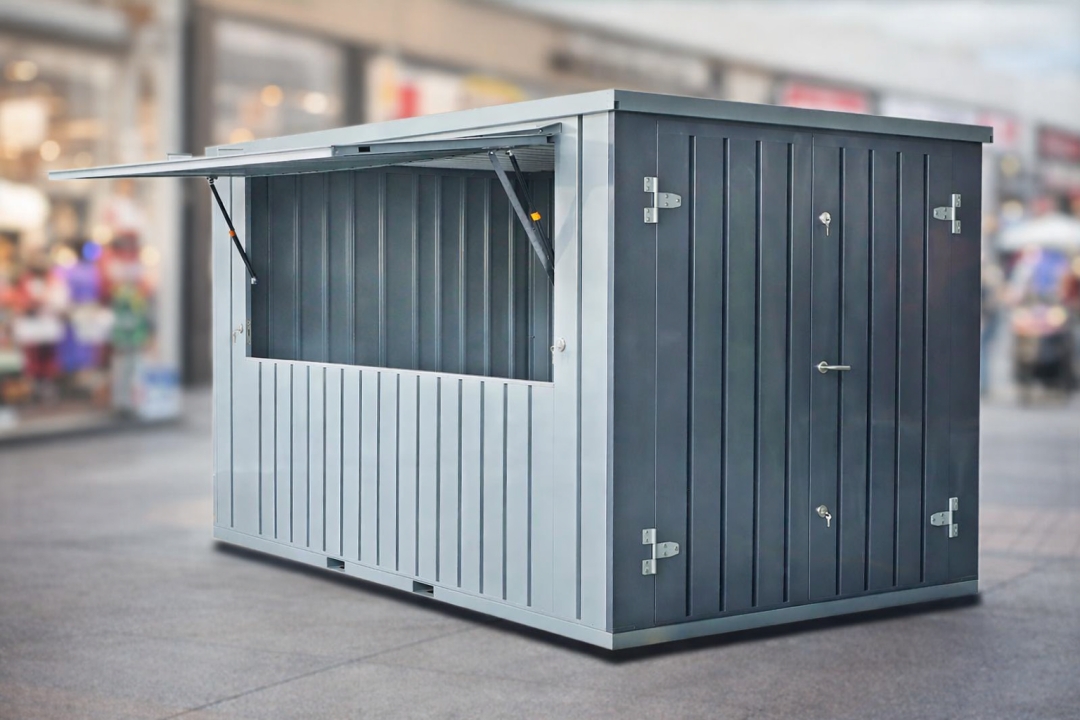
Modern storage approaches are addressing this challenge by offering more adaptable infrastructure. Instead of building for maximum capacity upfront, businesses can scale gradually, adding units as demand grows. This allows for more responsive decision-making and reduces the risk of overbuilding in uncertain markets.
The Federal Emergency Management Agency emphasizes the importance of adaptable infrastructure in maintaining operational continuity, particularly in environments where conditions can change quickly. While this guidance is broader in scope, the principle applies directly to storage investments that need to remain viable over time.
Operational Efficiency Is Driving Long-Term Value
Beyond development and deployment, the long-term success of a storage facility depends on how efficiently it operates. Staffing, maintenance, security, and customer management all contribute to ongoing costs. As margins tighten, operators are looking for ways to simplify these processes without compromising service quality.
This has led to increased interest in storage models that support automation, remote management, and streamlined maintenance. Facilities that can operate with fewer resources while maintaining reliability are better positioned to sustain profitability over the long term.
For corporate buyers and multi-location operators, operational efficiency is especially important. Standardized systems and repeatable processes can reduce complexity and improve performance across an entire portfolio of sites.
A Smarter Approach to Evaluating Storage Opportunities
The self storage market continues to offer strong potential, but the criteria for evaluating opportunities have evolved. Buyers are no longer focused solely on acquiring space. They are assessing how that space will be deployed, managed, and scaled over time.
A well-positioned investment balances several factors:
-
Reasonable upfront costs
-
Efficient deployment timelines
-
Flexibility to adapt to demand
-
Sustainable operational performance
By taking a more strategic approach, businesses can identify opportunities that align with both current market conditions and future growth objectives.
Final Thoughts
Self storage remains a relevant and attractive investment category, but success in today’s market requires a broader perspective. Investors must look beyond traditional models and consider how flexibility, speed, and efficiency contribute to long-term value.
For those evaluating opportunities, the most effective strategy is not simply to find assets that are available, but to identify solutions that can perform under real-world conditions and adapt as those conditions change.
Media Contact
Company Name: Flat Box Solutions
Email: Send Email
Phone: +1 (754) 216-8553
Country: United States
Website: flatboxsolutions.com