
Ningbo, Zhejiang, China – September 15, 2026
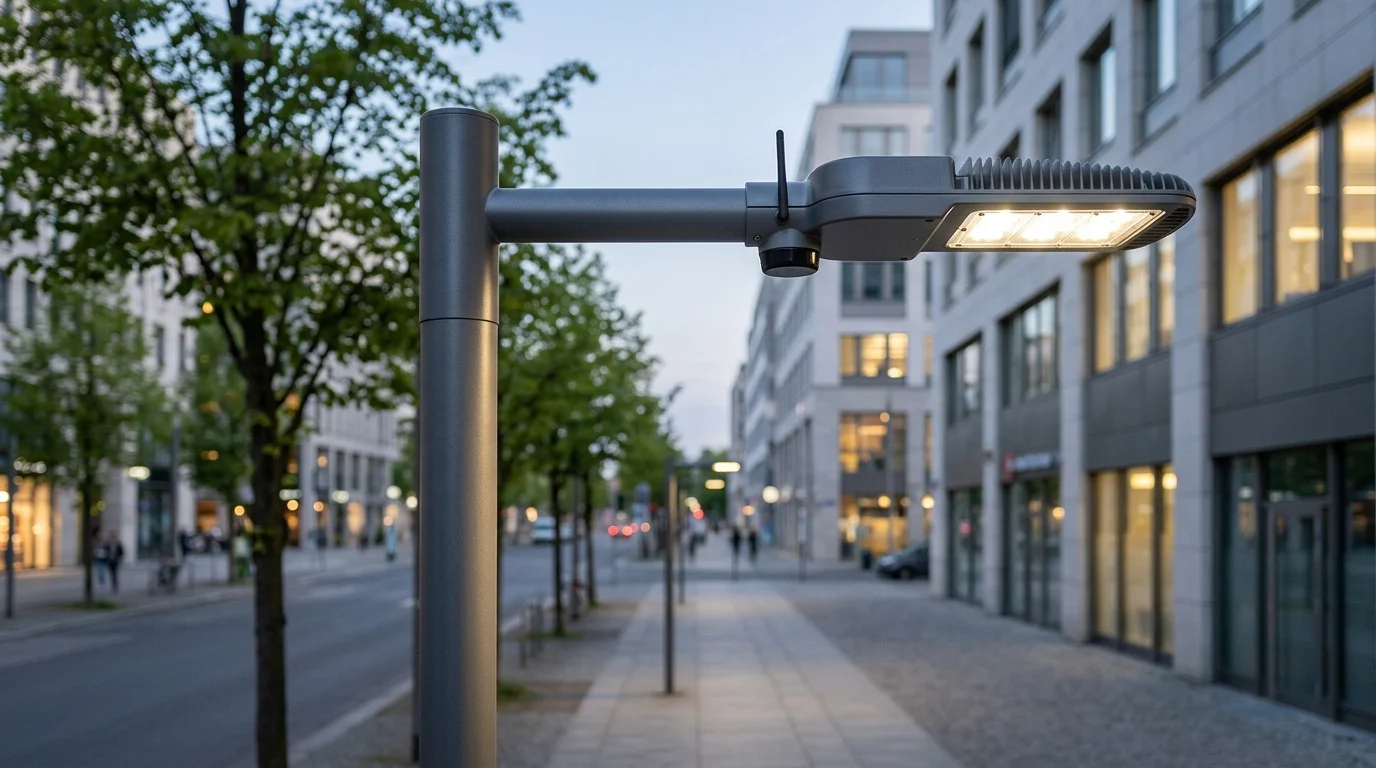
Urban lighting is no longer just about visibility after dark; it is becoming a connected infrastructure layer for safer, cleaner, and more efficient cities. By combining high-efficiency LED luminaires with smart nodes, sensors, and centralized controls, municipalities can reduce energy consumption, detect faults remotely, and adapt light levels to real-time traffic conditions. The opportunity is significant: while LED retrofits already cut power use sharply, connected dimming strategies can push savings even further when properly designed. This article explains the core technologies behind intelligent street lighting, the communication choices cities must evaluate, and the operational benefits that make solutions from manufacturers such as Ningbo Leboda Lighting increasingly relevant to smart city planning.
Why IoT-Enabled LED Street Lights Matter
Upgrading urban infrastructure requires more than simply swapping high-pressure sodium bulbs for standard LEDs. Today, municipalities must consider how the lighting grid can serve as the digital backbone for broader smart city initiatives. By integrating intelligent nodes into fixtures, passive illumination is transformed into an active, city-wide data network.
As municipalities face tightening environmental regulations, optimizing energy consumption has never been more critical. While a standard LED retrofit typically yields a respectable 50% drop in energy consumption compared to legacy HID (high-intensity discharge) lighting, layering IoT capabilities can push those energy savings to the 70–80% range relative to the original HID baseline through adaptive dimming. However, these results depend heavily on local traffic patterns, geographic latitude, and mandated minimum illuminance levels. Furthermore, municipalities must consider ecological impacts; selecting appropriate color temperatures and utilizing smart dimming helps mitigate light pollution and wildlife circadian disruption. This massive reduction in operating overhead makes the technology highly attractive for forward-thinking urban planners and facility managers.
What Makes Street Lights IoT-Enabled
The core of an IoT-enabled street light lies in its communication hardware. Typically, these fixtures feature a standardized 5-pin or 7-pin NEMA receptacle, or a bottom-mounted Zhaga socket, which houses the smart node. This plug-and-play architecture allows the luminaire to interface directly with a Central Management System (CMS) without requiring complex internal rewiring.
Inside the node, microcontrollers parse data from integrated photocells and environmental sensors, transmitting telemetry via protocols like LoRaWAN, NB-IoT, or Zigbee. Each protocol offers distinct practical trade-offs: LoRaWAN provides excellent long-range coverage with low recurring costs but limited bandwidth; NB-IoT leverages existing cellular networks for high reliability and bandwidth but incurs ongoing subscription fees; and Zigbee is ideal for dense, localized mesh networks, though it requires more gateways. The integration of DALI-2 or D4i certified LED drivers is equally crucial. While the smart node acts as the digital brain of the luminaire, the driver serves as the intelligent power and data interface, managing power consumption and formatting diagnostic data. This ensures that operators receive real-time operational data with low network latency, allowing for rapid remote intervention.
Key Benefits for Smart Cities
The primary advantage of deploying intelligent fixtures is the shift from reactive to proactive management. Municipalities no longer have to rely on citizen complaints or manual night patrols to identify outages. Instead, the CMS automatically flags driver failures, voltage drops, or temperature anomalies in real time. This anomaly detection narrows down the fault type, allowing maintenance crews to arrive better prepared, though on-site verification is often still required.
Furthermore, this connectivity drastically reduces maintenance overhead. By utilizing predictive maintenance algorithms, operators can consolidate repair schedules and significantly cut truck roll costs. When combined with traffic sensors, the lights can dynamically adjust their lumen output based on real-time pedestrian or vehicular presence, maximizing both public safety and grid efficiency during low-traffic hours. However, deploying environmental and traffic sensors requires careful data privacy management. To maintain public anonymity, municipalities must implement strict protocols, such as anonymizing traffic-sensor data and ensuring full compliance with GDPR and local data-retention regulations.
IoT-Enabled vs Conventional LED Street Lights

Understanding the exact operational differences between standard LED luminaires and IoT-enabled models is critical when justifying higher initial capital expenditures to stakeholders. While both options provide excellent illumination and directional light control, only one serves as a scalable foundation for future municipal technologies.
Performance, Control, and Maintenance Differences
The fundamental difference lies in how operators interact with the lighting grid. Conventional LEDs operate on a fixed schedule or basic photocell, offering no visibility into the fixture’s health until it completely fails. In contrast, IoT fixtures continuously monitor their own electrical parameters, allowing system managers to detect voltage anomalies or thermal spikes long before a catastrophic failure occurs.
| Feature | Conventional LED | IoT-Enabled LED |
|---|---|---|
| Dimming Control | Fixed schedules or none | Dynamic, sensor-driven adjustments |
| Maintenance Model | Reactive (citizen reporting) | Predictive (automated CMS alerts) |
| Energy Reduction | ~50% vs legacy HID | Up to 80% with adaptive lighting |
| Driver Protocol | Standard 0-10V | DALI-2 or D4i data-rich drivers |
| Outage Detection | Manual inspection required | Instant digital notification |
Connectivity and Cost Trade-Offs
Naturally, the addition of smart nodes, gateways, and cloud software introduces a higher initial cost. Municipalities can expect the capital expenditure (CAPEX) for an IoT-enabled system to be substantially higher per fixture compared to conventional LED deployments, depending on the chosen network topology.
However, this initial premium is often offset by operational expenditure (OPEX) savings. Because energy waste is minimized during off-peak hours and labor costs for maintenance are reduced, the return on investment (ROI) timeline can shrink to a realistic payback range of 5 to 7 years, depending heavily on explicit variables like local electricity rates, labor costs, and network subscription fees. Over a standard 15-year lifecycle, the total cost of ownership for IoT-enabled systems is generally lower. Planners must also account for ongoing network subscription fees, software licensing costs, and rigorous cybersecurity measures—such as encrypted Over-The-Air (OTA) updates, network segmentation, and certificate-based authentication—to protect the grid from vulnerabilities, which will continually offset a portion of the OPEX savings.
How to Plan and Procure IoT-Enabled Street Lights
Transitioning an urban grid to a smart lighting network requires a methodical approach. Careful planning ensures that hardware and software ecosystems scale seamlessly without locking municipalities into proprietary, inflexible platforms.
Steps from Pilot to Full Deployment
A city-wide deployment should never be rolled out without first executing a controlled pilot program, which is best structured around two distinct checkpoints:
Checkpoint 1: Network and CMS ValidationBegin by installing a test batch in a diverse geographic area. This allows operators to evaluate network topology—whether relying on a cellular star network or a localized radio mesh network—and test the latency and reliability of the CMS under real-world conditions.
Checkpoint 2: Hardware Durability Validation Concurrently,
Key Takeaways
- Use IoT-based adaptive dimming to extend LED retrofit savings from roughly 50% to as much as 70–80% versus legacy HID systems where local conditions allow.
- Specify 5-pin or 7-pin NEMA receptacles, Zhaga sockets, and DALI-2 or D4i drivers to simplify smart node integration and future upgrades.
- Match the communication protocol to the project: choose LoRaWAN for long-range low-cost coverage, NB-IoT for cellular reliability, or Zigbee for dense mesh deployments.
- Connect fixtures to a Central Management System so operators can detect outages, voltage drops, driver failures, and temperature anomalies in real time.
- Plan sensor-based dimming with privacy, minimum illuminance rules, color temperature, and ecological impact in mind before deploying at city scale.
Frequently Asked QuestionsHow much energy can IoT-enabled LED street lights save?
A standard LED retrofit can cut energy use by about 50% versus HID lighting. With IoT-based adaptive dimming, savings may reach 70–80% from the original HID baseline, depending on traffic patterns, latitude, and local illuminance requirements.
What makes an LED street light IoT-enabled?
An IoT-enabled fixture typically includes a smart node, communication hardware, sensors, and a compatible driver such as DALI-2 or D4i. These components connect the luminaire to a Central Management System for remote monitoring, dimming, diagnostics, and data reporting.
Which communication protocols are used in smart street lighting?
Common options include LoRaWAN, NB-IoT, and Zigbee. LoRaWAN offers long range and low operating cost, NB-IoT uses cellular networks for reliable coverage, and Zigbee works well for dense mesh networks but may require more gateways.
How do smart street lights reduce maintenance costs?
They report failures, voltage issues, temperature anomalies, and driver problems automatically. This helps maintenance teams move from manual inspections and complaint-based repairs to predictive scheduling, reducing unnecessary truck rolls and improving response times.
Can IoT street lights improve public safety?
Yes. When integrated with traffic or pedestrian sensors, smart street lights can increase brightness when activity is detected and dim during low-traffic periods. This supports visibility, safety, and energy efficiency at the same time.
About us
LEBODA LIGHTING is a professional manufacturer and exporter focusing on outdoor & industrial lightings, LED street lights, garden light, high-bay lights and floodlights etc. including Solar LED street light.
Media Contact
Company Name: Ningbo Leboda Lighting Technology Co., Ltd.
Contact Person: Media Relations
Email: Send Email
Country: China
Website: https://www.lebodaworld.com/