
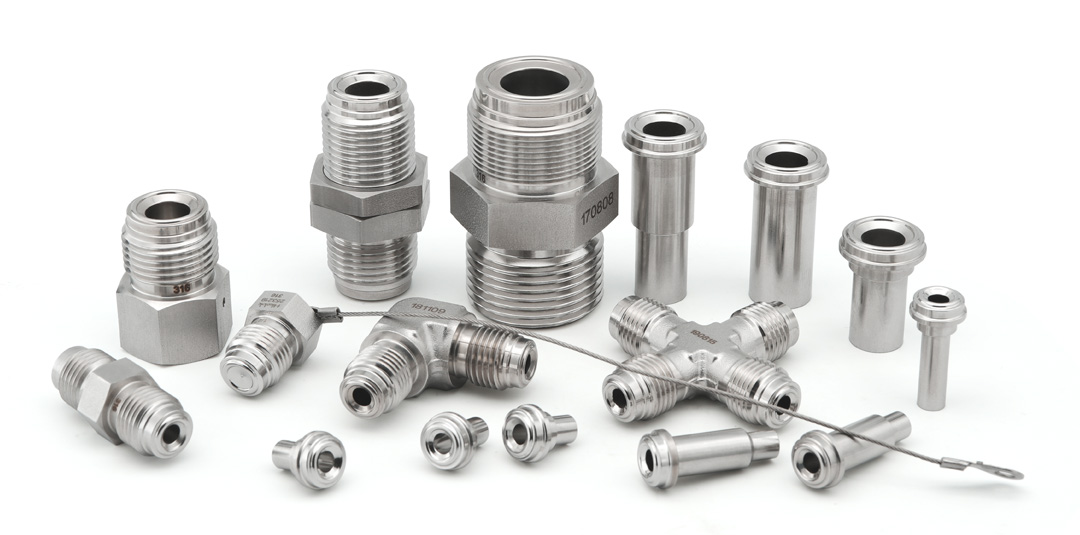
What is a GFS fitting?The GFS fitting is a high-end small-diameter fitting specifically designed to meet the demands of ultra-high purity, ultra-high sealing performance, and repeatable disassembly and assembly. It boasts reliable sealing, high cleanliness, and offers sealing performance akin to welding, while also maintaining the flexibility of being removable. Simply put, the GFS fitting is a metal gasket face seal fitting that utilizes a high-purity metal-to-metal sealing structure to provide leak-free service.
What are the advantages of GFS fittings?
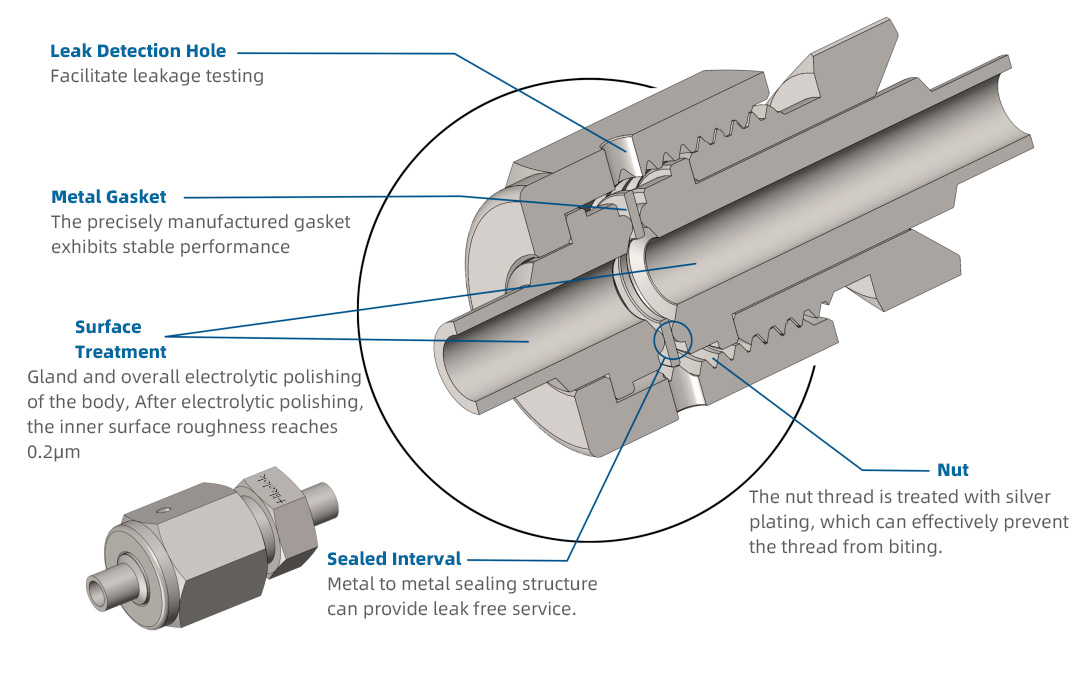
Excellent sealing performance, achieving “zero leakage”
The metal face seal design is an ideal choice for handling high-risk, high-purity, toxic, or expensive media.
· High cleanliness, no secondary pollution
The sealing area is a fully metal structure (unless a coated gasket is selected), containing no polymer materials, and will not release particles or cause outgassing. It is suitable for ultra-high purity gas systems, semiconductor processes, analytical instruments, vacuum systems, and other scenarios with stringent cleanliness requirements.
· Resistant to vibration, stable sealing, no dead zone, easy to purge
The GFS fitting boasts a sturdy structure that can withstand vibrations, offering stable and reliable sealing. The interior of the fitting is free from dead spaces or right angles, ensuring no trapped gas or liquid in ultra-pure applications. It effectively prevents contamination and is easy to clean and dry.
· Repeatable disassembly and assembly, convenient maintenance
As long as the sealing surface of the interface remains intact, it can be reused multiple times by simply replacing a metal gasket during each disassembly and assembly. The sealing performance remains consistent, greatly facilitating system maintenance and modification.
Installation method of GFS fittings
Installation preparation
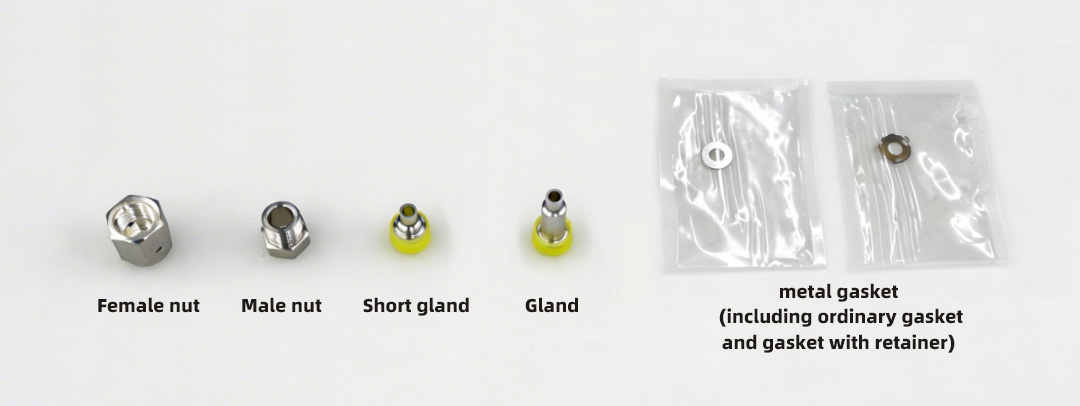
Required products: female nut, male nut, short gland, gland, metal gasket (including ordinary gasket and gasket with retainer)
Required tools: wrench, scissors
Installation Steps
Step 1: Assemble the nut and gland
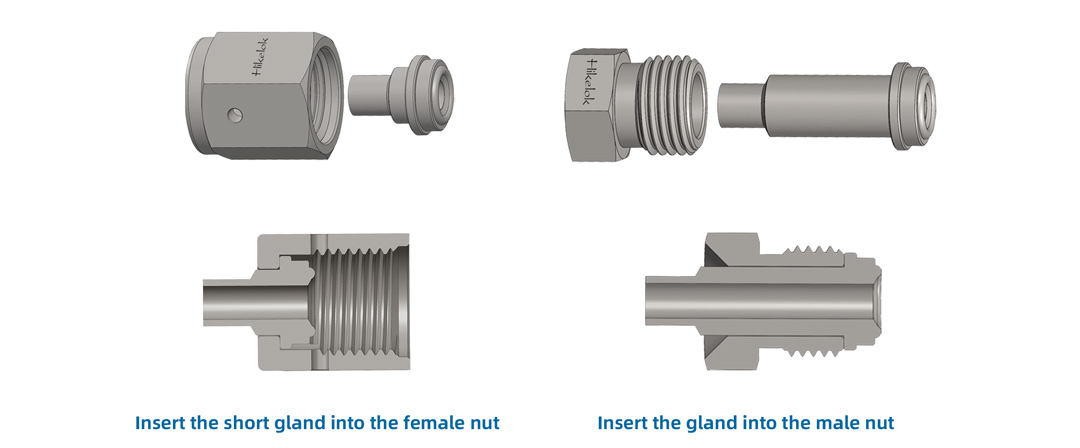
Step 2: Place the gasket
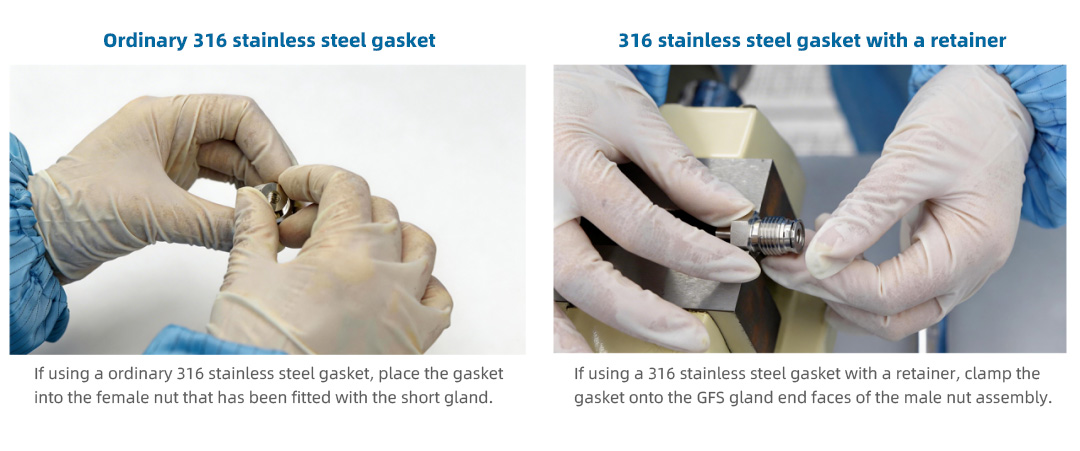
Step 3: Secure the fitting assembly
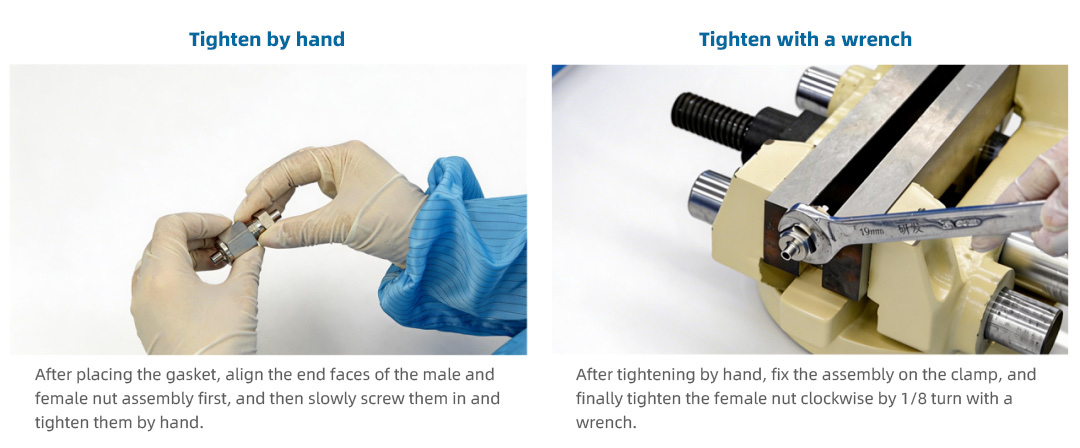
Precautions before and after installation
The metal sealing face is the core sealing area, which requires special protection to avoid scratches, as any scratch will directly affect the sealing effect;
· GFS fittings are commonly used in ultra-high purity applications. It is recommended to wear dust-free gloves during installation to prevent contamination of components;
· The GFS gasket materials are divided into three types: nickel, 316 stainless steel, and copper. For nickel and 316 stainless steel gaskets, tighten them an additional 1/8 turn after they are hand-tightened in place. For copper gaskets, tighten them an additional 1/4 turn. Be sure to operate according to the material type;
· When tightening with a wrench, excessive tightening is strictly prohibited to avoid wear on the end face, deformation of the gasket, and shortening of the joint’s service life.
Media Contact
Company Name: Hikelok
Email: Send Email
Country: China
Website: https://www.hikelok.com/