

In a move that could reshape the future of mental health and addiction treatment in the United States, a new executive directive is accelerating research and regulatory pathways for psychedelic therapies, including ibogaine.
The order prioritizes substances that have already shown clinical promise, allowing them to move more quickly through the regulatory process. This includes compounds that have received breakthrough therapy designation, signaling growing institutional interest in alternative approaches to complex mental health conditions.
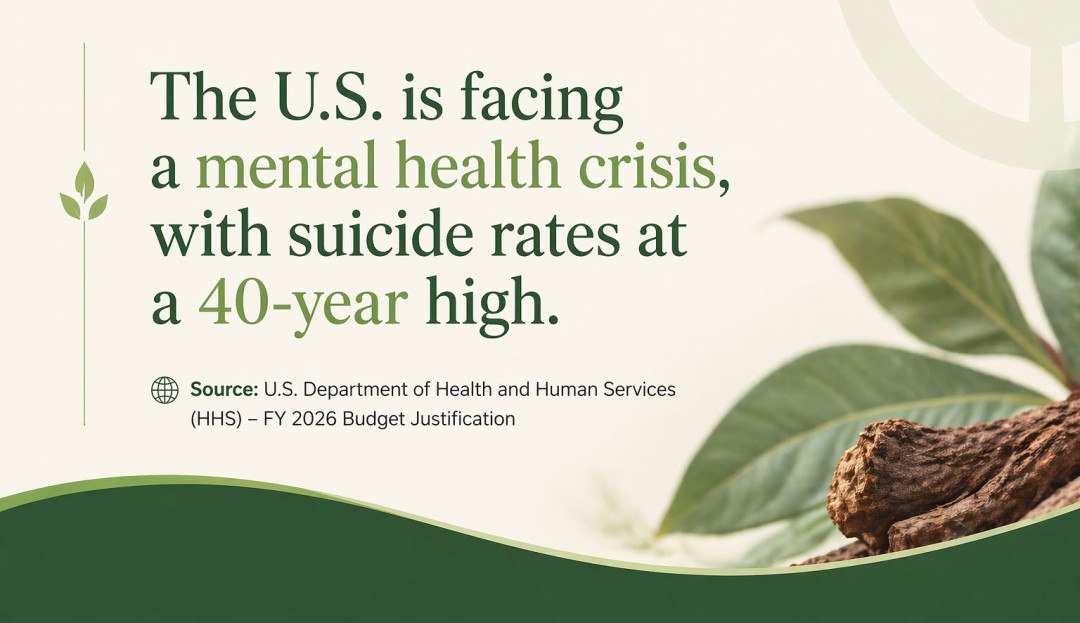
A Response to a Growing Mental Health Crisis
The directive reflects a broader shift in how the United States is approaching substances that have historically been subject to strict regulatory controls. According to official policy context, over 14 million American adults suffer from serious mental illness, while suicide rates have surged significantly over the past two decades, with veterans particularly affected.
Despite years of federal investment, many patients continue to relapse or fail to respond to conventional treatments. Officials emphasized that innovative approaches are urgently needed, particularly for individuals with treatment-resistant conditions.
Psychedelic compounds, including ibogaine, have shown promise in early clinical research for addressing these gaps.

The Scale of the Drug Crisis in America
The urgency behind this executive order becomes clearer when examining the scale of drug-related deaths across the United States.
Drug overdose is now one of the leading causes of death among people under the age of 45. In 2022 alone, the country recorded approximately 107,941 overdose deaths, reflecting a steep and ongoing rise.
The crisis has accelerated dramatically over the past decade. Between 2013 and 2019, deaths linked to synthetic opioids increased by more than 1,000%, largely driven by substances like fentanyl. By 2023, opioids accounted for over 75% of all overdose deaths, with fentanyl responsible for more than 72,000 deaths.
Since 1999, over 720,000 Americans have died from opioid overdoses, making it one of the most devastating public health challenges in modern U.S. history. The impact has extended beyond mortality, contributing to a measurable decline in national life expectancy in recent years.
Clinical data also shows a worrying rise in exposure to high-risk substances. Healthcare testing has revealed sharp increases in the presence of drugs like methamphetamine and fentanyl, highlighting a shift toward more potent and dangerous substances.
These figures underline the severity of the crisis and help explain the growing urgency to explore alternative treatment approaches, including emerging therapies like ibogaine.
A Shift in U.S. Drug Policy
The executive order marks a significant shift in how the United States approaches substances long classified under the most restrictive federal drug category.
Among the psychedelics expected to benefit from this accelerated pathway is ibogaine, a plant-derived compound gaining international attention for its potential role in treating addiction, PTSD, and other mental health conditions.
Although ibogaine remains federally restricted, the order introduces new mechanisms to expand access. This includes pathways under the Right to Try Act, allowing eligible patients to access experimental treatments, and potential regulatory flexibility for physicians and researchers handling such substances.
Funding and Institutional Support
To support this shift, the U.S Department of Health and Human Services is expected to allocate funding toward advancing psychedelic research and supporting related programs.
The order also mandates stronger collaboration between agencies such as the FDA, the Department of Veterans Affairs, and private sector partners to:
- Expand clinical trials
- Improve data sharing
- Accelerate real-world evidence collection
This coordinated effort is designed to speed up the evaluation and potential approval of psychedelic-based therapies.
What This Means for Americans
The directive is expected to expand pathways for evaluating alternative treatments, particularly for individuals who have not benefited from conventional approaches.
Speaking on the development, Mr. Julius, representative of GetIbogaine.com, described the move as a breakthrough:
“This could significantly reduce the suffering of people dealing with addiction and PTSD, especially those who have not found results with standard treatment.”
He noted that many Americans have already traveled abroad to countries like Mexico and New Zealand for ibogaine therapy, often with encouraging outcomes. The new policy could make such treatments more accessible within the United States.

Impact on Research and Industry
The directive is also expected to accelerate the work of biotech firms and academic institutions already studying psychedelic therapies. Companies like Atai Life Sciences, alongside leading universities, may now move more quickly from research to clinical application.
Another key provision of the order calls for faster reviews of the rescheduling of substances that complete Phase 3 clinical trials, potentially paving the way for legal medical use in the future.
Global Supply Chain Implications
Beyond healthcare, the decision may have ripple effects across global supply chains.
Iboga is primarily found in the tropical forests of Central Africa, particularly in Cameroon and Gabon, where it has long been used in traditional and research contexts.
With growing global demand, regions investing in sustainable cultivation could play a strategic role in supplying high-quality iboga materials to international markets, a step which they have already kick-started with a one-hectare iboga farm in Cameroon.
Video Link: https://www.youtube.com/embed/_-Ulool-Qqg?si=OQe9OPpr0mgJ1WnA
A New Chapter for Psychedelics
While the executive order does not immediately legalize ibogaine or other psychedelics, it signals a clear shift toward science-driven evaluation, regulatory flexibility, and patient access.
For many observers, this marks the beginning of a new chapter—one where alternative therapies are no longer dismissed outright but are carefully studied and potentially integrated into modern medicine.
As implementation begins, attention will now turn to how quickly these therapies can transition from experimental use to approved treatment options.
Our Final Take
As attention now turns to implementation, key questions remain around FDA timelines, the pace of clinical trials, ongoing regulatory uncertainty, and what real-world patient access will look like in the near term.
While progress is expected to be gradual, this moment signals more than a policy update—it reflects a broader shift in how emerging therapies like ibogaine are being evaluated within modern medicine.
Positioned at the intersection of policy, treatment innovation, and global supply dynamics, this development places early stakeholders at the forefront of a rapidly evolving landscape, where credibility, safety, and scientific validation will ultimately define long-term impact.
Media Contact
Company Name: GETIBOGAINE
Contact Person: Media Relations
Email: Send Email
Phone: 675418583
City: Douala
State: Littoral
Country: Cameroon
Website: https://getibogaine.com