

In 2026, I’ve seen how custom pitch trapezoidal screws, including the innovative multi-start trapezoidal screw, have driven a remarkable 30% increase in automation speed. These high speed lead screws truly optimize mechanical efficiency and precision in automated systems. Their widespread adoption reshapes product performance and enhances power transmission, boosting competitiveness in the market and making them essential automation components.
Key Takeaways
- Trapezoidal screws boost automation speed by 30% through efficient power transmission and strong load capacity, making them ideal for heavy-duty tasks.
- These screws offer high wear resistance, self-locking ability, and easy integration into existing systems, reducing maintenance and improving safety.
- Advances in materials and manufacturing, along with growing demand in industries and regions like Asia-Pacific, drive the future growth of trapezoidal screw technology.
Mechanics of Trapezoidal Screws
Design Features Enhancing Speed
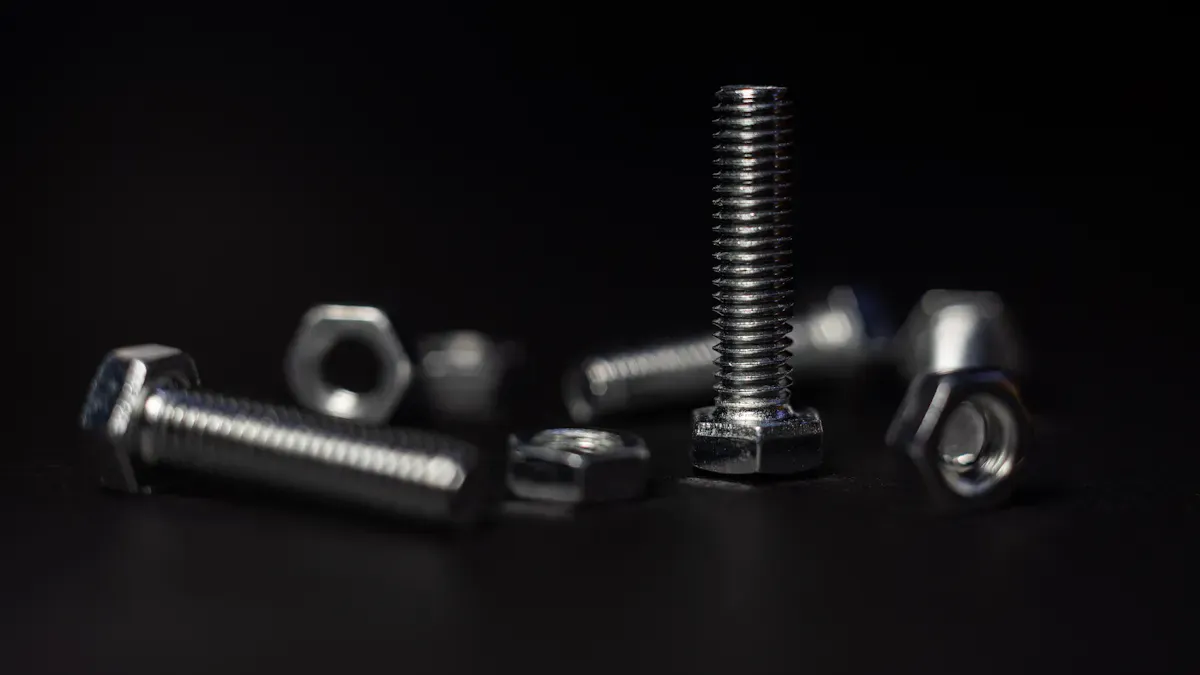
When I think about the design features of trapezoidal screws, several elements stand out that contribute to their impressive speed in automation. These screws have a unique thread profile that allows for efficient power transmission. This means they convert rotational motion into linear motion smoothly, which is crucial for high-speed applications.
Here’s a quick comparison of trapezoidal screws and ball screws, highlighting their key features:
| Feature | Trapezoidal Screws | Ball Screws |
|---|---|---|
| Efficiency | 20–40% | 90–95% |
| Precision | ±0.05 mm per 100 mm travel | High precision |
| Load Capacity | High, suitable for slow, heavy-load applications | Designed for high-speed applications |
| Friction Type | Sliding contact | Rolling contact |
| Applications | Presses, linear actuators | Automation tasks requiring speed and precision |
From this table, it’s clear that while trapezoidal screws excel in load capacity, they are designed for specific applications where speed isn’t the primary focus. Their efficiency, while lower than ball screws, still meets the needs of many industrial tasks.
Operational Advantages Over Traditional Screws
Trapezoidal screws offer several operational advantages that make them a preferred choice in many automation systems. For instance, their load-bearing capacity is impressive. They can handle medium to heavy loads without compromising structural integrity. This is largely due to their broad thread base, which provides a larger contact area.
Here’s a breakdown of how trapezoidal screws stack up against traditional screws:
| Advantage | Trapezoidal Screws | Traditional Screws |
|---|---|---|
| Load Capacity | Suitable for medium to heavy loads | Limited load capacity |
| Wear Resistance | High wear resistance | Lower wear resistance |
| Structural Integrity | Broad thread base for strong integrity | Narrow thread base |
| Compensating Nuts | Can offset wear | Not typically used |
The high wear resistance of trapezoidal screws means they can endure more demanding environments, which is a significant advantage in automation. Plus, they often come with features like self-lubricating composites that reduce maintenance cycles, making them even more appealing for long-term use.
In my experience, the self-locking nature of trapezoidal screws is another game-changer. Unlike ball screws, they can hold their position without needing additional braking systems. This feature not only enhances safety but also simplifies the design of automation systems.
Integration of Trapezoidal Screws in Automation
Compatibility with Existing Systems
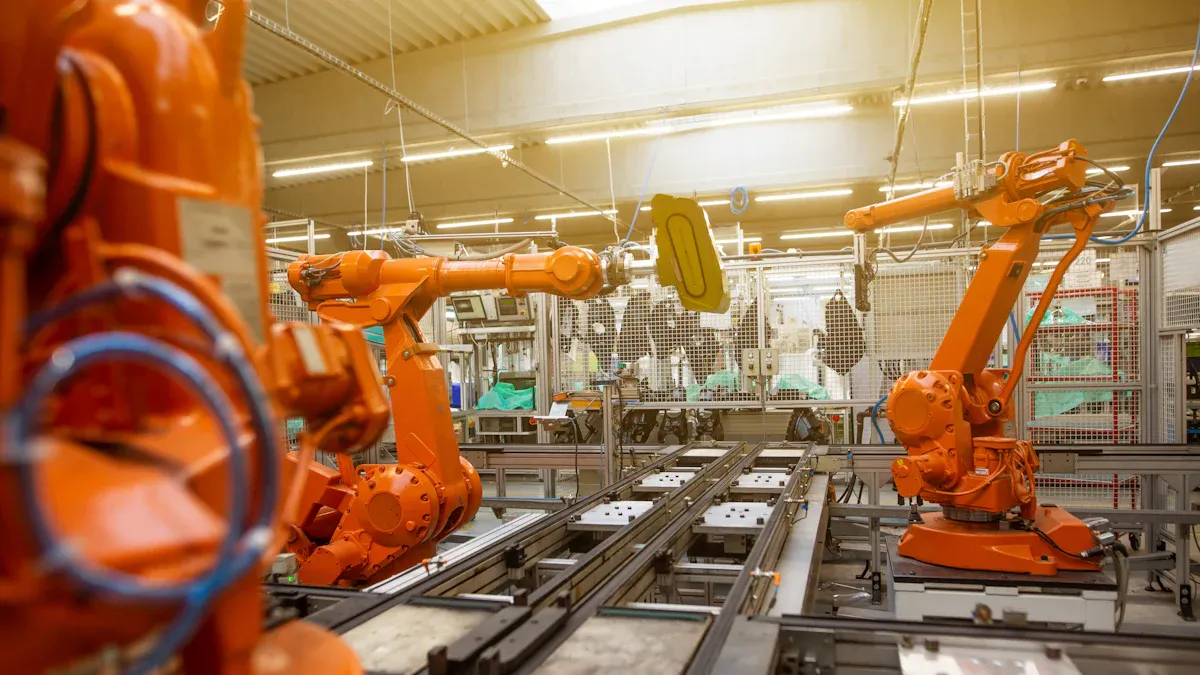
Integrating trapezoidal screws into existing automation systems is often smoother than I initially expected. These screws fit well into various applications, including conveyor positioning systems, sliding gates, and lift tables. Their versatility makes them a popular choice in many industries.
To ensure a successful integration, I recommend following these steps:
- Ensure proper lubrication to minimize friction.
- Align the screws correctly to maintain performance.
- Adapt drive systems to fit the characteristics of trapezoidal screws.
By taking these steps, I’ve seen firsthand how companies can enhance their automation processes without overhauling their entire systems.
Industry Applications Driving Growth
The demand for trapezoidal screws is surging, particularly in sectors like Tool Machinery and Precision Machinery. These industries lead the charge in adopting trapezoidal screws due to their need for precise linear motion components. The trend toward miniaturization and energy efficiency is also pushing the development of smaller, more robust trapezoidal screws.
In 2026, I noticed significant growth rates in various applications driven by trapezoidal screws:
| Application | Growth Rate |
|---|---|
| Manufacturing and Automation | 12% annually |
| Medical Equipment | 9% CAGR |
| Aerospace and Defense | 7% annually |
| Renewable Energy | 10% CAGR |
| Automotive Industry | 6% annually |

The rise of Industry 4.0 is also crucial. It integrates smart technologies into manufacturing processes, enhancing the functionality and reliability of trapezoidal screws in automated systems. I believe this trend will only continue to grow, making trapezoidal screws an essential component in the future of automation.
Future Trends in Trapezoidal Screw TechnologyAdvances in Materials and Manufacturing
I’ve noticed that the materials used in trapezoidal screws have come a long way, making these components stronger and more durable than ever. For example, copper nuts now offer self-lubricating properties and excellent wear resistance, which is perfect for T-type lead screws. Ductile iron nuts bring superior strength and resist fatigue and corrosion, making them ideal for heavy-load applications. Steel nuts stand out with their high-stress resistance, fitting demanding machinery environments.
| Material Type | Properties | Applications |
|---|---|---|
| Copper Nuts | Self-lubricating, good wear resistance | T-type lead screws |
| Ductile Iron Nuts | Superior strength, rigidity, resistance to fatigue and corrosion | Heavy-load applications |
| Steel Nuts | High-stress resistance, enhanced durability | Demanding machinery environments |
Manufacturing has also evolved. I’ve seen factories use advanced automation that runs with minimal human help. AI and machine learning optimize production settings, cutting downtime and waste. Smart sensors and IoT connectivity allow remote monitoring, so problems get spotted early. Digital twin technology lets engineers simulate changes before making them, saving time and money. Plus, modular tooling helps switch between different trapezoidal profiles quickly. These innovations lower costs and boost scalability, making it easier to meet growing demand.
Emerging Markets and Innovations
The Asia-Pacific region is where I see the biggest growth for trapezoidal screws. Countries like China and India are rapidly industrializing, and governments push for automation upgrades. This creates huge opportunities for trapezoidal screw adoption, especially in automotive and aerospace sectors. Companies there invest heavily in research and partnerships to improve motion control systems.
The trapezoidal screw market is growing fast, with a projected compound annual growth rate of 9.5%. This growth reflects how industries worldwide want reliable, efficient components to power their automation. I believe this trend will continue, with new innovations and expanding markets driving the technology forward.
Tip: Keeping an eye on material advances and regional growth can help you stay ahead in automation technology.
In 2026, I’ve seen how trapezoidal screws boost automation speed by 30%. Their precision and reliability enhance product performance, making them vital in various industries. Companies leveraging these advancements gain a competitive edge in the market.
Looking ahead, I believe trapezoidal screws will continue to shape automation, driven by innovations and growing demand in emerging economies.
Key Contributions of Trapezoidal Screws:
| Contribution Type | Description |
|---|---|
| Precision Engineering | Trapezoidal screws are designed for high precision, enhancing the accuracy of industrial applications. |
| Reliability | These screws provide dependable performance, reducing maintenance needs and downtime. |
| Adaptability to Automation | They integrate seamlessly with modern automated systems, meeting the demands of Industry 4.0. |
| Sustainability | Innovations in materials and design contribute to energy efficiency and reduced environmental impact. |
| Market Positioning | Companies that leverage these advancements can improve their competitive edge in the market. |
FAQ
What are trapezoidal screws used for?
Trapezoidal screws are great for converting rotational motion into linear motion. I often see them in machinery, automation systems, and even in 3D printers.
How do trapezoidal screws compare to ball screws?
While ball screws excel in speed, trapezoidal screws shine in load capacity and durability. I find them perfect for heavy-duty applications.
Can I integrate trapezoidal screws into my existing systems?
Absolutely! I’ve successfully integrated them into various systems. Just ensure proper alignment and lubrication for optimal performance.
Media Contact
Company Name: Ningbo Yinzhou Shun Gan Machinery Co., Ltd.
Email: Send Email
Country: China
Website: https://www.cshungan.com/