
Introduction
High-quality manufactured hydraulic and pneumatic cylinders are designed for long service life, and with proper installation and maintenance, the cylinders are expected to meet or exceed their projected lifespan. However, misalignment and/or side loading on the connecting rod bearings and/or piston can lead to premature damage, resulting in Hydraulic Cylinder failure.
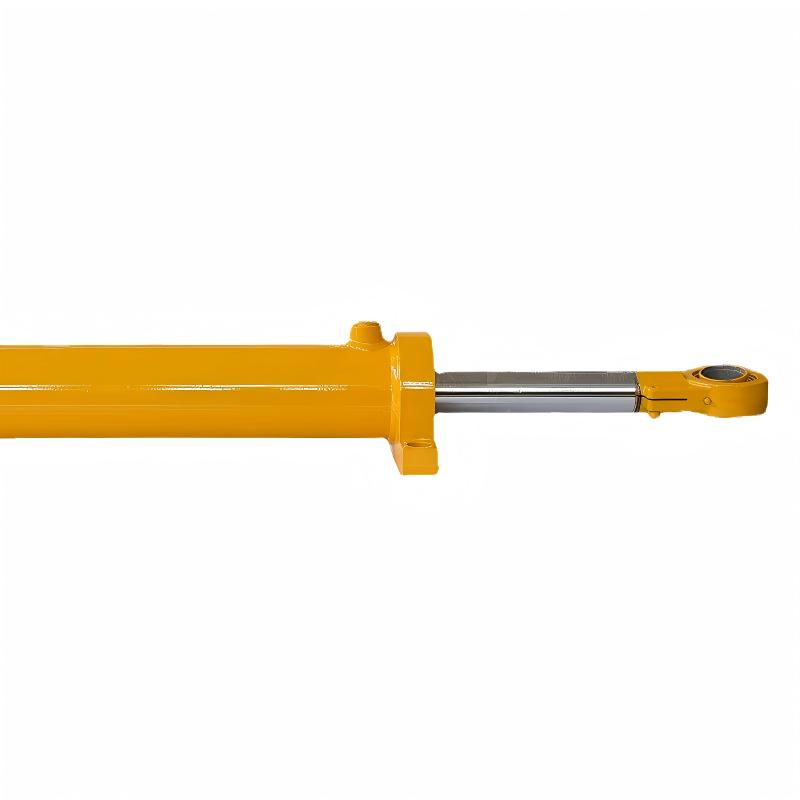
Normal Piston Rod Alignment Example
Side loading of a hydraulic cylinder occurs when the piston rod is forced to deviate from its designed path of travel. Misalignment or bending forces can occur at any point along the hydraulic cylinder’s direction and will at least lead to wear on the hydraulic cylinder, often 180 degrees opposite the actual side load, resulting in seal failure due to contaminants created by scoring the piston rod, rod bearing, piston, and/or tube.
Hydraulic cylinder manufacturers are responsible for maintaining specific tolerance specifications, especially concentricity to the center, as any deviation from design specifications and tolerances will introduce unnecessary side loading to the hydraulic cylinder.
Proper machine alignment is critical when installing hydraulic cylinders. For example, in an assembly system, the hydraulic cylinder and load are disconnected, and the hydraulic cylinder pushes the load in a different direction for the next process. If the hydraulic cylinder does not strike the load squarely, piston rod deflection can occur, creating a side load.
The above application would benefit from the use of a stop tube. The stop tube will provide additional bearing support and minimize piston rod deflection. Stop tubes are typically used in longer strokes (over 36 or 40 inches) to increase the distance between the piston and rod gland, or what is commonly referred to as L over D. The increased bearing surface and support reduce the amount of piston rod deflection. The best stop tube design utilizes a double piston stop tube design.
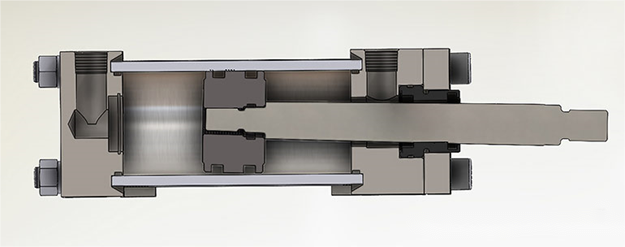
Examples of Lateral Loads on Hydraulic Cylinder Piston Rods
Proper mounting options, such as spherical bearing mounts or spherical bearing rod eyes, can compensate for some lateral loads. Trunnion-mounted hydraulic cylinders move with the lateral load to reduce its impact.
Excessive wear on the bearing surface can generate friction, heat, and potentially lead to material scratching or abrasion, and may cause surface degradation. You can tell when this is happening because your rod will wear unevenly. A common indicator is a shiny spot or polish on one side of the rod, but not the other. Frequent visual inspection of the piston rod is encouraged to detect this wear early.
Environmental Impact: Understanding the type of environment in which the hydraulic cylinder is installed is also crucial in preventing lateral loads. The surrounding environment is important when it comes to contamination entering the hydraulic cylinder. Contamination will almost always lead to catastrophic failure.
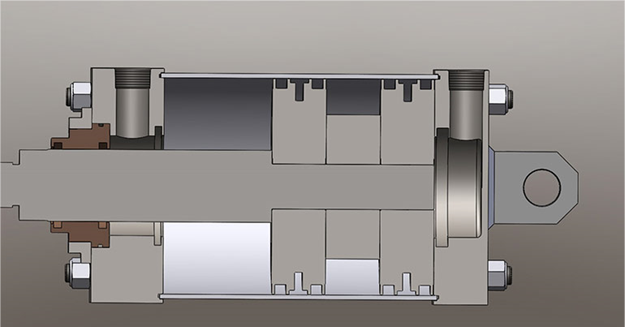
Hydraulic Cylinder Design Using Stop Tubes to Support the Piston Rod
Hydraulic cylinder manufacturers work closely with customers to obtain all the necessary information regarding the application and environment. This allows us to design against potential contaminants and other possible causes of failure.
Using an application data sheet, the customer will provide the following information:
- Stroke length
- How much weight the hydraulic cylinder needs to push or pull (in terms of weight)
- Whether it is a guided or unguided load
- What type of fluid is being used
- Will the hydraulic cylinder be exposed to extreme temperatures?
- Mounting method
Understanding the hydraulic cylinder orientation (whether it is mounted horizontally or vertically) is one of the most important data points in understanding the possibility of side loading. Side loading is more likely to occur in the horizontal direction due to gravity on the piston rod. The vertical direction has more natural resistance.
Conclusion
Lateral loading is one of the most common causes of hydraulic cylinder failure. Uneven wear, fluid leakage, seal failure, and rod bending caused by lateral loading can be prevented from the outset with proper installation, alignment, and mounting. Finally, preventative measures should be taken, including regular visual inspections of the piston rod for scratches and wear.
Media Contact
Company Name: Qingdao Micro Precision Machinery Co., Ltd.
Email: Send Email
Phone: +86-15589891818
Address:No. 438, Wangsha Road, Chengyang District
City: Qingdao
Country: China
Website: https://www.mpmmachine.com/