

PV cables are crucial for optimal solar energy system performance. They directly impact energy transfer and overall efficiency. Your manufacturer choice significantly influences project success and long-term longevity. You must make informed decisions when procuring Solar Cable for your business.
Key Takeaways
- Choose a good PV cable maker for safe and efficient solar power.
- Look for cables that meet safety rules and have good materials.
- High-quality cables save money over time and make your solar system last longer.
Why Manufacturer Choice Matters for Your Solar Cable Project

Choosing the right manufacturer for your solar cable is a critical decision. This choice directly impacts your project’s performance and longevity. You need to consider several key factors when making this selection.
Ensuring System Safety and Reliability
Your solar energy system’s safety depends heavily on cable quality. Poorly manufactured cables can lead to electrical fires or system failures. A reputable manufacturer uses high-grade materials and rigorous testing. This ensures their products meet strict safety standards. You protect your investment and personnel when you choose a reliable supplier. You also guarantee consistent power generation without unexpected outages.
Maximizing Energy Efficiency and Output
The quality of your solar cable directly affects energy transfer. Inferior cables have higher resistance. This causes energy loss during transmission from your panels to the inverter. High-quality cables minimize this resistance. They ensure maximum power reaches your system. You achieve higher energy output and better financial returns from your solar installation. You get the most out of every ray of sunlight.
Guaranteeing Long-Term Durability
Solar cables face harsh environmental conditions daily. They endure extreme temperatures, UV radiation, and moisture. A top manufacturer designs cables to withstand these challenges. They use durable insulation and sheathing materials. This prevents degradation over time. You avoid costly replacements and maintenance issues. Your solar cable will perform reliably for many years, securing your long-term energy production.
Essential Standards for Solar Cable Selection
You must prioritize adherence to industry standards when you select components for your solar projects. These standards establish critical benchmarks for safety, performance, and durability. They guide your procurement decisions and protect your investment.
Understanding IEC and UL Standards
You recognize key international standards for solar cable. The International Electrotechnical Commission (IEC) sets global standards. These standards ensure consistent quality and performance across various markets. Underwriters Laboratories (UL) provides standards primarily for North America. UL standards focus on safety and product testing. You ensure your solar cable meets rigorous safety and operational requirements when you choose products compliant with either IEC or UL. These certifications confirm the cable’s ability to withstand specific environmental and electrical stresses.
Importance of Local Regulations
Beyond international benchmarks, you must consider local regulations. These rules often adapt global standards to specific regional conditions. They cover installation practices, material specifications, and environmental considerations. You avoid legal complications and project delays when you comply with these local mandates. Local authorities enforce these regulations to ensure public safety and system integrity within their jurisdiction. You confirm your project’s full compliance by understanding and meeting these specific requirements.
Verifying Product Certifications
You verify product certifications to confirm compliance. Independent third-party bodies test cables against established standards. These certifications provide objective proof of quality and safety. You look for recognized labels such as TÜV, CE, or ETL. These marks indicate the solar cable has undergone thorough evaluation. They confirm the product meets stringent performance and safety benchmarks. You gain confidence in your purchase when you choose certified cables.
Key Solar Cable Material and Performance
You must understand the materials and performance characteristics of solar cable. These factors directly influence your system’s efficiency, safety, and lifespan. Choosing the right specifications ensures optimal operation.
Conductor Material and Cross-Section
The conductor carries the electrical current. You typically find copper conductors in high-quality solar cable. Copper offers excellent conductivity and corrosion resistance. Aluminum conductors are sometimes used for cost savings, but they require larger cross-sections for the same current capacity. You select the conductor’s cross-section based on the current your system generates. A larger cross-section reduces resistance. This minimizes energy loss and prevents overheating. You ensure efficient power transfer with the correct conductor size.
Insulation and Sheath Material
Insulation protects the conductor. The sheath provides external protection. You need materials that withstand harsh outdoor conditions. Cross-linked polyethylene (XLPE) is a common insulation material. It offers excellent electrical properties and high-temperature resistance. The outer sheath often uses UV-resistant and flame-retardant compounds. These materials protect against abrasion, moisture, and chemical exposure. You ensure long-term durability and safety with robust insulation and sheathing.
Current Capacity and Voltage Rating
Current capacity refers to the maximum current a cable can safely carry. You match this capacity to your system’s expected current. Overloading a cable causes overheating and potential failure. Voltage rating indicates the maximum voltage the insulation can withstand. You select a cable with a voltage rating higher than your system’s maximum open-circuit voltage. This prevents insulation breakdown and ensures electrical safety. You guarantee reliable power transmission by selecting appropriate ratings.
Temperature and Environmental Resistance
Solar cables operate in challenging environments. You need cables resistant to extreme temperatures, from freezing cold to intense heat. UV radiation from the sun can degrade standard plastics. Therefore, you require UV-resistant materials. Moisture, ozone, and chemicals also pose threats. High-quality cables feature materials designed to resist these environmental stressors. You ensure your system’s longevity and performance by choosing cables with superior environmental resistance.
Assessing Manufacturer Reputation and Experience
You carefully assess a manufacturer’s reputation and experience. This step helps you choose a reliable partner. A strong track record indicates consistent quality and dependable service.
Evaluating Production Capabilities
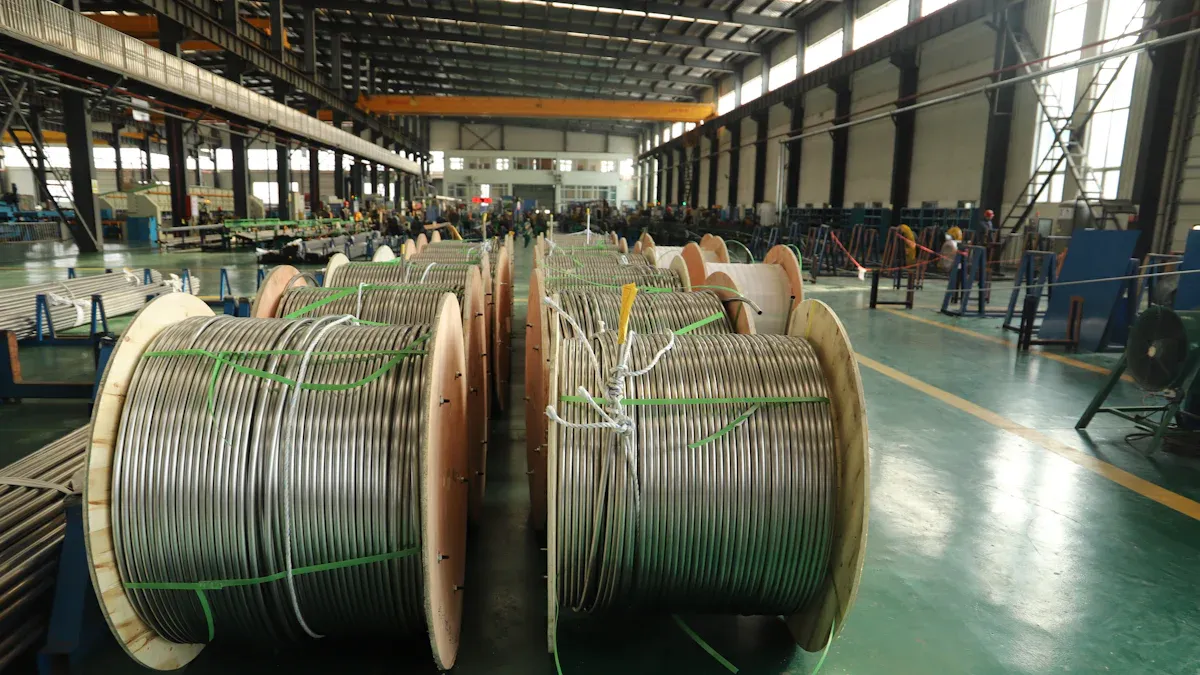
You examine a manufacturer’s production capabilities. Look at their factory size and equipment. Modern machinery ensures consistent product quality. Assess their quality control processes. A strong manufacturer has robust testing procedures. They can meet your volume requirements. This ensures timely delivery for your projects.
Reviewing Innovation and R&D
You investigate a manufacturer’s commitment to innovation. They invest in research and development (R&D). This leads to improved product performance. They develop new materials and designs. Innovative manufacturers stay ahead of industry trends. They offer cutting-edge solutions. This benefits your long-term project success.
Analyzing Customer Testimonials
You check customer testimonials and case studies. These provide insights into a manufacturer’s reliability. Look for consistent positive feedback. Satisfied customers indicate good product quality. They also show strong customer service. Ask for references from past clients. This helps you gauge their track record.
Tip: Always request direct contact information for a few recent clients. This allows you to get firsthand accounts of their experience.
Understanding Supply Chain Support
You evaluate a manufacturer’s supply chain support. They offer reliable logistics and delivery. Timely delivery prevents project delays. Assess their post-sales support. A good manufacturer provides technical assistance. They handle any issues promptly. Strong support ensures smooth project execution.
Balancing Cost with Quality for PV CablesThe Pitfalls of Low-Cost Cables
You might feel tempted by low-cost cables. These options often seem attractive initially. However, they typically use inferior materials. This leads to poor performance. You risk frequent failures and safety hazards. Your system’s efficiency drops significantly. You face higher maintenance costs later. These cables often degrade quickly under harsh conditions.
Calculating Total Cost of Ownership
You must look beyond the initial purchase price. Consider the total cost of ownership (TCO). This includes installation, maintenance, and potential replacement costs. A cheaper cable might cost more over its lifespan. You calculate TCO to make a truly informed decision. This approach reveals the true economic impact of your choice.
The Value of Warranties
You value strong warranties. A good warranty shows a manufacturer’s confidence in their product. It protects your investment for many years. You get peace of mind knowing your cables are covered. If defects occur, the manufacturer covers them. This reduces your financial risk significantly. A comprehensive warranty is a sign of quality.
Long-Term Savings from Quality Cables
You achieve long-term savings with quality cables. They perform better. They last longer. You avoid costly repairs and replacements. Your system generates more power consistently. This maximizes your return on investment. Choosing a high-quality solar cable is a smart financial move. It ensures your system’s reliability and profitability for decades.
Practical Steps for Manufacturer Selection
You need a systematic approach to choose the Best PV Cable manufacturer. These practical steps guide your decision-making process. They help you secure high-quality products for your projects.
Requesting Product Samples
You must physically evaluate a manufacturer’s product quality. Requesting samples allows you to do this. You examine the cable’s construction firsthand. Look at the conductor material and insulation integrity. Check the outer sheath for durability and flexibility. Verify that all markings are clear and correct. These markings include certifications and specifications. You can also perform your own tests on these samples. This confirms the cable meets your specific performance requirements. A reputable manufacturer readily provides samples. This shows their confidence in their products.
Media Contact
Company Name: Zhejiang Pntech Technology Co., Ltd.
Email: Send Email
Phone: +86 574 27975188
Country: China
Website: https://www.pncables.com/