
Shenzhen , Guangdong, China – September 15, 2026
Picking out the right microgrid battery storage system isn’t just about flipping through product brochures — it all starts with understanding the site itself. Whether it’s a remote clinic, a factory, or a university, each one needs a different approach. Plus, their energy needs don’t stay the same — they fluctuate hour by hour, change with the seasons, and depend on how things are running at that moment.Imre Gyuk, who used to manage the U.S. Department of Energy’s Energy Storage Program, once said, ‘Energy storage is the key to unlocking the full potential of renewable energy.’ And honestly, that still rings true. The idea is to use storage to soak up extra solar energy when the sun’s shining, back up critical stuff like refrigeration and servers, and cut down on reliance on an unstable grid. When you team up a battery with a microgrid solar system — like the one available [here](https://www.masspointenergy.com/microgrid-solar-system) — it needs to handle cloudy days, evening demands, and unexpected outages without breaking a sweat.Start by taking a close look at the load profile — ideally in chunks of 15 minutes or so. Pay attention to vital equipment: fridges, pumps, servers, motors — basically anything sensitive. Next, compare different battery options like lithium iron phosphate, nickel manganese cobalt, flow batteries, or newer tech. Each comes with its own pros and cons — safety, energy density, cycle life, maintenance, and price all come into play. For example, lithium iron phosphate batteries are pretty stable thermally, but they’re not always the best fit for every situation.Also, think about how long you need the backup. A battery built for just two hours isn’t likely to keep things running overnight. Inverters matter too — they need to support islanding, black start capabilities, handling power quality issues, and making sure transitions go smoothly. And don’t forget about energy management software — it’s what keeps your battery, solar panels, generator, and utility connection working together seamlessly.Sometimes, a low initial price might seem tempting — but beware. Always check what guarantees come with degradation, what’s covered in the warranty, how much it’ll cost to replace parts, and how quick the support is when things go wrong. Big names like Fluence, Tesla, and Schneider Electric do offer solid options, but every project has its unique conditions that affect how well things perform.Here’s the truth — no system is perfect. That’s kind of the ugly reality. The best approach is to have a solid plan, outline your assumptions, test out worst-case scenarios, and leave some room for future upgrades. Ultimately, the best microgrid battery storage system is the one that keeps working reliably, even when your forecasts aren’t quite right.
 Define the Role of Battery Storage in a MicrogridHow to Choose a Microgrid Battery Storage System?
A battery in a microgrid is more than a backup box. It balances supply, demand, and operating risk. During a sunny afternoon, it can store excess solar power for evening loads. During an outage, it can support critical circuits while generators start or renewable output changes. The battery’s role should be defined before choosing its size. That decision affects power rating, energy capacity, controls, safety systems, and maintenance planning.
Ask what the microgrid must protect. A clinic may need stable power for refrigeration, lighting, and medical equipment. A factory may need short bursts of high power to prevent production interruptions. A remote site may require several hours of storage through cloudy weather. These needs are different. A system designed only for daily energy shifting may fail during a long outage. A system sized only for emergencies may remain underused and financially weak.
Use measured load data whenever possible. Review peak demand, critical circuits, outage history, solar production, and seasonal changes. Specify how quickly the battery must respond and how often it may cycle. Safety approvals, thermal controls, isolation equipment, and local grid rules also matter. In field assessments, forecasts often look cleaner than reality. Weather changes. Loads grow. Plan for uncertainty, but avoid excessive capacity that never works. A practical design leaves room for testing, inspection, and future adjustment.
Assess Energy Demand, Load Profiles, and Backup Requirements
Choosing a Microgrid Energy System starts with measured demand, not battery capacity. Collect 15-minute interval data for at least twelve months. Include HVAC, pumps, refrigeration, process equipment, and seasonal occupancy. The U.S. Department of Energy’s Microgrid Design Toolkit emphasizes peak demand, critical loads, and outage duration. A monthly average hides the problem. A motor starting at 8:00 a.m. can create a sharp, expensive peak.Map the load profile against solar or wind production. NREL’s 2024 Annual Technology Baseline uses roughly 85% round-trip efficiency for utility-scale lithium-ion storage. Therefore, a 100 kWh load does not require only 100 kWh from the battery. Inverter losses, temperature, reserve capacity, and aging reduce usable energy. Size power in kW and energy in kWh separately. This distinction is often missed.Define backup requirements in operating terms: which circuits must remain live, for how many hours, and during what weather? The IEA’s Batteries and Secure Energy Transitions report (2024) estimates that global energy storage capacity must increase sixfold by 2030. That projection does not replace site-specific testing. Simulate a cloudy winter evening, a failed generator, and a 30-minute motor surge. Leave room for uncertainty. A neat spreadsheet can still be wrong. Recheck assumptions with measured data after commissioning.
Compare Battery Chemistries, Capacity, and Power Ratings
How to Choose a Microgrid Battery Storage System?Choosing a Battery Microgrid starts with the load profile, not the battery catalog. Record demand in 15-minute intervals, including evening peaks, motor starts, and seasonal changes. A clinic may need 80 kW for four hours, requiring about 320 kWh before efficiency losses. Keep reserve capacity for cloudy days and unexpected demand.Battery chemistry changes safety, cost, lifespan, and usable capacity. Lithium iron phosphate usually offers strong cycle life and stable thermal behavior. Nickel-based batteries can provide high energy density but require careful temperature control. Lead-acid systems may suit smaller backup projects, though frequent deep cycling can shorten their service life. Check the usable depth of discharge, round-trip efficiency, warranty conditions, and expected cycle count.Capacity is measured in kilowatt-hours, while power is measured in kilowatts. Do not confuse them. A 500 kWh battery may deliver only 100 kW if its inverter rating is limited. Review continuous and peak power ratings, especially for pumps, compressors, and refrigeration units. A short surge can trip an undersized inverter. Site temperature matters too. I have seen designs look adequate on paper, then lose performance during winter mornings. No spreadsheet is perfect. Leave room for degradation, maintenance outages, and future loads. Instrumentation should track voltage, temperature, state of charge, and alarm history from the first operating day.
How to Choose a Microgrid Battery Storage System?
Compare representative stationary-storage characteristics across common battery chemistries. Values are typical industry ranges expressed as practical reference points; actual performance depends on cell design, temperature, operating limits, and system integration.
Energy DensityRound-Trip EfficiencyCycle Life
Capacity: Battery energy capacity is measured in kWh or MWh. A simple sizing rule is usable energy = power rating × discharge duration. For example, a 10 MW system intended to discharge for four hours requires approximately 40 MWh of usable energy before additional reserve and conversion losses.
Power rating: The inverter determines the continuous MW rating, while the battery must support the required charge and discharge rate. Select a higher power-to-energy ratio for fast frequency regulation and a longer duration for load shifting or renewable-energy time shifting.
Selection guidance: LFP and sodium-ion batteries can be attractive for safety, cost, and stationary applications; NMC offers higher energy density where space is constrained; lead-acid may suit lower-cycle-duty projects but generally has lower usable depth of discharge and shorter cycle life.
Evaluate Safety, Efficiency, Lifespan, and Environmental Conditions
Choosing a Microgrid Solar battery requires more than comparing capacity and price. Safety should guide the shortlist. The 2022 NREL Storage Futures Study reports typical lithium-ion round-trip efficiency near 85–95%, but heat, wiring losses, and partial loads reduce real performance. Ask for independent testing under UL 9540A and clear thermal-management records. A battery beside a dusty generator room needs stronger ventilation and fire separation than one inside a clean, climate-controlled enclosure.Lifespan also depends on daily operating habits. NREL’s study commonly models lithium-ion storage with roughly 10–15 years of service, yet deep cycling and high temperatures can shorten that period. Check the warranty’s usable capacity, cycle limits, and end-of-life threshold. Do not trust calendar life alone. A 30°C installation can age differently from a shaded 20°C site. Heat changes everything.Environmental conditions deserve field-level attention. Salt air, humidity, freezing nights, and flood exposure require suitable enclosure ratings, corrosion protection, heating, and drainage. The International Energy Agency projects battery storage deployment must expand substantially this decade, increasing pressure for safer materials and responsible recycling. Still, environmental claims can be vague. Request measured efficiency at local temperatures, noise data, maintenance intervals, and recycling arrangements. In my experience, the least visible details often create the largest operating costs. A perfect datasheet is not enough.
How to Choose a Microgrid Battery Storage System? – Evaluate Safety, Efficiency, Lifespan, and Environmental Conditions
| Evaluation Criterion | Lithium Iron Phosphate (LFP) | Nickel-Manganese-Cobalt (NMC) | Valve-Regulated Lead-Acid (VRLA) | Sodium-Ion |
|---|---|---|---|---|
| Typical round-trip efficiency | 90–96% | 88–95% | 70–85% | 85–95% |
| Recommended routine depth of discharge | 80–95% | 80–90% | 50–80% | 80–95% |
| Typical cycle life at moderate operating conditions | 4,000–8,000 cycles | 1,500–3,000 cycles | 500–1,500 cycles | 3,000–6,000 cycles |
| Calendar-life expectation | 10–15 years | 8–12 years | 3–8 years | 8–15 years |
| Thermal-runaway risk | Lower than NMC, but not zero; requires monitoring and protection | Higher than LFP; robust thermal management is essential | No lithium-ion thermal runaway; may vent hydrogen and acid mist during abuse or overcharge | Generally low; system-level safety validation is still required |
| Temperature performance | Best performance near 15–30°C; charging below 0°C generally requires heating or control limits | Best performance near 15–30°C; low temperatures reduce available power and capacity | Works across a broad range, but heat accelerates aging and cold reduces capacity | Good low-temperature capability; charging and power limits still depend on system design |
| Approximate energy density | 90–160 Wh/kg at cell level | 150–250 Wh/kg at cell level | 30–50 Wh/kg | 100–160 Wh/kg at cell level |
| Power capability | High; suitable for peak shaving, backup, and frequent cycling | Very high; suitable where compact, high-power storage is important | Moderate; high-power operation can shorten service life | Moderate to high, depending on cell and pack design |
| Environmental tolerance | Requires protection from moisture, dust, flooding, and excessive heat; IP-rated enclosures are recommended outdoors | Requires strict temperature control, ventilation strategy, fire detection, and suitable enclosure protection | Requires ventilation, corrosion control, spill protection, and temperature management | Generally tolerant of cold conditions; still requires protection from water, dust, heat, and salt exposure |
| Maintenance requirements | Low; battery-management-system diagnostics and periodic inspection are required | Low to moderate; thermal-management and fire-safety systems need regular testing | Moderate to high; inspections, terminal checks, ventilation, and capacity testing are important | Low to moderate; monitoring and periodic electrical and enclosure inspections are required |
| Environmental and material considerations | Contains no cobalt in the cathode; recycling pathways are developing and should be confirmed before procurement | Higher energy density, but may use nickel and cobalt; recycling and responsible sourcing should be verified | Highly recyclable lead content; acid handling and end-of-life collection are essential | Uses more abundant sodium-based materials; recycling infrastructure is less mature than for lead-acid batteries |
| Best-fit microgrid application | Daily renewable-energy shifting, peak shaving, islanded operation, and long-duration backup | Space-constrained sites requiring high power and high energy density | Low-cost standby backup and applications with limited cycling | Cold-climate, cost-sensitive, and emerging microgrid applications requiring an alternative to lithium-ion |
| Selection priority | Choose when safety, long cycle life, and frequent cycling are priorities | Choose when footprint and power density outweigh additional thermal-management requirements | Choose when initial cost and standby capability matter more than efficiency and cycle life | Choose when low-temperature performance, material availability, and developing technology are acceptable |
Note: Values are representative industry ranges for comparison only. Actual performance depends on cell design, usable state-of-charge window, ambient temperature, charge and discharge rate, cooling system, control strategy, installation conditions, and maintenance.Plan System Integration, Controls, and Renewable Energy CompatibilityHow to Choose a Microgrid Battery Storage System?
Choosing an Ess Microgrid battery starts with system integration, not capacity alone. Map every power source, load, and protection device before comparing storage options. A battery should communicate reliably with solar inverters, generators, meters, and the utility connection. Use open communication standards where possible. This reduces future replacement risks.
Controls determine how the system behaves during normal operation and outages. Define clear priorities for peak shaving, backup power, solar self-consumption, and grid support. The energy management system should respond to changing loads within seconds. It also needs safe islanding and reconnection sequences. Test these functions with realistic events, such as cloudy afternoons and sudden motor starts. Field experience shows that an attractive simulation can hide weak control logic. I would not trust untested assumptions.
Tips: Request a control narrative, wiring diagram, and cybersecurity plan. Ask how operators can review alarms, battery temperature, state of charge, and historical events. Keep manual overrides available, but restrict access carefully.
Renewable compatibility requires more than matching voltage. Check solar variability, inverter ramp rates, charging limits, and seasonal production. Oversized solar arrays may create curtailment when the battery is full. Undersized storage may leave evening loads unsupported. Include temperature, degradation, maintenance access, and expansion space in the design review. A small reserve margin is wise. However, excessive reserve can reduce project value. Validate the final design using measured load data, not estimates alone.
Calculate Costs, Maintenance Needs, and Long-Term ValueHow to Choose a Microgrid Battery Storage System?
Cost is more than the battery invoice. Start with usable capacity, peak power, installation, controls, permitting, and financing. A 1 MWh system may deliver less after reserve limits and conversion losses. Include round-trip efficiency in every savings model. The International Energy Agency reported that battery pack prices fell 14% in 2023. Lower prices help, but they do not remove project risks.
Maintenance needs should be measured in labor hours, spare parts, inspections, and software support. Ask how often technicians must inspect cooling systems, connections, sensors, and fire protection equipment. Model annual availability, not just warranty duration. NREL’s Annual Technology Baseline highlights degradation as a major factor in storage economics. A battery losing capacity faster than expected can reduce demand-charge savings. Small assumptions matter.
Long-term value depends on revenue, replacement timing, and operating conditions. Compare levelized storage cost with the value of peak reduction, backup power, renewable self-consumption, and grid services. Lazard’s Levelized Cost of Storage analysis shows that storage costs vary widely by use case and project design. That warning deserves attention.
A spreadsheet can still lie.
I would test conservative cases using lower savings, higher maintenance, and an early module replacement. Also calculate the cost of downtime during a hot afternoon. The cheapest system may not be the most valuable one.
Pollution-Free Delta Microgrid BESS: A Smart Green Energy Solution from China’s Trusted Suppliers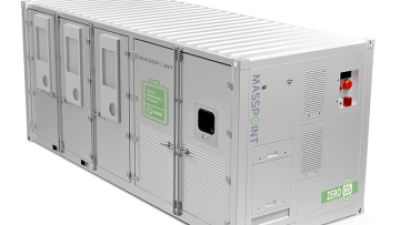
Conclusion
Choosing the right Microgrid Battery Storage System requires a clear understanding of how battery storage will support the microgrid, whether through renewable energy integration, peak shaving, load balancing, or backup power. Begin by analyzing energy demand, daily load profiles, critical loads, outage duration, and required reserve capacity. These factors help determine the appropriate battery capacity, power rating, and operating strategy.Next, compare battery chemistries according to safety, efficiency, lifespan, maintenance, environmental conditions, and available installation space. The system should integrate smoothly with solar or other renewable resources through reliable controls, energy management, and compatible power conversion equipment. Finally, evaluate the total cost of ownership, including installation, monitoring, maintenance, replacement cycles, and potential energy savings. A well-designed solution balances performance, resilience, safety, and long-term value rather than focusing only on initial purchase price.
About US
MASSPOINT Energy is a global leader in advanced micro-grid solutions, committed to providing reliable and sustainable energy systems.
With over 12 years of experience in power electronics and batteries industry, our team integrates R&D, manufacture, sales and services. We are committed to delivering green and sustainable energy solutions, including Industrial Hybrid BESS, Micro-Grid BESS, etc.
Media Contact
Company Name: Masspoint Energy Technology Co., Ltd.
Contact Person: Media Relations
Email: Send Email
Country: China
Website: https://www.masspointenergy.com/