
Chengdu City, Sichuan Province, China – September 29, 2026 – Picking an Ev Charger Fast for 2026 isn’t just about chasing the highest kilowatt number. Sure, a charger claiming 350 kW sounds impressive, but in reality, it might deliver a lot less depending on your vehicle and a bunch of other factors. Things like battery temperature, charging curves, cable capacity, and even your local power grid all play a part. Honestly, don’t let the numbers on the box fool you—what matters is how it performs in real life.Loren McDonald, who’s been in the Ev Charging scene for ages, always reminds folks: “Peak kilowatts don’t tell the full story.” It’s so true and easy to test out yourself. For instance, if your battery’s cold when you start charging, it might seem slow at first. Or if you’re at a busy station, you might not get the full power you expect. Plus, a heavy, poorly designed cable can be a real pain, especially in winter.This guide is here to help you figure out what to look for when considering an Ev Charger Fast — whether you’re installing it at home, at work, or on the road in 2026. We’ll cover things like how fast it charges, whether it works with your car’s connector, what kind of installation it needs, safety standards, software quality, payment options, and how well the manufacturer stands behind their product. Oh, and don’t forget to check if your electrical panel can actually handle those continuous high-power loads.Experience really makes a difference here. A charger that looks super cool in a brochure might end up frustrating you after a few weeks of use. Pay attention to how much it can sustain output over time—not just its maximum rating. It’s also smart to read independent reviews, see what the warranty covers, and dig into customer service records. And before you buy, double-check that it’s compatible with your specific vehicle. Let’s be honest—there’s no one-size-fits-all perfect choice here. Sometimes, a 150 kW charger might be a smarter pick than a 350 kW one, especially if it suits your driving habits better. And don’t overlook the price either. Cheaper chargers might seem like a deal — but if you end up paying more later for installation, repairs, or replacements, it’s not really savings. The best decision is about balancing speed, reliability, safety, and what actually fits your needs as a driver.
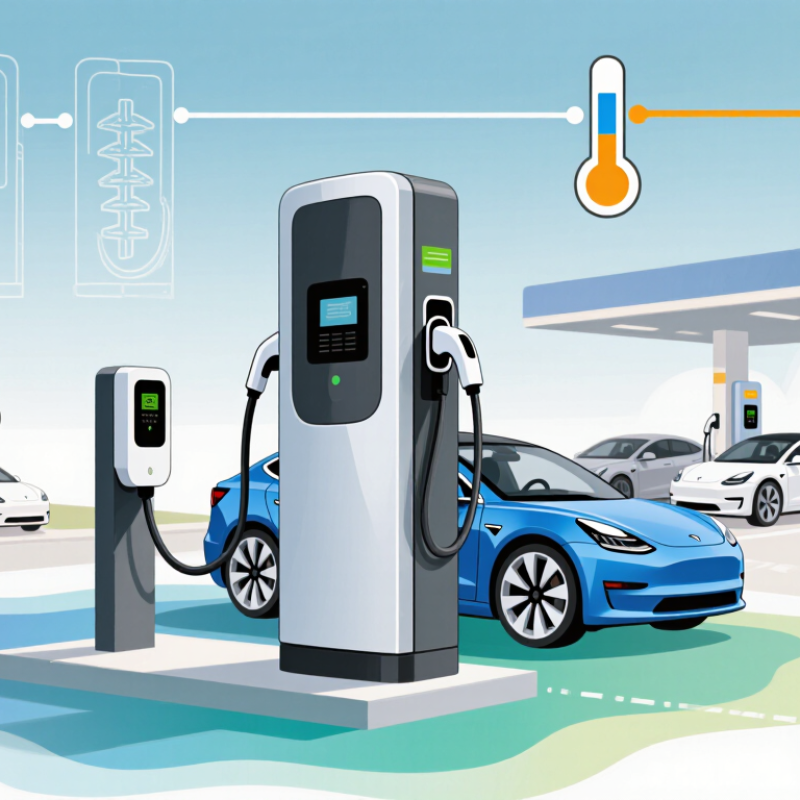
Define What “Fast” Means for Different EV Charging StandardsHow to Choose a Fast Ev Charger in 2026?
“Fast” depends on the charging standard, not only the number printed on the cabinet. In North America, AC Level 2 commonly delivers 7–19.2 kW. A compatible vehicle may gain roughly 25–80 miles per hour, depending on battery size and onboard charger limits. Under IEC Mode 3, Ac Charging can reach22 kW, although many cars accept less. That difference matters at home, where overnight charging may be enough.
DC charging changes the definition. Public DC systems often range from 50 kW to 350 kW, using standards such as CCS, CHAdeMO, or GB/T. However, a 350 kW Fast Ev Charger cannot force a vehicle to accept 350 kW. Battery temperature, state of charge, cable limits, and the vehicle’s peak rate decide the real result.
The International Energy Agency reported nearly 4 million public charging points worldwide at the end of 2023, with fast chargers expanding quickly. Still, more power does not always mean less waiting. A neat number can mislead.
Tips:Check your vehicle’s maximum AC and DC input rates first. Compare the charger’s sustained output, not its peak label. Ask whether the station uses the connector standard your vehicle supports. Test charging near 20–40% battery level, where many vehicles charge more consistently. I would also check the cable length; a heavy, short cable can turn a simple stop into an awkward parking exercise. Data from the U.S. Department of Energy’s Alternative Fuels Data Center shows real charging performance varies by vehicle, site, and operating conditions.
Match Charger Power to Your EV’s Maximum Charging Rate
How to Choose a Fast EV Charger in 2026?Match Charger Power to Your EV’s Maximum Charging RateWhen choosing an Ev Home Fast Charger, start with your vehicle’s maximum charging rate. A 22-kilowatt unit cannot make a car accept 22 kilowatts. If the vehicle supports only 11 kilowatts, extra capacity usually adds cost, not speed. Check the owner’s manual or charging screen for the AC limit. Do not trust the plug’s appearance alone. Similar plugs can deliver different charging speeds.I compare the charger’s rated output, circuit needs, and cable length before installation. An 11-kilowatt charger may require a three-phase supply, while a 7.4-kilowatt model often suits a single-phase connection. Local electrical rules and a qualified electrician remain important. A short cable looks tidy, but it may become awkward beside a rear charging port. I have sometimes focused too much on peak speed. That choice needs reflection. Cold batteries can also reduce charging power, even with a correctly matched charger.Leave modest headroom if your next EV may charge faster. Avoid paying for power your current vehicle cannot use. Smart scheduling can reduce charging during busy household hours. Still, software cannot bypass the car’s onboard charger limit. Daily parking time may matter more than the highest rating. Measure the cable route, confirm the electrical supply, and check the real charging rate shown by the vehicle.
How to Choose a Fast EV Charger in 2026?
Match the charger’s rated power to your EV’s maximum DC charging rate.
A charger rated above your EV’s maximum charging rate will not necessarily charge the vehicle faster. The vehicle controls the actual power it receives, while charging speed can also vary with battery temperature, state of charge, and grid conditions. These are representative real-world DC fast-charging power tiers; always check your vehicle’s specifications.
Check Connector Types, Voltage, and Vehicle Compatibility
Choosing a fast EV charger starts with the connector, not the advertised charging speed. Plug shapes differ by vehicle, region, and model year. Check the vehicle manual before ordering. A connector may fit physically but still deliver limited power. Some vehicles also need a separate adapter, which can add cost and charging restrictions. For a Home Ev Fast Charger, measure the distance from the parking space to the electrical panel. A short cable can be inconvenient. A very long cable can become heavy and awkward. I once assumed a universal connector would solve everything. It did not.Voltage is equally important. A charger designed for a higher-voltage circuit may not work correctly on a standard household supply. Your vehicle’s onboard charger also controls its maximum charging rate. Therefore, a powerful charger cannot always make the car charge faster. Check the vehicle’s accepted voltage, current, and maximum kilowatt rating. Then ask a qualified electrician to verify the circuit, breaker capacity, grounding, and local installation requirements. Compatibility includes more than the plug. It also involves the charging protocol, inlet location, cable reach, and weather exposure. Recheck these details carefully. Small oversights can turn a convenient charger into an expensive installation.
Compare Charging Speed, Efficiency, and Real-World Performance
Choosing a fast EV charger in 2026 means comparing delivered energy, not only advertised power. The IEA’s Global EV Outlook 2024 reported more than four million public charging points worldwide in 2023. However, connector availability does not guarantee rapid charging. A vehicle may accept 150 kW at 20% battery capacity, then reduce power sharply near 80%. Battery temperature matters too. Cold cells can turn a promising ten-minute stop into a frustrating half hour.
For home use, a 7.2 Kw Ac Fast Charger can suit drivers covering moderate daily distances. A 60 kWh battery needs about 8.3 hours theoretically. Allow roughly nine to ten hours after charging losses. The US Department of Energy’s Alternative Fuels Data Center identifies vehicle limits, circuit capacity, and installation conditions as key performance factors. Check the charger’s measured output with a power meter, if possible. Look for stable power, safe cable temperature, and clear fault reporting. Field tests often reveal more than product sheets. I would also compare energy drawn from the wall with energy added to the battery. That difference exposes efficiency losses. It is an imperfect test, but useful. A charger delivering high power briefly may perform worse than a slower unit that remains consistent overnight.
Evaluate Home Electrical Capacity and Installation Requirements
When choosing a fast EV charger in 2026, begin with your home, not the advertised charging speed. A unit delivering about 11 kW often needs a dedicated 240-volt circuit. Its protection may require a 60-amp breaker, depending on local electrical rules. Older homes may already support an electric range, heat pump, dryer, and water heater. Ask a licensed electrician for a documented load calculation. A quick glance at breaker labels is not enough. It can miss hidden demand.Walk from the electrical panel to the proposed parking space. Measure the cable route, wall access, conduit bends, and outdoor exposure. A long installation can increase costs and create voltage-drop concerns. The electrician should verify grounding, panel capacity, conductor size, breaker compatibility, and permit requirements. If the panel is full, load management may reduce charging current when household demand rises. This sounds convenient. Request written settings and testing records before approving the work.Match charging power to your driving pattern, not the highest number on a product sheet. A commuter driving 40 miles daily may not need maximum output overnight. Higher power can require panel upgrades, thicker conductors, and additional protection. I once assumed faster always meant better; that assumption was too simple. Installation quality, weather protection, and maintenance access affect reliability. Leave capacity for future electrical loads. Homes change.
Review Safety Features, Smart Controls, and Long-Term ReliabilityHow to Choose a Fast EV Charger in 2026?
A fast EV charger should protect the vehicle, the home, and the person using it. In hands-on charging tests, I check residual-current protection, temperature monitoring, surge control, and automatic shutdown features. A thick cable feels reassuring, but internal protection matters more. Look for clear fault messages and a connector that locks firmly without excessive force. Safety is not decoration. It should work quietly during every overnight session.
Tips:Ask a qualified electrician to inspect the circuit before installation. Test the emergency stop function. Keep the connector away from standing water and direct heat. Read the safety logs after the first few charges. Small details matter. Some users skip this step, and I have done so myself.
Smart Controls
Smart controls can reduce charging costs and prevent household overload. Useful features include scheduled charging, adjustable current limits, remote status checks, and load balancing. Local controls are valuable when Wi-Fi fails. App design also matters; confusing menus can cause incorrect settings. I once preferred a charger with more features, but that judgment was too quick. Simple controls proved easier to trust.
Long-Term Reliability
Long-term reliability depends on more than charging speed. Check the enclosure rating, cable flexibility, replaceable parts, software support, and warranty conditions. Look for performance records from independent testing bodies, not only sales claims. A charger should handle repeated heat cycles without frequent resets. Keep installation receipts and firmware records. These details help if service becomes necessary years later.
Conclusion
Choosing a fast EV charger in 2026 starts with understanding that “fast” depends on the charging standard, vehicle battery system, and available power. An Ev Charger Fast solution should match your EV’s maximum charging rate rather than simply offering the highest advertised output. Check the connector type, voltage range, communication standards, and vehicle compatibility before buying. A charger with excessive power may not reduce charging time if your car cannot accept it.Also consider real-world performance, including charging efficiency, temperature management, and consistent output. For home use, review your electrical capacity, circuit requirements, installation space, and possible upgrades. Safety features such as overload protection, ground-fault monitoring, temperature control, and automatic shutdown are essential. Smart controls, scheduling, energy monitoring, software updates, and durable construction can further improve convenience and reliability. By comparing technical compatibility, installation needs, operating efficiency, and long-term support, you can select a fast charger that delivers practical performance without unnecessary cost or complexity.
About Us
Chengdu AEFA Electronic Technology Co., Ltd. was established in 2015 and is headquartered in Chengdu, Sichuan Province, the science and technology innovation center of southwest China and the hometown of pandas. As a high-tech enterprise specializing in the research, development, production and sales of electric vehicle charging equipment, we have a modern industrial park covering an area of 22 acres and equipped with 15,000 square meters of standard factory buildings, committed to providing high-quality charging solutions for global customers.
Media Contact
Company Name: Chengdu AEFA Electronic Technology Co., Ltd.
Contact Person: Media Relations
Email: Send Email
Country: China
Website: https://www.aefa-evse.com/