
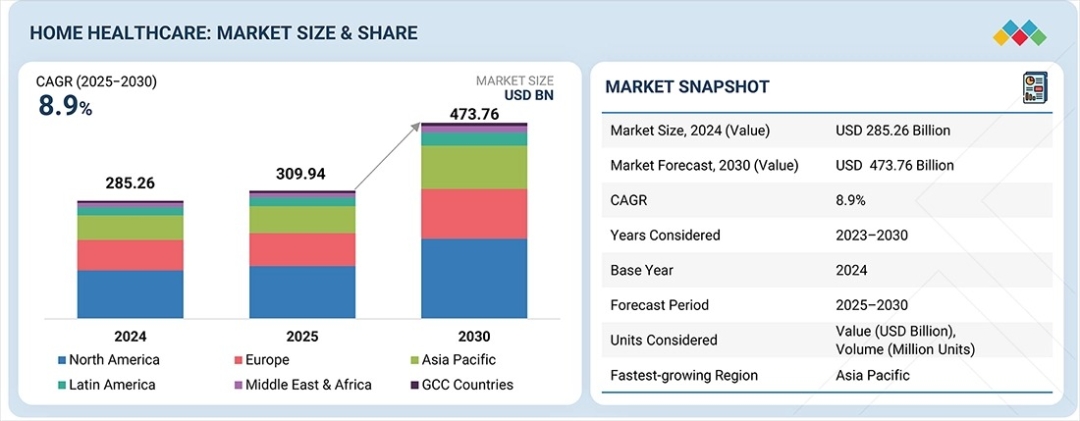
The global home healthcare market is projected to grow from USD 309.94 billion in 2025 to USD 473.76 billion by 2030, registering a strong CAGR of 8.9% during the forecast period. This significant expansion is primarily driven by the rapidly growing elderly population, which is more susceptible to chronic health conditions such as hypertension, diabetes, cardiovascular diseases, and respiratory disorders. These conditions require long-term monitoring and ongoing care, making home healthcare an increasingly attractive alternative to hospital-based treatment. In addition, the widespread adoption of telehealth platforms and remote patient monitoring technologies is improving access to healthcare services and enabling providers to deliver high-quality care outside traditional clinical settings. Rising awareness regarding preventive healthcare, early diagnosis, and chronic disease management is also fueling demand for home healthcare services. Furthermore, continuous innovation in home healthcare devices, including portable therapeutic equipment and connected medical devices, is enhancing patient convenience and affordability, encouraging greater adoption across both developed and emerging markets.
Download PDF Brochure: https://www.marketsandmarkets.com/pdfdownloadNew.asp?id=696
Rising Aging Population and Chronic Disease Burden Fuel Market Expansion
The rapid growth of the global elderly population is one of the most significant factors driving the expansion of the home healthcare market. Individuals aged 65 years and older are more likely to develop chronic conditions that require continuous monitoring and long-term treatment. The number of people aged over 85 is projected to more than double in the coming decades, creating a substantial demand for healthcare services that can be delivered outside traditional hospital settings. Home healthcare provides a practical solution for managing these health needs by offering medical care, monitoring, and therapeutic support within the comfort of patients’ homes.
Chronic diseases such as cardiovascular disorders, cancer, diabetes, and respiratory illnesses are among the leading causes of morbidity worldwide. Managing these conditions often requires ongoing medical attention, medication management, and regular monitoring. Home healthcare services enable patients to receive professional medical care without frequent hospital visits, improving quality of life and reducing healthcare costs. For many patients, home-based care also promotes faster recovery and greater independence.
The therapeutic products segment currently dominates the home healthcare market, largely due to the growing prevalence of chronic diseases such as kidney failure, sleep disorders, respiratory illnesses like chronic obstructive pulmonary disease (COPD), and cardiovascular conditions. Home-based therapeutic equipment, including oxygen therapy systems, dialysis machines, and glucose monitoring devices, allows patients to manage their conditions more effectively while minimizing hospital visits. Advances in compact and user-friendly medical devices have further improved accessibility and usability, making home-based care more feasible for patients and caregivers alike. As healthcare systems increasingly focus on patient-centered care and cost-effective treatment solutions, the demand for home healthcare services and equipment is expected to continue rising significantly.
Telehealth Adoption and Expanding Home-Based Services Create New Opportunities
The growing adoption of telehealth and digital health technologies is transforming the home healthcare industry and creating new opportunities for healthcare providers. Telehealth enables patients to consult healthcare professionals remotely through video consultations, mobile health applications, and connected medical devices. These digital tools allow physicians and healthcare providers to monitor patients’ health conditions, adjust treatment plans, and provide timely interventions without requiring in-person visits.
Remote patient monitoring technologies play a crucial role in supporting home healthcare services. Devices that track vital signs, blood glucose levels, heart rate, and oxygen saturation can transmit real-time health data to healthcare providers, enabling proactive management of chronic diseases. This approach not only improves patient outcomes but also reduces the need for costly hospital admissions and emergency care.
Among the various service segments, skilled nursing services account for the largest share of the home healthcare market. Licensed nurses provide a wide range of medical services at home, including medication administration, wound care, post-surgical care, chronic disease management, and rehabilitation support. The increasing number of patients with complex medical needs, along with the growing elderly population, is driving demand for professional nursing care at home. As healthcare systems worldwide shift toward more cost-efficient and patient-centered care models, the role of skilled nursing in home healthcare continues to expand.
By indication, the cancer segment holds the largest share of the home healthcare market. The rising global incidence of cancer and the increasing need for long-term treatment and palliative care are key factors contributing to this trend. Many cancer patients require continuous symptom management, pain relief, and supportive care following hospital treatment. Home-based oncology services provide patients with a more comfortable and personalized care environment, improving overall patient satisfaction and quality of life. Additionally, greater awareness of palliative care and supportive home-based treatments is encouraging families and caregivers to opt for home healthcare services for cancer patients.
Request Sample Pages: https://www.marketsandmarkets.com/requestsampleNew.asp?id=696
Regional Growth Trends, Workforce Challenges, and Competitive Landscape
Regionally, Asia Pacific is projected to register the fastest growth in the global home healthcare market during the forecast period. Several factors are contributing to this rapid expansion, including the rising prevalence of chronic diseases, a rapidly aging population, and increasing healthcare costs that make home-based care a more affordable option. Governments across the region are investing heavily in healthcare infrastructure, expanding access to rural healthcare services, and promoting digital health technologies to improve healthcare delivery.
In addition, the growing adoption of telehealth platforms and improved internet connectivity are supporting the expansion of home healthcare services across emerging Asian markets. Countries such as China, India, and Japan are witnessing increased demand for remote healthcare solutions as healthcare systems strive to manage rising patient volumes while controlling costs.
Despite the promising growth outlook, the home healthcare market faces several challenges. One of the most pressing issues is the shortage of qualified home healthcare workers, including personal care aides and home health nurses. As demand for home healthcare services continues to rise, healthcare providers are struggling to recruit and retain skilled workers. Low compensation levels and the physically demanding nature of caregiving roles make it difficult to attract younger workers to the profession. This workforce shortage could potentially limit the ability of healthcare providers to meet the growing demand for home-based services.
Another challenge impacting the market is the evolving landscape of reimbursement policies. In the United States, for example, the Centers for Medicare & Medicaid Services (CMS) introduced the Patient-Driven Groupings Model, which focuses on patient acuity and clinical needs but also reduces reimbursement rates for certain home healthcare services. These changes may create financial pressures for smaller providers and rural healthcare agencies. In addition, reimbursement gaps for durable medical equipment and reduced payments for diagnostic testing can slow the adoption of new technologies and impact service delivery.
Key companies operating in the global home healthcare market include Fresenius Medical Care AG (Germany), Abbott (US), Linde plc (Ireland), F. Hoffmann-La Roche Ltd. (Switzerland), ResMed (US), Koninklijke Philips N.V. (Netherlands), GE Healthcare (US), A&D HOLON Holdings Company Limited (Japan), Convatec Group PLC (UK), Amedisys (US), OMRON Healthcare Co., Ltd. (Japan), Invacare Corporation (US), BAYADA Home Health Care (US), Drive DeVilbiss Healthcare (UK), and Sunrise Medical (Germany). These companies are actively adopting both organic and inorganic growth strategies, including product launches, partnerships, and acquisitions, to strengthen their market presence and expand their home healthcare solutions in response to the growing global demand for patient-centric care delivered at home.
Related Reports:
Media Contact
Company Name: MarketsandMarkets™ Research Private Ltd.
Contact Person: Mr. Rohan Salgarkar
Email: Send Email
Phone: 18886006441
Address:1615 South Congress Ave. Suite 103, Delray Beach, FL 33445
City: Florida
State: Florida
Country: United States
Website: https://www.marketsandmarkets.com/Market-Reports/home-healthcare-equipment-market-696.html